Lisa Mariana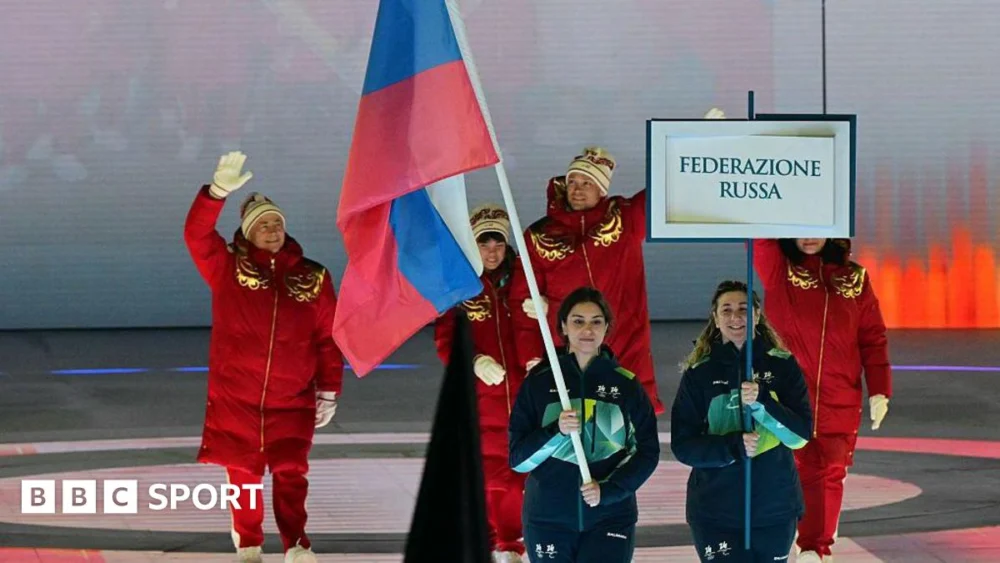
The 2026 Winter Paralympic Games commenced with an opening ceremony in Italy, notable for the participation of delegations from Russia and Belarus under their national emblems, a decision that reignited contentious debates regarding the intersection of international sport and geopolitical conflict, leading to ceremonial boycotts by several nations. This pivotal event, marking the 50th anniversary edition of the Games, unfolded amidst a backdrop of global tensions, transforming the traditional celebration of athletic achievement into a complex tableau of diplomatic maneuvering, principled protest, and the enduring quest for peace through sport.
The decision by the International Paralympic Committee (IPC) to permit athletes from Russia and Belarus to march under their respective national flags represented a significant policy shift, reversing sanctions initially imposed following the 2022 invasion of Ukraine. For these nations, this marked their return to competing under national representation at a Paralympic event for the first time since the comprehensive ban was enacted. The previous absence of the Russian flag from Paralympic ceremonies extends even further, dating back to the Sochi 2014 Games. This protracted exclusion was initially a consequence of a state-sponsored doping scandal that led to widespread sanctions across Russian sport, before the geopolitical conflict further solidified their isolation from international sporting stages under national colours. The re-integration, therefore, carries a multi-layered historical weight, touching upon issues of national integrity, athletic fairness, and the complex calculus of international sports governance.
The IPC’s evolving stance on the participation of Russian and Belarusian athletes has been subject to intense scrutiny and robust debate. Following the 2022 invasion, the initial decision to ban athletes from these countries was widely supported as a strong condemnation of the military action, aligning with the Olympic Truce and principles of peace. The subsequent re-evaluation, which culminated in the current allowance for national representation, has been framed by the IPC as a commitment to individual athlete rights and the principle of non-discrimination, provided athletes adhere to strict neutrality and anti-war declarations. This delicate balancing act seeks to separate the actions of states from the aspirations of individual competitors, a distinction that proves increasingly challenging in a world where national identity is deeply interwoven with international representation. Critics of the decision argue that allowing national flags effectively normalizes the actions of the states involved, undermining the very principles the initial ban sought to uphold.
The profound ramifications of this decision were immediately evident at the opening ceremony held in Verona. Delegations from seven nations, including Ukraine, opted to boycott the event in a powerful act of protest against the inclusion of Russian and Belarusian national teams. This collective stance underscored the deep moral and ethical dilemmas confronting the Paralympic movement and the broader international sports community. The Ukrainian delegation, despite its absence from the parade of nations, received an overwhelmingly resonant cheer when their flag was carried into the arena by a volunteer, a poignant moment that underscored global solidarity and empathy for a nation enduring ongoing conflict. This symbolic gesture highlighted the emotional resonance of the Games and the profound human impact of geopolitical events on athletes and nations.
Andrew Parsons, President of the International Paralympic Committee, addressed these complex issues directly in his opening remarks. He acknowledged the grim global landscape, stating, "Four years ago I said I was horrified at what was happening in the world. Unfortunately, the situation has not improved." His emphasis on sport as a pathway to an alternative future, where differences are sources of strength rather than division, articulated the aspirational vision of the Paralympic movement. Parsons’ assertion that he prefers "to know the countries by the name of their athletes" rather than their leaders, speaks to the idealistic view of sport as a realm where individual achievement and mutual respect can transcend political discord. This perspective, however, faces the persistent challenge of how to uphold such ideals when the very act of participation becomes politicized. The tension between the IPC’s stated mission of inclusion and the calls for exclusion based on national actions remains a central paradox.
Giovanni Malago, President of the Milan-Cortina 2026 organising committee, echoed these sentiments, articulating the profound weight of hosting such a global event during a period of intense global instability. "We cannot ignore that these Games take place in a deeply divided world, torn apart by wars, grief and suffering at one of the most dramatic turning points of our time," Malago observed. He stressed that the core message of peace, inclusion, and solidarity, central to both the Olympic and Paralympic movements, gains unprecedented significance in such turbulent circumstances. These statements reflect a broader understanding within international sporting bodies that the traditional separation of sport and politics is increasingly untenable, forcing them to navigate ethical minefields with global implications.
Further complicating the pre-Games narrative was the unexpected withdrawal of Iran. The nation’s sole athlete, cross-country skier Aboulfazl Khatibi Mianaei, was unable to travel safely to Italy due to escalating conflict in the Middle East. This development introduced another layer of geopolitical complexity, demonstrating how regional instability can directly impede individual athletic aspirations and national representation. The specific context involved recent joint US-Israeli attacks targeting Iranian missile infrastructure, military sites, and leadership, which were met with retaliatory strikes by Tehran across the region, including on Israel. This situation underscored the acute vulnerability of international sporting events to broader global security dynamics, highlighting that the challenges extend beyond a single conflict to encompass a wider spectrum of geopolitical volatility affecting multiple nations and athletes.
The opening ceremony itself was a spectacle of history and aspiration, unfolding within the magnificent Arena di Verona, a 2,000-year-old Roman amphitheater and UNESCO World Heritage site. The choice of venue, while logistically distinct from the competition sites, offered a powerful symbolic backdrop, contrasting ancient permanence with contemporary flux. This iconic setting, renowned for its operatic performances, provided a dramatic stage for the parade of over 660 athletes from 56 countries who will compete across six sports until March 15. The logistics of athlete attendance reflected the diverse challenges faced by national delegations; only 28 of the 55 competing nations had athletes physically marching in Verona. For others, pre-recorded videos of flagbearers and teams were broadcast, accompanied by music from Italian house artists Meduza, illustrating an adaptive approach to ceremonial participation in an era of complex travel and varied team schedules.
The absence of the 25-strong Great Britain team from the ceremony was attributed to logistical considerations rather than political protest, with many athletes scheduled for early competitive action in the Dolomites. This highlights the practical constraints that can influence ceremonial participation, further illustrating the multifaceted reasons behind a nation’s presence or absence at such events. The ceremony also paid homage to Verona’s literary legacy as the "City of Love," referencing Shakespeare’s Romeo and Juliet. This romantic motif, juxtaposed against the backdrop of global discord and boycotts, offered a poignant counterpoint, perhaps suggesting an enduring hope for unity and reconciliation. The culmination of the ceremony, with the simultaneous lighting of two Paralympic cauldrons in Milan and Cortina, symbolized the shared spirit and decentralized nature of the Games across its host regions.
Parsons’ concluding remarks reinforced the core message of the Paralympic movement: "Paralympians are ready to redefine possibility, push the boundaries of human ability and show what humans can achieve when respected and provided with chances to succeed." He emphasized that the record number of athletes and nations participating would showcase the pinnacle of winter sport, aiming to transform societal attitudes and inspire individuals globally. This articulation of disability not as a limitation but as "an incredible dimension of human diversity" encapsulates the profound social mission of the Paralympics.
The Milan-Cortina 2026 Winter Paralympics, therefore, commences not merely as a sporting event but as a critical juncture in the ongoing global dialogue about sport, politics, and humanity. The decisions made regarding participation, the protests against them, and the broader geopolitical context of a "deeply divided world" will undoubtedly shape the narrative of these Games. As athletes strive for excellence on the snow and ice, the underlying currents of international relations will continue to flow, making this edition of the Winter Paralympics a powerful barometer of the contemporary global landscape and the enduring, yet challenged, power of sport to unite and inspire. The outcomes, both on the field of play and in the realm of international diplomacy, will set significant precedents for future major sporting events, compelling continuous re-evaluation of the principles that govern global athletic competition.

 Ridwan Kamil
 Safa Marwah
 Aura Kasih
 Ayu Aulia