Aura Kasih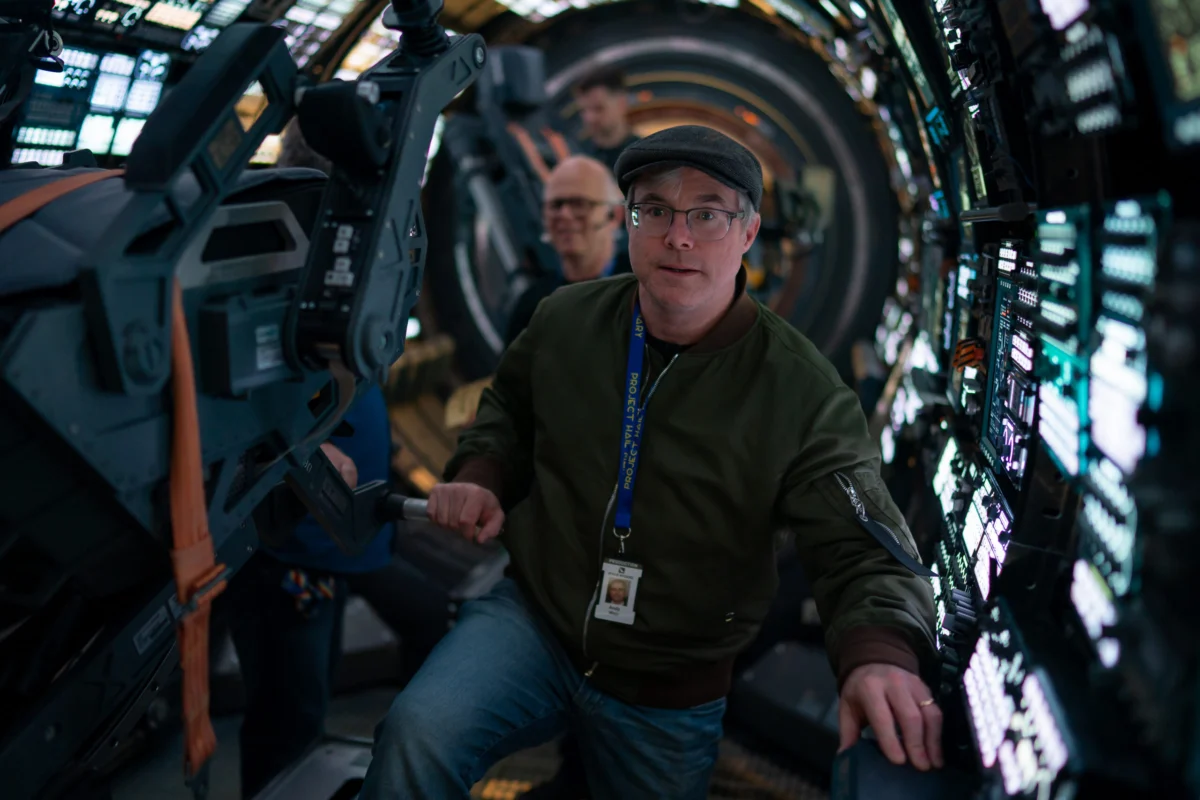
Bestselling author Andy Weir, renowned for his scientifically grounded and thrilling narratives, offers a unique perspective on the intricate relationship between literature and its cinematic adaptations, emphasizing the distinct demands of each medium. Following the considerable box office success of "The Martian" and the highly anticipated, robust opening weekend of "Project Hail Mary," Weir reveals a deliberate strategy to insulate his creative process from the allure of the silver screen during the initial writing phase. This approach, he contends, is paramount to preserving the integrity and immersive power of the written word, allowing for the full exploitation of the novel’s inherent strengths.
Weir’s journey from acclaimed novelist to influential figure in film production is a testament to his versatile talent. "The Martian," his debut novel, was masterfully translated into a 2015 film directed by Ridley Scott, achieving global box office revenues exceeding $600 million. More recently, "Project Hail Mary" has mirrored this commercial triumph, its powerful opening weekend performance positioning it as a significant contender for one of the year’s most financially successful films. Despite this proven track record of successful screen adaptations, Weir maintains a conscious detachment from the prospect of cinematic translation during his foundational writing process. "I endeavor to maintain a complete absence of such considerations," he states, underscoring the fundamental divergence between the novelistic and cinematic arts.
The rationale behind Weir’s deliberate separation stems from a profound understanding of the inherent differences between written storytelling and visual media. His extensive involvement in the production of "Project Hail Mary," where he served as a producer, provided him with an unprecedented, granular insight into the multifaceted nature of filmmaking. "My engagement spanned every facet of the production lifecycle," Weir elaborates. "I was present throughout the principal photography, actively participated in casting decisions and the selection of directorial talent, and contributed to the post-production and editing phases. The opportunity to offer feedback on virtually every element was invaluable. While the structural intricacies of my contract necessitated my producer role, my primary objective was to afford deference to the seasoned professionals whose expertise guided the project."
This deepened immersion into the filmmaking process, a stark contrast to his more hands-off experience with "The Martian" where his involvement was largely financial, has nonetheless failed to alter his fundamental approach to crafting novels. His advice to fellow authors is unequivocal: "When embarking on the creation of a book—and this guidance extends to all aspiring writers—I strongly advise against contemplating a film adaptation. If the objective is to craft a screenplay, then the undertaking should be a screenplay. Conversely, if the ambition is to author a novel, the focus must be squarely on the novel. The paramount concern should be the reader’s immersive experience, their journey through the narrative. To impose limitations based on what might translate effectively to the screen is to undermine the unique potential of the written form. The strength of a literary work lies in its capacity to engage the reader through its own distinct mechanisms, not by anticipating visual translation. Literature offers a far more expansive canvas, a greater degree of flexibility with language, and the ability to explore concepts and internal landscapes that are often beyond the purview of cinematic representation. To confine oneself to the constraints of a pre-visualized film script is to squander the rich tapestry of possibilities inherent in the written word."
The inherent qualities of Weir’s literary output, however, have consistently lent themselves to compelling cinematic interpretations. Drew Goddard, the screenwriter responsible for adapting both "The Martian" and "Project Hail Mary," offers a perceptive analysis of this phenomenon. Goddard, who initially expressed trepidation regarding the ambitious scope of "Project Hail Mary," posits that these very grand, conceptual elements are precisely what make Weir’s novels so potent for adaptation. "He possesses an extraordinary gift for conceptualizing grand, cinematic ideas," Goddard observes. "His narratives are underpinned by a remarkable sense of plot development. On a personal level, however, it is the profound emotional core of his writing that elevates his work beyond mere spectacle. While his audacious concepts and the intricate hard science are often cited as the keys to his success, I believe the true magic lies in the underlying humanity he explores. Although he might claim his focus is simply on providing an entertaining experience, I perceive a profound exploration of human compassion and emotion woven between the lines of his prose. My role, as I see it, is to excavate this intrinsic soul and translate it onto the screen."
This understanding of the underlying emotional resonance was instrumental in overcoming Goddard’s initial apprehension with the "Project Hail Mary" screenplay. "The profound admiration I hold for the novel compelled me to undertake the challenge," he affirms. "The sheer brilliance of the story demanded that we make every effort to bring it to life."
The synergy between Weir’s scientific acumen and his narrative prowess has consistently captivated audiences, transcending the boundaries of genre and medium. His ability to construct plausible, intricate scientific scenarios that drive compelling human drama is a hallmark of his style. In "The Martian," the survival of Mark Watney on Mars was not merely a testament to his ingenuity but also a profound exploration of human resilience and the collaborative spirit of scientific endeavor. The novel’s meticulous attention to detail, from orbital mechanics to Martian botany, provided a bedrock of realism that grounded the fantastical premise. This scientific rigor, far from alienating readers, served to enhance the immersive experience, allowing them to engage with the challenges faced by the protagonist on a visceral, intellectual level.
Similarly, "Project Hail Mary" thrusts its protagonist, Ryland Grace, into an even more perilous cosmic predicament. The narrative unfolds with a sense of urgency and mystery as Grace, suffering from amnesia, must piece together his mission and the dire threat facing Earth. Weir masterfully interweaves complex astrophysical concepts, alien biology, and engineering challenges into a narrative that is both intellectually stimulating and emotionally resonant. The novel’s exploration of communication barriers, interspecies cooperation, and the universal drive for survival offers a rich thematic tapestry that extends beyond the immediate crisis.
The success of these adaptations can be attributed to several factors that resonate across both literary and cinematic landscapes. Firstly, Weir’s protagonists are inherently relatable and resourceful. Despite facing seemingly insurmountable odds, they exhibit a pragmatism, humor, and unwavering determination that endears them to audiences. Mark Watney’s sarcastic wit and scientific problem-solving, and Ryland Grace’s intellectual curiosity and evolving sense of responsibility, provide anchors of human connection within extraordinary circumstances.
Secondly, the pacing and narrative structure of Weir’s novels lend themselves to dynamic visual storytelling. The inherent tension and escalating stakes in his plots create natural arcs for cinematic adaptation, allowing for impactful sequences and moments of high drama. The "ticking clock" scenarios, whether it’s surviving on Mars or saving Earth from an extraterrestrial threat, provide a clear impetus for narrative progression that translates effectively to the screen.
Furthermore, the visual potential of Weir’s settings is undeniable. The stark beauty of the Martian landscape, the vast emptiness of space, and the intricate designs of advanced spacecraft and alien environments offer filmmakers fertile ground for breathtaking visual effects and immersive world-building. The scientific accuracy that Weir infuses into these settings enhances their credibility and allows audiences to suspend disbelief more readily.
The collaborative process between author and screenwriter, as exemplified by the relationship between Weir and Goddard, is crucial. While Weir’s initial focus is on crafting a compelling literary experience, his willingness to engage with the adaptation process, albeit with a clear understanding of its distinct requirements, has been beneficial. Goddard’s ability to discern the underlying emotional themes and translate them into a visual language that resonates with audiences is a testament to his skill as a screenwriter. His emphasis on "bringing out the soul" of Weir’s writing highlights the importance of not just replicating the plot but capturing the spirit of the work.
The implications of this successful cross-medium translation extend beyond individual book sales and box office revenues. It signals a growing appreciation for science fiction narratives that blend intellectual rigor with emotional depth. As audiences become increasingly sophisticated, the demand for stories that challenge and engage on multiple levels is on the rise. Weir’s work, by consistently delivering on both fronts, is well-positioned to meet this demand.
Looking ahead, the continued success of Weir’s adaptations suggests a promising future for narrative science fiction in Hollywood. The ability to translate complex scientific concepts into accessible and emotionally engaging cinematic experiences is a valuable asset. As filmmakers continue to seek out original and thought-provoking stories, Weir’s bibliography, with its inherent blend of scientific plausibility, compelling characters, and high-stakes narratives, remains a rich source of material. The ongoing dialogue between literary creation and cinematic interpretation, guided by authors who understand the unique strengths of each medium, promises to deliver further enthralling experiences for audiences across both platforms. The discipline of writing for the page, with its emphasis on internal landscapes and intricate detail, and the art of visual storytelling, with its power to evoke immediate emotion and grand spectacle, can, when approached with deliberate craft and mutual respect, converge to create truly unforgettable narratives.




 Safa Marwah
 Lisa Mariana
 Ayu Aulia