Aura Kasih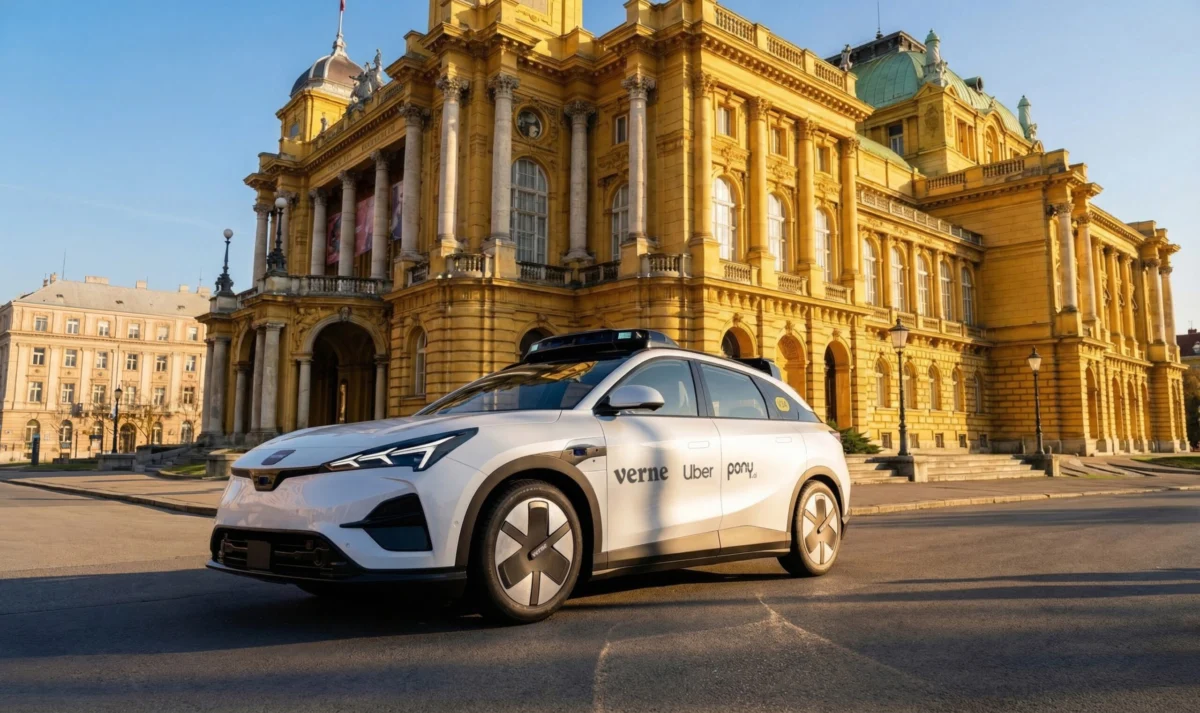
In a significant stride towards the widespread adoption of self-driving transportation, Uber is spearheading the introduction of Europe’s inaugural commercially viable robotaxi service, forging strategic alliances with pioneering technology firms Pony AI and Verne. This ambitious venture, currently undergoing rigorous testing in Zagreb, Croatia, aims to seamlessly integrate autonomous vehicles into Uber’s existing ride-hailing network, signaling a profound shift in urban mobility across the continent.
The strategic alignment between Uber, Pony AI, and Verne represents a calculated maneuver by the global ride-sharing giant to proactively navigate the impending transformation of the transportation landscape. In recent years, Uber has actively cultivated partnerships with a diverse array of autonomous vehicle developers, a strategy designed to reassure investors and demonstrate its preparedness for an era where human drivers may be supplanted by artificial intelligence. This latest collaboration underscores Uber’s commitment to remaining at the forefront of this technological evolution, ensuring its continued relevance and leadership in the future of mobility.
This tripartite collaboration leverages the distinct strengths of each entity. Uber will contribute its extensive ride-hailing infrastructure and vast customer base, providing the essential platform and demand for the autonomous service. Verne, headquartered in Croatia and emerging from the innovative ecosystem of supercar manufacturer Rimac, is tasked with the crucial responsibility of fleet management, encompassing the operational intricacies of deploying and maintaining the autonomous vehicles. Meanwhile, Pony AI, a prominent player in the autonomous driving sector with established operations in several Chinese cities, will furnish the sophisticated artificial intelligence and cutting-edge technology that underpins the self-driving capabilities of the vehicles. The initial rollout is slated for Zagreb, with plans for subsequent expansion into additional European markets. The long-term vision is an ambitious one, aiming to scale the robotaxi fleet to encompass thousands of vehicles within the next few years, fundamentally altering the fabric of urban transportation.
Currently, the partners are engaged in the critical phase of validating Pony AI’s advanced autonomous driving system, specifically its seventh-generation technology stack, within the challenging urban environment of Zagreb. The vehicles being utilized for these trials are the Arcfox Alpha T5 Robotaxis, a product of a collaborative development and manufacturing effort between Pony AI and the state-owned Beijing Automotive Group Co (BAIC). This extensive testing is a prerequisite for the commencement of commercial operations, and once fares are introduced, this initiative is poised to mark Europe’s first truly commercial robotaxi service. The successful implementation of this service will be a testament to the technological maturity and operational readiness of autonomous driving systems in a complex European urban setting.
The competitive landscape for autonomous ride-hailing in Europe is rapidly intensifying, with several other major players also vying for a foothold. Notably, Waymo, a subsidiary of Alphabet Inc., has publicly declared its intention to launch a robotaxi service in London, with a projected debut in 2026. Uber itself is not solely reliant on this new partnership, as it continues to explore other avenues for autonomous vehicle integration. The company is actively engaged in testing self-driving cars in Germany in collaboration with Momenta, a firm specializing in intelligent driving solutions. Furthermore, Volkswagen has announced its own ambitions in the autonomous ridesharing domain, planning to deploy a service under its subsidiary Moia, also within Germany. These parallel developments highlight a broader industry trend towards autonomous mobility, underscoring the significance of Uber’s latest strategic moves.

Verne, as a relatively new entrant into the autonomous vehicle space, has garnered attention since its inception as a spin-off project from Rimac, a company renowned for its high-performance electric hypercars. Mate Rimac, the visionary founder and CEO of the Rimac Group, has previously showcased a substantial fleet of 60 prototype autonomous vehicles, hinting at the company’s considerable investment and development capabilities. While the exact composition of the vehicles that will ultimately be integrated into Uber’s fleet remains a subject of ongoing discussion and confirmation, the existence of these prototypes indicates Verne’s substantial technological underpinnings and its potential to contribute significantly to the scaling of the robotaxi service. The synergy between Rimac’s engineering prowess and Verne’s focus on autonomous mobility creates a compelling foundation for this venture.
The implications of this partnership extend far beyond the immediate deployment of a new taxi service. The successful launch and scaling of a commercial robotaxi network in Europe could catalyze a paradigm shift in urban transportation. It has the potential to significantly reduce traffic congestion, improve road safety by mitigating human error, and offer a more sustainable and accessible mobility solution for a wider population. The economic ramifications are also substantial, with the prospect of creating new industries, generating employment opportunities in fleet management, maintenance, and technological support, and driving innovation in related sectors such as urban planning and infrastructure development.
Furthermore, the integration of autonomous vehicles into ride-hailing platforms presents a compelling case for increased efficiency and cost-effectiveness in the long run. Once the initial investment in technology and infrastructure is absorbed, robotaxis could potentially offer more affordable ride options, democratizing access to on-demand transportation. This could be particularly transformative for individuals with mobility challenges, the elderly, and those in underserved communities, providing them with greater independence and connectivity. The environmental benefits are also noteworthy, as a shift towards electric autonomous vehicles can contribute to reducing carbon emissions and improving air quality in urban centers.
However, the path to widespread adoption is not without its challenges. Regulatory frameworks for autonomous vehicles are still evolving across Europe, and obtaining the necessary approvals and certifications for commercial operations will be a critical hurdle. Public perception and trust in self-driving technology also remain key considerations, and extensive public education and engagement will be vital to foster acceptance. Cybersecurity is another paramount concern, as autonomous systems are vulnerable to hacking and data breaches, necessitating robust security protocols. The ethical considerations surrounding autonomous vehicle decision-making in complex scenarios also require careful deliberation and established guidelines.
The partnership between Uber, Pony AI, and Verne represents a bold vision for the future of European mobility. By combining Uber’s market reach, Pony AI’s advanced autonomous technology, and Verne’s fleet management expertise, this venture has the potential to redefine urban transportation. The lessons learned from the pilot program in Zagreb will undoubtedly inform future expansions, paving the way for a more connected, efficient, and sustainable transportation ecosystem across the continent. The coming years will be crucial in observing how this groundbreaking initiative unfolds, its impact on the broader automotive and technology sectors, and its ultimate contribution to shaping the future of how people move within cities. The successful integration of these autonomous vehicles into the daily lives of European citizens will be a defining moment in the ongoing revolution of personal mobility.




 Ayu Aulia
 Safa Marwah
 Lisa Mariana