Lisa Mariana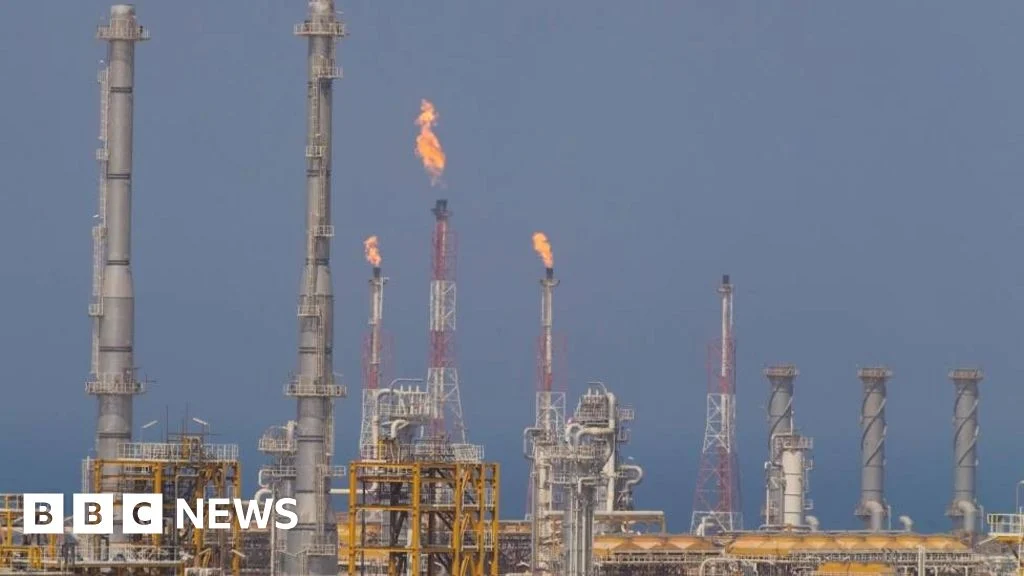
Global energy markets experienced significant upward pressure on Wednesday following reports of an aerial assault targeting a key petrochemical installation situated within the world’s most extensive natural gas reserve, leading to immediate surges in crude oil and natural gas benchmarks. This incident, coupled with subsequent retaliatory threats and reported damage to Qatari energy facilities, has reignited fears of supply disruptions in a highly sensitive geopolitical region, underscoring the fragility of global energy security.
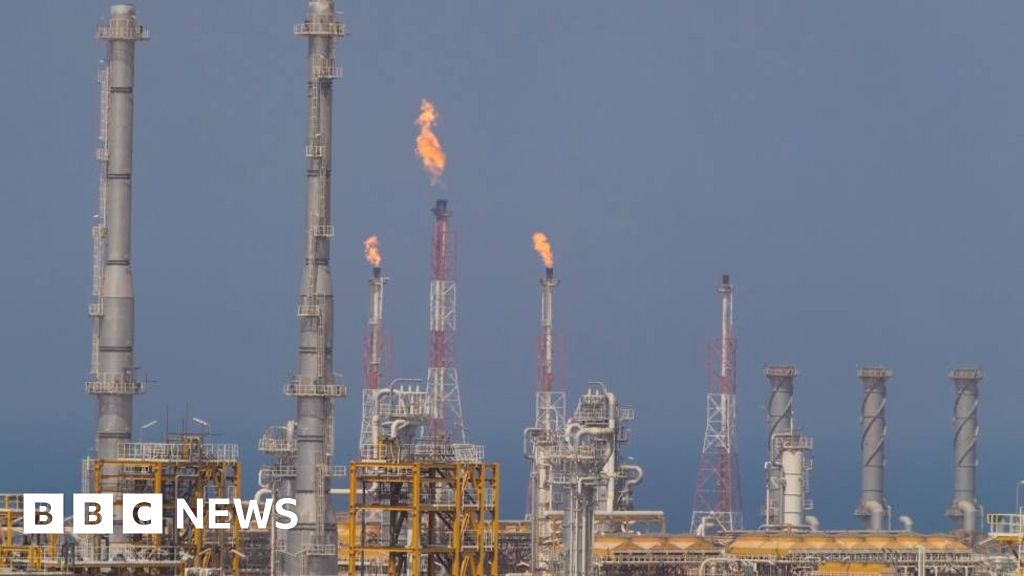
The initial reports, disseminated by Iranian state media, indicated that a facility within its crucial South Pars gas field complex had been struck. This development sent immediate ripples through international commodity exchanges. The Brent crude oil benchmark, a key indicator for global petroleum prices, swiftly ascended, reaching levels approaching $110 per barrel, marking an increase of over 5% compared to prior trading sessions. Simultaneously, the benchmark price for natural gas in the United Kingdom experienced a sharp increase, jumping by 6% before stabilizing slightly below its peak. These rapid escalations reflect profound market apprehension regarding the stability of energy supply from a region vital to global consumption.
Hours following the initial incident, further reports emerged from Qatar confirming substantial damage at its Ras Laffan industrial site. This confirmation followed earlier warnings from Iran’s military, which had explicitly threatened "decisive action" against what it termed "the origin of that aggression," particularly targeting energy infrastructure in response to any perceived attack on its own facilities. The interconnectedness of the South Pars and North Dome fields, shared between Iran and Qatar, means that any incident affecting one side inherently carries implications for the other, and indeed, for global supply chains.
While the immediate price spikes were significant, both oil and gas benchmarks remained below their peak levels observed earlier in the broader regional conflict. Brent crude had previously soared to over $116 per barrel in early March, and UK natural gas prices had reached a higher point during the same period. This indicates that while the market reacted sharply to the new development, it also retained some memory of previous, more extreme volatility, suggesting a degree of conditioned response to escalating tensions.
The South Pars/North Dome gas field stands as the single largest natural gas reservoir in the world, holding an estimated 51 trillion cubic meters of in-situ gas and approximately 50 billion barrels of condensates. Its strategic importance cannot be overstated. For Iran, the field is a cornerstone of its energy independence and export capabilities, despite international sanctions. For Qatar, its portion, known as the North Dome, underpins its status as one of the world’s leading exporters of liquefied natural gas (LNG), a critical fuel for Europe and Asia. Any disruption to operations in this colossal field, whether due to direct damage or the broader climate of insecurity, reverberates across international energy markets, affecting prices, supply routes, and national energy strategies.
The regional geopolitical landscape has been a persistent source of instability, with various state and non-state actors engaged in a complex web of rivalries and proxy conflicts. Iran’s military statement, referencing an "American-Zionist enemy," underscores the deep-seated animosities and the potential for a wider conflagration. The targeting of energy infrastructure in such a volatile environment not only risks physical damage but also fuels a risk premium in energy prices, as traders factor in the heightened probability of future disruptions. This dynamic transforms energy assets into strategic targets, further complicating the global supply outlook.
The incident at South Pars and the subsequent Qatari reports highlight the extreme vulnerability of critical energy infrastructure to geopolitical events. For Iran, the petrochemical complex serves as a vital processing hub, converting raw gas into higher-value products for domestic use and export. Damage to such facilities can have long-lasting economic repercussions beyond the immediate disruption. Qatar, as a major LNG producer, had already taken precautionary measures earlier in the month by reportedly halting some production in response to the escalating regional conflict, demonstrating the proactive steps energy producers are compelled to take to safeguard operations and personnel. Qatar’s foreign ministry spokesman, Majed Al Ansari, emphasized that strikes against energy infrastructure "constitutes a threat to global energy security," a sentiment echoed by energy analysts worldwide.
Expert analysis consistently points to sustained volatility in energy markets under such conditions. Danni Hewson, head of financial analysis at AJ Bell, articulated that the reported attack and Iran’s subsequent threats had "helped dial up the temperature once again and put renewed upward pressure on oil prices." Hewson further highlighted the critical role of the Strait of Hormuz, stating that "any solution to the blockage of the Strait of Hormuz looks pretty distant at this point and unless and, until there is progress on that front, energy markets will likely remain volatile." The Strait of Hormuz, a narrow waterway between the Persian Gulf and the Gulf of Oman, is a choke point through which approximately 20% of the world’s petroleum and a substantial portion of its LNG pass. Its potential closure or disruption due to military action or heightened tensions is a nightmare scenario for global energy markets, capable of triggering catastrophic price spikes and severe supply shortages.
In response to the rising energy costs and their potential impact on domestic economies, governments are exploring various countermeasures. The White House, on Wednesday, announced the temporary suspension of the Jones Act, a 1920 maritime law mandating that only American-built, American-owned, and American-crewed vessels transport goods between U.S. ports. This 60-day waiver aims to facilitate the freer flow of "vital resources like oil, natural gas, fertiliser, and coal" by allowing non-U.S.-flagged ships to participate in domestic transport. While intended to alleviate price pressures by reducing shipping costs, maritime industry groups in the U.S. have largely dismissed its potential impact, arguing that the predominant driver of rising prices at the pump remains the global price of crude oil, not domestic shipping expenses.
Further compounding the immediate consequences of the reported strike, Iran has reportedly suspended gas flow to Iraq. This action, confirmed by a senior Iraqi official, is ostensibly a measure by Tehran to bolster its domestic energy reserves following the incident. This move highlights Iran’s significant reliance on its own gas production for internal consumption, with data from the Gas Exporting Countries Forum indicating that a substantial 94% of Iran’s gas supply is utilized domestically. The cessation of supply to Iraq, a country already grappling with its own energy challenges and political instability, adds another layer of complexity to regional energy dynamics and underscores how geopolitical tensions can quickly cascade into direct impacts on neighboring nations.
The broader implications of these events are profound. Sustained high energy prices can act as a significant drag on global economic growth, fueling inflation, eroding consumer purchasing power, and increasing operational costs for industries. For energy-importing nations, this translates into larger import bills, potentially straining national budgets and balance of payments. Geopolitically, the targeting of energy infrastructure and the subsequent retaliatory threats deepen regional mistrust and complicate diplomatic efforts aimed at de-escalation. The incident serves as a stark reminder of the intrinsic link between political stability and energy security, illustrating how localized conflicts can quickly manifest as global economic challenges.
Looking ahead, the outlook for energy markets remains inherently volatile. Any further escalation in regional tensions, additional attacks on critical infrastructure, or sustained threats to vital shipping lanes like the Strait of Hormuz could trigger more severe price shocks. Conversely, clear signals of de-escalation or successful diplomatic interventions could provide some relief. However, the fundamental geopolitical risk premium is likely to persist as long as the underlying conflicts and rivalries endure. This ongoing uncertainty may also accelerate the global pivot towards diversifying energy sources and investing in renewable technologies, as nations seek to mitigate their exposure to the unpredictable dynamics of fossil fuel markets. The incident underscores that in an interconnected world, the security of energy supply is not merely an economic consideration but a strategic imperative.




 Ridwan Kamil

 Aura Kasih
 Safa Marwah