Lisa Mariana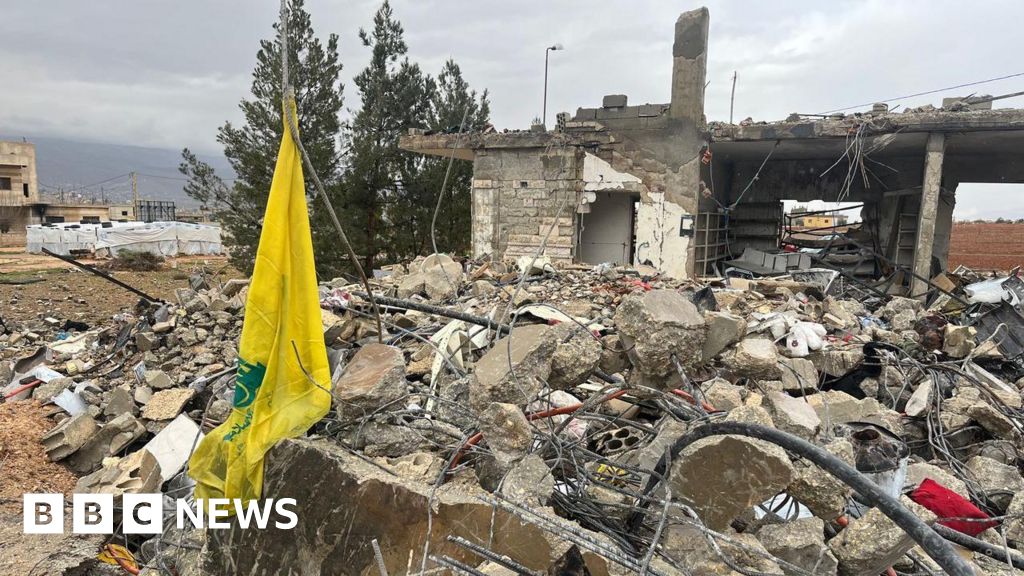
A devastating Israeli airstrike in northeastern Lebanon has ignited further condemnation and highlighted the profound civilian cost of the escalating cross-border conflict. Eight members of an extended family, including three young children, perished in the blast in the town of Younine, an incident that has drawn starkly contrasting narratives from the Israeli military and local residents, deepening the humanitarian crisis gripping the region.
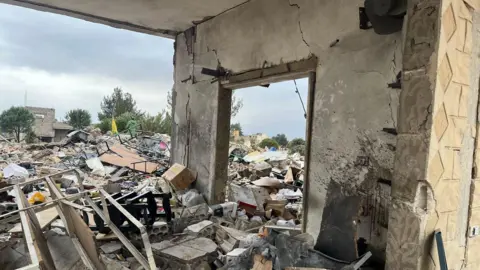
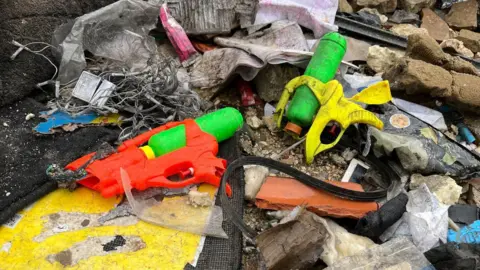
The strike, which occurred on a Wednesday evening as families gathered for the traditional Ramadan fast-breaking meal, Iftar, obliterated a residential home and an adjacent shop. The scene, later visited by international observers, depicted a landscape of utter destruction: a pile of shattered concrete and twisted metal, interspersed with poignant reminders of lost lives – children’s toys, confectionery wrappers, and household effects. While the Israel Defense Forces (IDF) asserted the target was "Hezbollah terrorist infrastructure" with operatives present, eyewitnesses and relatives on the ground vehemently denied any military presence, insisting the victims were entirely civilian. This divergence in accounts underscores the inherent complexities and tragic consequences of modern conflict, where the lines between combatant and non-combatant often blur under the fog of war.
The town of Younine, situated in the northeastern Bekaa Valley, is geographically distinct from the more frequently targeted southern Lebanese border region. This particular strike represents a significant expansion in the geographical scope of Israeli military operations, demonstrating a willingness to strike deeper into Lebanese territory. Historically, Israeli retaliatory actions against Hezbollah have concentrated on southern Lebanon, the eastern Bekaa Valley, and the Dahiyeh suburbs of Beirut – areas known as strongholds of the Iran-backed Shia Muslim group. The targeting of Younine, however, signals an intensification and broadening of the conflict’s reach, impacting communities previously less directly exposed to the immediate front lines.
According to figures from the Lebanese health ministry, the overall casualty count from Israeli military actions has now surpassed 800 individuals. This grim tally includes at least 12 healthcare workers reportedly killed in a strike on a medical facility. The IDF, acknowledging reports of the medical center incident, stated it was under review, reiterating its official stance that its operations are directed solely against Hezbollah’s military capabilities, not against the civilian population of Lebanon. However, the consistent occurrence of civilian casualties, as seen in Younine and other locations, casts a long shadow over these assurances and fuels widespread local resentment.
Local testimonies from Younine paint a harrowing picture of the strike’s immediate aftermath. A shepherd, who had been at the family’s shop just half an hour before the explosion, recounted rushing back to find the building flattened and human remains scattered across the road. His traumatic experience of collecting body parts and passing them to first responders speaks to the brutal reality confronting residents. He described his daughter, a friend of one of the child victims, as deeply traumatized, unable to eat or drink properly since the incident. Another resident, a Syrian refugee woman living in a nearby tent, expressed profound shock, highlighting her reliance on the family’s shop for credit and emphasizing their reputation as "decent and religious" people with no known links to military activity. Such accounts collectively challenge the official Israeli narrative, presenting a compelling argument for the civilian nature of the casualties.
The physical evidence discovered amid the wreckage further complicated the narrative. Alongside the typical debris of a destroyed home, investigators observed everyday items like cartons of yogurt, bottles of soft drinks, children’s clothing, and toys – all hallmarks of a civilian dwelling. A framed photograph of Iran’s first supreme leader, Ayatollah Ruhollah Khomeini, partially buried in rubble, pointed to the family’s religious and cultural affiliations, common within Lebanon’s Shia community, but not inherently indicative of direct military involvement.
Hassan al-Tahan, whose brother Ali Abbas owned the property, provided a detailed account of the ill-fated Iftar gathering. He explained that three related families were sharing the meal, a common practice of communal gathering. His description of the immediate aftermath, witnessing something "never seen before," underscores the destructive power of the strike. While acknowledging the general support for the "resistance" against Israel prevalent in the area, Tahan adamantly maintained that his relatives were civilians, not Hezbollah operatives. He asserted that a subsequent inspection by the Lebanese army found "no military items or weapons" at the scene, directly contradicting the IDF’s claims of targeting a Hezbollah facility. "The Hezbollah facility turned out to be this civilian home," Tahan stated, "There were kids, women, guys – those are the people who were martyred." This assertion from a local official, confirming the Lebanese military’s findings, adds weight to the civilian casualty claim and calls into question the precision of the Israeli targeting.
The IDF’s consistent justification for its actions rests on the premise that Hezbollah deliberately embeds its military infrastructure within civilian areas, effectively using the population as human shields. This tactic, if true, presents a significant challenge for any military force operating under international humanitarian law, which mandates distinction between combatants and civilians, and proportionality in attack. The IDF states it "takes the possible steps to mitigate harm to civilians" and calls on residents to "distance themselves from the organisation’s terrorist infrastructure for their own safety." However, the effectiveness and ethical implications of this approach are severely tested when strikes result in significant civilian casualties, especially when local populations deny the presence of military assets.
The broader context of the conflict between Israel and Hezbollah is rooted in decades of animosity, intensified significantly following the October 7th attacks by Hamas on Israel. Hezbollah, a powerful non-state actor with significant political and military influence in Lebanon, has engaged in cross-border exchanges with Israel in solidarity with Hamas and in response to perceived Israeli provocations. These exchanges, initially confined to border areas, have steadily escalated in intensity and geographical reach. Hezbollah’s arsenal, believed to include tens of thousands of rockets and missiles, poses a substantial threat to Israeli population centers, while Israel’s superior air power gives it the capacity to strike deep into Lebanon. The Younine strike, therefore, is not an isolated incident but a critical data point in a dangerous trajectory of escalating violence.
The human cost extends beyond immediate fatalities. The psychological trauma inflicted on survivors, especially children, is immense. Displacement, destruction of homes and livelihoods, and the constant fear of future strikes contribute to a profound humanitarian crisis in Lebanon, a country already grappling with severe economic instability and a fragile political system. Each civilian death, particularly those of children, risks further radicalizing communities and deepening animosity, potentially serving as a recruitment tool for armed groups. Hassan al-Tahan’s declaration, pulling a yellow Hezbollah scarf from his pocket and stating, "Even if we were not militarily affiliated before… From today, we are the soldiers of Hezbollah and proud of it," exemplifies this dangerous dynamic. Such statements underscore how perceived injustices and civilian casualties can galvanize support for militant factions, perpetuating cycles of violence.
From an international legal perspective, the incident in Younine raises critical questions about adherence to the principles of distinction, proportionality, and precautions in attack, enshrined in international humanitarian law. While armed groups operating within civilian populations pose undeniable challenges, states are still obligated to take all feasible precautions to avoid, or at least minimize, civilian harm. The onus is on the attacking party to demonstrate that a target was indeed a legitimate military objective and that the anticipated civilian harm was not excessive in relation to the concrete and direct military advantage expected. The conflicting accounts from Younine highlight the immense difficulty in independently verifying such claims in real-time and post-strike, often leaving victims’ families and communities to grapple with devastating losses and unanswered questions.
The long-term implications of this escalating conflict are dire. It threatens to destabilize not only Lebanon but the wider Middle East, potentially drawing in regional and international actors. The precise targeting capabilities claimed by modern militaries are constantly scrutinized against the backdrop of civilian casualties, fueling debates about the ethics of warfare and the responsibility of state actors. As the shepherd in Younine poignantly asked amidst the rubble, "Is it acceptable that a young girl was burned to ashes? If they wanted a specific person, why kill the rest?" These questions resonate deeply, reflecting the enduring human tragedy at the heart of geopolitical conflicts and the urgent need for de-escalation and accountability to prevent further innocent lives from being lost. The strike on Younine serves as a stark reminder of the devastating human price paid when geopolitical tensions spill over into the lives of ordinary families.


 Safa Marwah
 Aura Kasih
 Ridwan Kamil