Lisa Mariana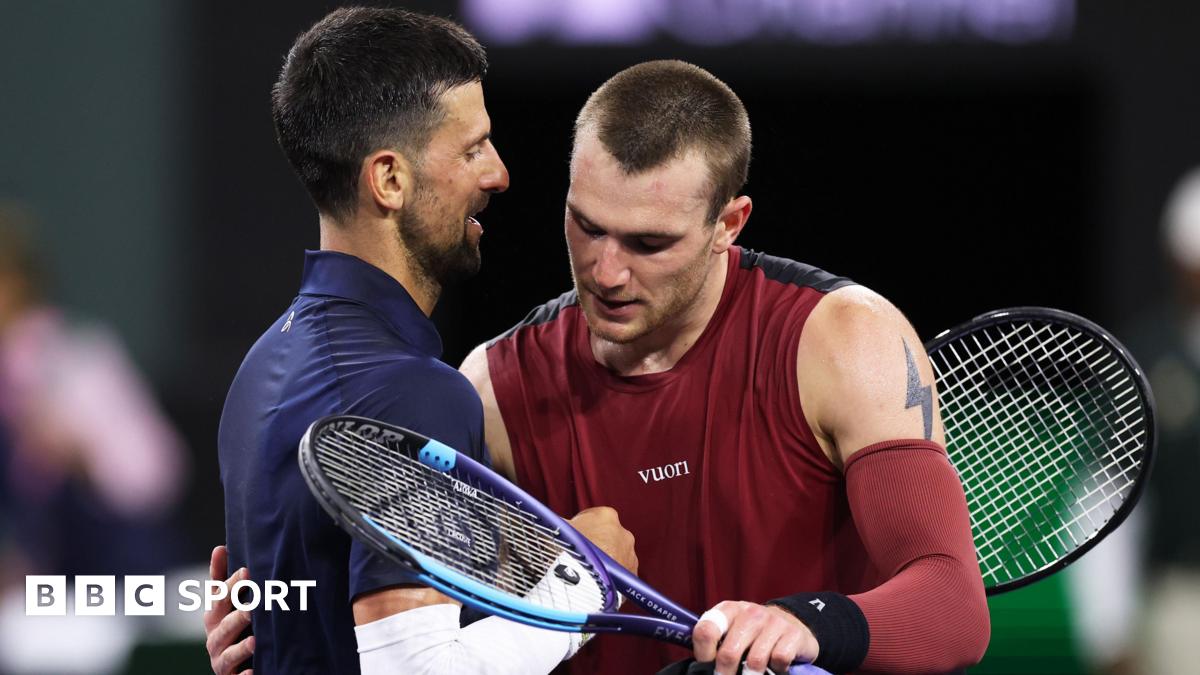
In a contest that reverberated through the professional tennis circuit, British talent Jack Draper delivered a performance of exceptional fortitude, conquering the legendary Novak Djokovic in a dramatic three-set encounter at the prestigious Indian Wells tournament, a result poised to significantly redefine his career trajectory. This monumental upset, achieved through sheer grit and strategic precision, marks a pivotal moment for the young Briton as he navigates a crucial phase of his professional development, particularly following a challenging period marked by injury.
The "fifth Grand Slam," as Indian Wells is often dubbed, consistently offers a platform for both established champions to assert their dominance and rising stars to announce their arrival. Draper’s triumph over the 24-time Grand Slam champion, a figure synonymous with tennis greatness, transcends a mere win; it is a profound declaration of his burgeoning capabilities and mental resilience. For Djokovic, a five-time victor at this desert oasis, the early exit represents a rare disruption to his customary deep runs in major events, prompting reflection on the evolving landscape of men’s tennis.
A Battle of Generations and Endurances
The third-round clash unfolded over two hours and thirty-five minutes of intense, high-stakes tennis, culminating in a 4-6, 6-4, 7-6 (7-5) victory for the Briton. From the outset, the encounter was characterized by contrasting styles and a stark generational divide. Djokovic, with his unparalleled experience and tactical acumen, sought to impose his rhythm, while Draper, renowned for his powerful left-handed serve and aggressive groundstrokes, aimed to disrupt the Serb’s meticulously constructed game.
The opening set saw Djokovic display the characteristic efficiency that has defined his illustrious career. His serve, a weapon often underestimated, operated at an impressive 87% points won on first serve, allowing him to dictate rallies and secure the crucial break needed to clinch the set 6-4. It appeared, for a period, that the familiar narrative of a top seed advancing with minimal fuss might unfold. However, Draper, despite dropping the first set, exhibited no signs of capitulation. Instead, he meticulously analyzed Djokovic’s patterns and began to adjust his own strategy, signaling a profound mental fortitude uncommon for a player relatively new to such high-pressure stages.
The second set witnessed a palpable shift in momentum and an elevation in the match’s quality. Draper, refusing to be intimidated, began to unleash his powerful forehand with greater conviction, consistently pushing Djokovic behind the baseline and extracting errors. His serve, which had shown glimpses of brilliance in the first set, became a more consistent threat, providing him with easier service holds and the confidence to attack on return games. The pivotal moment arrived when Draper secured a critical break, maintaining his composure to serve out the set 6-4, forcing a decider and igniting the crowd with the prospect of an upset.
The final set was a masterclass in psychological warfare and physical endurance. Both players pushed their limits, engaging in grueling rallies that tested every facet of their game. A particularly memorable exchange, a monumental 26-shot rally early in the decider, showcased the extraordinary athleticism and defensive prowess of both competitors. While Djokovic ultimately won that specific point, he later admitted the immense physical toll it exacted, conceding that it "cost me a break after" due to the subsequent depletion of energy. Draper capitalized on these fleeting moments of vulnerability, securing a crucial break of serve. Yet, serving for the match at 5-4, the immense pressure of the moment momentarily manifested, and Djokovic, drawing upon his vast reservoir of experience, broke back, sending the set into a decisive tie-break.
In the tie-break, often considered tennis’s ultimate test of nerve, Draper once again demonstrated his remarkable composure. Despite the emotional swing of being broken while serving for the match, he regrouped with astonishing speed and focus. He played with a controlled aggression, minimizing unforced errors while seizing opportunities to attack, ultimately securing the tie-break 7-5 and, with it, the most significant victory of his burgeoning career. The "physical battle," as Draper himself described it, had been won through a combination of raw talent, strategic execution, and an indomitable will.
Draper’s Ascent: A Catalyst for the Season
For Jack Draper, this victory transcends the immediate satisfaction of an upset. It represents a profound validation of his potential, particularly after an arduous eight-month period plagued by a debilitating arm injury. His journey back to competitive form has been a testament to his dedication and perseverance, making this win not just a triumph on the court, but a deeply personal milestone. Having played only one other ATP Tour event this season prior to Indian Wells, his performance here underscores a remarkable return to peak physical and mental condition.
Draper articulated the profound impact of this achievement, stating, "To beat Novak is something that is mind-blowing. I’ve watched him since I was a kid, idolizing him. Unbelievable respect for the player that he is." This sentiment highlights the emotional weight of defeating a childhood hero, a moment that few athletes ever experience. Beyond the emotional aspect, Draper keenly recognized the broader implications for his season: "I still want to play better, and feel better on the court, but I think for how long I have had off the court to come here and play three tough matches already and play that one, it’s huge for me. It’s something I will probably look back on in a few months and think this is a real big moment for me." This self-awareness, coupled with his ambition, suggests a maturity beyond his years, indicating that he views this win not as a culmination, but as a critical stepping stone.
Djokovic’s Perspective: The Inevitable Challenges of Sustained Dominance
For Novak Djokovic, an early exit from a Masters 1000 event is a rare occurrence and inevitably invites scrutiny. While his unparalleled success has accustomed fans and analysts to his relentless march through tournaments, even the greatest champions face moments of vulnerability. His candid assessment of the match, particularly regarding the energy expenditure on the 26-shot rally, offers insight into the fine margins at the elite level. "It was great winning that point in that game, but I just ran completely out of the gas. I got the crowd backing me and I felt the energy. It was, like, ‘maybe I’m going to take this one’. It was so close, so close. I mean, just unfortunate few mistakes from my side," he reflected.
Djokovic’s gracious praise for Draper – "He is playing at a great level. Just, overall, a great player, great guy" – speaks to the respect he holds for emerging talent. This defeat, while undoubtedly disappointing for a player of his competitive drive, is unlikely to derail his broader season objectives. For an athlete of his stature and age, managing physical demands across a long season, particularly after a deep run to the Australian Open final, becomes a critical strategic consideration. Such early exits, while unexpected, can sometimes serve as valuable learning experiences, prompting tactical adjustments or a renewed focus ahead of future major events.
Broader Implications and Future Trajectories
Draper’s triumph injects a significant dose of excitement and unpredictability into the Indian Wells tournament. It validates the growing sentiment that a new generation of talent is increasingly capable of challenging the established hierarchy. For the ATP Tour, such upsets are vital, showcasing the depth and competitive spirit that drives the sport.
The victory will undoubtedly provide a substantial boost to Draper’s ranking, which, while respectable at world number 14, belies his true potential when fully fit and firing. More importantly, it provides an immense psychological advantage, equipping him with the belief that he can consistently compete and win against the very best. This confidence is an invaluable asset for any athlete aiming for the pinnacle of their sport, and it will be crucial as he navigates the remainder of the season, particularly the upcoming clay and grass court swings.
Looking ahead, Draper’s next challenge is a formidable one: a quarter-final clash against former world number one Daniil Medvedev. This matchup presents another opportunity for Draper to test his mettle against an elite, top-tier opponent known for his relentless defensive skills and unconventional game. Should Draper continue his impressive run, it would further solidify his position as a serious contender on the tour. His progress is also mirrored by fellow Briton Cameron Norrie, who has also advanced to the quarter-finals, setting up an intriguing encounter with world number one Carlos Alcaraz. The strong showing by both British players at Indian Wells underscores a promising period for British men’s tennis.
For Djokovic, the focus will undoubtedly shift to preparing for the clay court season, where he will aim to fine-tune his game ahead of the French Open, a tournament where he holds multiple titles. While this early exit is a minor setback, it is part of the ebb and flow of a long and demanding professional season. The broader narrative remains one of his continued pursuit of Grand Slam records, but also of the relentless challenge posed by a hungry, talented generation eager to carve out their own legacies. Jack Draper’s win at Indian Wells serves as a powerful reminder that in professional tennis, the torch is constantly being contested, with each new season bringing fresh narratives and the emergence of compelling new contenders.




 Ayu Aulia
 Ridwan Kamil
 Safa Marwah
 Aura Kasih