Safa Marwah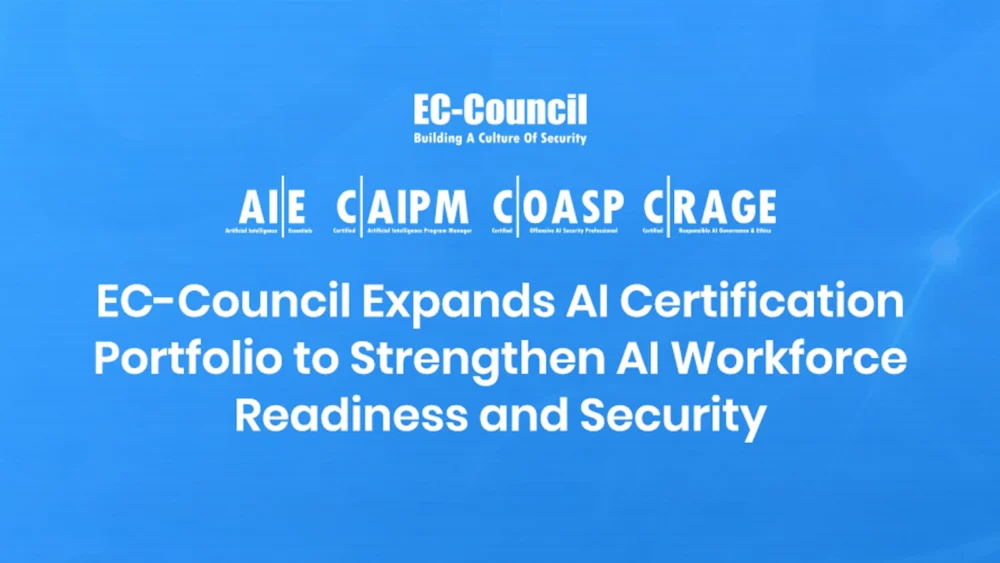
A significant strategic initiative has been launched by EC-Council, a global leader in applied cybersecurity education, through the introduction of its Enterprise AI Credential Suite and a comprehensively updated Certified CISO v4 program. This dual offering directly addresses the widening chasm between the accelerating adoption of artificial intelligence technologies and the critical need for a skilled workforce capable of managing, securing, and governing these advanced systems amidst escalating global AI risk exposure, projected at $5.5 trillion, and a substantial domestic demand for reskilling 700,000 U.S. professionals.
This launch represents the most expansive single portfolio enhancement in EC-Council’s quarter-century history, underscoring a proactive stance against a multifaceted challenge that transcends mere technological solutions. The rapid proliferation of AI across industries has created a structural imbalance, where the velocity of technological integration far outstrips the development of human capital equipped to operationalize, safeguard, and oversee these transformative tools. This imbalance not only stifles innovation but also introduces significant vulnerabilities that could undermine economic stability and national security.
The timing of EC-Council’s new offerings aligns seamlessly with pressing U.S. national priorities, particularly those articulated in recent executive directives focused on workforce development and the responsible deployment of AI. Executive Order 14179, alongside the workforce development pillar of the July 2025 AI Action Plan, and Executive Orders 14277 and 14278, collectively underscore the imperative to broaden AI education pathways and cultivate job-relevant proficiencies across diverse professional and skilled-trade sectors. This policy emphasis reflects a growing recognition that AI is transitioning from experimental pilot projects to foundational elements of daily operations and strategic decision-making within organizations nationwide.
The urgency of this transformation is palpable, manifesting in both substantial economic exposure and pronounced workforce capacity deficits. Research from IDC posits that unmitigated AI risk could escalate to a staggering $5.5 trillion globally, encompassing financial, reputational, and operational repercussions. Concurrently, an analysis by Bain & Company highlights a projected shortfall of 700,000 individuals requiring reskilling in AI and cybersecurity within the United States alone. This talent gap is not merely a recruitment challenge but a fundamental impediment to sustained economic growth and technological leadership.
Further corroborating this critical skills deficit, both the International Monetary Fund (IMF) and the World Economic Forum (WEF) have identified workforce readiness – rather than mere access to technology – as a primary limiting factor for AI-driven productivity and expansion. As AI integration accelerates across an increasingly diverse range of sectors, the bottleneck created by an insufficiently trained workforce becomes more pronounced, threatening to curtail the full economic and societal benefits promised by these advanced technologies.
The proliferation of AI also brings with it a commensurately rising tide of security pressures. A recent survey revealed that an alarming 87 percent of organizations have reported experiencing AI-driven cyberattacks, indicating a sophisticated and evolving threat landscape. The volume of generative AI traffic has surged by an astounding 890 percent, dramatically expanding potential attack surfaces that many enterprise security teams are still struggling to comprehend and adequately defend. This escalating threat is compounded by the highly concentrated nature of AI talent, with 67 percent of the global AI workforce residing in just 15 U.S. cities, and women representing a mere 28 percent of this critical talent pool. These statistics underscore persistent access and participation disparities at a time when demand for AI expertise is intensifying exponentially.
"The trajectory of AI is shifting decisively from mere experimentation to becoming an integral part of organizational infrastructure, demanding a parallel evolution of the professional workforce," stated Jay Bavisi, Group President of EC-Council. "These meticulously designed programs are engineered to equip professionals with tangible capabilities across the entire spectrum of AI adoption, security, and governance, thereby enabling organizations to scale their AI initiatives with unwavering confidence and clearly defined accountability." This statement encapsulates the strategic imperative behind EC-Council’s comprehensive new offerings.
Architecting AI Competency: Role-Aligned Certifications
The newly introduced Enterprise AI Credential Suite is meticulously structured to mirror the practical development and deployment of AI capabilities within real-world environments. Its foundational element, Artificial Intelligence Essentials (AIE), establishes a baseline for practical AI fluency and promotes responsible usage across diverse professional roles. This foundational understanding is synergistically supported by EC-Council’s proprietary Adopt. Defend. Govern. (ADG) framework, which provides a comprehensive blueprint for the operationalization of AI at scale.
The ADG framework delineates a three-pronged approach essential for effective AI integration:
- Adopt: This pillar focuses on preparing teams for the deliberate deployment of AI, emphasizing thorough readiness assessments, strategic planning, and the implementation of robust safeguards. It involves understanding AI’s potential, identifying appropriate use cases, and ensuring that organizational infrastructure and personnel are prepared for its integration.
- Defend: This critical component addresses the imperative of securing AI systems against a new generation of sophisticated threats. This includes mitigating risks such as prompt injection, where malicious inputs manipulate AI behavior; data poisoning, which corrupts training data to compromise model integrity; model exploitation, where adversaries uncover and exploit vulnerabilities in AI algorithms; and AI supply-chain compromise, targeting the various components and stages of AI development and deployment.
- Govern: The governance pillar is dedicated to embedding accountability, rigorous oversight, and proactive risk management into AI systems from their inception. This encompasses establishing ethical guidelines, ensuring regulatory compliance, defining clear lines of responsibility, and implementing continuous monitoring and auditing mechanisms to maintain control and trust.
Within this overarching ADG structure, the Enterprise AI Credential Suite introduces four new role-based certifications. While specific titles for these certifications are not publicly detailed, their design directly targets distinct workforce needs spanning the entire AI lifecycle. These likely include specialized roles such as AI Adoption Specialists, focused on strategic integration and ethical deployment; AI Security Analysts, tasked with identifying and neutralizing AI-specific cyber threats; AI Governance, Risk, and Compliance (GRC) Professionals, ensuring adherence to regulatory frameworks and ethical standards; and potentially AI Operations Specialists, managing the day-to-day functioning and optimization of AI systems. These tailored programs aim to bridge the specific skill gaps identified within the AI ecosystem, ensuring that professionals can effectively contribute to every stage of AI development and deployment.
Elevating Executive Leadership: Certified CISO v4
Complementing the new AI certifications, the updated Certified CISO v4 program significantly enhances executive cyber leadership education, specifically tailored for navigating the complexities of AI-driven risk environments. As intelligent systems increasingly become interwoven with core business operations and influence critical security decision-making processes, the role of a Chief Information Security Officer (CISO) demands an evolved skill set.
"Security leaders are now faced with the profound responsibility of overseeing systems that possess the capacity to learn, adapt, and influence organizational outcomes with unprecedented speed and scale," Bavisi further elaborated. "Certified CISO v4 is meticulously crafted to equip these leaders with the foresight and capabilities required to manage AI-driven risk with unparalleled clarity, to fortify governance structures, and to render highly informed decisions when the stakes, and accountability, are at their highest." This comprehensive update prepares CISOs to understand not just the technical aspects of AI security but also the strategic, ethical, and legal dimensions of integrating AI into enterprise operations. It emphasizes developing frameworks for AI risk assessment, establishing AI ethics committees, and ensuring robust data privacy measures, all crucial for maintaining organizational resilience and trust in an AI-powered world.
Broader Strategic Implications and Future Outlook
EC-Council’s expanded portfolio extends beyond individual skill enhancement, holding significant strategic implications for national security and economic competitiveness. The organization’s long-standing collaboration with government and defense entities, evidenced by its existing DoD 8140 baseline certification recognition, underscores the critical national importance of AI security and workforce readiness. A robust and skilled AI workforce is indispensable for maintaining national technological superiority, defending against sophisticated cyber threats from state and non-state actors, and ensuring the resilience of critical infrastructure in an increasingly AI-dependent global landscape.
These certifications are poised to influence industry standards, potentially inspiring other training providers to align with comprehensive frameworks like ADG. This could foster a more standardized and rigorous approach to AI education across the industry. For individuals, these programs offer clearly defined career pathways into high-demand AI and cybersecurity roles, providing a tangible route for professional advancement and economic mobility. Furthermore, by making advanced AI training more accessible and structured, EC-Council’s initiative can play a vital role in addressing the persistent talent concentration and diversity gaps within the AI sector, promoting a more inclusive and geographically distributed pool of AI experts.
In the long term, EC-Council’s commitment to continuously evolving its educational offerings positions it as a pivotal force in shaping the future trajectory of AI education and cybersecurity. As AI technologies continue their rapid evolution, the demand for adaptive, skilled professionals will only intensify. By proactively developing comprehensive, role-aligned certifications, EC-Council is not only responding to current market needs but also anticipating future challenges, thereby contributing significantly to building a resilient, secure, and innovative AI ecosystem.
To explore the full spectrum of training and certification opportunities offered, individuals and organizations are encouraged to visit the EC-Council AI Courses library. This strategic expansion marks a critical milestone in preparing the global workforce to harness the transformative power of AI responsibly and securely.




 Ridwan Kamil
 Aura Kasih
 Lisa Mariana