
 Aura Kasih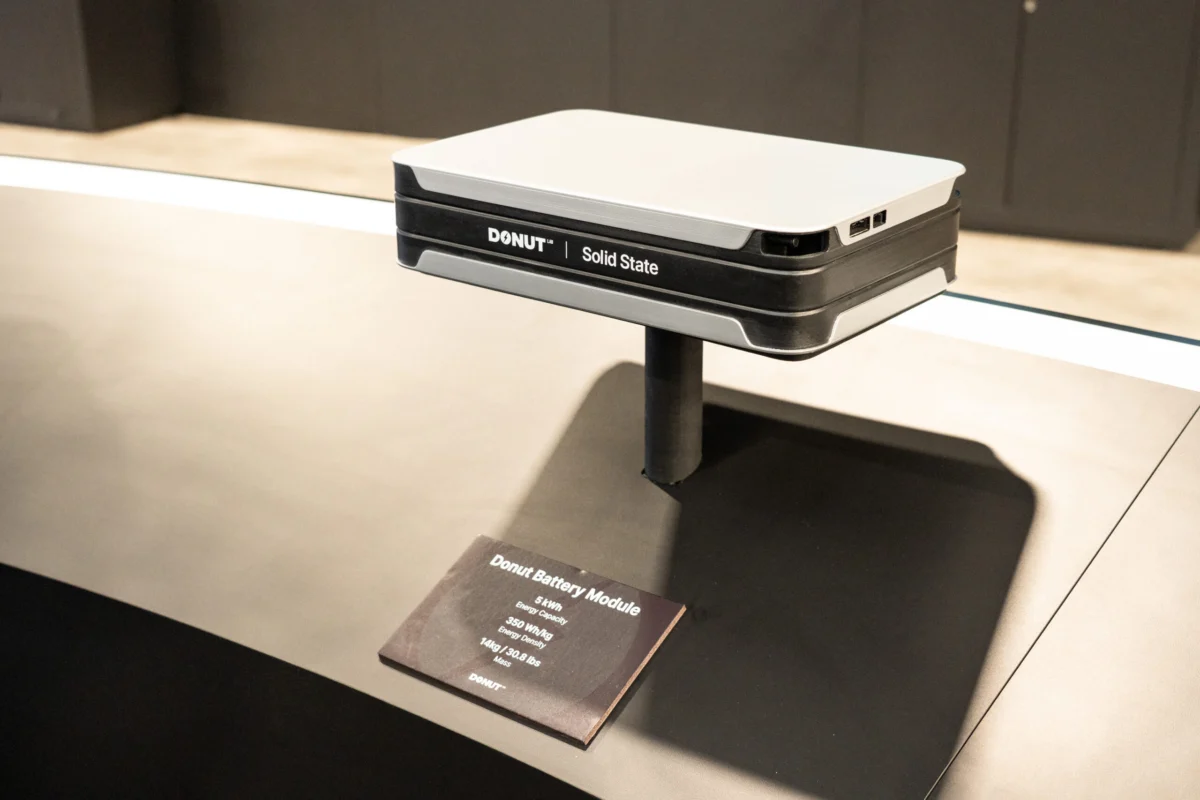
In a significant development for the nascent field of solid-state battery technology, Donut Lab has presented compelling evidence of its proprietary battery’s safety and resilience, even when subjected to considerable damage. While recent independent testing has revealed a substantial decline in charge-holding capacity following physical compromise, the company highlights the absence of thermal runaway or fire, positioning this outcome as a critical validation of its design principles. This latest assessment, conducted by Finland’s VTT Technical Research Centre, adds another layer to the ongoing scrutiny of Donut Lab’s claims regarding the real-world viability of its solid-state energy storage solutions.
The impetus for this particular examination stemmed from an anomaly observed during prior extreme heat endurance tests. In those trials, the protective casing of Donut Lab’s battery pack experienced a breach in its vacuum seal. This compromised state prompted researchers to investigate how the solid-state cell would perform under conditions that, in conventional lithium-ion batteries, are known to precipitate catastrophic failures, such as thermal runaway and ignition. The core objective was to ascertain whether Donut Lab’s technology could mitigate these severe risks, even when its structural integrity was compromised.
The experimental protocol involved a rigorous series of charge-discharge cycles designed to stress the battery under varying conditions. Initially, a baseline performance assessment was established through five cycles at a 1C rate, corresponding to a current of 26 amperes. Subsequently, the battery was subjected to a far more demanding regime: fifty cycles at a high-stress 5C rate, equivalent to 130 amperes. This aggressive testing phase was intended to simulate demanding operational scenarios and accelerate any latent degradation. Following this high-stress period, a final baseline test of five cycles at the initial 1C rate was performed to quantify the cumulative impact on the battery’s performance metrics.
The observed degradation in performance was indeed significant. Prior to the stress tests, the battery possessed an energy capacity of 24.7 Amp-hours. Post-testing, this figure plummeted to 11.2 Amp-hours, representing a reduction of approximately 55 percent. Concurrently, the energy efficiency, initially measured at 89.6 percent, declined to 83 percent. Furthermore, physical examination revealed a noticeable increase in the battery pack’s thickness, an indication of internal structural changes, with a documented rise of 17 percent. These metrics underscore the considerable impact of the damage sustained, particularly the loss of the vacuum seal, which likely exacerbated internal electrochemical processes leading to accelerated degradation and the observed swelling.
Despite the pronounced decline in charge retention and efficiency, Donut Lab emphasizes that the battery did not exhibit any hazardous behaviors. The company articulated this outcome as a testament to its "graceful failure" mode, asserting that the battery "continues to operate safely at reduced capacity rather than posing danger to the user." This perspective positions the battery’s inability to hold a substantial charge under damaged conditions not as a failure, but as a successful demonstration of inherent safety features that differentiate it from conventional lithium-ion chemistries. The absence of temperature spikes and fire risk, in a scenario that could have been perilous for traditional batteries, is presented as a crucial validation of the solid-state architecture’s inherent safety advantages.
However, this series of tests, while informative regarding safety under duress, also represents the closest the Donut Lab battery has come to a prolonged cycle life evaluation, and critically, this occurred under compromised conditions. The company has yet to provide independent verification of its extraordinary claims regarding the battery’s long-term durability, specifically its purported ability to withstand an astonishing 100,000 charge-discharge cycles. This longevity, if substantiated, would translate to an operational lifespan of approximately 270 years, vastly exceeding the typical 1,000 to 2,000 full cycles that current electric vehicle batteries can endure before significant capacity degradation. The absence of comprehensive, independently validated cycle life data remains a critical gap in the assessment of Donut Lab’s technology.
Equally significant is the lack of independent verification for Donut Lab’s claimed energy density of 400 Watt-hours per kilogram. This metric is fundamental to evaluating a battery’s potential for widespread adoption, particularly in weight-sensitive applications like electric vehicles. The test required to confirm this figure—a straightforward measurement of the cell’s mass and its energy output—appears relatively simple to conduct. The delay or omission in seeking such independent validation raises questions about the company’s strategy and the robustness of its claimed performance specifications.
The ongoing series of independent tests, while revealing, also highlight the critical need for comprehensive, unbiased assessments across a spectrum of performance parameters. While Donut Lab’s recent results demonstrate a commendable safety profile when its battery is damaged, the core questions surrounding its long-term cycle life and volumetric/gravimetric energy density remain largely unanswered by independent scrutiny. The technology’s potential hinges not only on its ability to avoid catastrophic failure but also on its capacity to deliver sustained, high-performance energy storage over extended periods.
The development of solid-state batteries represents a paradigm shift in energy storage technology, promising enhanced safety, higher energy density, and faster charging compared to conventional lithium-ion batteries. These advancements are driven by the replacement of the liquid electrolyte with a solid material, which inherently reduces the risk of leakage, fire, and explosion. The potential benefits are immense, ranging from safer and longer-range electric vehicles to more reliable portable electronics and grid-scale energy storage solutions. However, the transition from laboratory prototypes to commercially viable products is fraught with technical and economic challenges. Manufacturers must overcome issues related to material cost, manufacturing scalability, interface stability between electrodes and the solid electrolyte, and long-term electrochemical performance.
Donut Lab’s approach of systematically subjecting its technology to independent testing is a positive step toward building credibility in a field often characterized by ambitious claims and speculative advancements. The results from VTT, while showing a significant capacity fade, underscore the potential for solid-state designs to offer a margin of safety not present in liquid electrolyte systems. The ability of the battery to endure physical damage without igniting is a crucial safety feature that could be a significant differentiator in the market. This is particularly relevant given the increasing demand for batteries in high-stress environments, such as automotive applications, where crash safety is paramount.
The observed swelling of the battery pack after the high-stress test, while a sign of degradation, is also an area that warrants further investigation. In solid-state systems, volume changes during electrochemical cycling can lead to mechanical stresses at the electrode-electrolyte interfaces, potentially causing delamination or cracking, which in turn reduces performance and lifespan. Understanding the precise mechanisms behind this swelling in Donut Lab’s specific material system will be crucial for future design optimizations. It is plausible that the compromised vacuum seal allowed ambient moisture or gases to ingress, contributing to internal chemical reactions that led to the observed physical changes.
The path forward for Donut Lab will likely involve addressing the existing gaps in its validation process. Comprehensive, long-term cycle life testing under standardized conditions, performed by multiple independent laboratories, is essential to substantiate its ambitious claims. Similarly, obtaining independent verification of its energy density figures will be critical for attracting investment and gaining market acceptance. The technological hurdles in solid-state battery development are substantial, and only through transparent and rigorous scientific validation can companies like Donut Lab demonstrate the true potential of their innovations and contribute to the realization of a more sustainable energy future. The industry will be closely watching as further data emerges, seeking to discern genuine breakthroughs from premature pronouncements.




 Safa Marwah

 Lisa Mariana