
 Aura Kasih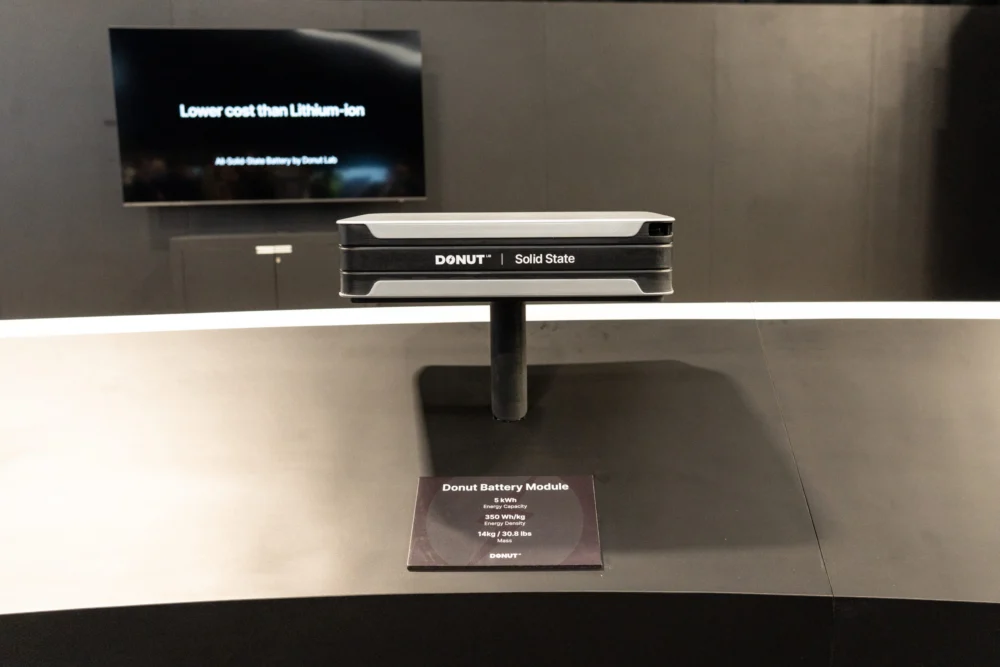
Finnish innovator Donut Lab has released compelling independent test results designed to decisively address persistent questions regarding the fundamental nature of its recently unveiled solid-state battery technology, aiming to definitively distinguish it from high-performance supercapacitors.
The nascent stages of Donut Lab’s solid-state battery announcement earlier this year were met with a degree of skepticism within the energy storage community. A primary point of contention centered on whether the claimed performance metrics, particularly rapid charge and discharge capabilities, were indicative of a sophisticated solid-state battery or rather a highly optimized supercapacitor. While both technologies offer swift energy transfer, their core functionalities, energy density, and long-term storage characteristics are fundamentally divergent. Supercapacitors excel at delivering bursts of power but struggle with sustained energy storage, whereas batteries are engineered for extended energy reservoirs. The critical question therefore arose: was Donut Lab’s offering a genuine breakthrough in battery chemistry, or a sophisticated iteration of supercapacitor technology?
Donut Lab has now presented data from a third-party assessment, conducted by the esteemed VTT Technical Research Centre of Finland, a state-owned entity renowned for its rigorous scientific evaluations. This latest examination focused specifically on the battery’s ability to retain charge over an extended period of inactivity, a critical differentiator between batteries and supercapacitors. This charge retention test follows a series of earlier independent validations commissioned by Donut Lab, each designed to scrutinize and substantiate the company’s ambitious claims about its novel energy storage solution.
"The performance specifications attributed to the Donut battery have led many to surmise that it must be a supercapacitor," stated Marko Lehtimäki, CEO of Donut Lab, in a recent video address. "Our objective today is to unequivocally demonstrate that this is not the case."
The methodology employed by VTT involved subjecting Donut Lab’s solid-state cell to a battery testing apparatus and allowing it to remain in an idle state for a duration of ten days. During this period, voltage measurements were meticulously recorded at ten-second intervals. The findings revealed a remarkable degree of stability, with the cell retaining an impressive 97.7 percent of its stored energy over the entire ten-day idle interval.
While a minor initial fluctuation was observed, with VTT noting a voltage decrease from an initial 3861 millivolts (mV) to 3722mV—a change of -128mV—within the first hour. This initial dip was attributed by the researchers to a necessary chemical stabilization process inherent in new battery chemistries. Beyond this initial adjustment, the cell demonstrated exceptional energy conservation, a characteristic that Donut Lab asserts directly refutes the prevailing theories suggesting its technology is a supercapacitor.
In contrast, supercapacitors are inherently prone to significant energy loss through self-discharge when left idle for comparable periods. Their design architecture prioritizes rapid energy transfer over long-term storage, meaning their voltage levels typically decline substantially within days or even weeks. The VTT test results explicitly confirm "normal battery-type charge retention – not the rapid linear discharge characteristic of supercapacitors," as stated by the laboratory. This distinction is crucial, as it highlights a fundamental difference in how energy is held and released.
Donut Lab emphasizes the paramount importance of dispelling these misconceptions to foster clarity and credibility around its solid-state battery technology. The company’s claims are considered by many industry experts to be exceptionally ambitious, bordering on the revolutionary. Solid-state batteries are widely regarded as the "holy grail" of energy storage, promising to overcome the limitations of current lithium-ion technology in electric vehicles (EVs). Such advancements could enable EVs to achieve significantly greater ranges and vastly reduced charging times, while simultaneously mitigating the persistent concerns surrounding fire risks and thermal runaway events associated with conventional lithium-ion batteries.
The specific performance benchmarks set by Donut Lab are indeed noteworthy. The company asserts that its battery achieves an energy density of 400 watt-hours per kilogram (Wh/kg). For context, contemporary lithium-ion batteries typically range between 200 and 300 Wh/kg, meaning Donut Lab’s offering could potentially double the energy storage capacity for a given weight. Furthermore, the startup claims its battery can be fully recharged in under ten minutes and boasts an impressive lifespan of 100,000 charge cycles. This far surpasses the typical lifespan of current lithium-ion batteries, which generally range from 1,500 to 3,000 cycles. These figures, if validated, represent a paradigm shift in energy storage capabilities.
Despite the encouraging results from the charge retention test, several critical aspects of Donut Lab’s solid-state battery technology remain subjects of ongoing inquiry. A comprehensive independent analysis of the battery’s underlying chemistry has yet to be publicly disclosed. Moreover, the precise mechanisms by which Donut Lab addresses the notorious "dendrite issue" remain an area requiring further elucidation. Dendrite formation, a phenomenon where microscopic crystalline structures grow from the anode across the solid-state electrolyte to the cathode, can lead to electrical shorts and compromise battery safety and longevity. It is anticipated that future reports within Donut Lab’s "I Donut Believe" series of independent assessments may provide further insights into these crucial technical challenges.
The implications of a truly high-performance, safe, and long-lasting solid-state battery are profound and far-reaching. Beyond the automotive sector, such technology could revolutionize portable electronics, grid-scale energy storage, aerospace applications, and numerous other fields where energy density, charging speed, and safety are paramount. The ability to store more energy in a smaller, lighter package, coupled with rapid replenishment capabilities, would unlock new possibilities for device design and operational efficiency. For electric vehicles, it could effectively eliminate range anxiety and significantly reduce the time required for recharging, making EV adoption even more attractive and practical for a broader consumer base.
The persistent skepticism surrounding Donut Lab’s claims, while understandable given the transformative nature of their purported breakthroughs, underscores the high bar for validation in the battery industry. The rigorous testing protocols, especially those conducted by independent, reputable institutions like VTT, are essential for building trust and facilitating the adoption of new technologies. The charge retention test, in particular, serves as a crucial piece of evidence in demonstrating the fundamental difference between a battery designed for sustained energy supply and a supercapacitor optimized for transient power delivery.
The solid-state battery landscape is highly competitive, with numerous research institutions and commercial entities striving to overcome the inherent technical hurdles. Key challenges include achieving high ionic conductivity within the solid electrolyte, ensuring robust interfacial contact between the electrodes and the electrolyte, managing volume changes during charge-discharge cycles, and, as mentioned, preventing dendrite formation. Successfully navigating these challenges is essential for commercial viability and widespread deployment.
Donut Lab’s approach of engaging independent third-party verification for each of its claimed performance metrics is a strategic move to build confidence. While the charge retention data addresses one critical aspect, the validation of energy density, cycle life, and the underlying chemistry will be equally vital. The company’s commitment to transparency through its "I Donut Believe" series suggests a deliberate strategy to systematically address these complex technical questions in the public domain.
The successful development and commercialization of a solid-state battery with the performance characteristics claimed by Donut Lab would represent a significant leap forward in energy storage technology. It would not only redefine the capabilities of electric vehicles but also have a cascading effect across multiple industries, accelerating the transition to a more sustainable and electrified future. The ongoing independent assessments will be closely watched by industry analysts, investors, and consumers alike as they seek to ascertain the true potential of this promising innovation. The journey from laboratory breakthrough to market reality is often arduous, but the initial results presented by Donut Lab offer a compelling glimpse into what could be a transformative future for battery technology.




 Ridwan Kamil
 Lisa Mariana


 Safa Marwah