Ayu Aulia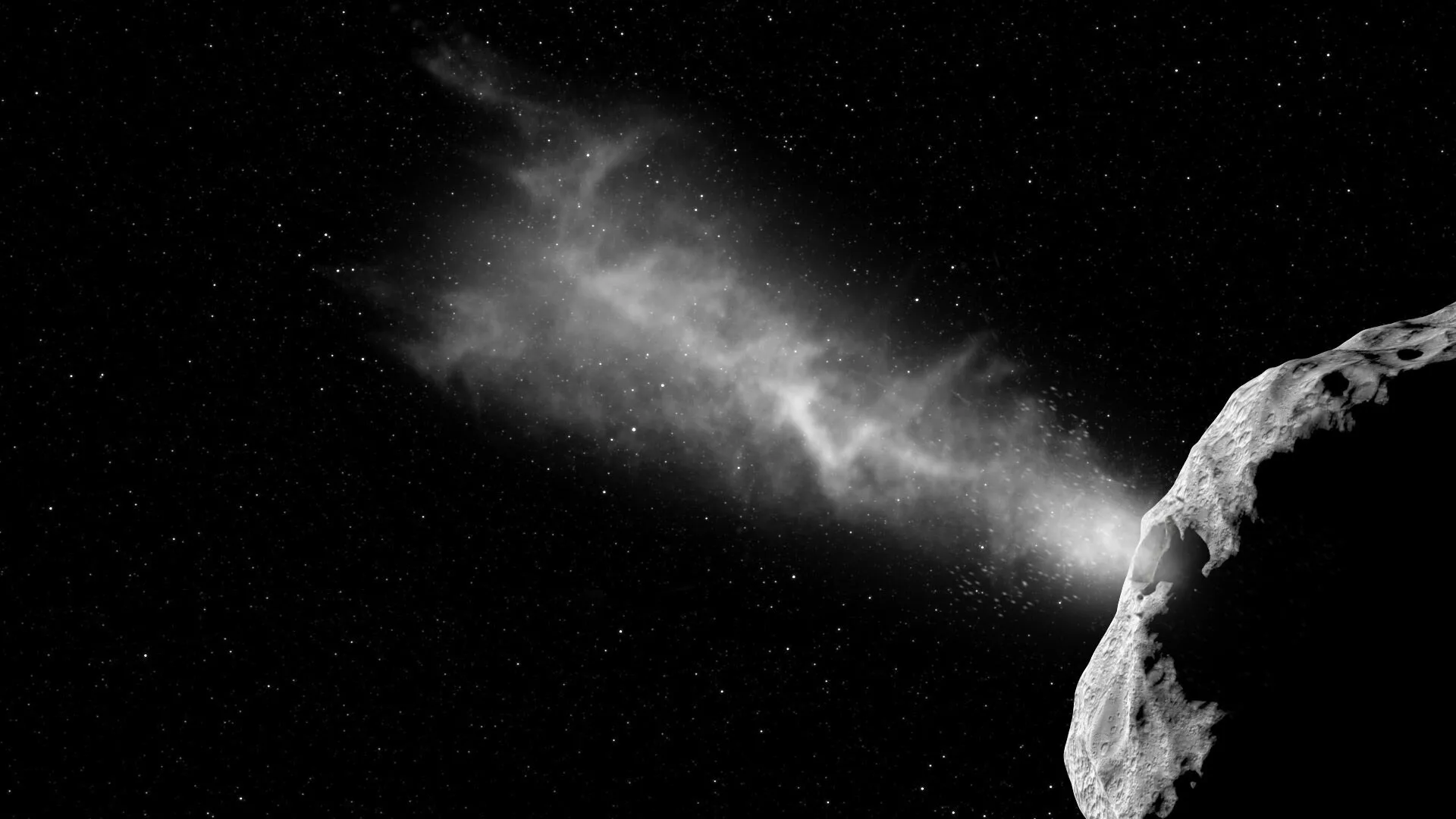
Recent scientific findings from NASA’s Double Asteroid Redirection Test (DART) mission have confirmed a pivotal achievement in planetary defense: the intentional modification of a celestial body’s orbital trajectory around the Sun. The precise impact of the DART spacecraft with the asteroid moonlet Dimorphos in September 2022 not only altered its path relative to its larger companion, Didymos, but crucially, also induced a measurable shift in the binary system’s heliocentric orbit. This groundbreaking demonstration offers compelling empirical validation for the kinetic impactor technique as a viable method for safeguarding Earth against potential future asteroid threats.
The DART mission, a monumental undertaking by NASA’s Planetary Defense Coordination Office, represented humanity’s inaugural full-scale demonstration of asteroid deflection technology. Its target, the Didymos-Dimorphos binary asteroid system, was carefully selected because it posed no threat to Earth, making it an ideal proving ground for this critical capability. Didymos, approximately 780 meters in diameter, hosts Dimorphos, a smaller moonlet measuring about 160 meters across, which orbits its larger partner in a tightly bound gravitational dance. Understanding the intricate dynamics of such binary systems is fundamental to predicting and, ultimately, altering their trajectories.
Prior to the DART impact, extensive observational campaigns had characterized the Didymos-Dimorphos system with high precision. This baseline data was indispensable for accurately measuring any post-impact changes. The primary goal of the mission was to demonstrate that a spacecraft could successfully intercept a small asteroid and impart sufficient momentum to alter its orbit. While earlier observations confirmed a significant change in Dimorphos’s orbital period around Didymos, the latest research, published in a leading scientific journal, reveals an even more profound implication: a modification of the entire system’s journey around the Sun.
This discovery marks a landmark moment in astronomical history, representing the first instance where human technology has measurably altered the solar orbit of a natural celestial object. Scientists meticulously tracked the post-impact movements of the asteroid pair, discerning a fractional, yet definitive, shift in the system’s 770-day orbital period around the Sun. This subtle alteration underscores the profound potential of kinetic impactors when deployed with sufficient foresight and precision, proving that even a small, targeted intervention can yield significant long-term deviations.
Dr. Thomas Statler, a prominent scientist specializing in solar system small bodies at NASA Headquarters, articulated the significance of this finding. He emphasized that while the immediate change to the solar orbit was minuscule, its cumulative effect over extended periods could be substantial enough to avert a collision course with Earth. The DART mission, therefore, not only validated kinetic impact as a viable defense mechanism but also demonstrated its applicability to binary asteroid systems, where impacting one component can influence the entire gravitationally linked pair.
A critical element contributing to the success of the DART mission was the phenomenon known as momentum enhancement. Upon impact, the DART spacecraft not only transferred its own kinetic energy to Dimorphos but also ejected a massive plume of rocky debris into space. This expulsion of material, akin to a rocket engine firing in reverse, imparted additional thrust to the asteroid. Researchers quantified this effect, determining that the momentum enhancement factor was approximately two, meaning the ejected debris effectively doubled the propulsive force generated by the spacecraft’s direct collision alone. This insight is invaluable for future mission planning, allowing engineers to design impactors and trajectory adjustments that maximize the deflection achieved.
Previous analyses had already confirmed that the collision shortened Dimorphos’s orbital period around Didymos by 33 minutes, reducing it from its original 12-hour cycle. The new research extends these findings by revealing that the impact also expelled sufficient mass from the binary system to slightly modify its path around the Sun. Specifically, the system’s heliocentric orbital period was altered by approximately 0.15 seconds. This minute change translates to an orbital speed adjustment of about 11.7 microns per second, or roughly 1.7 inches per hour, as highlighted by Rahil Makadia, the study’s lead author from the University of Illinois Urbana-Champaign. Such seemingly insignificant velocity changes, when compounded over vast astronomical distances and timescales, can indeed determine whether a hazardous object intersects Earth’s orbital path or safely bypasses it.
The implications of these findings for planetary defense are profound. While the Didymos system never posed a threat to Earth, and the DART experiment was designed to avoid creating one, the successful demonstration of orbital alteration provides a tangible blueprint for future defensive strategies. The core principle is that if a potentially hazardous asteroid is detected early enough—years or even decades before a projected close approach—a relatively small kinetic impactor could be dispatched to nudge it off course. Over time, that tiny initial deviation would accumulate into a sufficient trajectory change, ensuring the asteroid misses our planet.
To enhance humanity’s capacity for early detection, NASA is actively developing the Near-Earth Object (NEO) Surveyor mission. This initiative, managed by NASA’s Jet Propulsion Laboratory, will deploy the first space telescope specifically engineered for planetary defense. The NEO Surveyor is designed to search for difficult-to-detect near-Earth objects, including dark asteroids and comets that reflect minimal visible light, thereby expanding the inventory of known threats and extending the crucial lead time required for effective mitigation.
Achieving the extremely precise measurements necessary to confirm DART’s influence on both asteroids required a combination of advanced observational techniques. In addition to conventional radar and ground-based optical telescopes, researchers heavily relied on stellar occultations. A stellar occultation occurs when an asteroid passes directly in front of a distant star, briefly obscuring its light from Earth. By meticulously observing the exact timing and duration of this momentary disappearance from multiple vantage points, scientists can derive exceptionally precise data regarding the asteroid’s position, velocity, and even its physical dimensions.
Capturing these elusive events presents significant logistical challenges, as observers must be positioned precisely along a narrow predicted path where the asteroid will occult the star. This often necessitates deploying multiple observation stations, sometimes spread hundreds of miles apart. The DART research benefited immensely from the dedication of volunteer astronomers globally, who contributed to recording 22 stellar occultations between October 2022 and March 2025. This global collaborative effort, blending professional expertise with citizen science, was instrumental in generating the comprehensive dataset required for the orbital calculations. As Steve Chesley, a study co-lead and senior research scientist at JPL, noted, such work is highly dependent on weather conditions and frequently requires travel to remote locations with no guarantee of success, underscoring the invaluable commitment of these observers.
Beyond its primary objective, tracking the asteroids’ motion also provided valuable scientific insights into their physical properties. The density estimates derived from the post-impact observations suggest that Dimorphos is slightly less dense than previously hypothesized. This finding lends further support to the "rubble pile" hypothesis, which posits that Dimorphos likely formed from an accumulation of loose rocky material shed by a rapidly spinning Didymos, gradually coalescing under its own weak gravity. Understanding the internal structure and composition of asteroids is crucial for optimizing future deflection strategies, as a kinetic impactor would behave differently when striking a solid monolithic body versus a loosely aggregated rubble pile.
The DART mission, designed, built, and operated by the Johns Hopkins Applied Physics Laboratory for NASA’s Planetary Defense Coordination Office, represents a watershed moment in humanity’s technological evolution. It unequivocally demonstrated our capacity to intentionally alter the motion of a natural celestial object, moving the concept of planetary defense from theoretical models to empirical reality. This pioneering endeavor provides a tangible strategy for protecting Earth from potential asteroid impacts, reinforcing the global imperative for continued investment in space exploration, asteroid detection, and mitigation technologies. The success of DART not only secures a critical defense mechanism for our planet but also heralds a new era of proactive celestial stewardship.




 Lisa Mariana
 Ridwan Kamil
 Safa Marwah
 Aura Kasih