Lisa Mariana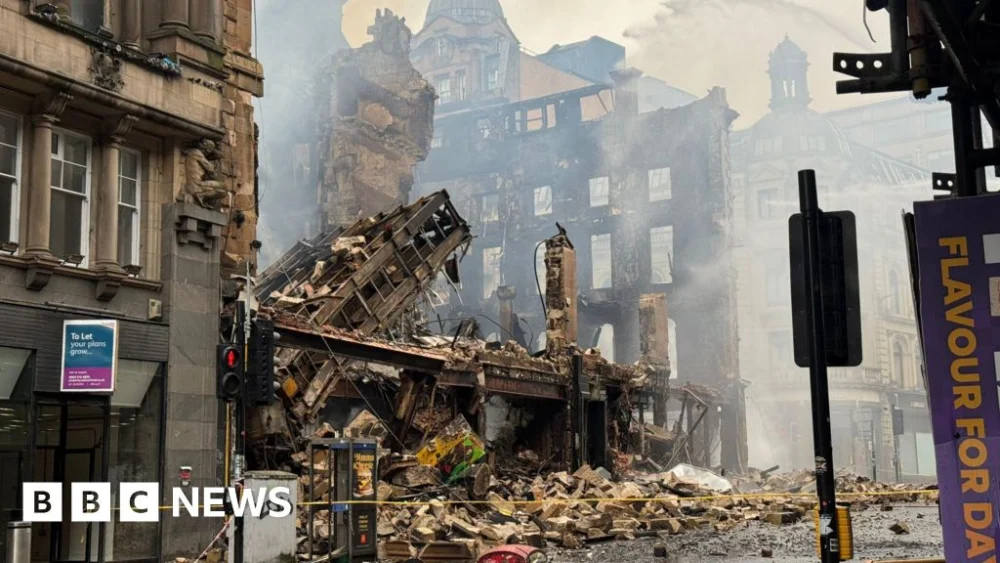
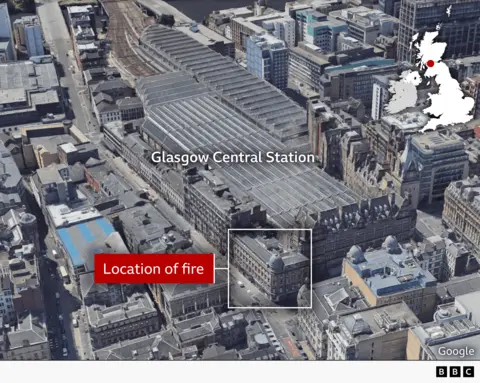
Glasgow Central Station, a pivotal transport artery for Scotland, remains indefinitely closed following a devastating fire that ravaged an adjacent historic edifice, plunging the city’s rail network into profound disruption and prompting concerns over urban infrastructure resilience. The inferno, which ignited in a commercial premises on Union Street, escalated rapidly, ultimately consuming a significant B-listed Victorian structure and necessitating an extensive, multi-agency response that continues to unfold days after the initial outbreak. The incident has not only brought Scotland’s busiest railway hub to a standstill but has also underscored the vulnerabilities of historic urban centres to such catastrophic events, with profound implications for daily commuters, regional connectivity, and the architectural legacy of Glasgow.
The conflagration originated on Sunday afternoon within a vape shop situated on Union Street, a bustling commercial thoroughfare intrinsically linked to the station’s main entrance. Eyewitness accounts and initial reports describe smoke billowing from the ground-floor establishment around 15:45 GMT, rapidly intensifying and spreading throughout the four-storey building known as Union Corner. This venerable structure, a prominent fixture at the intersection of Union Street and Gordon Street, predates the iconic Glasgow Central Station itself, having been erected in 1851, a full 28 years before the station’s grand opening in 1879. Its architectural significance is formally recognized by its B-listed status, designating it as a building of special interest and warranting efforts for its preservation. However, the ferocity of the blaze proved overwhelming; by Sunday evening, flames had engulfed the entirety of the building, culminating in the dramatic collapse of its front wall and the destruction of its distinctive corner dome, leaving behind a skeletal shell of charred remains and rubble.
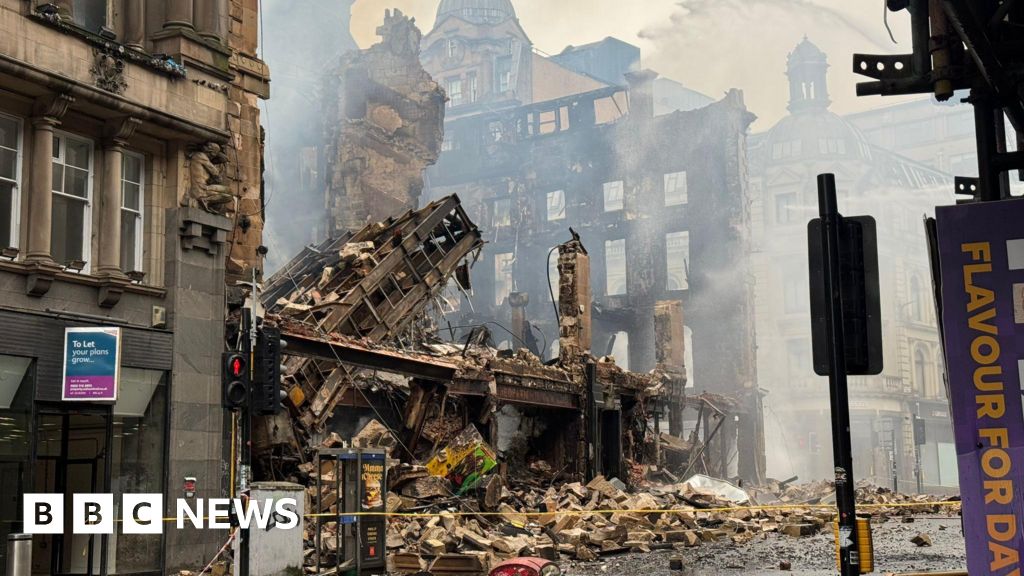
The immediate aftermath saw an immense deployment of emergency services. Six fire crews from the Scottish Fire and Rescue Service (SFRS) were initially dispatched, battling the rapidly spreading fire in challenging urban conditions. Police Scotland swiftly implemented extensive road closures around Union Street and Central Station, diverting traffic and pedestrians to ensure public safety and facilitate emergency operations. These closures, which include key arterial routes, have remained in effect, significantly impacting the city centre’s logistical flow and disrupting bus routes and pedestrian access to one of Glasgow’s most frequented areas. Union Street, in particular, serves as a crucial drop-off and pick-up point for numerous city centre passengers, compounding the travel chaos.
The operational fallout for the rail network has been immediate and severe. Glasgow Central Station, handling an average of 34 million passengers annually, is the primary gateway for rail travel across much of Scotland and to England. Its complete closure has severed vital links, forcing a comprehensive re-evaluation of national rail schedules. ScotRail, the primary operator for domestic services, confirmed the complete cessation of all services into and out of the station for Tuesday and indicated that significant disruption would persist for "several days." While high-level platforms remain inaccessible, low-level services have been partially rerouted, allowing trains to pass through the station to stop at nearby Argyle Street and Anderston stations, offering a limited alternative for some commuters. However, the majority of the scores of ScotRail services that typically utilise both high and low-level platforms are either cancelled or truncated.
Intercity operators have also felt the profound impact. Avanti West Coast, which operates services between Glasgow and London, has advised passengers that their tickets will be honoured on LNER services travelling between Edinburgh and London King’s Cross at no additional cost, highlighting the cascade effect of the disruption across the broader UK rail network. David Ross, Chief Operating Officer for ScotRail, publicly advised passengers to consult the ScotRail website and app for the latest service updates, appealing for patience from the travelling public during what he termed "very difficult circumstances." This sentiment underscores the immense logistical challenge of managing passenger flows and expectations amidst such an unprecedented closure of a major transport hub.
Beyond the immediate operational hurdles, the incident has triggered a complex and protracted recovery phase. The Scottish Fire and Rescue Service, having scaled back its initial, intensive response, continues to maintain a significant presence at the site. As of Tuesday, four fire engines and two high-reach vehicles remained actively engaged, primarily focusing on cooling persistent hotspots within the scorched stonework of the collapsed building. A critical component of this ongoing work involves close collaboration with structural engineers, who are meticulously assessing the stability of the remaining structure. The precarious nature of the damaged edifice poses a considerable risk, necessitating careful management of debris and potential further collapse, which directly impacts the timeline for reopening the adjacent station and surrounding streets.
A preliminary multi-agency investigation has been launched to ascertain the exact cause of the fire and to understand the mechanisms behind its rapid spread. Assistant Chief Officer David Farries of the SFRS emphasized the need for a thorough inquiry involving various partners to fully comprehend the nature of the incident. Such an investigation typically involves experts from the fire service, Police Scotland, Network Rail, local council building standards, and potentially insurance adjusters and heritage bodies. Their scope will likely encompass examining potential ignition sources, the flammability of materials within the vape shop, the building’s construction and internal layout, the efficacy of any fire suppression systems, and the overall structural integrity of the B-listed building. The findings of this investigation will be crucial not only for accountability but also for informing future fire safety protocols and urban planning strategies, particularly for historic buildings situated in dense commercial areas.
The destruction of the Union Corner building represents a significant loss to Glasgow’s architectural heritage. B-listed buildings contribute significantly to the character and identity of Scottish towns and cities, embodying centuries of architectural evolution. The obliteration of such a prominent structure, particularly one so intrinsically linked to the city’s most iconic railway station, is a poignant reminder of the fragility of urban heritage. The challenge now extends beyond mere demolition and clearance; it involves careful consideration of the site’s future. Options could range from sympathetic reconstruction, attempting to replicate the lost architectural details, to a modern redevelopment, each carrying its own set of planning, financial, and aesthetic considerations. The Glasgow City Council, in conjunction with heritage bodies, will face complex decisions regarding the site’s future, balancing historical preservation with modern urban needs.
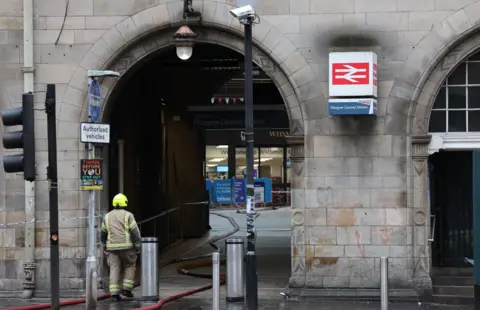
The economic ramifications of the station’s closure and the destruction of a key city-centre building are substantial. Glasgow Central is not merely a transport hub; it is a vital economic engine, driving commerce, tourism, and daily business activities within Scotland’s largest city. Local businesses on Union Street and surrounding areas, already contending with reduced footfall due to the fire and road closures, face significant financial strain. The disruption to commuter patterns affects productivity across the Glasgow City Region, while the broader impact on tourism, particularly as visitors struggle to navigate the city, could be considerable. First Minister John Swinney acknowledged the "significant cost" associated with the aftermath of the blaze, expressing relief that no injuries were reported. He pledged financial support from the Scottish government to Glasgow City Council, aiming to "get the city centre up-and-running as quickly as we can," highlighting the incident’s recognition at the highest levels of government.
The rail union TSSA (Transport Salaried Staffs’ Association) underscored the critical importance of safety in railway stations and associated infrastructure. General Secretary Maryam Eslamdoust called for a "thorough" investigation to prevent similar incidents in the future, lamenting the destruction of an "iconic part of Glasgow city centre." This sentiment resonates across the transport sector, emphasizing the need for robust safety measures not just within the railway infrastructure itself, but also in the commercial and residential buildings that often adjoin these critical hubs.
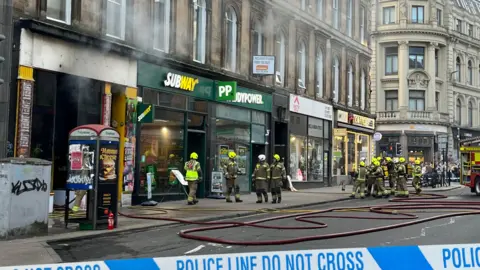
Looking ahead, the recovery and restoration process will be arduous and multi-faceted. The immediate priority remains the complete suppression of the fire, the stabilization of the Union Corner site, and the thorough investigation into the incident’s genesis. Only once these conditions are met can detailed assessments for the station’s reopening begin. This will involve comprehensive inspections of the station’s structure, track, signalling, and overhead line equipment for any heat or smoke damage, as well as ensuring the safety of personnel and passengers from potential debris or structural instability from the adjacent site. The timeline for reopening Glasgow Central Station remains highly uncertain, contingent upon the findings of structural engineers and the progress of debris clearance and safety certification.
The incident serves as a stark reminder of the intricate interdependencies within dense urban environments and the cascading effects when critical infrastructure is compromised. It highlights the constant challenge of maintaining and protecting historic buildings while ensuring modern safety standards. The collaborative effort between emergency services, transport operators, local authorities, and national government will be paramount in navigating this complex recovery. Ultimately, the incident at Glasgow Central will undoubtedly prompt a re-evaluation of emergency preparedness, urban planning, and heritage protection strategies, aiming to enhance the resilience of Glasgow’s vital infrastructure and safeguard its architectural legacy for future generations.



 Ayu Aulia
 Ridwan Kamil
 Safa Marwah
 Aura Kasih