Ayu Aulia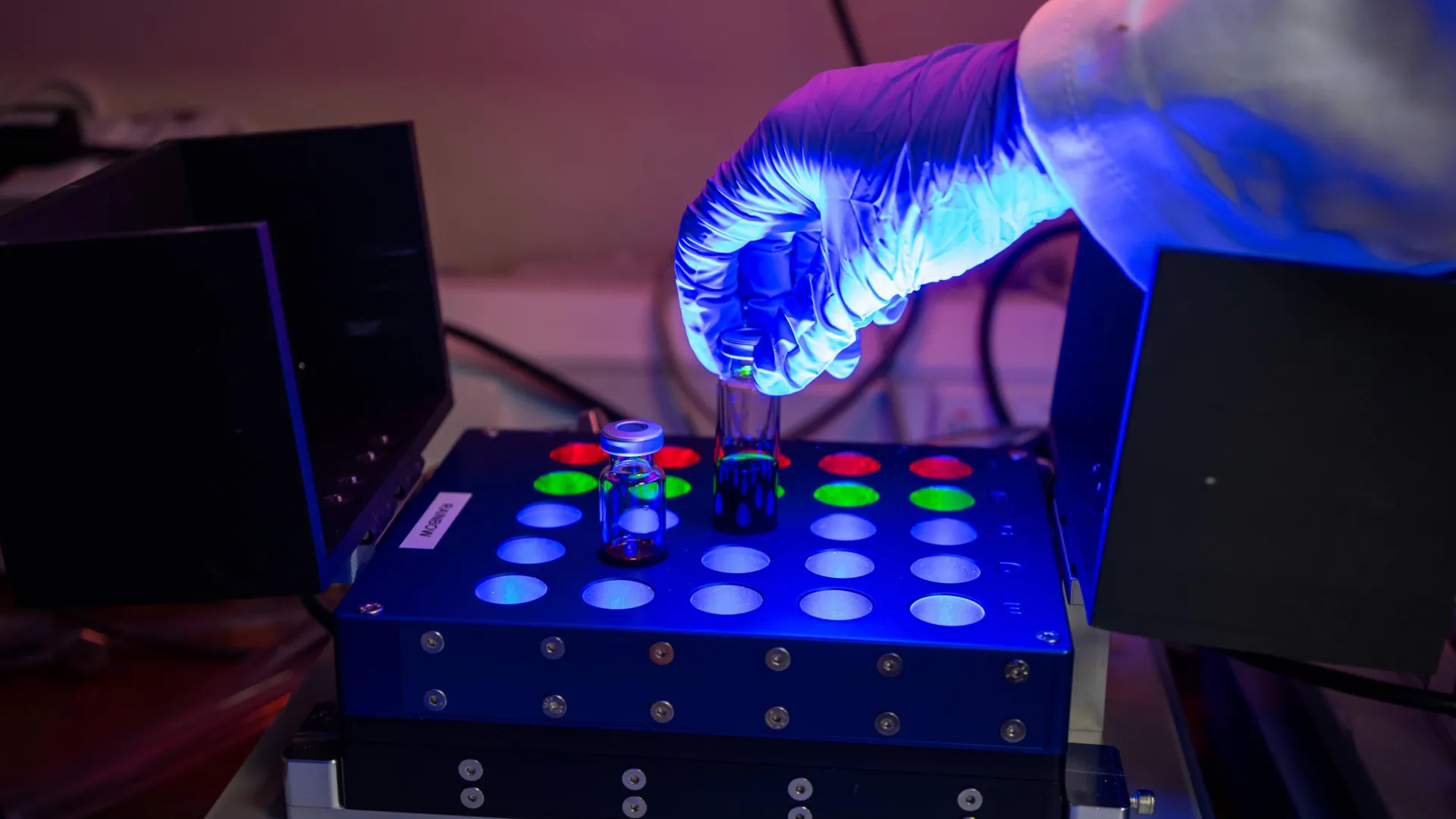
Researchers at the University of Cambridge have unveiled a groundbreaking method that leverages the power of light, rather than traditional hazardous chemical reagents, to precisely modify intricate drug molecules. This innovation promises to dramatically accelerate pharmaceutical development, making the entire process of designing and refining therapeutic compounds significantly more efficient and sustainable.
The pivotal research, detailed in a recent publication in Nature Synthesis, introduces a novel chemical transformation referred to by the team as an "anti-Friedel-Crafts" reaction. This designation highlights a fundamental departure from conventional Friedel-Crafts chemistry, which has long been a cornerstone of organic synthesis. Historically, Friedel-Crafts processes necessitate the use of aggressive chemical agents, often corrosive acids or potent metal catalysts, along with demanding laboratory conditions such as elevated temperatures or pressures. These stringent requirements typically confine such reactions to the initial phases of drug manufacturing, necessitating numerous subsequent synthetic steps to achieve the final pharmaceutical product. The newly developed Cambridge methodology fundamentally inverts this established paradigm, enabling chemists to introduce crucial structural modifications to complex drug molecules much later in their developmental lifecycle.
Photocatalysis Forges Essential Chemical Linkages
In a significant departure from reliance on heavy metal catalysts, the novel reaction is initiated by exposure to an LED light source at ambient temperatures. This photochemically driven activation triggers a self-propagating chain reaction, facilitating the formation of essential carbon-carbon bonds under remarkably mild conditions, entirely circumventing the need for toxic, expensive, or environmentally burdensome reagents. This practical advancement empowers chemists to fine-tune and functionalize elaborate molecular structures during the latter stages of drug development. This contrasts sharply with the arduous and time-consuming alternative of deconstructing and meticulously rebuilding molecular scaffolds, a process that can consume many months of intensive laboratory work.
Dr. David Vahey, lead author and a doctoral researcher at St John’s College, Cambridge, emphasized the transformative potential of this discovery. "We have established an unprecedented route for introducing precise alterations into complex pharmaceutical molecules, particularly those that have historically presented formidable challenges to modification," Vahey stated. He further elaborated, "Scientists often dedicate months to reconstructing substantial portions of a molecule simply to evaluate a minor structural adjustment. This new approach allows them to begin with a promising candidate molecule and subsequently introduce targeted, minor modifications, bypassing the need for extensive, multi-step syntheses across hundreds of variations." Vahey concluded, "This reaction equips scientists with the capability to execute precise adjustments much later in the development process, under mild conditions, and without recourse to hazardous or costly reagents. This opens up previously inaccessible chemical spaces and provides medicinal chemists with a cleaner, more efficient toolkit for exploring novel iterations of therapeutic compounds."
Expediting Drug Discovery with Enhanced Sustainability
The ability to reduce the overall number of synthetic steps in drug development translates directly into a multitude of benefits. It significantly curtails the consumption of chemical feedstocks, diminishes energy expenditure, and ultimately reduces the environmental footprint associated with pharmaceutical innovation. Beyond these ecological advantages, it liberates invaluable research time for scientists. The reaction exhibits exceptional selectivity, a critical attribute in drug design. This precision allows chemists to target and modify a specific region of a complex molecule without inadvertently affecting or disrupting other sensitive functional groups or structural elements. Such specificity is paramount because even subtle structural alterations can profoundly influence a medicine’s pharmacological activity within the body, its biological interactions, or its propensity to induce undesirable side effects.
At its fundamental core, this breakthrough addresses a long-standing challenge in chemical synthesis: the formation of carbon-carbon bonds. These covalent linkages constitute the foundational backbone of an immense array of organic compounds, ranging from commodity chemicals like fuels and plastics to the intricate architectures of complex biological macromolecules. The method also demonstrates what chemists term "high functional-group tolerance." This signifies its capacity to selectively modify one segment of a molecule while leaving other reactive functional groups intact. This characteristic renders the reaction particularly valuable for late-stage optimization, a crucial phase in drug discovery where scientists meticulously refine molecules to enhance their therapeutic performance, bioavailability, and safety profiles. Furthermore, by eliminating the need for heavy metals, harsh reaction environments, and protracted synthetic pathways, this approach has the potential to substantially mitigate toxic waste generation and energy consumption within pharmaceutical manufacturing. These environmental considerations are gaining increasing prominence as the global chemical industry strives to minimize its ecological impact and transition towards more sustainable practices.
Inspired by Principles of Sustainable Chemistry
The pioneering work of Dr. Vahey is conducted within the research group led by Professor Erwin Reisner at Cambridge, renowned for its innovative development of chemical systems inspired by the elegance and efficiency of natural photosynthesis. Professor Reisner’s team actively investigates novel strategies to harness solar energy to convert waste materials, water, and atmospheric carbon dioxide into valuable chemicals and sustainable fuels. Professor Reisner, who holds the Yusuf Hamied Chair in Energy and Sustainability within the Department of Chemistry and served as the senior author of the study, underscored the profound significance of this work. He highlighted its dual impact: expanding the frontiers of what chemists can achieve under practical laboratory conditions while simultaneously advancing the broader objective of developing greener manufacturing technologies. "This represents a fundamentally new pathway for constructing a critical carbon-carbon bond, which is why its potential ramifications are so extensive," Professor Reisner remarked. "It also empowers chemists to circumvent an undesirable and inherently inefficient process for drug modification."
The research team rigorously validated the reaction across a diverse spectrum of drug-like molecules, demonstrating its adaptability for integration into continuous flow systems, which are routinely employed in industrial chemical production. A collaborative engagement with AstraZeneca proved instrumental in assessing the technique’s potential to satisfy the stringent practical and environmental prerequisites of large-scale pharmaceutical manufacturing. Professor Reisner acknowledged the formidable challenge ahead: "The transition of the chemical industry towards a truly sustainable model is arguably one of the most intricate components of the overarching global energy transition."
Breakthrough Emerges from Unforeseen Laboratory Observation
Remarkably, this transformative discovery originated from an unexpected laboratory result, echoing the genesis of numerous iconic scientific breakthroughs throughout history, including the identification of X-rays, the isolation of penicillin, the development of Viagra, and the recent emergence of modern weight-loss medications. Dr. Vahey recounted the journey: "Following a series of unsuccessful attempts, we stumbled upon an unforeseen observation amidst the experimental ‘mess’ – a genuine diamond in the rough. And it was all thanks to what initially appeared to be a failed control experiment." He had been engaged in testing a photocatalyst when, during a control experiment where the photocatalyst was intentionally omitted, he observed that the desired reaction proceeded equally well, and in some instances, even more effectively, without its presence.
Initially, the unusual product seemed to be an error. However, rather than dismissing it as a mistake, the researchers made the critical decision to delve deeper and investigate its nature. Professor Reisner emphasized that the capacity to recognize the inherent significance of unanticipated results constitutes a vital element of successful scientific inquiry. "Identifying the value embedded within the unexpected is arguably one of the defining characteristics of a truly accomplished scientist," he affirmed.
Artificial Intelligence Augments Chemical Discovery
"We routinely generate vast quantities of experimental data, and increasingly, we rely on artificial intelligence tools to aid in its comprehensive analysis," Professor Reisner elaborated. "We have developed algorithms capable of predicting chemical reactivity. AI provides invaluable assistance by reducing the necessity for chemists to engage in endless cycles of trial and error. However, an algorithm is inherently limited to following the predefined rules it has been given. It still requires human intellect to scrutinize an outcome that appears anomalous and to pose the fundamental question of whether it might, in fact, represent something genuinely novel." In this particular instance, Dr. Vahey possessed the astute insight to recognize the profound implications of the unexpected result and diligently pursued its further exploration. "David could have easily disregarded it as a mere failed control," Professor Reisner observed. "Instead, he paused, reflected deeply on what he was observing, and made the conscious choice to investigate rather than ignore it. That pivotal moment is precisely where true scientific discovery often unfolds."
Subsequent to elucidating the underlying chemical principles governing the reaction, the team integrated machine learning models, developed in collaboration with Trinity College Dublin, to predict the precise location of the reaction on entirely novel molecular structures that had never been subjected to laboratory testing. By discerning patterns from established chemical reactions, the AI system can simulate potential outcomes prior to the execution of physical experiments. This capability empowers researchers to identify promising molecular candidates with greater rapidity and a significantly reduced reliance on iterative trial-and-error experimentation.
For Dr. Vahey, the discovery provides the scientific community with an invaluable new capability for accelerating drug discovery and development. He articulated his perspective on its future impact: "What the pharmaceutical industry and other research entities choose to do with this technology next – that is where its future impact truly resides. For us, life in the laboratory is typically characterized by average to challenging days. The truly ‘good’ days, however, are exceptionally rewarding." Professor Reisner added a poignant reflection on the nature of scientific endeavor: "As a chemist, one truly needs only one or two profoundly impactful ‘good days’ per year – and those significant moments can very often originate from what initially appears to be a failed experiment."
Historical Parallels: Accidental Discoveries in Science
The serendipitous nature of the Cambridge discovery resonates with a rich history of scientific breakthroughs born from unexpected observations. These instances underscore that scientific progress is not always a linear, predictable path, but often a meandering journey punctuated by moments of unforeseen insight.
- X-rays (1895): Wilhelm Conrad Röntgen’s investigation into electrical currents within glass vacuum tubes led to the accidental observation of a nearby screen fluorescing. This unexpected phenomenon revealed a novel form of radiation, fundamentally altering medical diagnostics by enabling internal imaging without invasive procedures.
- Radioactivity (1898): Marie Curie’s meticulous studies of uranium minerals unveiled a perplexing anomaly: certain samples exhibited significantly higher levels of radiation than could be accounted for by uranium alone. This crucial observation culminated in the discovery of polonium and radium, laying the groundwork for nuclear physics and chemistry.
- Vulcanized Rubber (1839): Charles Goodyear’s accidental spillage of a rubber and sulfur mixture onto a hot stove yielded a transformative result. Instead of melting, the material became remarkably strong and elastic, a process termed vulcanization, which revolutionized industrial applications of rubber, notably in the development of tires.
- Penicillin (1928): Alexander Fleming’s astute observation of mold contaminating a petri dish, which subsequently inhibited bacterial growth in its vicinity, led to the discovery of penicillin. This accidental finding ushered in the era of antibiotics, fundamentally reshaping modern medicine’s ability to combat infectious diseases.
- Teflon (1938): Chemist Roy Plunkett’s pursuit of new refrigerant gases unexpectedly resulted in the creation of a slippery, heat-resistant polymer. This material, later commercialized as Teflon, found widespread application in nonstick cookware and demanding industrial environments.
- Super Glue (1942): Harry Coover’s research into transparent plastics inadvertently yielded a substance with an astonishing ability to instantly bond to virtually any surface. This compound, later marketed as Super Glue, became an indispensable adhesive in households, manufacturing, and even medical applications.
- LSD (1943): Swiss chemist Albert Hofmann’s accidental absorption of a minute quantity of lysergic acid diethylamide (LSD), a compound he had synthesized, triggered profound psychological effects. This accidental self-experimentation initiated extensive research into its neurological implications and its subsequent controversial role in popular culture.
- Pulsars (1967): Graduate student Jocelyn Bell Burnell detected puzzling, regularly repeating radio signals while analyzing astronomical data. Initially attributed to terrestrial interference, these signals were ultimately identified as the first evidence of pulsars—rapidly rotating neutron stars—opening an entirely new frontier in astrophysics.
- Viagra (1990s): During clinical trials for a drug intended to treat angina, researchers at Pfizer noted an unanticipated side effect reported by male participants. This observation led to the repurposing and development of the compound as Viagra, which subsequently became a widely prescribed treatment for erectile dysfunction.
- Weight Loss Injections (2021): Scientists developing therapies for Type 2 diabetes observed that drugs mimicking the hormone GLP-1 also induced significant and sustained weight loss. This unforeseen efficacy led to the development of medications like Ozempic and Mounjaro, initially for diabetes, but later adapted to treat obesity, marking a paradigm shift in weight management strategies.
These historical precedents underscore that the path to scientific discovery is frequently nonlinear, with moments of profound insight often emerging from the unexpected. The Cambridge team’s "anti-Friedel-Crafts" reaction stands as a modern testament to this enduring principle, offering a powerful new tool for chemistry that emerged from the crucible of an unexpected laboratory observation.



 Safa Marwah
 Aura Kasih
 Lisa Mariana