Lisa Mariana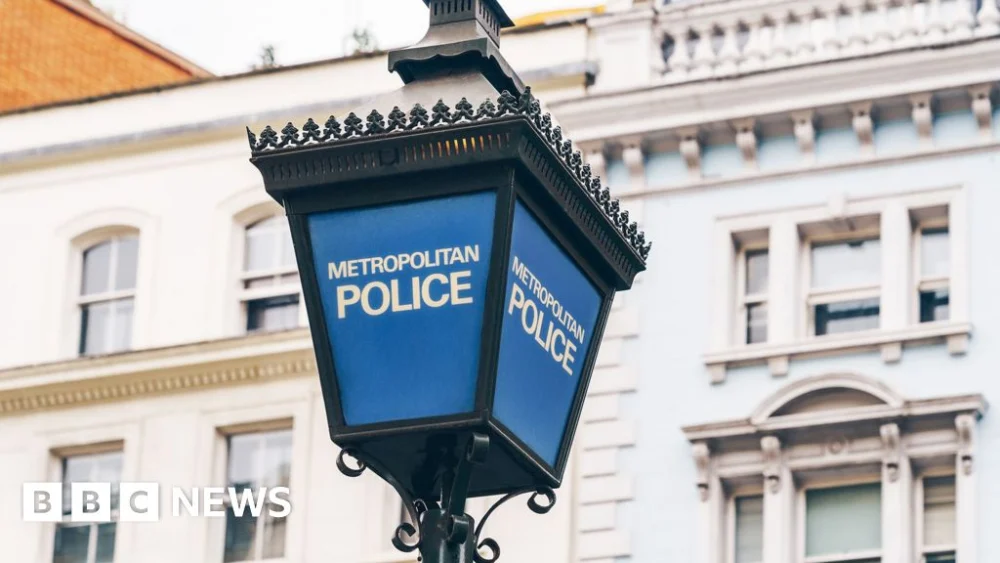
In a significant development for national security, UK law enforcement has detained four individuals suspected of operating an intelligence-gathering network on behalf of a foreign state, specifically linked to Iran, with preliminary indications pointing to surveillance activities against Jewish community institutions and persons across London. This sophisticated operation, revealed by the Metropolitan Police, underscores the escalating concerns regarding malign state interference on British soil, prompting widespread reassessment of domestic counter-espionage strategies and the protection of vulnerable communities. The arrests, involving an Iranian national and three individuals holding dual British-Iranian citizenship, mark a critical juncture in the United Kingdom’s ongoing efforts to counteract foreign threats that extend beyond traditional geopolitical arenas and directly impact civil society.
The initial phase of the operation saw the apprehension of a 40-year-old and a 55-year-old in Barnet, a 52-year-old in Watford, and a 22-year-old in Harrow. These individuals are being held under suspicion of providing assistance to an undisclosed foreign intelligence service, an allegation that carries profound implications for national sovereignty and the safety of specific demographic groups. Subsequent to these primary arrests, an additional six men, aged 20, 20, 29, 39, 42, and 49, were also taken into custody at the same Harrow location, on suspicion of aiding an offender. The combined detention of ten individuals highlights the potential scale and interconnectedness of the alleged network, signalling a meticulously planned and executed law enforcement intervention. Searches are actively continuing at various residential and commercial properties in Watford, Barnet, and Wembley, indicating the breadth of the investigation and the meticulous collection of forensic evidence.
Commander Helen Flanagan, a leading figure in Counter Terrorism Policing London, articulated that these arrests are the culmination of an extensive and protracted investigation. Her statement emphasized the proactive nature of the police’s work in disrupting hostile state activities, acknowledging the potential for apprehension and concern within the public, particularly among members of the Jewish community. She underscored the imperative for continued vigilance and cooperation from the populace, urging individuals to report any suspicious observations or information to the authorities. This public appeal serves as a critical component of a comprehensive security strategy, relying on both professional intelligence gathering and community-level awareness to mitigate risks.
The detention of the four primary suspects was carried out under the provisions of the National Security Act 2023, a landmark piece of legislation enacted to significantly modernize and bolster the United Kingdom’s legal framework against state-sponsored espionage, sabotage, and foreign interference. This act replaced outdated statutes, providing law enforcement and intelligence agencies with enhanced powers to investigate, disrupt, and prosecute individuals engaged in hostile state activities. Its introduction reflected a growing awareness within the UK government of the evolving and multifaceted nature of threats posed by foreign intelligence services, moving beyond conventional spying to encompass cyber warfare, disinformation campaigns, and attempts to influence political processes or intimidate diaspora communities. The application of this new act in the current case underscores the severity with which these alleged activities are being treated and the government’s commitment to leveraging its most potent legal tools to safeguard national interests.
The alleged targeting of Jewish community locations and individuals in London resonates with a troubling pattern of state-sponsored harassment and surveillance globally, particularly from Iran. For decades, the Iranian regime has been accused of employing its intelligence apparatus to monitor, intimidate, and even orchestrate attacks against perceived adversaries, including dissidents, opposition figures, and members of Jewish communities abroad, whom it often links to Israel. This operational methodology frequently leverages proxy networks and recruited individuals, sometimes from within the diaspora, to conduct reconnaissance, gather intelligence, and prepare for potential malign actions. The implications of such activities extend beyond mere surveillance, potentially laying groundwork for future acts of intimidation, coercion, or even violence, thereby posing a direct and profound threat to the fundamental rights and freedoms of British citizens and residents.

Deputy Prime Minister David Lammy provided a broader geopolitical context to the arrests, reiterating the government’s long-standing assessment that Iran represents the foremost state sponsor of terrorism globally. He highlighted the persistent efforts of the UK’s intelligence services and counter-terrorism police in thwarting numerous Iranian-backed malign actions within the country over recent years. His commendation of these agencies underscores the invisible yet critical work undertaken daily to safeguard the nation from sophisticated and often clandestine threats. This official stance aligns with a wider Western intelligence consensus regarding the pervasive nature of Iran’s intelligence operations and its strategic deployment of proxies to project influence and destabilize regions, including Europe.
The Community Security Trust (CST), a vital charity dedicated to protecting Britain’s Jewish community and monitoring antisemitism, issued a statement expressing gratitude to the police for their decisive action. The CST also reassured the community that security measures across Jewish institutions remain robust. This collaborative approach between law enforcement and community organizations is indispensable in building resilience against external threats. The Jewish community in the UK has, unfortunately, been a historical target for extremist groups and, more recently, state actors seeking to exploit geopolitical tensions. The CST’s role involves not only physical security but also intelligence sharing and public awareness campaigns, which are crucial in empowering communities to identify and report potential threats. The affirmation of strong security protocols aims to mitigate fear and reinforce a sense of safety amidst the unsettling revelations.
The recent arrests occur against a backdrop of heightened international tensions involving Iran, particularly following its retaliatory strikes in the Middle East. Prime Minister Sir Keir Starmer, while condemning Iran’s actions against regional partners, also drew a direct link to the domestic threat posed by the Iranian regime. He specifically highlighted Iran’s direct threat to dissidents and the Jewish community within the United Kingdom, revealing a stark statistic: over the past year alone, Iranian-backed entities have been implicated in more than 20 potentially lethal attacks on UK soil. This alarming figure underscores the persistent and tangible danger that Iranian state-sponsored activities represent to the UK’s national security and its diverse communities. These incidents range from assassination plots and kidnappings targeting Iranian dissidents to sophisticated surveillance operations and attempts at coercive interference.
The complexity of countering state-sponsored threats lies in their often clandestine nature, the sophisticated methods employed, and the potential for exploiting legal loopholes or manipulating individuals. Foreign intelligence services frequently recruit agents from within expatriate communities, leveraging ethnic, religious, or national ties, or exploiting vulnerabilities. The use of dual nationals in such operations adds a layer of complexity for law enforcement, as it blurs the lines between citizenship and allegiance, requiring meticulous intelligence gathering and robust legal processes. The current investigation, spanning multiple locations and involving numerous arrests, demonstrates the intricate web that intelligence agencies must unravel to dismantle such networks effectively.
The broader implications of these arrests extend to the United Kingdom’s foreign policy and diplomatic relations. The UK government maintains a delicate balance in its engagement with Iran, often condemning its human rights record and malign regional activities while also seeking channels for de-escalation and diplomatic resolution. Incidents of alleged espionage and targeting of UK citizens further strain these relations, potentially leading to diplomatic expulsions, sanctions, or other retaliatory measures. The ongoing investigation will undoubtedly provide further insights into the extent of Iranian intelligence operations in the UK, shaping future policy decisions and international cooperation in counter-intelligence.
In conclusion, the disruption of this alleged Iranian espionage network represents a significant victory for UK national security agencies, reaffirming their capacity to identify and neutralize sophisticated state threats. However, it also serves as a stark reminder of the persistent and evolving dangers posed by hostile foreign powers. The targeting of specific communities, particularly the Jewish community and dissidents, underscores the urgent need for continuous vigilance, robust intelligence sharing, and unwavering commitment to safeguarding civil liberties and national sovereignty. As the investigation progresses, the full scope of these alleged activities and their implications for the UK’s security landscape will undoubtedly become clearer, informing future strategies to combat foreign interference in an increasingly complex global environment. The successful application of the National Security Act 2023 in this context highlights a new era of proactive counter-espionage measures, designed to protect the integrity of British society from covert state-backed aggressions.




 Ridwan Kamil
 Safa Marwah
 Aura Kasih
 Ayu Aulia