Lisa Mariana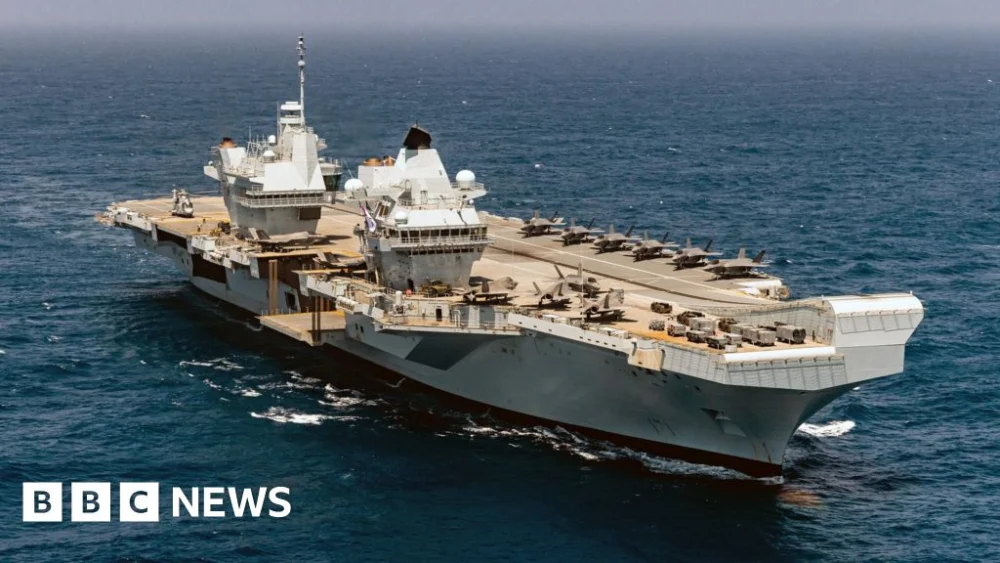
The Royal Navy’s formidable aircraft carrier, HMS Prince of Wales, has been placed on an accelerated operational readiness footing, drastically reducing its preparation time for deployment from its homeport of Portsmouth, a move underscoring the United Kingdom’s heightened vigilance in response to evolving global security challenges. This strategic recalibration by the Ministry of Defence signals a potential shift in the vessel’s immediate operational trajectory, prompting widespread speculation regarding its possible deployment to the Eastern Mediterranean, an area witnessing escalating instability linked to the broader Middle East conflict. The directive to achieve sailing readiness within a compressed five-day window, a significant reduction from the customary fourteen days, highlights the urgency with which London is evaluating its defense posture and projecting its naval power in critical international waters.
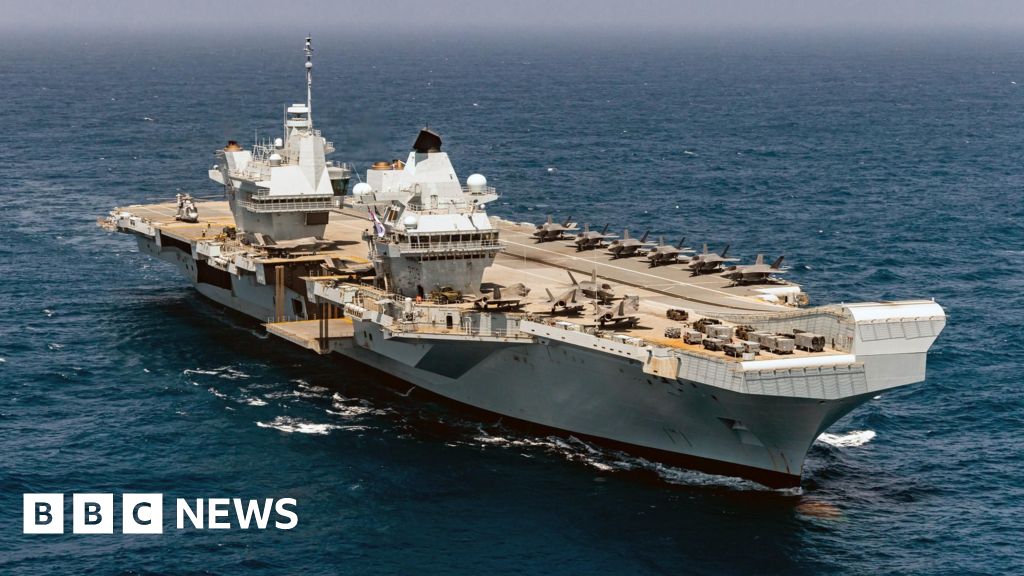
The HMS Prince of Wales, one of two Queen Elizabeth-class aircraft carriers, represents the pinnacle of British naval power projection. Weighing an imposing 65,000 tonnes and boasting a flight deck expansive enough to accommodate three football pitches, the vessel is engineered to host a sophisticated array of up to 24 F-35B stealth fighter jets, alongside various helicopters and unmanned aerial systems. This capacity allows it to command air superiority, conduct intelligence, surveillance, and reconnaissance (ISR) missions, and serve as a mobile command and control hub. With a crew complement of approximately 1,600 personnel and the capability to traverse 500 nautical miles per day, the carrier embodies a formidable asset for global power projection and the safeguarding of national interests. Its operational readiness is a critical barometer of the UK’s ability to respond dynamically to international crises.
Prior to this expedited readiness order, HMS Prince of Wales was undergoing routine maintenance procedures in Portsmouth, preparing for a pre-scheduled deployment to the North Atlantic and Arctic regions later in the year. This original mission, designated Operation Firecrest, was conceived as a pivotal exercise alongside key allies including the United States, Canada, and European partners. The objective was to reinforce deterrence against perceived Russian aggression in the strategically vital High North, demonstrating collective defense capabilities and ensuring freedom of navigation in contested waters. The sudden pivot in operational priorities underscores the fluidity of global geopolitics and the necessity for naval assets to maintain a high degree of adaptability.
The dramatic acceleration of the carrier’s readiness has inevitably fueled conjecture that its ultimate destination might be the Mediterranean Sea. This region has become a crucible of heightened tensions, particularly in light of the ongoing Middle East conflict and its spillover effects, including threats to international shipping lanes and regional stability. Deploying a carrier strike group to such a volatile theater would provide the UK with a robust platform for defending its strategic interests, which encompass vital trade routes, the security of its sovereign base areas in Cyprus, and the protection of its diplomatic and civilian assets across the broader region. A carrier’s presence offers a potent deterrent, capable of providing air cover, maritime security, and rapid response capabilities should the situation further deteriorate.
The UK’s response to the regional crisis has drawn scrutiny, notably from former US President Donald Trump, who publicly criticized the perceived delay in British naval deployments to the Middle East. In a statement disseminated via social media, Trump remarked on the UK’s apparent reconsideration of sending aircraft carriers to the region, adding a pointed comment about not needing allies who join conflicts after the decisive phase. Such high-profile external commentary underscores the international pressure and expectations placed upon the UK, a permanent member of the UN Security Council and a key NATO ally, to contribute actively to global security initiatives.
Domestically, the government has been compelled to address concerns regarding the speed and efficacy of its actions. Sir Keir Starmer, the Prime Minister, has staunchly defended the UK’s preparedness, asserting that Britain initiated the pre-deployment of strategic assets to the region earlier in the year, specifically bolstering its presence in Qatar and Cyprus in close coordination with the United States and other allies. Defence sources have corroborated these statements, revealing that an additional 400 UK personnel have been dispatched in recent weeks to enhance air defense capabilities across British military installations in Cyprus. This strategic reinforcement aims to protect against potential drone and missile threats, a growing concern given the sophisticated nature of contemporary asymmetric warfare.
The Ministry of Defence has affirmed the upgraded status of HMS Prince of Wales, stating that the carrier "has always been on very high readiness" and that the current measures are designed to further reduce the time required for deployment. This proactive stance is part of a broader strategy to bolster the UK’s military footprint in the Middle East, a process that commenced in January. Existing deployments include advanced Typhoon and F-35 fighter jets, sophisticated air defense systems, and Wildcat helicopters equipped with anti-drone missiles, all contributing to a layered defense strategy. Furthermore, the Type 45 destroyer HMS Dragon has been deployed to the region, though it is not expected to be fully ready for operations until the following week, highlighting the phased nature of these military mobilizations.
The strategic importance of Cyprus to the UK’s defense posture in the Eastern Mediterranean cannot be overstated. As a sovereign base area, it serves as a crucial forward operating location, enabling rapid projection of air power and logistical support across the region. The sustained deployment of additional personnel and advanced air defense systems to the island directly addresses concerns about protecting this vital asset from the burgeoning threat of unmanned aerial vehicles and ballistic projectiles emanating from regional actors. This reinforcement is not merely reactive but represents a calculated strengthening of a pivotal strategic hub.
In parallel with the increased military activity, the arrival of additional US military assets at RAF Fairford in Gloucestershire has further underscored the depth of Anglo-American defense cooperation. Following the initial arrival of a B-1 Lancer bomber, three more of these long-range strategic aircraft, along with a C-5 airlifter, landed at the base. The B-1 Lancer, known for its speed and payload capacity, provides the US with a significant long-range strike capability, serving both as a deterrent and a potential platform for offensive operations if required. The Ministry of Defence confirmed that British bases are being utilized by the US for "specific defensive operations," emphasizing the collaborative nature of the allied response to regional threats.
The intensified military readiness and allied deployments have inevitably sparked a range of public and political reactions. In London, thousands of demonstrators took to the streets, articulating diverse perspectives on the crisis. Anti-war protesters, marching towards the US Embassy, decried the military actions as illegal, unprovoked, and unjustified, holding placards that read "Hands off Iran" and "Stop Trump’s Wars." Their concerns revolved around the potential for broader conflict and the humanitarian consequences of military intervention. Simultaneously, a separate group of demonstrators marched from Downing Street to the Iranian Embassy, advocating for a free and democratic Iran, reflecting the complex internal dynamics of the region.
The domestic political landscape has also seen robust debate. Prime Minister Starmer has faced sustained criticism for his approach to the crisis, particularly his initial reluctance to grant the US permission to use British bases for offensive operations against Tehran, a decision he defended by advocating for a "cool head" and strategic patience. However, this stance drew sharp rebukes from opposition figures, with Conservative leader Kemi Badenoch asserting that the Prime Minister was "too scared to make foreign interventions," suggesting a perceived lack of decisiveness. This political discourse reflects the inherent tension between diplomatic caution and the imperative of projecting strength in the face of perceived threats.

Looking ahead, the heightened readiness of HMS Prince of Wales introduces significant flexibility into the UK’s strategic planning. While its original mission focused on the Arctic, the ability to pivot rapidly to the Mediterranean demonstrates the inherent adaptability of the carrier strike group concept. Such a deployment would not only enhance regional security but also provide invaluable operational experience for the crew and air wing in a high-stakes environment. The strategic implications extend beyond immediate crisis response, influencing future defense spending priorities, force structure development, and the UK’s long-term commitment to global stability. The decision to accelerate the carrier’s deployment readiness underscores the UK’s resolve to actively participate in safeguarding its interests and contributing to the stability of critical international regions, even as it navigates complex geopolitical currents and domestic political pressures.




 Ridwan Kamil
 Safa Marwah
 Aura Kasih
 Ayu Aulia