Lisa Mariana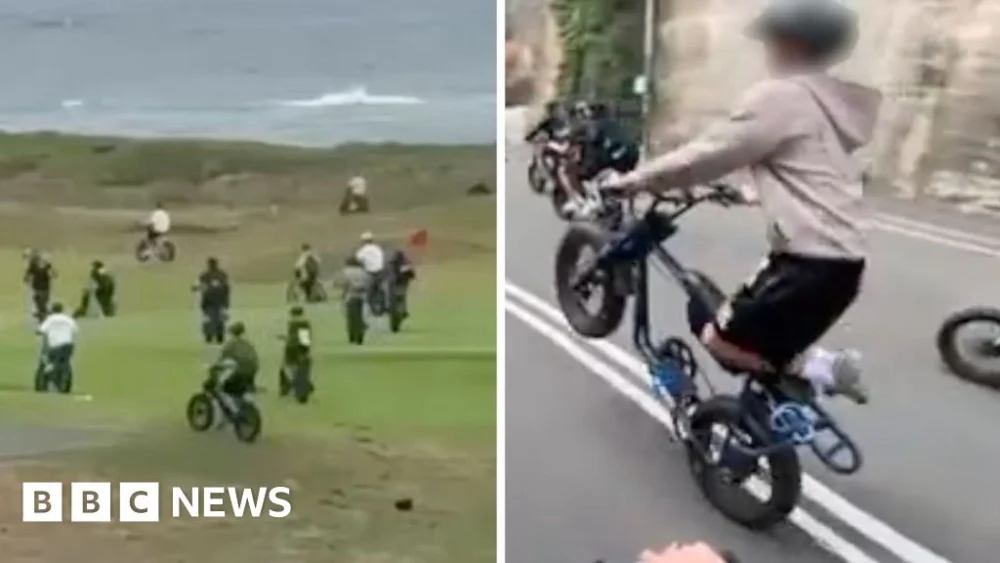
Across Sydney’s affluent coastal enclaves, a growing phenomenon involving high-powered electric bicycles, colloquially known as fatbikes, is generating widespread concern. These vehicles, often illegally modified to exceed speed limits and ridden by underage individuals, are creating significant safety hazards and considerable public nuisance on roads and footpaths, prompting calls for more stringent regulation and enforcement amidst a surge in related injuries and community frustration.
The Escalating Fatbike Phenomenon in Sydney’s Elite Coastal Precincts
Along the sun-drenched promenades and vibrant thoroughfares of Sydney’s most sought-after beach suburbs, a new and disruptive element has become increasingly conspicuous: groups of teenagers, often in swimwear, navigating electric fatbikes with an alarming disregard for traffic regulations and pedestrian safety. In areas like Manly, renowned for its pristine beaches, these modified e-bikes are no longer an isolated occurrence but a ubiquitous presence, frequently observed maneuvering haphazardly through vehicular flow and hurtling along pedestrian pathways. This burgeoning trend extends beyond Manly, permeating the Northern Beaches, the iconic Eastern Suburbs encompassing Bondi, and stretching south to Cronulla, creating a consistent pattern of public disturbance.
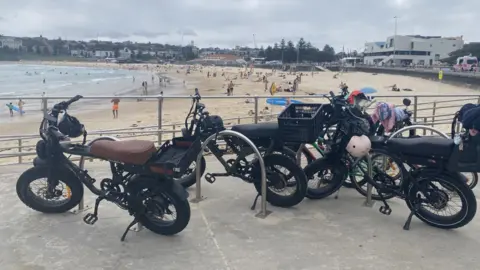
The vehicles themselves, distinguished by their oversized, robust tyres designed for diverse terrains, have earned the moniker "fatbikes." While standard e-bikes are legally restricted to a maximum speed of 25 km/h, a substantial number of those in circulation, particularly among younger riders, have undergone illicit modifications. These alterations bypass factory-set speed governors, enabling them to achieve speeds far surpassing legal limits, effectively transforming them into unregistered and unregulated motor vehicles. This widespread non-compliance has not only fueled public anger but has also garnered significant media attention, particularly as medical facilities report an alarming escalation in e-bike-related injuries and critics decry what they perceive as inadequate law enforcement efforts to maintain public safety on both roads and footpaths. The problem is not solely confined to recreational users; food delivery riders employing similar fatbikes also contribute to the daily challenges faced by Sydney residents. However, recent weeks have seen a particular focus on teenagers, whose audacious exploits have been widely disseminated through viral online videos, further amplifying public discourse and concern.
A Confluence of Youth Culture and Technological Acceleration
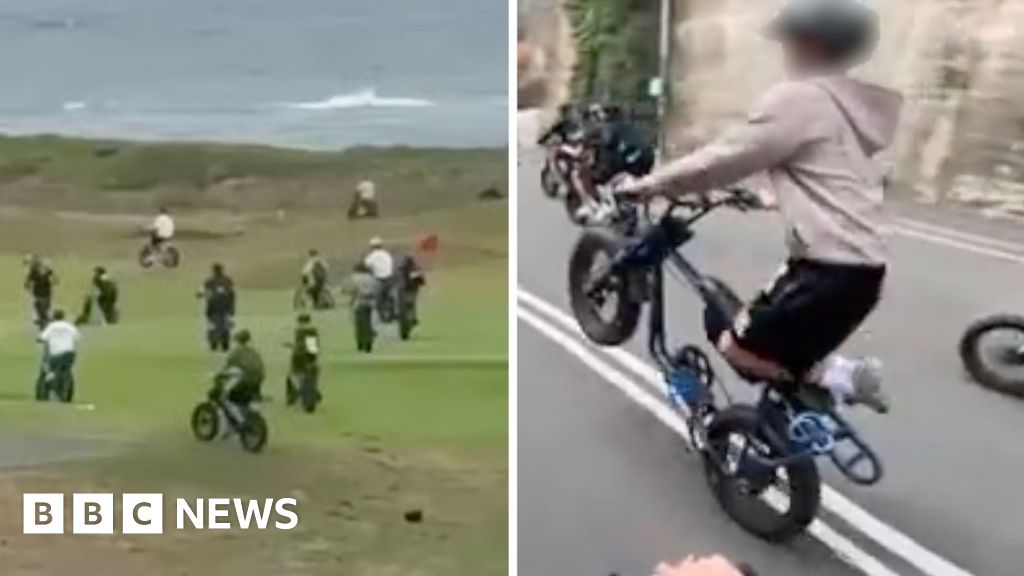
The proliferation of these modified fatbikes in Sydney’s coastal zones can be attributed to a unique convergence of socio-economic factors, environmental conditions, and technological accessibility. Sydney’s idyllic climate, characterized by abundant sunshine and a pervasive outdoor lifestyle, naturally encourages cycling. Concurrently, the city’s wealthy beachside communities are often home to affluent families, enabling parents to purchase these relatively expensive devices, with entry-level models from popular brands retailing for approximately AUD$3,000 (US$2,110). Furthermore, deficiencies in reliable public transport options in some of these sprawling coastal areas make personal mobility solutions highly appealing.
Beyond mere utility, the fatbike has evolved into a potent symbol of youth culture and perceived freedom. As one observer noted, "It’s a lifestyle thing… Kids love going to the beach on them." This allure is amplified by the pervasive influence of social media, where viral videos often showcase daring stunts and large-scale "mass rideouts." These events, sometimes orchestrated by international social media personalities, involve dozens, if not hundreds, of riders, including uniformed schoolchildren, performing stunts like wheelies across iconic landmarks such as the Harbour Bridge. Other documented instances depict teens riding through shopping malls, commandeering entire traffic lanes, or traversing private property like golf courses. This cavalier conduct has led to a torrent of complaints directed at local councils from both pedestrians and motorists. Residents recount alarming encounters, with one Northern Beaches local, Andre, describing how these bikes "overtake me on the footpath" while he is riding his Vespa at speeds of 50-60 km/h. Another resident, Debbie, who has reportedly been "taken out" multiple times by children on fatbikes, likens them to "mini motorbikes." The sheer volume of these incidents underscores the escalating severity of the situation, with an estimated "tens of thousands" of illegal fatbikes now operating across New South Wales, out of a total of approximately 750,000 e-bikes. Harold Scruby, chairman of the Pedestrian Council of Australia, starkly compared the rapid and uncontrolled spread of these vehicles to the early stages of a pandemic, expressing grave concerns about its inexorable expansion if not promptly addressed.
The Unregulated Landscape: A Critical Examination of Legal Frameworks and Loopholes
A significant contributing factor to the current predicament is the fragmented and, in many respects, inadequate regulatory framework surrounding e-bikes in Australia. Critically, New South Wales currently lacks a minimum age requirement for operating e-bikes, and individuals under 16 years of age are permitted to ride on footpaths, a policy that frequently precipitates conflicts with pedestrians. Law enforcement agencies face considerable challenges in interdicting these young riders. The inherent risks associated with high-speed pursuits, particularly involving minors, often deter police from engaging, as such actions could inadvertently lead to serious accidents. This operational dilemma was highlighted by a reporter’s own near-collision with two teenagers speeding the wrong way down a one-way street in Manly, illustrating the real-time difficulties faced by authorities. While some teenagers, like 14-year-old Robert, express a conscious effort to "keep it legal" to avoid confiscation, many others appear undeterred by existing regulations.
The current situation is, in part, a consequence of recent legislative and policy shifts. In 2021, the federal government relaxed import restrictions, removing the requirement for e-bikes to demonstrate compliance with minimum safety standards. This decision opened the floodgates for a wider array of products, some of which bypassed crucial safety checks. Subsequently, in 2023, the New South Wales state government further complicated the landscape by increasing the maximum permissible motor wattage for e-bikes from 250w to 500w. While legal e-bikes are designed to provide pedal assistance only above 6 km/h and feature a motor cut-off at 25 km/h, the market has been flooded with high-powered models. Many retailers exploit a critical loophole by selling these bikes with a pre-installed governor that can be easily deactivated using a PIN, ostensibly for "private property use" only. This practice, however, effectively enables users to "unlock" the full, illegal speed capabilities for public road use, as noted by Scruby, who remarked that "unscrupulous marketers suddenly realised every kid in Australia is going to want one of these." This regulatory lacuna, coupled with lax enforcement, has created an environment ripe for the unchecked proliferation of these high-speed, unmonitored vehicles.
The Mounting Toll: Public Safety and Medical Emergencies

The human cost of this unchecked phenomenon is increasingly evident in Sydney’s healthcare system. Hospitals are reporting substantial increases in e-bike-related injuries, with Dr. Brian Burns, a trauma specialist at Sydney’s Royal North Shore Hospital, describing such cases as becoming "almost business as usual" in paediatric and adult major trauma centres. Dr. Burns highlights the critical disparity between the speeds achieved by these modified e-bikes, which can rival those of motorised vehicles, and the minimal protective gear typically worn by riders. Unlike motorbike riders who wear specialized helmets, leathers, and gloves, e-bike riders often only wear a standard bicycle helmet, leaving them highly vulnerable. Doctors are now frequently encountering "significant brain injuries," alongside other serious trauma such as friction burns. The risk extends beyond the riders themselves; pedestrians face heightened danger from these heavy vehicles, which can weigh between 30 and 40 kilograms and often carry multiple teenagers at high speeds. St Vincent’s Hospital Sydney reported a doubling of serious e-bike injuries treated in its emergency department in the past year, marking a staggering 350% increase since 2023.
Beyond physical injuries, the legal ramifications for young riders are severe, often not fully understood by those involved. A tragic incident in Queensland in October, where an 8-year-old died after colliding with a 15-year-old riding a higher-powered illegal e-bike, serves as a stark warning. While the younger child was not deemed at fault, the 15-year-old now faces serious charges, including dangerous operation of a vehicle causing death, as well as driving an unregistered and uninsured vehicle. Such precedents underscore the potential for criminal charges, civil liability, and the profound impact on the lives of those involved, highlighting the critical need for comprehensive awareness and accountability.
Divergent Perspectives: Industry, Advocates, and Responsible Users
The debate surrounding e-bikes reveals a spectrum of perspectives, underscoring the complexity of the issue. On one hand, responsible e-bike users champion their undeniable benefits. Will, a Bondi resident, utilizes his e-bike daily with a kid trailer for his daughters, valuing the convenience of zipping to and from the beach without parking concerns. While acknowledging the disruptive behaviour of some teenagers, he expresses understanding of the freedom these bikes offer. Scott Jeffery, an e-bike shop owner, vociferously defends the legitimate advantages of e-bikes, noting their ability to facilitate longer journeys and easier hill climbs, making them a viable alternative to cars for many, with concomitant environmental benefits. He also highlights their utility for older individuals who might otherwise cease cycling or driving, making e-bikes their primary mode of transport. However, Jeffery is equally critical of the "foolish" actions of teenagers, arguing that their irresponsible conduct "ruins the whole usage of e-bikes for everyone else."
Conversely, Harold Scruby, from the Pedestrian Council of Australia, represents the staunch perspective of pedestrian safety advocates. He is highly critical of the current regulatory environment and perceived lack of enforcement, viewing the uncontrolled proliferation of high-speed e-bikes as an existential threat to pedestrian safety and the sanctity of shared public spaces. The divergent views underscore the challenge of formulating policy that balances innovation and individual liberty with collective safety and order.
Policy Responses and the Path Forward: A Call for Comprehensive Reform
Faced with mounting public pressure and escalating injury statistics, the New South Wales government recently unveiled a series of proposed measures aimed at reining in the burgeoning fatbike crisis. These proposals include establishing a minimum age for e-bike riders, adopting stringent European safety standards that stipulate a maximum power output of 250w and incorporate anti-tampering protections, and empowering police to confiscate and crush illegal bikes. NSW Transport Minister John Graham articulated the government’s dual objective: to foster a cycling-friendly city while simultaneously implementing necessary controls over bicycle usage.
However, these plans have not met with universal approval and have elicited criticism from various stakeholders. Scott Jeffery, from the e-bike industry, characterises the government’s response as a "knee-jerk" reaction, advocating for an initial focus on education before resorting to punitive enforcement measures. Conversely, Harold Scruby argues that the proposed reforms do not go far enough. He points out that the plan still permits 16-year-olds to ride on footpaths, continuing the potential for conflict with pedestrians. More critically, Scruby highlights the significant omission of any provisions regarding insurance, which leaves victims of e-bike accidents potentially unable to claim compensation for serious injuries. He asserts that "the main problem here has been that technology has just outpaced the law at 100 kilometres an hour," concluding with the ominous sentiment that "the genie’s out of the bottle." This metaphor encapsulates the challenge: rapid technological advancement has created a complex social problem that current legal and enforcement frameworks are ill-equipped to manage. The absence of mandatory insurance for these vehicles represents a critical gap, as individuals injured by an unregistered, uninsured e-bike ridden by a minor could face substantial medical costs and long-term financial hardship with no recourse for compensation, exacerbating the trauma of the incident itself.
Conclusion: Navigating the Complexities of a Modern Urban Challenge
The escalating issue of illegal fatbikes in Sydney’s affluent beach suburbs represents a multi-faceted challenge, encapsulating the complex interplay between technological innovation, youth culture, urban planning, and public safety. The rapid proliferation of these modified electric bicycles, driven by a confluence of affluence, lifestyle aspirations, and regulatory loopholes, has created a palpable sense of unease among residents and placed an unprecedented strain on healthcare resources. The surge in serious injuries, coupled with the daily disruption to public spaces, underscores the urgent need for a robust and comprehensive policy response.
While the NSW government’s proposed measures are a step towards addressing the crisis, critical gaps remain, particularly concerning age restrictions on footpaths and the crucial issue of insurance liability. The Queensland fatality serves as a stark reminder of the potential for tragic consequences and the severe legal ramifications for all parties involved. Effectively managing this phenomenon necessitates a holistic approach that transcends mere enforcement. It requires a coordinated strategy encompassing refined legislative frameworks, targeted public education campaigns for riders and parents, innovative urban planning solutions for shared spaces, and consistent, yet judicious, law enforcement. Without a concerted and well-thought-out strategy, the challenge posed by these unregulated vehicles will continue to escalate, further eroding public trust and safety within Australia’s vibrant coastal communities. The imperative is clear: to reconcile the benefits of personal electric mobility with the fundamental right to safety and order in public spaces, ensuring that the "genie" of technological advancement serves, rather than undermines, societal well-being.




 Ayu Aulia
 Ridwan Kamil
 Safa Marwah
 Aura Kasih