
 Ridwan Kamil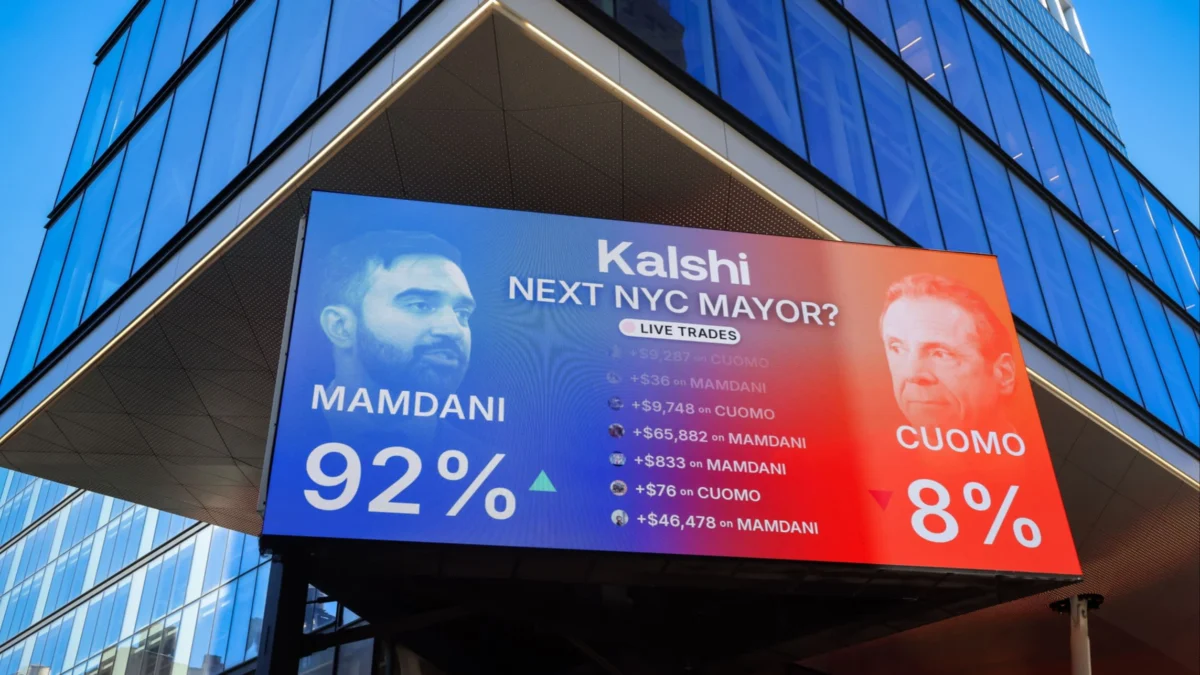
Arizona’s Corporation Commission (ACC) has initiated legal proceedings against Kalshi, a regulated exchange for event contracts, leveling serious accusations that the platform is facilitating an illegal gambling business within the state. This development marks a significant escalation in the regulatory scrutiny of innovative financial instruments and their intersection with existing gambling laws, potentially creating a precedent for similar exchanges operating nationwide. The ACC’s complaint centers on the core functionality of Kalshi – allowing users to trade contracts based on the outcome of future events, ranging from economic indicators to political elections. While Kalshi maintains its operations are legal and distinct from gambling, Arizona regulators argue that these activities fall squarely within the definition of prohibited wagering.
The dispute highlights a growing tension between the burgeoning field of event contracts and the often decades-old legal frameworks designed to regulate traditional forms of gambling. Kalshi, which operates as a designated contract market under the Commodity Futures Trading Commission (CFTC), positions itself as a legitimate venue for hedging against or speculating on specific future occurrences. The exchange’s proponents argue that these contracts offer a valuable economic function, allowing individuals and institutions to express views on future outcomes and potentially manage risk. However, the ACC’s stance suggests that the speculative nature and the broad scope of events covered by Kalshi’s contracts are more akin to betting on unpredictable outcomes, thereby crossing the legal threshold into gambling.
A Clash of Interpretations: Event Contracts vs. Gambling
At the heart of the ACC’s allegations is the assertion that Kalshi’s business model constitutes an unlawful gambling operation under Arizona Revised Statutes. The commission contends that the exchange facilitates betting on uncertain future events, where participants risk capital with the expectation of financial gain based on a specific outcome. This interpretation hinges on the perceived lack of an underlying economic purpose or risk-mitigation function that would distinguish these contracts from a simple wager. Regulators are likely focusing on the broad array of events available for trading, some of which may not have a clear, direct link to traditional financial markets or risk management strategies.
Kalshi, conversely, has consistently defended its operations, emphasizing its status as a federally regulated entity. The exchange argues that its contracts are designed to provide price discovery and risk management for a diverse range of events. For instance, contracts related to economic data releases, such as inflation rates or employment figures, can be viewed as tools for businesses and investors to hedge against potential economic shifts. Similarly, contracts on election outcomes could theoretically be used by political analysts or organizations to gauge public sentiment or manage campaign resources. Kalshi’s defense likely rests on the argument that these contracts have legitimate economic or informational value, setting them apart from pure chance-based gambling. The critical distinction, according to Kalshi, lies in the predictability and the potential for informed decision-making, however imperfect.
The legal battle in Arizona is not merely a localized dispute; it carries significant implications for the broader landscape of event contracts and speculative finance. If Arizona’s interpretation prevails, it could embolden other state regulators to scrutinize similar platforms, potentially leading to a patchwork of regulations that could stifle innovation and create operational challenges for exchanges seeking to operate across state lines. This could also force a re-evaluation of how existing gambling laws are applied to emerging financial products that blur the lines between speculation, hedging, and pure chance.
The Regulatory Landscape and Kalshi’s Position
Kalshi operates under the oversight of the Commodity Futures Trading Commission (CFTC), the federal agency responsible for regulating the U.S. derivatives markets. As a Designated Contract Market (DCM), Kalshi is subject to stringent rules designed to ensure market integrity, prevent fraud and manipulation, and protect market participants. The CFTC’s approval of Kalshi’s operations suggests a degree of federal endorsement for the concept of event contracts as a legitimate financial instrument. This federal oversight is a key pillar of Kalshi’s defense, as it highlights the exchange’s compliance with a robust regulatory framework.
However, state-level regulators retain authority over certain aspects of financial activities, particularly those that intersect with their own statutes concerning gambling. The ACC’s action underscores the potential for jurisdictional conflicts when innovative financial products traverse the boundaries of existing regulatory domains. Arizona’s gambling laws are designed to prevent unregulated wagering, and the ACC appears to believe that Kalshi’s offerings, despite federal oversight, fall outside the scope of permitted financial activities and within the purview of prohibited gambling.
The specific events available for trading on Kalshi are likely a focal point of the ACC’s investigation. While contracts based on widely recognized economic indicators might be easier to defend as having a financial or hedging purpose, contracts based on more esoteric or unpredictable events could be viewed by regulators as more akin to betting pools. The ACC will be scrutinizing the terms of these contracts, the nature of the underlying events, and the typical participants to determine if they constitute illegal gambling.
Broader Implications and Future Outlook
The Arizona case against Kalshi raises fundamental questions about the future of event contracts and the adaptability of financial regulation. As technology enables new forms of trading and speculation, regulators face the challenge of distinguishing between legitimate financial innovation and activities that could exploit regulatory loopholes or pose risks to consumers and market stability.
For Kalshi, a negative outcome in Arizona could have significant ramifications. It could lead to fines, an injunction preventing operations within the state, and potentially damage its reputation and ability to attract investors and users. The precedent set by such a ruling could also influence regulatory approaches in other states, potentially leading to a more restrictive environment for event contract exchanges.
Conversely, if Kalshi prevails, it could solidify its position and provide a clearer regulatory pathway for similar platforms. It might also prompt a broader conversation about modernizing gambling laws to accommodate new financial instruments that offer economic utility.
The ACC’s action is a clear signal that regulatory bodies are paying close attention to the evolving financial landscape. The outcome of this legal challenge will likely have a lasting impact on how event contracts are regulated, not just in Arizona, but across the United States, shaping the future of this innovative and potentially controversial segment of the financial market. The need for clarity and consistency in regulatory frameworks will be paramount as these markets continue to develop.
The core of the ACC’s argument likely rests on the interpretation of "gambling" within Arizona’s statutes. Typically, gambling involves the wager of money or other valuable consideration on an event of chance with the intent to win more money or valuable consideration. The ACC appears to contend that the events traded on Kalshi, regardless of any potential hedging or informational utility, are sufficiently characterized by chance and speculation to fit this definition. This would imply that the exchange is essentially facilitating a form of regulated betting, which is illegal in Arizona without proper licensing and oversight as a gambling operator.
Kalshi’s defense, conversely, would likely focus on the "event of chance" aspect. While acknowledging that future events are inherently uncertain, the exchange would argue that the outcomes are not purely based on chance but can be influenced by a multitude of factors, including economic policies, market forces, and human decisions. Furthermore, Kalshi would emphasize the existence of an underlying economic or informational purpose. For example, a contract on the price of oil next month is not merely a bet on a random occurrence; it’s a reflection of expectations about supply, demand, geopolitical events, and economic growth. The ability to hedge against or speculate on such factors is a fundamental aspect of financial markets.
The regulatory environment for such platforms is still evolving. While the CFTC provides a federal framework, state laws can create additional layers of complexity. The ACC’s intervention suggests that state regulators are asserting their authority to protect their citizens from what they perceive as unregulated gambling activities, even if those activities are conducted by entities subject to federal oversight in other capacities. This highlights the ongoing challenge of harmonizing federal and state regulatory approaches in the financial sector.
The implications of this case extend beyond Kalshi and Arizona. If the ACC’s action is successful, it could inspire similar legal challenges in other states, potentially leading to a fragmented regulatory landscape for event contract exchanges. This could create significant operational hurdles for companies seeking to offer their services nationwide, forcing them to navigate a complex web of state-specific laws and interpretations. It could also dampen innovation in this space, as companies may be hesitant to develop and launch new products if they face a high risk of legal challenges and regulatory uncertainty.
Conversely, a victory for Kalshi could provide greater clarity and legitimacy for the event contract market. It could establish a precedent that these contracts, when structured and regulated appropriately, are distinct from illegal gambling and possess legitimate economic functions. This would likely encourage further development and adoption of these innovative financial tools.
The long-term outlook for event contract exchanges will depend on how these legal and regulatory battles unfold. The case in Arizona serves as a crucial test of whether existing gambling laws are adequate to address the complexities of modern financial innovation, or if new regulatory frameworks are needed to accommodate these evolving markets. The resolution of this dispute will undoubtedly shape the future of speculative finance and the regulatory oversight of emerging financial instruments. The outcome will be closely watched by market participants, regulators, and policymakers alike, as it has the potential to define the boundaries of permissible financial activities in the digital age.



 Aura Kasih
 Ayu Aulia

 Safa Marwah