Ayu Aulia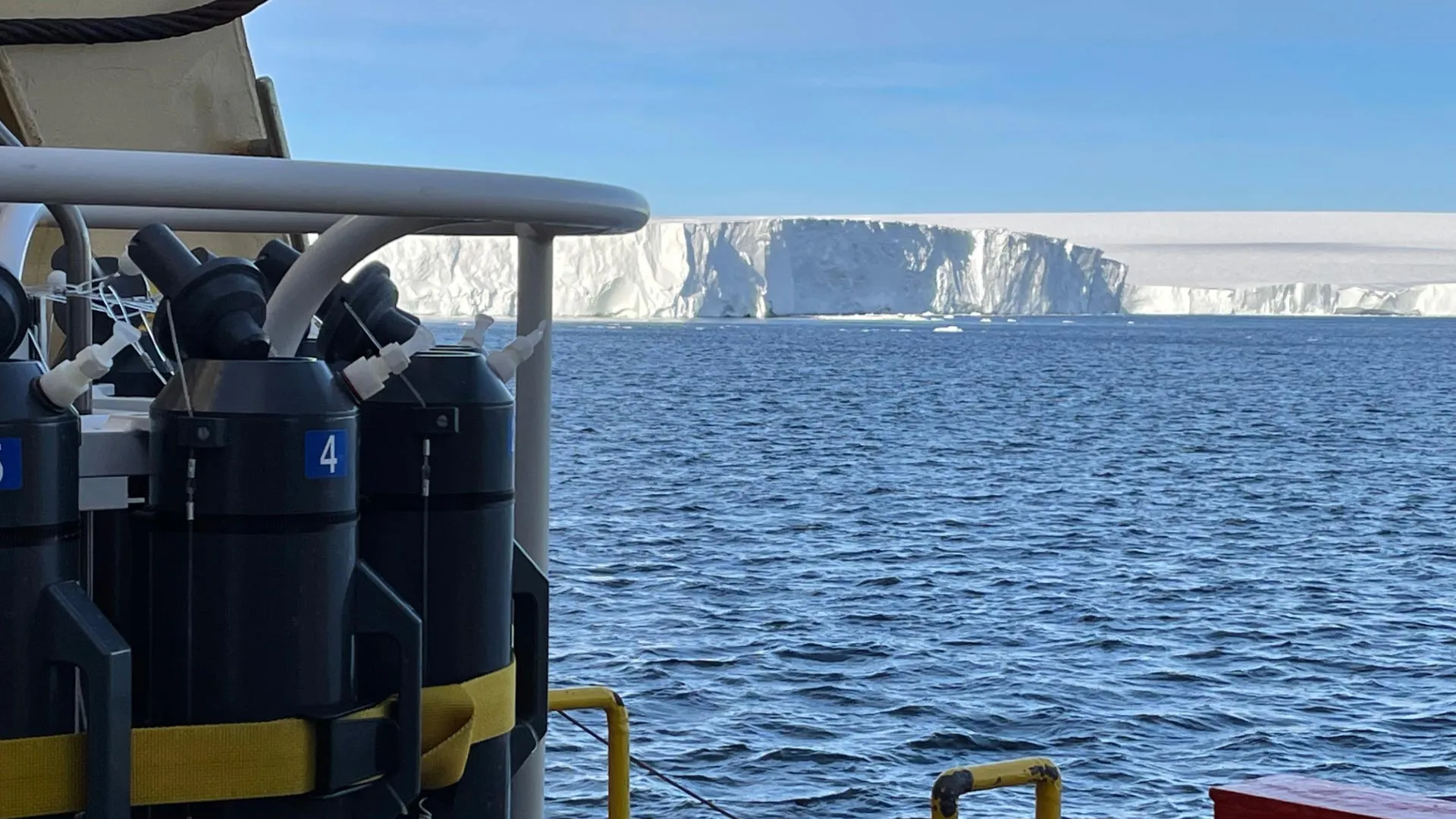
A long-standing hypothesis positing that melting Antarctic glaciers would naturally enhance oceanic carbon sequestration through increased iron availability has been significantly re-evaluated following novel empirical data, challenging a key assumption in global climate projections. This recent research indicates that meltwater from the continent’s colossal ice sheets contributes substantially less bioavailable iron to the Southern Ocean than previously theorized, compelling a fundamental reassessment of a perceived natural buffer against rising atmospheric carbon dioxide levels.
For decades, the concept of iron fertilization in the Southern Ocean has captured the attention of marine scientists and climate modelers alike. It proposed an elegant feedback loop: as global temperatures climbed, leading to accelerated glacial melt in Antarctica, the iron trapped within the vast ice formations would be liberated into the surrounding waters. This influx of iron, a crucial micronutrient often scarce in polar oceans, was expected to stimulate massive blooms of phytoplankton – microscopic marine algae. These phytoplankton, through photosynthesis, absorb vast quantities of atmospheric carbon dioxide, effectively drawing down greenhouse gases and mitigating the pace of climate warming. This natural process was envisioned as a significant, albeit passive, mechanism for carbon sequestration, offering a glimmer of hope amidst escalating climate concerns. The Southern Ocean, in particular, is renowned for its capacity to absorb atmospheric CO2, and the iron fertilization hypothesis provided a plausible explanation for how this capacity might be sustained or even enhanced in a warming world.
However, a groundbreaking study, leveraging precise field measurements, has cast considerable doubt upon this optimistic scenario. Researchers from Rutgers University-New Brunswick have published findings that meticulously quantify the iron content in meltwater emanating from an Antarctic ice shelf, revealing concentrations significantly lower than earlier estimates. This empirical evidence suggests that the anticipated natural boost to oceanic carbon uptake from glacial iron may be largely overestimated, necessitating a critical recalibration of climate models that have incorporated this assumption.
The Southern Ocean’s unique biogeochemical characteristics make the availability of iron a paramount factor in its productivity. Despite prolonged periods of darkness and extreme cold, these waters support an astonishing abundance of marine life, from the foundational phytoplankton to apex predators like whales. Phytoplankton, as primary producers, form the base of the entire food web, sustaining krill, which in turn are a vital food source for penguins, seals, and baleen whales. Crucially, the photosynthetic activity of these microscopic organisms transforms the Southern Ocean into the planet’s largest oceanic sink for atmospheric carbon dioxide. Understanding the precise mechanisms that regulate phytoplankton growth, particularly the supply of limiting micronutrients like iron, is therefore indispensable for accurately predicting future carbon cycle dynamics and the health of the global climate system.
Historically, much of the scientific understanding regarding the sources and distribution of iron in the Southern Ocean has relied upon sophisticated computer simulations and predictive models. While these tools are invaluable for exploring complex systems, they are inherently dependent on the accuracy of their underlying assumptions and input parameters. Recognizing this limitation, the Rutgers team, in collaboration with partner institutions from the United States and the United Kingdom, embarked on an ambitious expedition to gather direct, real-world measurements. Their target was the Dotson Ice Shelf, located in the Amundsen Sea of West Antarctica, a region critically important as it accounts for a substantial portion of Antarctica’s contribution to global sea-level rise through accelerated melting. The objective was clear: to collect glacial meltwater samples directly from its source, providing an unprecedented level of precision in quantifying its iron contribution.
The methodology employed by the research team was meticulously designed to isolate and measure the iron contribution from glacial meltwater. Floating ice shelves, which are extensions of land-based glaciers projecting into the ocean, are subject to melting primarily from relatively warm deep ocean currents that penetrate into the cavities beneath them. At the Dotson Ice Shelf, the scientists strategically identified and sampled water at both the entry points, where seawater flows into these sub-ice cavities, and the exit points, where the water, now mixed with glacial melt, flows out. This comparative sampling allowed them to precisely determine the net addition of iron attributable to processes occurring within the cavity.
Upon returning to the laboratory, Venkatesh Chinni, a postdoctoral scholar and the lead author of the study, undertook the arduous task of analyzing the collected samples. His measurements focused on two distinct forms of iron: dissolved iron, which is readily available for biological uptake by phytoplankton, and iron attached to suspended particulate matter. To further elucidate the origins of the iron, collaborators Jessica Fitzsimmons and Janelle Steffen at Texas A&M University employed isotopic ratio analysis. This technique acts like a geochemical "fingerprint," allowing scientists to trace the unique isotopic signatures of iron back to its specific geological or oceanic source, thereby distinguishing between iron derived from melting ice, deep ocean waters, or seafloor sediments.
The results of this exhaustive analysis proved to be highly illuminating and, for many, quite surprising. The study revealed that meltwater originating directly from the ice shelf contributed a mere 10% of the total dissolved iron flowing out of the cavity. Instead, the overwhelming majority of the dissolved iron—an impressive 62%—was found to originate from the deep ocean water circulating beneath the ice shelf. An additional 28% was traced back to sediments on the continental shelf. This finding fundamentally rewrites the understanding of iron sources in this critical polar environment. As Chinni succinctly stated, "Roughly 90% of the dissolved iron coming out of the ice shelf cavity comes from deep waters and sediments outside the cavity, not from meltwater."
Furthermore, the isotopic data provided intriguing insights into processes occurring even deeper beneath the glacier itself. The analyses pointed to the presence of a distinct liquid meltwater layer situated between the bedrock and the overlying ice sheet, a layer characterized by a notable absence of dissolved oxygen. Under these anoxic conditions, solid iron oxides within the bedrock are significantly more prone to dissolution, leading to the release of iron into the surrounding water. This newly identified mechanism, involving the grinding and dissolving of bedrock rather than the melting of ice, may constitute a more substantial source of bioavailable iron than the meltwater from ice shelves, challenging yet another long-held assumption.
These collective findings represent a significant paradigm shift in glaciology, oceanography, and climate science. They directly contradict the widespread assumption that glacial melting is a primary driver of iron fertilization in the Southern Ocean. The implications for climate change forecasts and the development of future climate models are profound. If a major natural carbon sequestration feedback loop is substantially weaker than previously believed, it necessitates a re-evaluation of projections for atmospheric CO2 concentrations and global warming trajectories. Climate models must now incorporate this revised understanding of iron cycling to improve their accuracy and predictive power.
Moreover, the ecological ramifications are substantial. A more precise understanding of iron sources is crucial for modeling the future productivity of the Southern Ocean ecosystem. If the iron supply is less dependent on glacial melt and more on deep-water upwelling and subglacial bedrock interactions, it could alter our understanding of how the food web, from phytoplankton to whales, will respond to ongoing climate change. It underscores the intricate and often counter-intuitive complexity of Earth’s natural systems, where anticipated beneficial feedback mechanisms may not materialize as expected.
The researchers emphasize that this study, while groundbreaking, is a crucial step rather than a definitive conclusion. It highlights the urgent need for further comprehensive investigations into subglacial processes across different Antarctic regions. Understanding the precise conditions under which bedrock dissolution occurs, the variability of iron release from different types of glaciers, and the spatial and temporal dynamics of deep-water iron transport will be critical for a holistic understanding of the Southern Ocean’s role in the global carbon cycle. This empirical evidence underscores the indispensable value of direct field measurements in validating and refining theoretical models, particularly in the face of rapidly evolving environmental conditions. The initial hope placed in Antarctica’s melting glaciers as a natural climate ameliorator may have dissipated, but in its place emerges a clearer, albeit more complex, picture of the continent’s profound influence on the planet’s climate future.



 Ridwan Kamil
 Safa Marwah
 Aura Kasih
 Lisa Mariana