Ayu Aulia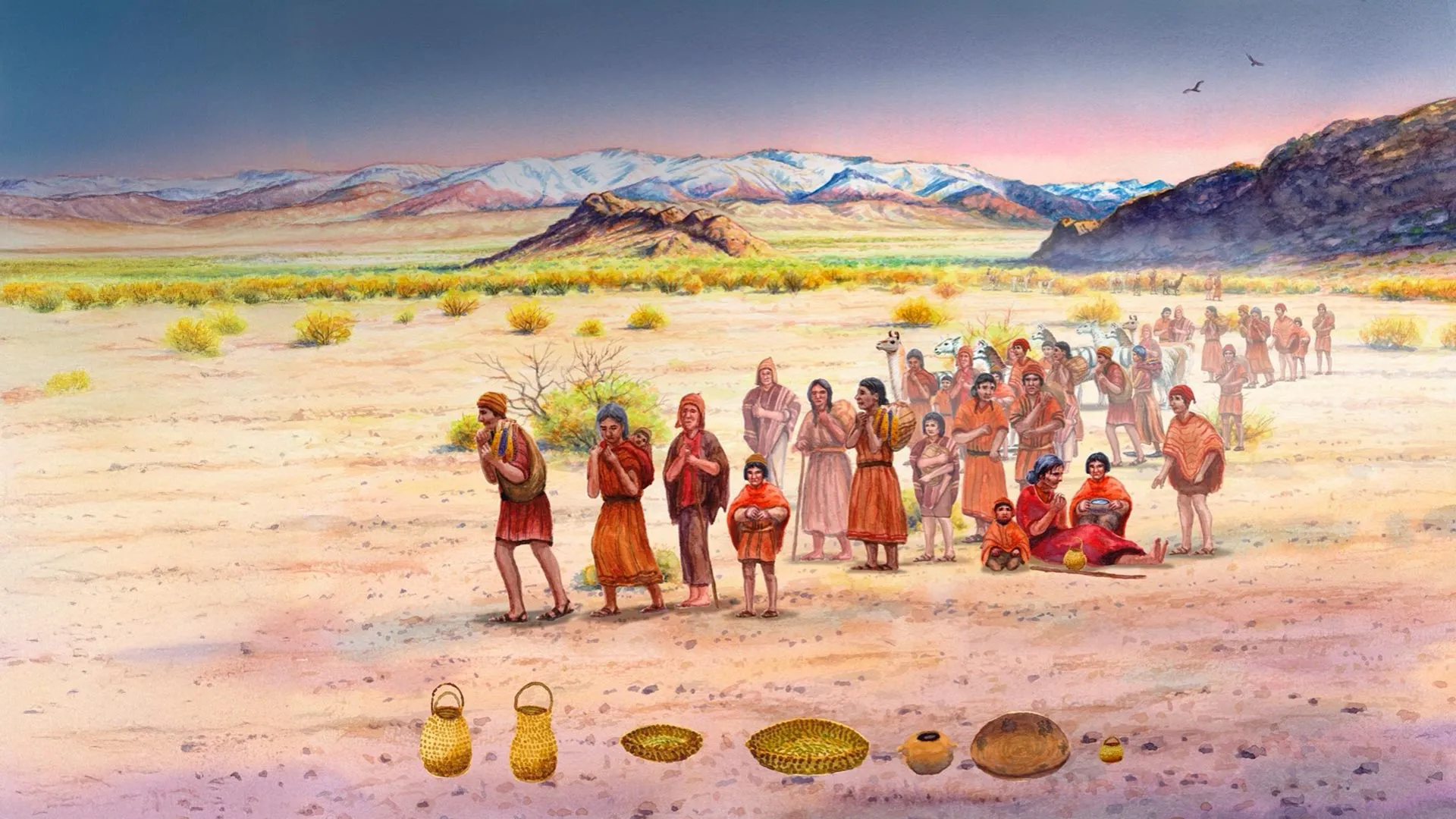
A groundbreaking interdisciplinary investigation, delving into over two millennia of human occupation in Argentina’s Uspallata Valley, a crucial ancient agricultural frontier in the southern Andes, has illuminated the complex interplay between evolving farming practices, environmental pressures, and societal adaptation. This comprehensive analysis, integrating ancient human and pathogen DNA with stable isotopic data, archaeological records, and paleoclimate reconstructions, and crucially developed in collaboration with Huarpe Indigenous communities, reveals how local hunter-gatherer populations embraced agriculture, the profound stresses encountered by subsequent maize-dependent societies, and the pivotal role of robust familial bonds in navigating periods of sustained instability.
The transition from nomadic hunter-gatherer lifestyles to settled agricultural communities represents one of the most profound transformations in human history, often termed the Neolithic Revolution. Across continents, this shift dramatically reshaped social structures, demographic patterns, and ecological relationships. A central debate within archaeology and anthropology revolves around the mechanisms of this spread: did agriculture primarily advance through the migration of farming populations, or was it largely adopted by existing local groups who assimilated new crops and cultivation techniques? Distinguishing between these two scenarios, often challenging through archaeological evidence alone due to similar material culture outcomes, finds clarity in specific regional contexts. The Uspallata Valley, situated at the southern periphery of the ancient Andean agricultural expansion, presents a unique opportunity to examine this question, as farming innovations arrived here considerably later than in more northerly South American regions, offering a clearer temporal window for observation.
Leveraging advanced paleogenomic techniques, a research collective, spearheaded by the Microbial Paleogenomics Unit at Institut Pasteur, undertook an extensive analysis of genome-wide ancient DNA derived from 46 individuals. These individuals spanned a vast chronological range, from early hunter-gatherer societies approximately 2,200 years ago to later populations deeply engaged in maize and other crop cultivation. The findings decisively indicate a profound genetic continuity linking these early hunter-gatherers with communities thriving over a millennium later, precisely as agricultural practices expanded throughout the region. This compelling genetic evidence strongly supports the hypothesis that farming was predominantly absorbed and integrated by the resident indigenous populations, rather than being introduced by a large influx of migrating agriculturalists.
Deep Genetic Heritage and Validation of Indigenous Narratives
Beyond unraveling the localized narrative of agricultural adoption in Uspallata, this genetic research significantly contributes to a broader understanding of human genetic diversity across the southern Andes. The study has successfully identified and characterized a distinct ancestral genetic component, previously only inferred through analyses of contemporary populations. This newly documented genetic lineage exhibits a remarkably deep evolutionary divergence and demonstrates continued persistence in the modern-day inhabitants of the region. This discovery holds considerable weight, particularly in countering historical narratives that have often erroneously claimed the extinction of indigenous descendants in the wake of the establishment and expansion of the Argentine nation-state. The genetic continuity affirmed by this research provides empirical validation for the enduring presence and deep roots of indigenous heritage in the area, reinforcing the cultural and historical claims of current Indigenous communities.
To reconstruct the daily lives, subsistence strategies, and mobility patterns of these ancient populations, researchers meticulously analyzed stable isotopes preserved within skeletal remains and dental enamel. Carbon and nitrogen isotopic signatures, incorporated into bone collagen and tooth dentin over an individual’s lifetime, provide a reliable record of long-term dietary composition, indicating the relative consumption of different food sources, including terrestrial plants like maize and animal proteins. Strontium isotopes, conversely, reflect the geological composition of the environment where an individual resided during tooth formation and later life, serving as a powerful proxy for determining residential mobility and whether individuals moved between distinct geographical areas.
The isotopic data revealed a dynamic and often flexible approach to maize consumption over time, suggesting that communities did not uniformly or steadily transition towards full agricultural dependence. Instead, their dietary practices appear to have been adaptive, potentially fluctuating with environmental conditions or cultural preferences. However, a marked shift emerged approximately 800 to 600 years ago, particularly evident at Potrero Las Colonias, a significant burial site. Individuals interred here displayed an exceptionally high reliance on maize, among the most intensive levels documented anywhere in the southern Andes. Crucially, many of these individuals also exhibited non-local strontium isotopic signatures, providing clear evidence of migration into the Uspallata Valley. The identity and origin of these migrants, and the drivers behind their relocation, thus became central questions for the research team.
Migration, Environmental Strain, and Societal Decline
Further comprehensive genetic and isotopic analyses shed light on the origins of these migrating groups. The evidence suggested that these newcomers were not from distant, unrelated populations but rather originated from nearby regions, sharing close genetic affinities with the existing local groups and forming part of the same broader, interconnected population network within the southern Andes. Despite this kinship, genomic data from this specific migrant population revealed a sharp and prolonged demographic decline, signaling generations of profound stress and adversity.
Multiple independent lines of evidence converged to paint a picture of a complex and multi-faceted crisis. Paleoclimate records, reconstructed from natural archives such as ice cores and sediment layers, indicated extended periods of environmental instability and climatic fluctuations that precisely coincided with the observed population decline. These environmental stressors likely included prolonged droughts, shifts in temperature regimes, or increased unpredictability in rainfall patterns, all of which would have severely impacted agricultural yields and resource availability. Concurrently, analysis of individual skeletal remains from the period provided stark biological indicators of hardship, revealing signs of chronic childhood malnutrition, growth arrest lines, and evidence of various diseases, reflecting widespread health deterioration across the community.
Adding another critical dimension to this crisis, ancient DNA analysis successfully identified the presence of Mycobacterium tuberculosis, the causative agent of tuberculosis, at the site. The specific lineage of M. tuberculosis detected is known to have circulated in pre-contact South America. Its discovery this far south, significantly beyond previously documented occurrences in Peru and Colombia, raises new and important questions regarding the historical routes and mechanisms of disease dissemination and persistence across the continent prior to European arrival. The presence of such a debilitating pathogen, especially within a population already facing environmental and nutritional stress, would have significantly compounded the challenges to survival and contributed to the observed demographic contraction.
Nicolás Rascovan, head of the Microbial Paleogenomics Unit at Institut Pasteur, emphasized the significance of this finding: "Detecting tuberculosis this far south in a pre-contact context is striking. It expands the geographic frame for understanding how tuberculosis circulated in the past and highlights the value of integrating pathogen genomics into broader reconstructions of human history." The pathogen’s ability to persist and spread within a community undergoing profound environmental and dietary stress underscores the vulnerability of such populations and the complex interplay between human health, environment, and societal stability.
Kinship Networks: A Strategy for Survival
Amidst these profound challenges, the genetic analysis of family relationships within the Uspallata Valley population revealed a crucial adaptive strategy. Many of the identified migrants, despite being closely related, were interred at different times, indicating a pattern of ongoing, multi-generational movement into and within the valley. These kinship networks were notably structured, with one mitochondrial lineage—passed exclusively through maternal lines—predominating. This strong maternal signature suggests a central and perhaps organizing role for women in maintaining family continuity, coordinating movement, and preserving social cohesion during periods of crisis.
Crucially, the archaeological and genetic evidence showed no indication of violent conflict between the local inhabitants and the newcomers. Indeed, individuals from both groups were sometimes buried together, implying peaceful coexistence and integration rather than animosity. This absence of inter-group violence, coupled with the strong familial ties, suggests that migration, driven by the imperative of survival, was a collective strategy orchestrated through existing social bonds. These family networks likely provided essential support, shared knowledge, and facilitated resource allocation, enabling communities to navigate the overlapping pressures of environmental instability, food shortages, and disease outbreaks.
Ramiro Barberena, an archaeologist and co-first author of the study, a researcher at CONICET, articulated the implications: "No farming community abandons fields and homes lightly. Our results are most consistent with people moving under force majeure, relying on family networks to navigate crisis." He further elaborated on the broader relevance: "Understanding how these transitions unfolded and what they meant for demography, economy, and health helps us better grasp the pathways that shaped today’s societies—and to think about risks and challenges of climate change and demographic pressures." The insights from Uspallata thus offer a historical analogue for contemporary issues, highlighting the enduring human capacity for adaptation and cooperation in the face of existential threats.
Ethical Research and Indigenous Collaboration
A distinguishing feature and foundational strength of this research lies in its profound commitment to collaboration with Indigenous communities. Members of the Huarpe community were not merely subjects of study but active partners throughout the entire research process, significantly contributing to the interpretation of findings, the formulation of narratives, and the ethical framing of the investigation. The study formally recognizes this partnership through the co-authorship of three Huarpe community members: Claudia Herrera, Graciela Coz, and Matías Candito. This deep engagement fostered ongoing dialogues that addressed critical issues such as permissions for research, managed uncertainties surrounding ancestral remains, and shaped how research outcomes would be disseminated respectfully and accessibly. To ensure effective local engagement and understanding, a Spanish-language version of the findings, featuring accessible explanations, was specifically produced.
Rascovan underscored the transformative impact of this collaborative approach: "Archaeology and paleogenomics are not neutral when they involve the ancestors of living people. Working with communities changes how we do science: it shapes the questions we ask, how we interpret evidence, and how we communicate what we can—and cannot—conclude." This statement powerfully articulates the ethical imperative and intellectual enrichment that arises when scientific inquiry is conducted in partnership with the descendants of the populations being studied, ensuring that research is not only scientifically rigorous but also culturally sensitive and socially responsible.
Rethinking Agricultural History and Human Resilience
More broadly, this comprehensive investigation fundamentally reframes our understanding of the agricultural transition, one of the most pivotal epochs in human history. It demonstrates unequivocally that this transformative process did not unfold along a monolithic, predetermined trajectory. Instead, the adoption and evolution of farming practices were highly diverse, intricately shaped by localized environmental conditions, unique social dynamics, and the specific cultural contexts of different communities. By meticulously integrating genetic, archaeological, environmental, and pathogen data, the study constructs a holistic narrative, revealing the multifaceted strategies ancient communities employed to contend with overlapping challenges such as pervasive climate instability, acute food stress, and the burden of infectious diseases.
The long-term perspectives gleaned from Uspallata, illuminating how ancient populations adapted and endured through cooperation, flexible social structures, and robust family networks, offer invaluable insights into the enduring nature of human resilience. These lessons resonate with particular force in the contemporary era, as global societies grapple with unprecedented challenges posed by accelerating climate change, increasing demographic pressures, and the ever-present threat of emergent and re-emergent diseases. The ancient past, through studies like this, thus provides a critical lens through which to understand human capacity for adaptation, collective action, and survival in the face of profound systemic pressures.

 Ridwan Kamil
 Safa Marwah
 Aura Kasih
 Lisa Mariana