Aura Kasih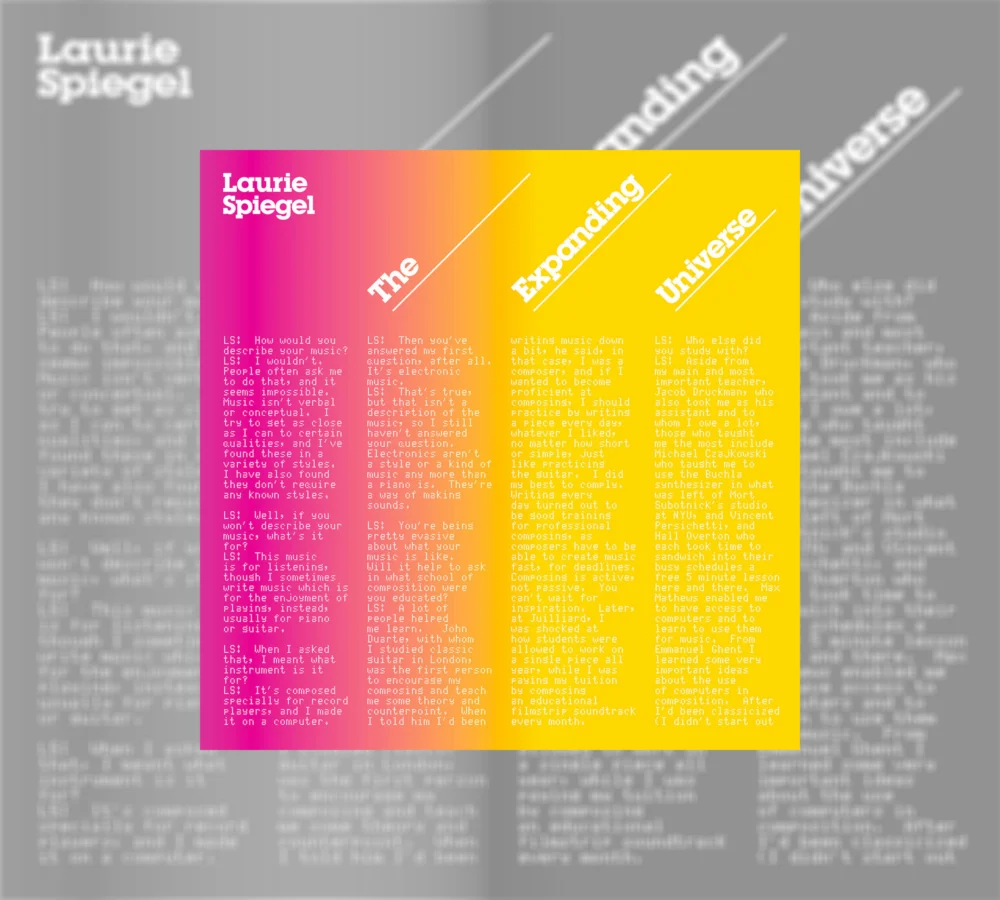
Laurie Spiegel’s seminal 1980 album, "The Expanding Universe," stands as a monumental achievement in the evolution of electronic music, predating and influencing the very fabric of ambient and algorithmic composition. This collection of works, recently brought back into wider circulation, offers a profound sonic journey that feels both remarkably prescient and deeply resonant with contemporary listeners, showcasing a masterful blend of synthetic experimentation and introspective musicality that continues to captivate and inspire.
"The Expanding Universe" is not merely a collection of tracks; it is an auditory exploration, a meticulously crafted soundscape that emerged from a fertile period of innovation in electronic music. Released in 1980, this album by Laurie Spiegel represents a pivotal moment, demonstrating an early and sophisticated understanding of what would later become known as ambient music, long before the term gained widespread recognition. Spiegel’s work on this record is characterized by a profound engagement with the nascent possibilities of synthesizers and algorithmic composition techniques, resulting in a body of work that feels remarkably ahead of its time. The album’s enduring appeal lies in its ability to evoke a sense of both profound nostalgia and cutting-edge modernity, a testament to Spiegel’s visionary approach to sound.
To fully appreciate "The Expanding Universe," one must delve into the historical context of electronic music’s emergence. The 1970s and early 1980s were a period of intense experimentation, where artists grappled with new technologies like synthesizers and early computer programming. Unlike the more structured and often bombastic styles of rock and pop music prevalent at the time, a growing number of musicians began to explore the potential of electronic sound for creating immersive, atmospheric, and introspective experiences. This movement, which would eventually crystallize into ambient music, sought to move beyond traditional song structures and instrumental virtuosity, focusing instead on texture, timbre, and the creation of sonic environments. Laurie Spiegel was at the vanguard of this movement, utilizing her technical acumen and artistic vision to forge a path that would profoundly shape the future of electronic sound.
Spiegel’s use of synthesizers on "The Expanding Universe" was not simply about replicating traditional instruments; it was about discovering new sonic palettes. She explored the timbral possibilities of her instruments, creating sounds that were simultaneously organic and alien. Tracks like "Patchwork" and "A Folk Study" exemplify this, featuring intricate, bouncing arpeggios that, while distinct, invite comparisons to the melodic inventiveness found in pieces like The Who’s "Baba O’Riley," though approached with a decidedly different intent and sonic character. These compositions demonstrate a keen understanding of melodic development and rhythmic interplay, even within the often abstract realm of electronic music.
The album’s sonic palette is remarkably diverse, yet consistently cohesive. Tracks such as "Old Wave" and "East River Dawn" possess a shimmering, ethereal quality that resonates with the foundational elements of what would later define the sonic signatures of artists like M83 in their earlier explorations or the evocative soundscapes of Boards of Canada. This is not to suggest direct influence in a linear sense, but rather to highlight the shared sensibilities and pioneering spirit that connect Spiegel’s work to these later artists. Her ability to craft sounds that feel both familiar and otherworldly is a hallmark of her genius, ensuring that "The Expanding Universe" rarely feels dated, a challenge many electronic albums from this era faced.
In contrast to these more rhythmically engaging pieces, "The Expanding Universe" also offers profound excursions into the contemplative side of electronic music. "Appalachian Grove II" and "The Unanswered Question" are prime examples of this, presenting melodies that unfold at a deliberate, almost glacial pace. These tracks can, at times, evoke a sense of profound spaciousness and introspection, where the listener is encouraged to drift and explore the subtle nuances of sound. This approach to composition, characterized by its slow evolution and focus on sustained sonic textures, finds direct parallels in the contemporary landscape of ambient music. Indeed, pieces like these would not feel out of place in the curated soundscapes found on platforms dedicated to ambient Instagram or the burgeoning modular synth YouTube community, both of which owe a significant debt to Spiegel’s pioneering efforts.
While the majority of the album eschews conventional percussion, a deliberate choice that contributes to its immersive and ambient qualities, there are notable exceptions that showcase Spiegel’s versatility. The track "Drums," as its title suggests, is a percussive exploration, venturing into fast-paced and polyrhythmic territories that demonstrate a command over complex rhythmic structures. However, the true standout in this regard is "Clockworks." This piece ventures into a darker, more industrial sonic territory, exhibiting a proto-industrial grime and rattle that evokes the raw, experimental output of bands like Throbbing Gristle, or even the atmospheric tension found in modern film scores by composers such as Trent Reznor. The fact that "Clockworks" has not been extensively sampled or repurposed for use in underground hip-hop productions, as one might expect given its compelling rhythmic and textural qualities, is a testament to its unique and unassailable artistic integrity.
"The Expanding Universe," while not necessarily presenting a singular, monolithic concept, nevertheless feels like the unadulterated expression of an artist operating at the zenith of their creative and technical capabilities. The 2012 reissue of the album further solidified Spiegel’s legacy by augmenting the original tracklist with over 100 minutes of previously unreleased material. This expanded edition provides an even deeper dive into Spiegel’s sonic universe, offering listeners a more comprehensive understanding of her creative process and the breadth of her artistic vision. The additional material not only enriches the listening experience but also reinforces the profound impact "The Expanding Universe" has had on the trajectory of electronic music.
The notion of 1970s experimental synth music might, for some, conjure images of impenetrable, avant-garde sonic exercises. However, "The Expanding Universe" possesses a remarkable inviting quality that belies its experimental roots. While certain tracks, such as the concluding pieces "Kepler’s Harmony of the Worlds" and "Wandering in Our Times," do not shy away from extended periods of dissonance and confrontational tones, the overarching impression of the album is one of tunefulness and accessibility. Spiegel masterfully balances sonic innovation with an inherent musicality that draws the listener in, making the exploration of these complex sonic territories a rewarding and engaging experience.
The genesis of "The Expanding Universe" can be traced back to Spiegel’s work at the Columbia-Princeton Electronic Music Center in the early 1970s, a hub for electronic music innovation. During this period, she developed her own computer music software, including the groundbreaking Music Mouse, which allowed for interactive composition and real-time manipulation of musical parameters. This technological fluency informed her approach to creating "The Expanding Universe," enabling her to explore intricate compositional structures and sonic textures that were previously unattainable. Her understanding of algorithmic composition, the process of using algorithms to generate musical material, allowed her to create music that felt both meticulously designed and organically emergent. This was not simply about programming a sequence; it was about creating systems that could generate novel musical ideas, pushing the boundaries of what was considered possible in music creation.
The album’s title itself, "The Expanding Universe," is evocative and deeply symbolic. It suggests a continuous process of creation, exploration, and growth, mirroring the very nature of the music itself. The compositions seem to unfurl and evolve, much like cosmic phenomena, creating a sense of limitless possibility. This resonates with the idea of ambient music as a space for contemplation and inner exploration, inviting the listener to project their own thoughts and feelings onto the sonic canvas. Spiegel’s ability to imbue her electronic creations with such profound emotional depth is a testament to her artistry, transforming abstract sounds into something deeply human.
The influence of "The Expanding Universe" extends far beyond the immediate circles of electronic music enthusiasts. Its pioneering use of synthesizers and algorithmic composition laid foundational groundwork for numerous genres and subgenres that have emerged in the decades since its release. The album’s embrace of textural sound design and its focus on creating immersive sonic environments can be heard in the evolution of ambient, drone, electronic, and even certain forms of film scoring. Artists across a spectrum of musical disciplines have, consciously or unconsciously, benefited from the sonic vocabulary that Spiegel helped to establish.
Furthermore, the reissue of "The Expanding Universe" in the digital age has introduced Laurie Spiegel’s groundbreaking work to a new generation of listeners and creators. Platforms such as Bandcamp, alongside major streaming services like Qobuz, Deezer, YouTube Music, Apple Music, and Spotify, have made her music accessible to a global audience. This renewed accessibility is crucial for understanding the historical development of electronic music and for appreciating the enduring power of Spiegel’s artistic vision. Her work serves as a vital reminder that innovation often emerges from dedicated experimentation and a profound connection to the creative potential of technology.
In conclusion, Laurie Spiegel’s "The Expanding Universe" is an essential work for anyone seeking to understand the origins and evolution of modern electronic music. It is an album that transcends its time, offering a sonic landscape that is both intellectually stimulating and emotionally resonant. Spiegel’s masterful integration of experimental synthesis, algorithmic composition, and a deeply intuitive musicality has resulted in a collection of pieces that continue to inspire and captivate, solidifying her position as a true pioneer in the realm of electronic sound. The album’s enduring appeal lies not just in its historical significance but in its timeless ability to transport the listener to new sonic frontiers.



 Ayu Aulia
 Ridwan Kamil
 Safa Marwah
 Lisa Mariana