Lisa Mariana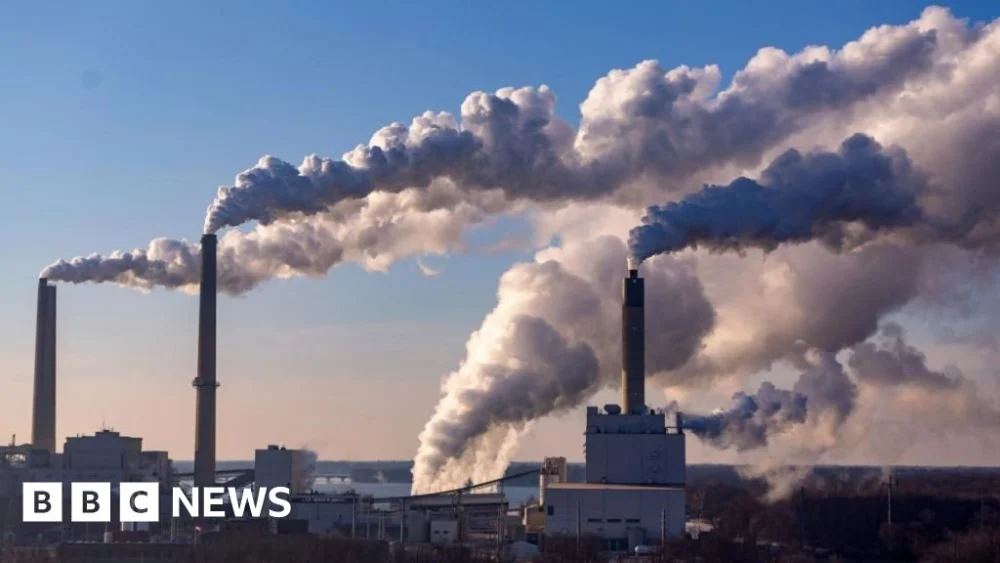
The United States government has taken a pivotal step to rescind a critical regulatory determination made during the previous administration, which established that atmospheric accumulation of greenhouse gases poses a direct peril to public health and societal welfare, thereby eliminating a cornerstone for federal climate action. This sweeping policy reversal, announced by President Donald Trump, directly challenges the scientific consensus underpinning climate regulation and is anticipated to trigger immediate and prolonged legal battles, reshaping the landscape of environmental policy and economic priorities within the nation.
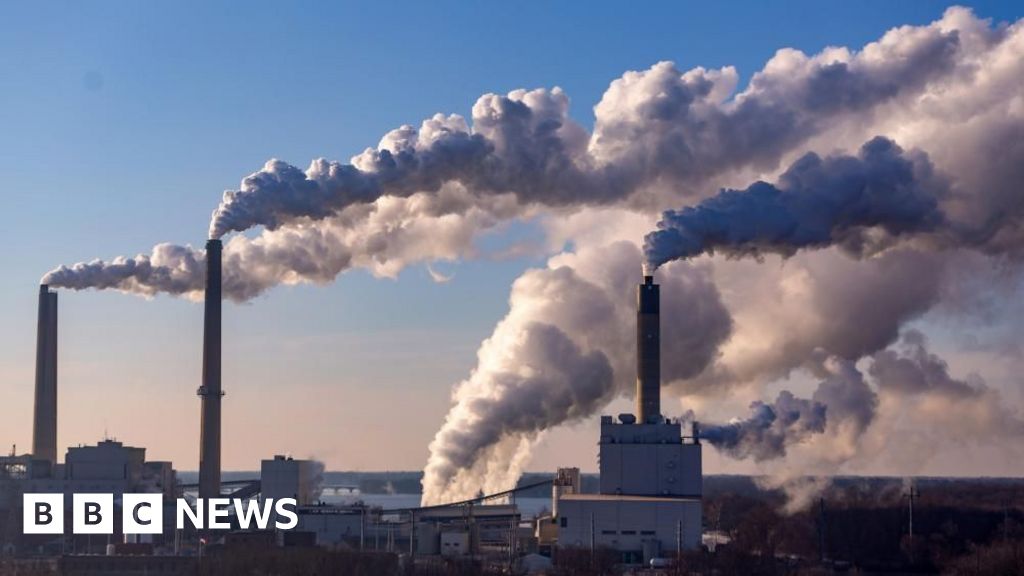
At the core of this dramatic shift lies the 2009 "endangerment finding," a scientific and legal pronouncement by the Environmental Protection Agency (EPA). This finding concluded unequivocally that six principal greenhouse gases, notably carbon dioxide and methane, were contributing to climate change in a manner that jeopardized human health and the environment. This determination was not merely an academic exercise; it became the indispensable legal basis, or "lynchpin," for a wide array of federal regulations aimed at mitigating climate change. Without legislative consensus in a divided Congress, this EPA finding empowered the executive branch to implement controls across various sectors, from vehicle emissions and power plant operations to methane leaks in the oil and gas industry, and even aircraft pollution. Its significance cannot be overstated, as it underpinned virtually every federal initiative to curb planet-warming emissions over the past decade.
President Trump, speaking from the Oval Office, characterized the original 2009 finding as a "disastrous Obama-era policy" that had "severely damaged the American auto industry" and "massively drove up prices for American consumers." The White House framed the revocation as the "largest deregulation in American history," projecting significant economic benefits. Administration officials asserted that rolling back these regulations would save over a trillion dollars across the economy and reduce manufacturing costs for automakers by an estimated $2,400 per vehicle, thereby making cars more affordable and stimulating economic growth. This narrative aligns with the administration’s broader agenda of prioritizing economic expansion and deregulation, often at the expense of environmental protections. The president further derided climate mitigation efforts, including the Democratic party’s climate proposals, as a "Green New Scam," underscoring the ideological divide inherent in the decision.
The decision has, predictably, drawn sharp condemnation from environmental advocacy groups, former government officials, and a substantial portion of the scientific community. Critics assert that this move represents the most significant retrenchment from climate action attempted to date and vow to challenge it vigorously in the courts. Former President Barack Obama, a rare commentator on the policies of his successors, voiced strong opposition, stating that repealing the finding would render Americans "less safe, less healthy and less able to fight climate change," directly attributing the policy shift to the financial interests of the fossil fuel industry. Environmental organizations have released their own analyses, counteracting the administration’s economic projections. One prominent environmental defense group estimated that the rollback would lead to an additional $1.4 trillion in fuel costs for American consumers due to less efficient vehicles. Furthermore, their analysis projected dire public health consequences, including up to 58,000 additional premature deaths and 37 million more asthma attacks, painting a stark picture of the human cost associated with reduced air quality and accelerated climate impacts.
The legal ramifications of this reversal are profound and complex. The 2009 endangerment finding, rooted in the Clean Air Act, provided the EPA with statutory authority to regulate pollutants that endanger public health and welfare. Its abrogation raises fundamental questions about the agency’s obligations under existing environmental law. Prior to this reversal, the finding had effectively preempted states from enacting their own, often more stringent, carbon emission regulations, as federal authority was deemed supreme. It also served to block numerous "nuisance" lawsuits brought by individuals or organizations seeking redress for climate-related damages, by centralizing regulatory authority at the federal level. Legal experts anticipate that this reversal will empower states and non-profit entities to initiate a wave of new litigation, likely in state courts, to define the new contours of environmental law in the absence of federal leadership. The legal challenge against the reversal will likely contend that the administration’s decision is "arbitrary and capricious," lacking a sound scientific or legal basis, and thus violates administrative law.
For the American automotive industry, the implications are mixed. While some within the industry may welcome the immediate relief from regulatory compliance costs, others face considerable uncertainty. Global automotive markets are increasingly demanding fuel-efficient and low-emission vehicles, driven by international regulations and consumer preferences. By diverging from these global standards, American manufacturers producing less fuel-efficient vehicles could find their products less competitive and harder to sell in lucrative overseas markets. This could place U.S. automakers at a distinct disadvantage compared to their international counterparts who continue to innovate in cleaner vehicle technologies.
A critical aspect of the Trump administration’s strategy to justify the reversal involves challenging the underlying climate science itself. The Department of Energy had previously convened a panel of scientists to produce a report that aimed to question widely accepted scientific consensus regarding the human impact on global warming. This report was intended to provide a scientific rationale for undoing the 2009 finding. However, this panel faced widespread criticism for its perceived lack of scientific diversity, with many experts noting it was populated by individuals skeptical of anthropogenic climate change, and for producing a report deemed inaccurate and misleading. A federal judge subsequently ruled that the formation of this hand-picked team violated legal procedures, further undermining the scientific credibility of the administration’s position. The reliance on such a contested scientific basis is likely to be a central point of contention in any forthcoming legal challenges, highlighting a broader concern about the politicization of scientific inquiry in policymaking.
Indeed, many legal analysts believe that the Trump administration’s ultimate objective is not merely to repeal the endangerment finding for the remainder of its term, but to secure a permanent legal victory that would prevent future administrations from easily reinstating it. This strategy likely involves maneuvering the anticipated legal challenges to reach the Supreme Court before the end of the current presidential term. If the Supreme Court were to rule in favor of the administration, effectively consigning the endangerment finding to history, it would represent a monumental shift. Such a ruling, particularly if it fundamentally reinterprets the EPA’s authority under the Clean Air Act or overturns precedents like Massachusetts v. EPA (2007)—which affirmed the EPA’s power to regulate greenhouse gases—could severely curtail the executive branch’s ability to address climate change without new, and often difficult to achieve, legislative action. This would create a lasting legal barrier that even a future environmentally-focused administration would struggle to overcome, profoundly altering the institutional capacity of the United States to tackle climate change.
The revocation of the endangerment finding also carries significant international implications. The United States, under the Trump administration, has already withdrawn from the Paris Agreement, a global accord to combat climate change. This latest action further signals a retreat from global climate leadership and could undermine international efforts to reduce emissions, potentially encouraging other nations to relax their own environmental commitments. It presents a stark contrast to the growing global consensus on the urgency of climate action and the imperative for decarbonization.
In conclusion, the Trump administration’s decision to revoke the EPA’s 2009 endangerment finding is far more than a simple regulatory adjustment; it represents a fundamental reorientation of the nation’s environmental policy and a direct challenge to established climate science. This move is poised to unleash an unprecedented wave of legal battles, reshape federal-state environmental governance, and potentially leave a lasting legacy on the American legal and environmental landscape. The debate over economic prosperity versus environmental protection, and the role of scientific evidence in policy, will undoubtedly intensify as the courts, states, and advocacy groups grapple with the far-reaching consequences of this pivotal decision. The long-term trajectory of U.S. climate policy, and indeed global climate efforts, hangs in the balance as this foundational mandate is dismantled.




 Safa Marwah
 Aura Kasih
 Ridwan Kamil