
 Ayu Aulia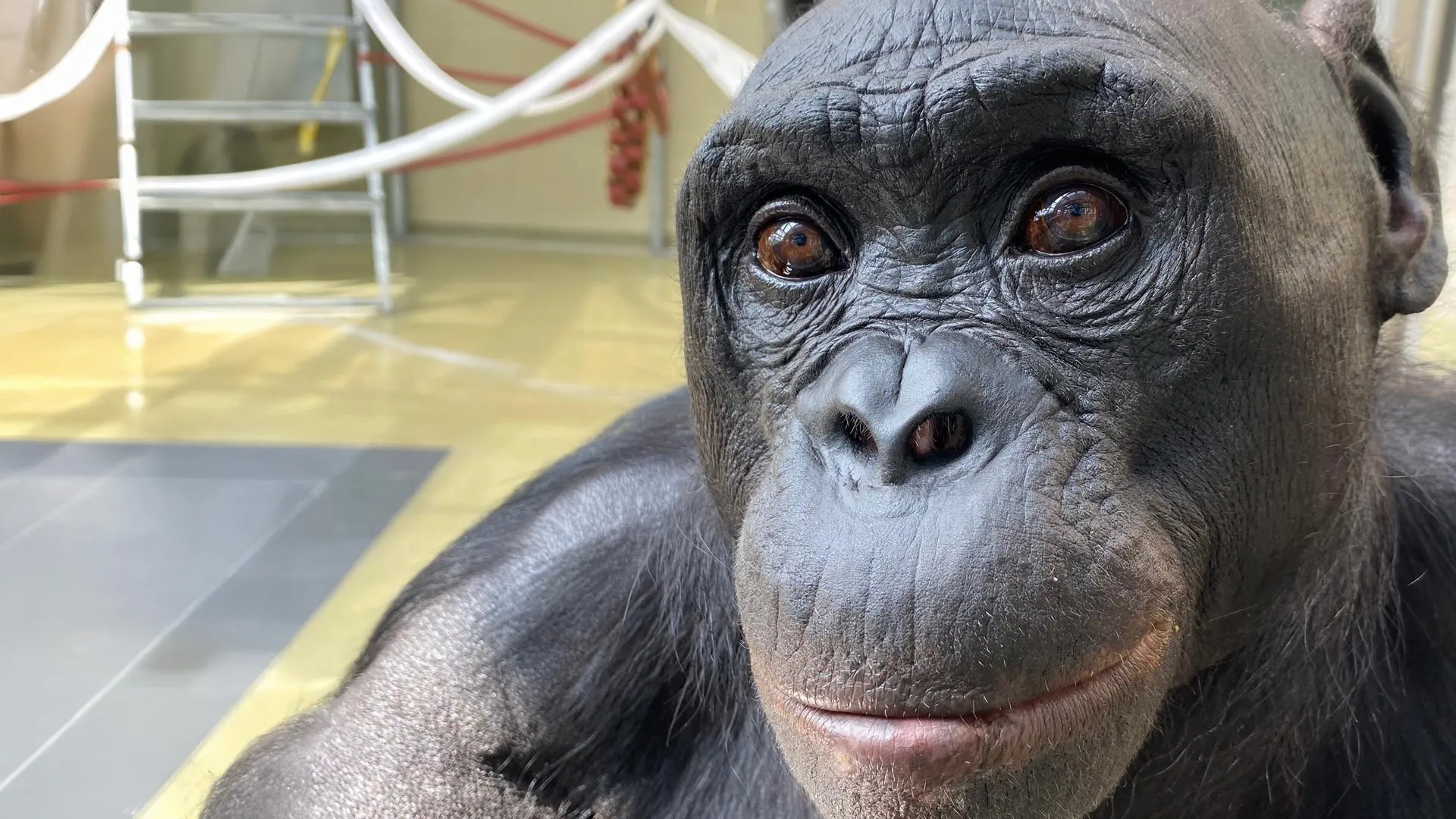
In a pioneering series of investigations, researchers have presented compelling evidence that apes possess the capacity for imagination and engage in forms of pretend play, a cognitive faculty long considered a unique hallmark of human intelligence. These findings, stemming from carefully orchestrated experiments at a prominent research institution, fundamentally challenge long-standing assumptions about the mental lives of non-human primates and compel a re-evaluation of the evolutionary trajectory of complex cognitive abilities.
The groundbreaking research centered on a single bonobo whose interactions with conceptualized objects—such as imagined beverages and unseen fruit—demonstrated a consistent and discernible understanding of make-believe scenarios. This empirical demonstration provides a robust counterpoint to traditional perspectives on animal cognition, suggesting a far greater degree of mental flexibility and abstract reasoning among certain species than previously posited. The scientific community has historically drawn a sharp distinction between human and animal minds, often attributing to humans an exclusive domain over capacities like symbolic thought, future planning, and the creation of imaginary worlds. This latest study, however, proposes that the neural underpinnings for such sophisticated mental operations may possess deeper evolutionary roots, potentially extending back millions of years to a common ancestor shared by humans and contemporary apes.
Historical Perspectives on Animal Intellect and the Human Divide
For centuries, Western philosophical and scientific thought has largely positioned humanity at the apex of cognitive evolution, often viewing animals through a mechanistic lens. Figures like René Descartes famously proposed that animals were mere automata, lacking consciousness, reason, or any internal mental life akin to humans. This anthropocentric view profoundly influenced scientific inquiry, leading to a focus on explaining animal behaviors through instinct or simple stimulus-response mechanisms, rather than attributing complex cognitive processes.
The latter half of the 20th century witnessed a gradual shift in this paradigm, largely fueled by pioneering ethological studies. Jane Goodall’s revolutionary observations of chimpanzees crafting and utilizing tools in the wild, for instance, famously necessitated a redefinition of "man the toolmaker," forcing a reconsideration of what truly distinguished human ingenuity. Similarly, research into animal communication, problem-solving, and social structures began to chip away at the notion of human cognitive exclusivity. Yet, the realm of imagination, particularly the capacity for "pretend play"—the ability to mentally represent objects or scenarios that are not physically present or to attribute novel properties to existing ones—remained largely unchallenged as a uniquely human endeavor. It represented a frontier of cognition that seemed to demand a level of abstract thought, counterfactual reasoning, and understanding of others’ mental states that was deemed beyond the reach of non-human animals. The current investigation directly confronts this lingering assumption, presenting empirical data that suggest the boundaries of primate imagination may be far more expansive than previously conceived.
Deconstructing Imagination and Pretend Play
To fully appreciate the significance of this research, it is crucial to delineate what constitutes imagination and pretend play from a cognitive science standpoint. Imagination is not merely the ability to recall past events or anticipate immediate future outcomes; it involves the capacity to mentally construct novel scenarios, objects, or ideas that do not currently exist in reality. Pretend play, a manifestation of imagination, typically involves:
- Symbolic Representation: Using one object to stand for another (e.g., a stick as a baby).
- Counterfactual Thinking: Acting "as if" a situation were different from reality (e.g., an empty cup containing juice).
- Metarepresentation: Understanding that the play is a mental construct, not a literal reality. This often involves a rudimentary "theory of mind"—the ability to attribute mental states (beliefs, desires, intentions) to oneself and others.
In humans, pretend play is a fundamental developmental milestone, typically emerging around the second year of life. It serves as a critical incubator for language development, social skills, problem-solving, and emotional regulation. Even younger infants demonstrate precursors to this ability, exhibiting surprise or specific reactions when adults engage in make-believe actions, such as pretending to drink from an empty cup. These early behaviors indicate an innate capacity to distinguish between reality and a simulated reality, laying the groundwork for more complex imaginative endeavors.
Despite anecdotal accounts of animal behaviors that seemed to involve pretend play—such as young chimpanzees in the wild carrying sticks as if they were infants, or captive apes manipulating imaginary items after interacting with real ones—controlled scientific experiments to rigorously test this capacity in non-human animals were conspicuously absent. This gap in research persisted, leaving the question of non-human imagination largely unanswered by empirical means.
The Genesis of a Controlled Experiment: Designing for Ape Imagination
Recognizing this critical void, the research team embarked on a mission to devise a controlled experimental framework capable of assessing pretend play in a non-human primate. The objective was to move beyond anecdotal observations and establish empirical evidence under rigorous conditions. The researchers, led by key figures in cognitive ethology, meticulously crafted a methodology inspired by human children’s tea parties, a quintessential context for pretend play.
The subject of this pioneering study was Kanzi, a 43-year-old bonobo residing at the Ape Initiative, a renowned research facility. Kanzi was not a randomly selected individual; he possessed a unique background, having been extensively involved in language acquisition research since infancy. His history of interacting with human researchers, his reported capacity for spontaneous pretend behaviors, and his ability to comprehend spoken language and respond by pointing made him an exceptionally suitable candidate for exploring advanced cognitive functions. His "enculturated" status—meaning he had been raised in a human-like environment with extensive exposure to human communication and cultural practices—was a crucial factor, as it suggested a potential for cognitive development that might differ from wild populations.
The experimental setup was designed for clarity and replicability. Kanzi was positioned across a table from an experimenter, a familiar and comfortable arrangement. The table was equipped with everyday items such as empty cups, pitchers, bowls, and jars, all arranged to mimic a social interaction centered around food or drink preparation and consumption. The simplicity of the props aimed to minimize distractions and focus Kanzi’s attention on the symbolic actions performed by the experimenter.
Unveiling the Invisible: Tracking Imaginary Objects
The research unfolded across three distinct experiments, each designed to progressively test Kanzi’s understanding of pretend objects and actions:
Experiment 1: The Invisible Juice Conundrum
In the initial experiment, two empty, transparent cups were placed alongside an empty, transparent pitcher. The experimenter then performed a series of actions, pretending to pour juice from the pitcher into both cups. Following this, the experimenter acted out emptying the "juice" from one of the cups, shaking it demonstrably to convey its emptiness. Crucially, the experimenter then posed a direct question to Kanzi: "Where’s the juice?" Kanzi’s response was consistently to point to the cup that was meant to still contain the pretend juice. This pattern of response persisted even when the experimenter deliberately shuffled the positions of the cups, indicating that Kanzi was tracking the conceptual location of the imaginary liquid rather than simply reacting to a fixed physical position.
Experiment 2: Differentiating Real from Pretend
To rigorously exclude the possibility that Kanzi genuinely believed real juice was physically hidden within the cup in the first experiment, a critical control condition was introduced. In this second experiment, one cup contained actual juice, while the other held the pretend juice from the previous scenario. When asked to indicate what he desired, Kanzi overwhelmingly pointed to the cup containing the real juice. This finding was pivotal, demonstrating that Kanzi was not merely confused or mistaking pretend for reality. He understood the distinction between a physically present, consumable liquid and a symbolically represented, non-existent one. His preference for the real juice strongly suggested an awareness of the "as if" nature of the pretend scenario, while still being able to track the imaginary substance.
Experiment 3: The Case of the Imaginary Grapes
To further validate the findings and demonstrate the generalizability of Kanzi’s cognitive ability, a third experiment was conducted using a different type of object: grapes. The experimenter simulated eating a grape from an empty container, then proceeded to place this "imaginary grape" into one of two empty jars. After pretending to empty one of the jars, the experimenter again asked, "Where’s the grape?" Consistent with the previous experiments, Kanzi reliably indicated the jar that conceptually held the pretend grape. While his responses were not flawless in every single trial, their accuracy was statistically significant and highly reliable, providing compelling evidence of his consistent engagement with the pretend scenarios.
Profound Implications for Understanding Animal Minds
The cumulative evidence from these experiments presents an extremely striking and profoundly exciting development in the field of animal cognition. The data strongly suggest that at least one enculturated ape possesses the mental capacity to conceive of objects and scenarios that are not physically present. As one of the co-authors aptly articulated, Kanzi demonstrates the ability to generate a mental representation of a pretend object while simultaneously understanding its non-real status. This dual awareness—holding a mental model of something non-existent alongside an understanding of its counterfactual nature—is a hallmark of sophisticated cognitive processing, often considered a prerequisite for higher-order reasoning.
These findings carry significant implications for several areas of scientific inquiry:
- Re-evaluation of Human Cognitive Uniqueness: The discovery directly challenges the long-held assumption that imagination, particularly in the form of pretend play, is an exclusive domain of humanity. It forces a re-examination of the cognitive faculties that truly distinguish humans from other species and suggests a continuum of abilities rather than an absolute dichotomy.
- Deep Evolutionary Roots of Cognition: The researchers’ hypothesis about the deep evolutionary roots of this mental skill—potentially stretching back 6 to 9 million years to a shared ancestor—is particularly profound. It suggests that the cognitive architecture necessary for symbolic thought and abstract reasoning may have been present in a common ancestor, predating the divergence of human and ape lineages. This would imply that imagination is not a recent human innovation but a more ancient cognitive capacity that has evolved and diversified across primate species.
- Enhanced Understanding of Primate Minds: The study offers a glimpse into the rich inner lives of apes, indicating that their mental landscapes are not merely confined to the "here and now" of immediate sensory experience. The ability to engage with imaginary constructs suggests a capacity for flexible thinking, mental time travel (thinking about past or future scenarios, even if imaginary), and perhaps even rudimentary forms of "theory of mind"—understanding that the experimenter is engaged in a make-believe scenario.
- Ethical Considerations and Conservation: If animals, particularly highly intelligent primates, possess such intricate and beautiful minds capable of imagination, the ethical implications for their treatment, welfare, and conservation are substantial. It compels humanity to reconsider its moral obligations towards creatures whose mental lives may be far more complex and nuanced than previously appreciated, underscoring the urgency of protecting these species and their habitats.
Charting Future Frontiers in Cognitive Research
The pioneering nature of this research opens a vast array of new avenues for scientific exploration. The immediate next steps involve investigating whether these capacities for pretend play and tracking imaginary objects are unique to Kanzi, a highly enculturated individual, or if they are observable in other apes, including those with different developmental backgrounds or species. Expanding the study to a broader population of apes, and potentially other intelligent animals (such as dolphins, elephants, or certain bird species), will be crucial for understanding the prevalence and evolutionary trajectory of these cognitive skills.
Beyond replication and generalization, future research may delve into:
- Spontaneous Pretend Play: While Kanzi demonstrated the ability to track elicited pretend scenarios, investigating whether apes engage in spontaneous pretend play without human prompting would provide further insight into the intrinsic nature of this capacity.
- Neural Correlates: Employing advanced neuroimaging techniques could help identify the brain regions and neural networks activated during pretend play in apes, offering insights into the biological underpinnings of imagination and comparing them to human brain activity during similar tasks.
- Complexity of Pretend Scenarios: Gradually increasing the complexity of the pretend scenarios, perhaps introducing multiple imaginary objects or more intricate narratives, could test the limits of ape imaginative capacities.
- Relationship to Other Cognitive Abilities: Further research could explore the linkages between pretend play and other advanced cognitive functions, such as future planning, problem-solving, and more sophisticated forms of theory of mind. For instance, do apes who excel at pretend play also demonstrate superior abilities in anticipating future events or understanding the intentions of others?
- Cultural Transmission: Investigating whether pretend play can be culturally transmitted among groups of apes, akin to how tool use or specific vocalizations are learned, would offer valuable insights into the social dimensions of this cognitive ability.
In conclusion, this landmark study represents a significant paradigm shift in our understanding of animal cognition. By empirically demonstrating that a bonobo can engage with imaginary objects and scenarios, the research dismantles a long-held barrier between human and animal minds. It invites a profound reconsideration of what it means to possess a rich mental life, urging us to recognize the intricate cognitive landscapes that exist beyond our own species. This discovery not only enriches our comprehension of evolution and cognition but also underscores the imperative to appreciate and protect the diverse, complex intelligences that inhabit our planet. The mental lives of other creatures, far from being simplistic or robotic, may harbor depths of imagination and cognitive flexibility that are only just beginning to be unveiled.




 Aura Kasih
 Lisa Mariana
 Ridwan Kamil


 Safa Marwah