
 Lisa Mariana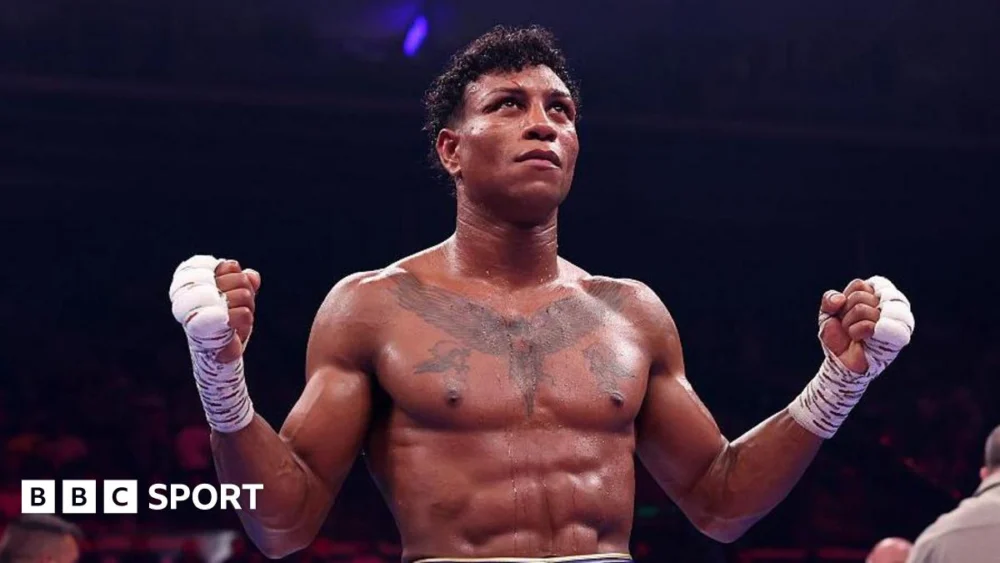
Bilal Fawaz stands at a unique and challenging crossroads, embodying a profound paradox within the British sporting landscape: an English boxing champion, poised to contend for a prestigious national title, yet legally unrecognized as a citizen of the very nation he represents. His narrative transcends the typical underdog story, revealing a complex entanglement of personal trauma, bureaucratic hurdles, and an unwavering drive for belonging, all while balancing the demands of elite athleticism with the stark realities of multiple arduous jobs to sustain his family.
At 37 years old, Fawaz’s journey to the cusp of a British light-middleweight championship bout against Ishmael Davis in Nottingham this Saturday is extraordinary, not merely for his age in a demanding sport, but for the profound legal and existential uncertainty that shadows every punch he throws. While the boxing world often lionizes athletes who rise from humble origins, Fawaz’s reality as an Uber driver, personal trainer, and fitness instructor is not a romanticized "rags-to-riches" prelude, but a necessary, relentless grind. He openly discusses his four concurrent occupations, a testament to the immense financial pressures he faces, directly stemming from a precarious immigration status that prohibits him from accessing the full economic opportunities afforded to his peers. The day after his potential championship victory, Fawaz fully intends to resume his late-night taxi shifts, a stark illustration of the unyielding commitment required to keep his family afloat, contrasting sharply with the celebratory aftermath typically associated with such high-level sporting success.
Fawaz’s eloquent articulation and cultivated poise, honed during his time in acting school, belie a history of profound adversity that extends far beyond the physical demands of the boxing ring. His fight for identity and stability began decades before his professional debut, marked by a childhood scarred by abuse, a harrowing experience within the UK’s care system, and a perpetual struggle to affirm his place in a society that he has come to call home. This personal saga has been periodically documented over the years, yet the fundamental challenge of his legal status—an English champion without a British passport—persists, casting a long shadow over his hard-won achievements.
His early life was characterized by extreme instability and suffering. Born in Nigeria to a Beninese mother and a Lebanese father, Fawaz endured severe physical mistreatment from his mother. At the age of eight, his largely absent father arranged for him to live with an uncle, a change that offered little respite. The true turning point, however, came at 14, when he was brought to London under false pretenses. Instead of the promised reunion with his father, Fawaz found himself trapped in conditions that mirrored modern slavery, confined to a house, denied education, and forced into labor, effectively cut off from the outside world. This period of forced isolation and exploitation inflicted deep, enduring wounds. He reflects on these formative years with poignant insight, noting how such experiences strip an individual of fundamental human needs: the sense of belonging, security, and trust. The psychological impact of being a child adrift, with no trusted adult to confide in, profoundly shaped his early development.
Upon escaping these dire circumstances, Fawaz entered the UK’s care system, a framework designed to safeguard vulnerable children, but one he critically assesses as having failed to provide the holistic support he desperately needed. In his adolescence, he accumulated minor criminal convictions, including for cannabis possession and graffiti. While these infractions did not result in incarceration, they later significantly complicated his protracted immigration battles. Fawaz points to a systemic failure in guiding young people through the care system, arguing that crucial information about the long-term ramifications of their actions is often withheld. He emphasizes the profound and lasting spiritual and emotional scars left by these experiences, scars that, despite his attempts to conceal them, continue to haunt him, prompting reflections on the transformative power of parental guidance and stable upbringing he was denied.
The All Stars boxing gym in Kilburn emerged as a crucial sanctuary, offering structure, discipline, and a sense of community. Within its walls, Fawaz excelled as an amateur, achieving the coveted title of English champion and eventually captaining the national team. Yet, outside the protective confines of the gym, the specter of uncertainty relentlessly pursued him. His life was punctuated by two periods of detention in immigration centers and repeated threats of deportation. The complexities of his origins led to a bizarre and frustrating predicament: the Nigerian embassy disavowed him, the Lebanese embassy had no record, and Beninese authorities found no evidence of his birth within their territory. This left him in a state of effective statelessness, a legal limbo where no nation officially recognized him as a citizen.
A judicial ruling ultimately affirmed that the Home Office had no lawful basis to detain him, leading to his release. However, this legal victory did not translate into full recognition of his statelessness under UK law, as his official status remained inexplicably listed as Nigerian. This administrative anomaly proved devastating, as it prevented him from formally claiming stateless status, which would have offered a clearer pathway to resolution. Consequently, twice in his life, significant opportunities—including the prospect of representing Great Britain at the Olympics and securing lucrative six-figure professional contracts—evaporated due to his inability to legally work or travel internationally. The arbitrary nature of his designation as ‘Nigerian’ despite evidence to the contrary created a unique and crippling barrier to his athletic and personal progression.
It was not until 2022 that Fawaz was finally granted a work permit, enabling him to turn professional and begin to salvage a career that had been repeatedly stalled. He views this as a partial victory, acknowledging that "it’s better to have a portion of something than nothing at all." This pragmatic approach underscores his relentless determination, a belief that sustained effort can gradually overcome even the most formidable obstacles.
Despite his triumph over Junaid Bostan last year, which secured him the English title, Fawaz’s life remains a tapestry of stark contradictions. He articulates the profound irony: "How can you be an English champion fighting for a British title and you don’t have a British passport? How can you beat the champion of a country and you’re not a citizen?" After 24 years of residency, deep cultural integration, and significant contributions to British sport, Fawaz asserts an undeniable sense of British identity.
His personal life further highlights this disparity. Fawaz is married to a British woman, and together they have two young sons, aged one and three, both of whom possess British passports. The sight of his children’s travel documents serves as a constant, poignant reminder of the fundamental freedom and belonging that continues to elude him. His aspirations are deeply rooted in his family: the desire to provide greater security, to travel freely with them, and to offer them a better home. However, his current immigration pathway, designated as a "10-year route to settlement," means he is not expected to receive his British passport until 2034 or 2035. This timeline is devastating for a professional athlete, as it means he will likely be beyond his prime boxing years by the time he gains full citizenship. While the Home Office stated that it does not routinely comment on individual cases and denied responsibility for this specific 10-year pathway decision, the practical impact on Fawaz’s life and career is undeniable.
The protracted nature of his immigration case and the limitations of his current status place a definitive ceiling on his professional aspirations. He is unable to accept lucrative international fight opportunities in major boxing hubs such as Saudi Arabia or the United States, severely restricting his earning potential and global recognition. Instead, his immediate ambition is a domestic showdown against Newcastle’s IBF world champion, Josh Kelly. Fawaz hopes that continued success and the accumulation of national titles will create an undeniable public profile and a compelling argument for the expedited processing of his citizenship application. He appeals to potential political intervention, expressing a hope that the Home Secretary or a Member of Parliament might "expedite my wait and give me a British passport so I can fight for the country and make it proud." With a pause, he then adds, with an understated confidence, a truth that many would agree with: "Actually, I’m already making this country proud."
Bilal Fawaz’s story is a powerful microcosm of the complex challenges faced by individuals navigating intricate immigration systems, particularly those who have endured extreme trauma and yet strive for excellence. His journey illuminates critical questions about national identity, the criteria for belonging, and the extent to which a society recognizes and supports those who contribute significantly, even while lacking formal recognition. His unwavering resilience in the face of such profound personal and systemic obstacles serves as an enduring testament to the human spirit, an English champion fighting not only for titles in the ring but for the fundamental right to call his home truly his own.


 Ayu Aulia
 Safa Marwah
 Aura Kasih
 Ridwan Kamil