
 Aura Kasih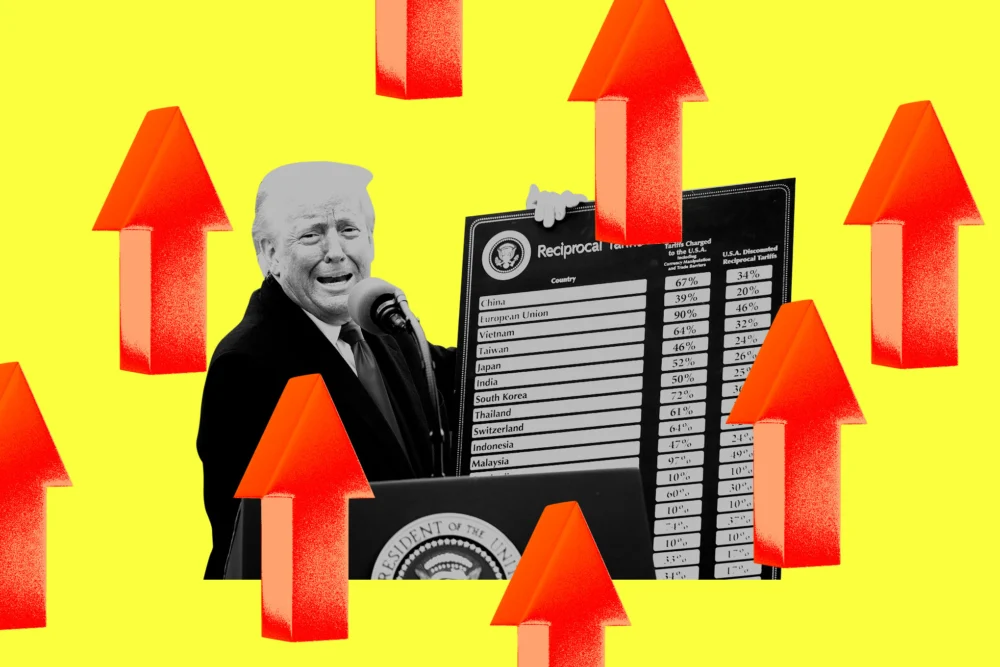
In a landmark decision that reverberates through global commerce and domestic policy, the United States Supreme Court has significantly curtailed the executive branch’s ability to unilaterally impose tariffs using broad emergency powers. This ruling, a substantial repudiation of former President Donald Trump’s expansive use of the International Emergency Economic Powers Act (IEEPA) to levy tariffs on foreign imports, addresses a contentious chapter of recent trade history. While this judicial intervention offers a measure of clarity for businesses and a potential recalibration of presidential authority, the underlying complexities of trade disputes and the specter of future tariff actions ensure that the economic landscape remains far from settled.
The Supreme Court’s judgment centers on the legality of employing the IEEPA, a statute enacted in 1977 primarily to grant the President authority to respond to extraordinary threats originating from outside the United States, as a mechanism for imposing import duties. This approach, unprecedented in its application by any prior administration, had been invoked by the Trump administration to justify significant tariffs on goods from key trading partners such as Canada, Mexico, and China, as well as a sweeping "reciprocal" tariff measure applied to imports from nearly every other nation. The legal basis for this application of the IEEPA had been a subject of considerable debate and legal challenge since its inception. Furthermore, the administration had leveraged the same act to dismantle the de minimis exemption, a provision that historically allowed low-value packages to enter the U.S. without incurring duties.
It is crucial to note that the Supreme Court’s ruling specifically targets tariffs enacted under the IEEPA. Other tariff measures, such as those imposed on steel and aluminum or industry-specific duties, remain unaffected by this particular judicial pronouncement. This distinction is vital, as it means that a significant portion of the tariff landscape shaped during the Trump administration’s tenure is not subject to immediate alteration by this decision. However, the former president has signaled a continued commitment to employing tariffs as a trade policy tool. Public statements indicate an intention to explore alternative legal avenues for imposing tariffs and initiating investigations into perceived unfair trade practices, suggesting that the broader use of tariffs as a policy instrument is likely to persist.
The immediate implications of the ruling for importers, small businesses, and consumers who have borne the financial burden of these tariffs are multifaceted and, in many respects, remain uncertain. The Supreme Court’s decision does not provide explicit guidance on the process or scope of potential refunds for tariffs paid under the IEEPA. Justice Brett Kavanaugh, in his dissenting opinion, highlighted the potential for significant financial obligations for the U.S. Treasury, suggesting that a substantial refund process for importers who paid tariffs under this act could prove administratively complex and challenging. Estimates suggest that refund requests could amount to as much as $120 billion, a figure that underscores the economic scale of the issue. However, consumers, who often ultimately bear the cost of tariffs through higher prices, are unlikely to see direct reimbursement.
Industry analysts emphasize that the resolution of refund claims will likely involve protracted legal proceedings. Monica Gorman, managing director at Crowell Global Advisors, explained that such matters are now expected to be adjudicated by the Court of International Trade, a process that could extend over several months. "The president has announced Section 122 tariffs effective almost immediately at a 10 percent rate. Although the 122 statute is limited to 150 days without a subsequent act of Congress, this will buy time for the administration to pursue additional tariff actions under Section 301 and other tariff statutes," Gorman stated. "Bottom line, industry should expect a continued high tariff environment for the foreseeable future." This expert perspective underscores the ongoing strategic considerations for businesses operating within the current trade framework.
The National Retail Federation has responded to the decision by characterizing it as a source of "much-needed certainty for U.S. businesses and manufacturers." The organization has also called for "a seamless process to refund the tariffs to U.S. importers," highlighting the importance of efficient administrative procedures to address past financial obligations. Small businesses, which were among the earliest and most vocal critics of the Trump administration’s tariffs, have expressed both relief and apprehension. The coalition "We Pay the Tariffs" celebrated the ruling but cautioned that "a legal victory is meaningless without actual relief for the businesses that paid these tariffs." Their statement urged the establishment of a "fast, efficient, and automatic refund process" to return unlawfully collected funds to businesses without further delay or costly litigation.
The historical context of the Trump administration’s trade policies reveals a pattern of using tariffs as a strategic lever, both to pressure foreign governments and to exert influence over domestic corporations. This approach often resulted in a volatile and unpredictable trade environment, where tariff rates and applications could shift rapidly, influenced by geopolitical considerations or the perceived compliance of specific entities. This inherent instability forced businesses and consumers to constantly adapt and react to changing economic conditions, often leading to stockpiling and reactive purchasing strategies. The current environment, while perhaps offering a degree of legal clarity on specific tariff mechanisms, still presents a new phase of uncertainty, where businesses and consumers may feel compelled to prepare for potential future trade disruptions and associated cost increases.
While the Supreme Court’s decision represents a significant judicial check on executive overreach in trade policy, the broader economic implications remain a subject of ongoing analysis. The Port of Los Angeles, for instance, has reported expectations of an influx of cargo ships as American importers seek to increase inventory levels in anticipation of potential future trade policy shifts. Economists caution that the long-term impact of tariffs, including the cost of potential refunds and the entrenchment of higher prices by companies, will continue to affect consumers. Kathryn Anne Edwards, an economist and policy consultant, noted that "Taking control of tariffs out of [Trump’s] hands is unequivocally good for the economy. That’s not to say the ruling won’t cause harm, but he was using the American consumer as leverage."
The potential for public perception to shift, particularly if businesses are seen to benefit from tariff refunds while consumers do not receive similar direct relief, could have significant political ramifications. As approval rates and public sentiment towards large corporations have reached historic lows, a scenario where refunds are perceived as a corporate windfall at the expense of the general populace could exacerbate public dissatisfaction. The inherent complexity of trade policy, coupled with the ongoing evolution of legal interpretations and executive actions, ensures that the economic and political ramifications of tariff policy will continue to be a central theme in the national discourse. The Supreme Court’s ruling has addressed one specific mechanism of tariff imposition, but the broader question of how the United States engages with global trade and utilizes its economic leverage remains a dynamic and evolving challenge.
The decision by the United States Supreme Court to strike down certain tariffs imposed under the International Emergency Economic Powers Act (IEEPA) marks a pivotal moment in the nation’s trade jurisprudence. This ruling signifies a reassertion of judicial oversight over executive actions that impact international commerce, particularly concerning the unilateral imposition of duties. The core of the court’s decision hinges on the interpretation of the IEEPA, a statute designed to address national emergencies originating from external threats, and its inapplicability to the broad-stroke tariff measures implemented by the Trump administration. This legal challenge had been brewing since these tariffs were introduced, creating a cloud of uncertainty over international trade relationships and domestic economic planning.
Historically, the IEEPA has been invoked to respond to specific, defined threats, such as nuclear proliferation or terrorism, enabling the President to freeze assets or impose sanctions. However, its application to broad economic measures like across-the-board tariffs on imports from major trading partners represented a significant expansion of presidential power. Critics argued that this usage stretched the statute beyond its intended scope, effectively allowing the executive branch to bypass established legislative processes for trade policy, which typically involve congressional deliberation and negotiation. The tariffs in question, levied on goods from Canada, Mexico, and China, as well as a more sweeping "reciprocal" tariff policy impacting a vast array of goods from nearly every other nation, were implemented under this controversial interpretation of the IEEPA. Furthermore, the act was also employed to eliminate the de minimis exemption, a policy that had facilitated duty-free importation of low-value shipments, impacting e-commerce and small businesses.
It is crucial to differentiate the scope of the Supreme Court’s ruling. The decision specifically addresses tariffs implemented under the IEEPA and does not alter or invalidate other forms of tariffs that were enacted through different statutory authorities. For instance, tariffs imposed on specific industries, such as steel and aluminum, or other targeted industry-specific measures, remain in effect and are not subject to remedy by this particular ruling. This nuance is critical for understanding the ongoing landscape of U.S. trade policy, as a substantial portion of existing tariffs fall outside the purview of this Supreme Court decision.
Despite the judicial setback concerning IEEPA-based tariffs, former President Donald Trump has indicated a continued inclination towards utilizing tariffs as a primary tool of economic statecraft. Public statements following the ruling suggest a determination to explore alternative legal frameworks for imposing future tariffs and to initiate investigations into perceived unfair trade practices by other nations. This suggests a strategic recalibration rather than an abandonment of tariff-centric policies. The administration’s focus may shift towards statutes like Section 301 of the Trade Act of 1974, which grants broad authority to investigate and act against unfair trade practices, or other existing trade laws, to pursue its objectives. This indicates that the broader environment of tariff volatility and uncertainty for businesses may persist.
The practical consequences of the Supreme Court’s decision for businesses, importers, and consumers who have paid billions in tariffs remain a complex area. The ruling does not provide a clear roadmap for the repatriation of these funds. Justice Kavanaugh’s dissent pointed to the potential for the U.S. Treasury to be compelled to refund importers who paid tariffs under the IEEPA, acknowledging that the process could be "a mess." Estimates suggest that the total value of potential refunds could reach upwards of $120 billion. However, the direct beneficiaries of these refunds are likely to be importers and businesses, while consumers, who have historically absorbed tariff costs through higher retail prices, are unlikely to receive direct compensation.
The resolution of these refund claims is expected to be a protracted affair, potentially involving the Court of International Trade. Monica Gorman, managing director at Crowell Global Advisors, articulated the forward-looking outlook: "The president has announced Section 122 tariffs effective almost immediately at a 10 percent rate. Although the 122 statute is limited to 150 days without a subsequent act of Congress, this will buy time for the administration to pursue additional tariff actions under Section 301 and other tariff statutes. Bottom line, industry should expect a continued high tariff environment for the foreseeable future." This assessment underscores the strategic imperatives for businesses to remain vigilant and adaptable in the face of ongoing trade policy evolution.
Industry organizations have reacted with a mix of relief and calls for decisive action. The National Retail Federation characterized the ruling as providing "much-needed certainty for U.S. businesses and manufacturers" and advocated for a "seamless process to refund the tariffs to U.S. importers." Small businesses, often disproportionately affected by trade policy shifts, have echoed this sentiment. The coalition "We Pay the Tariffs" issued a statement celebrating the legal victory but emphasized the critical need for "actual relief for the businesses that paid these tariffs." They urged the establishment of an expedited and automatic refund mechanism, arguing that small businesses cannot afford lengthy bureaucratic delays or expensive litigation to reclaim funds that were unlawfully collected.
The historical application of tariffs by the Trump administration often functioned as a form of economic leverage, deployed to secure concessions from foreign governments and to exert pressure on large corporations. This dynamic led to a trade environment characterized by unpredictability and rapid shifts, as tariff rates could be altered based on immediate geopolitical considerations or the compliance of specific entities. The constant flux meant that businesses and consumers were compelled to make real-time adjustments to their strategies. The current period, while offering a degree of legal clarity regarding the IEEPA, introduces a new dimension of uncertainty, potentially prompting businesses and consumers to preemptively build inventories in anticipation of future trade policy shifts and associated cost increases.
From an analytical perspective, the Supreme Court’s decision represents a significant check on the executive branch’s unilateral authority in trade policy. However, the underlying economic challenges and the potential for future trade disputes remain. The Port of Los Angeles, for example, has reported an anticipated surge in cargo shipments as American importers seek to bolster their inventories in response to the evolving trade landscape. Economists and policy consultants emphasize that the ultimate financial burden of tariffs often falls on the American consumer, whether through the cost of future tariffs, the expense of refund processes, or the perpetuation of higher prices by companies. Kathryn Anne Edwards, an economist and policy consultant, stated, "Taking control of tariffs out of [Trump’s] hands is unequivocally good for the economy. That’s not to say the ruling won’t cause harm, but he was using the American consumer as leverage."
The potential for public perception to diverge between corporate beneficiaries of tariff refunds and consumers who do not receive similar direct financial relief could have significant political implications. Public approval ratings and attitudes toward large corporations have historically fluctuated, and a scenario where corporate entities appear to benefit at the expense of consumers could lead to increased public scrutiny and dissatisfaction. This situation highlights the complex interplay between trade policy, economic outcomes, and public sentiment. The Supreme Court’s ruling has definitively addressed a specific avenue of presidential tariff imposition, but the broader strategic direction of U.S. trade policy and its enduring impact on domestic and international economies will continue to be shaped by a confluence of legal, economic, and political forces. The ongoing dialogue surrounding trade, tariffs, and economic fairness is therefore likely to remain a central feature of the national policy agenda.




 Ayu Aulia
 Safa Marwah
 Lisa Mariana

 Ridwan Kamil