Safa Marwah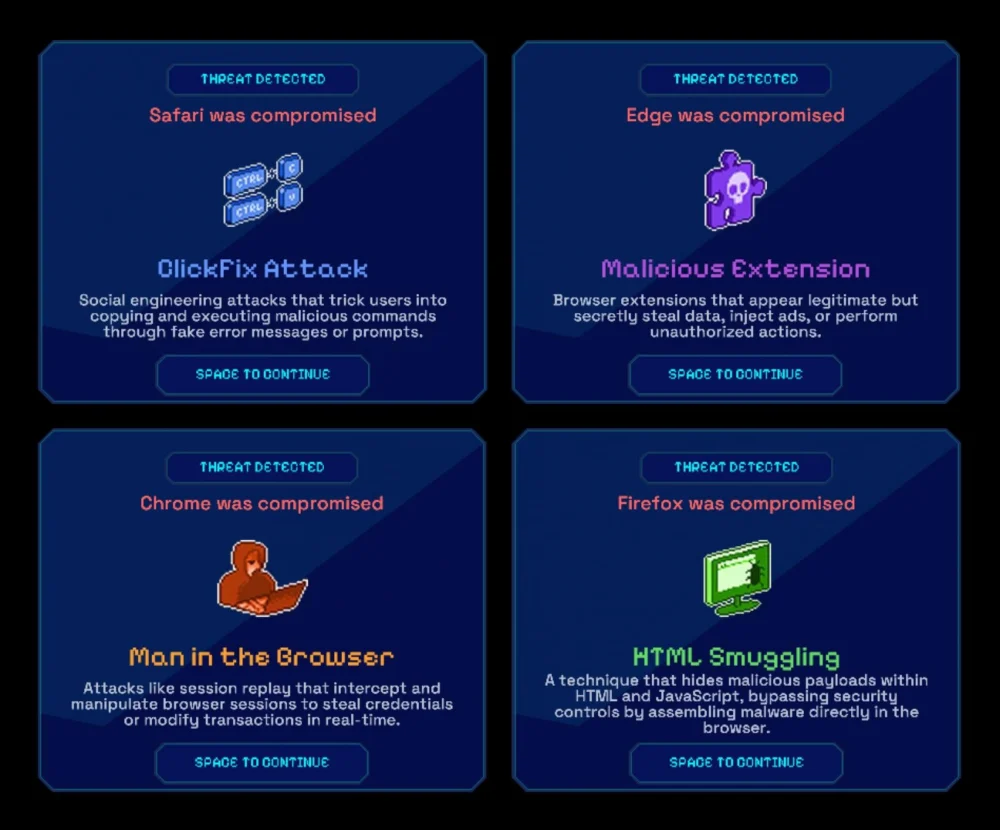
The contemporary enterprise landscape increasingly relies on web browsers as the primary conduit for critical operations, yet a significant chasm persists in security architectures, leaving organizations vulnerable to a sophisticated class of attacks that evade conventional detection mechanisms. This fundamental disconnect between the browser’s pivotal role and its peripheral treatment within security frameworks creates an expansive "safe haven" for malicious actors, necessitating a paradigm shift in how digital perimeters are conceived and defended. As the digital workspace converges within browser environments, the inability to discern user intent and contextualize actions at this granular level represents a critical security vulnerability, often rendering security teams unable to definitively answer the fundamental question: what precisely transpired within the browser?
The Browser as the New Digital Epicenter
Over the past decade, the internet browser has transformed from a mere tool for web navigation into the indispensable operational hub for the modern enterprise. The ubiquitous adoption of Software-as-a-Service (SaaS) applications, cloud-based identity providers, sophisticated administrative consoles, and increasingly, artificial intelligence (AI) tools, has fundamentally reconfigured how employees interact with corporate data and execute their daily tasks. This evolution has solidified the browser’s position as the primary interface through which intellectual property is accessed, sensitive customer information is processed, and critical business decisions are facilitated. Consequently, securing this environment is no longer a secondary consideration but an existential imperative. Despite this undeniable centrality, the architectural blueprints of many organizational security strategies continue to treat the browser as an edge application, rather than the core operational domain it has become. This oversight manifests as a critical blind spot, where advanced security tools designed to protect endpoints, networks, and email systems operate around the browser, but crucially, not within its intricate operational processes.
The Proliferation of Evasive Browser-Native Attacks
The current security landscape is characterized by a rise in browser-centric attack vectors that exploit this visibility gap, often leaving minimal traditional forensic evidence. These attacks are not dependent on a single exploit technique but rather represent a confluence of methodologies that leverage the browser’s inherent functionality and the user’s interaction with it. The insidious nature of these threats lies in their ability to mimic legitimate user behavior, rendering them exceedingly difficult to detect with security tools that lack deep browser-level context.
-
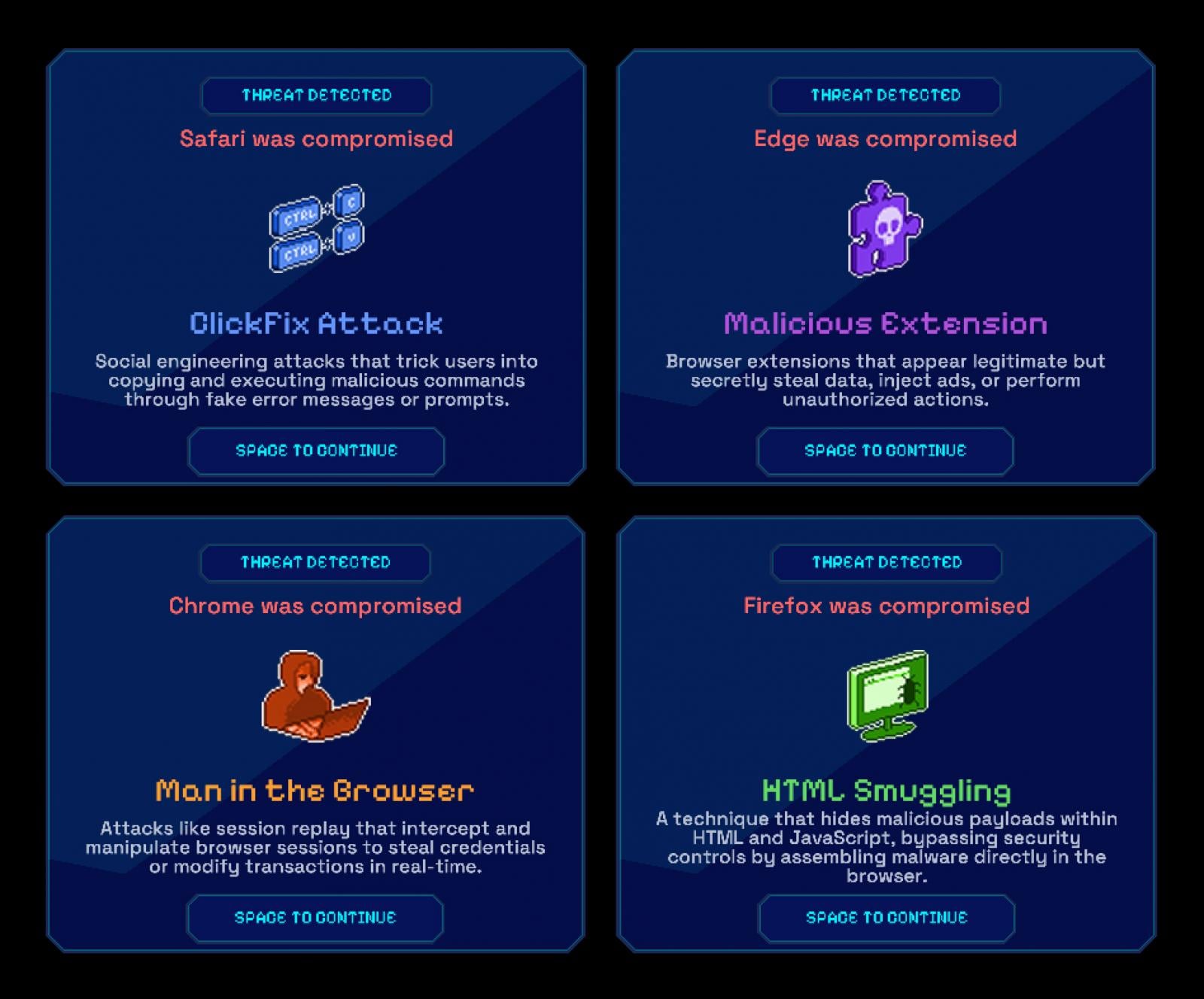
UI-Driven Social Engineering (e.g., ClickFix): This highly effective vector capitalizes on human psychology and the browser’s visual interface. Attackers craft deceptive messages or prompts that appear to originate from legitimate browser functions or trusted applications. Users are then subtly guided to perform actions such as copying and pasting sensitive data, submitting credentials, or approving transactions, all under the false pretense of routine operation. Crucially, these attacks deliver no malicious payload, trigger no known exploits, and involve only standard user actions, making them almost entirely invisible to traditional endpoint and network defenses. The challenge lies in distinguishing a legitimate user action from one that has been subtly coerced, as the technical execution appears entirely benign.
-
Malicious Browser Extensions: Browser extensions, while often enhancing productivity, also present a significant attack surface. Malicious extensions, or legitimate ones that have been compromised, can be intentionally installed by users, often due to social engineering or deceptive marketing. Once active, these extensions operate stealthily, observing page content, intercepting form inputs, and exfiltrating sensitive data without direct user interaction. From the perspective of endpoint detection and response (EDR) systems or network monitoring tools, the activity simply registers as normal browser behavior. The true malicious intent and actions of the extension remain opaque, making retrospective investigations extremely challenging due to a lack of granular activity logs.

-
Man-in-the-Browser (MitB) and Related Session Manipulation: This sophisticated class of attacks, encompassing variations like Adversary-in-the-Middle (AiTM) or Browser-in-the-Browser (BitB), directly abuses valid, authenticated browser sessions. Instead of attempting to steal credentials for future use, MitB attacks manipulate the ongoing session itself. This means that credentials are entered correctly, multi-factor authentication (MFA) is approved, and all activity appears to be authorized by the legitimate user. Security logs confirm a genuine user and an authentic session, but they critically fail to indicate whether the browser interaction was subtly manipulated, content was altered, or transactions were replayed by an attacker controlling aspects of the session. The attack essentially operates within the trusted confines of an established user session, making it exceptionally difficult to differentiate from benign activity.
-
HTML Smuggling: This technique represents an advanced method for delivering malicious content while circumventing traditional security inspection points. Instead of directly downloading an executable or malicious document, HTML smuggling leverages JavaScript to assemble the malicious payload directly within the user’s browser. The browser renders the content as expected, but the critical steps of malicious content construction and execution occur client-side, bypassing network-level ingress filtering and endpoint-based download inspection. This allows attackers to deliver malware or trigger malicious actions without ever creating a "first-class" security event that traditional systems are designed to detect.
The Inherent Limitations of Legacy Security Frameworks
The inability of established security tools like Endpoint Detection and Response (EDR), Email Security gateways, and Secure Access Service Edge (SASE) solutions to effectively counter these browser-native threats is not a failing of the tools themselves, but rather a direct consequence of their foundational design and intended scope. Each of these solutions was engineered to address specific layers of the computing and network stack, inherently limiting their visibility into the nuanced internal workings of the browser.
-
Endpoint Detection and Response (EDR): EDR solutions excel at monitoring and responding to threats at the operating system level. They track processes, file system activity, memory usage, and registry changes on the endpoint. However, from an EDR perspective, most browser-native attacks manifest simply as legitimate actions performed by the browser application (e.g., "chrome.exe" or "firefox.exe"). When a user copies sensitive data from a web application and pastes it into an AI chatbot within the same browser, the EDR sees two browser-internal actions. It lacks the contextual understanding of what data was copied, from where, and to where within the browser’s DOM (Document Object Model), or the user’s intent behind these actions. The EDR’s focus on the operating system process boundary means the critical events occurring inside the browser are abstracted away, leaving a significant blind spot.
-
Email Security Gateways: Email security solutions are primarily designed to prevent threats from entering the organization via email. They scrutinize incoming messages for malicious attachments, phishing links, and spam. While effective at the initial stages of an attack chain, their utility diminishes significantly once a user clicks a malicious link and enters a compromised or manipulated web environment. Once the browser session is active, email security has no further visibility or control over the user’s subsequent actions within that browser. It cannot detect a ClickFix attack that manipulates a user on a legitimate site, nor can it identify a malicious browser extension exfiltrating data, as these events occur long after the email gateway has performed its function.
-
Secure Access Service Edge (SASE) and Proxy Technologies: SASE architectures and traditional web proxies primarily focus on network traffic. They enforce security policies, filter URLs, inspect encrypted traffic (often via TLS decryption), and ensure secure access to applications. While they can block access to known malicious domains or enforce data loss prevention (DLP) policies on network egress, their understanding of events within the browser is fundamentally limited. They see the flow of network packets and can identify the destination URL, but they cannot interpret the specific user actions or application-level interactions occurring within a complex web application. For instance, a SASE solution might see traffic to a legitimate SaaS application, but it cannot discern whether a user is legitimately uploading a document or being tricked by a MitB attack into approving a fraudulent transaction within that application. The intricate dance of JavaScript, DOM manipulation, and user input within the browser remains largely opaque to network-centric defenses.
When the browser itself becomes the primary execution environment where users actively engage, click, paste, upload, and authorize actions, both preventative controls and detection mechanisms lose crucial context. Actions may be permitted or denied based on coarse-grained rules, but without granular visibility into the actual sequence of events and the data involved, controls become blunt instruments, and forensic investigations remain incomplete and speculative.
The "Own the Browser" Initiative: A Call for Observability
The "Own the Browser" initiative, a vendor-neutral research effort, has meticulously evaluated the security and governance practices across more than 20 mainstream, enterprise, and emerging AI-native browsers. The findings underscore a critical deficiency: the challenge is not a scarcity of security controls, but rather a profound absence of observable behavior that these controls can leverage for intelligent decision-making and continuous improvement. Organizations frequently deploy extensive browser policies, yet they often lack structured, real-time visibility into how these policies manifest in actual user behavior. Without this critical insight, prevention strategies remain static and reactive, and policies rarely evolve to address emerging threats or adapt to changing operational realities. The research highlights that effective browser security hinges on gaining deep, actionable telemetry from within the browser itself, allowing for a dynamic and adaptive security posture.
AI’s Accelerating Impact and the Expanding Attack Surface
The rapid proliferation of artificial intelligence tools is further exacerbating the browser security challenge, increasing both the volume and the subtlety of sensitive data movement within the browser environment. Large Language Models (LLMs) and other AI-powered applications, such as ChatGPT, Claude, and Gemini, have normalized behaviors like copying proprietary information, pasting sensitive text, uploading confidential documents, and summarizing internal data directly within browser-based interfaces. This integration streamlines workflows but also creates unprecedented opportunities for inadvertent data leakage or malicious exfiltration.
Moreover, the emergence of "AI-native browsers" and browser-integrated AI assistants further blurs the lines between legitimate user actions and potentially risky data handling. These tools are designed to facilitate rapid information processing and data exchange, making it increasingly difficult for traditional security policies to evaluate risk without context. Policies can be implemented to allow or block certain actions, but without granular observability into how data is being used, what data is involved, and why it is being moved, security teams are unable to adapt their controls to match the evolving reality of AI-driven workflows. As AI-powered operations become routine and integral to enterprise functions, prevention mechanisms that are not informed by deep, browser-level behavioral insights will inevitably fall behind, leaving organizations exposed to novel and sophisticated data exfiltration vectors.
The Transformative Power of Browser-Level Observability
Implementing comprehensive browser-level observability fundamentally transforms an organization’s security posture, moving beyond mere incident response to proactive prevention and continuous improvement. When browser activity is meticulously monitored and contextualized, security teams gain unprecedented clarity, enabling them to prevent threats more effectively and investigate incidents with unparalleled precision.
- Enhanced Prevention: Granular insights into data movement, user interactions, and application behavior within the browser allow security teams to define and enforce smarter, highly targeted controls. This moves beyond blunt "allow" or "block" decisions to nuanced, context-aware interventions. For instance, a system can be configured to prevent the copying of specific sensitive data from a financial application to a public AI chatbot, or to pause a suspicious upload action pending user confirmation, all at the moment the risky action is attempted.
- Improved Detection: With browser-level telemetry, seemingly benign individual actions can be correlated and analyzed in context, revealing patterns indicative of malicious activity. Behavioral anomalies, such as an unusual sequence of copy-paste operations involving critical data, or unauthorized DOM manipulation, become detectable, allowing for early warning and intervention before significant damage occurs.
- Streamlined Response: In the event of an incident, detailed browser activity logs enable security teams to reconstruct events with high fidelity. This provides a clear, chronological narrative of what transpired, identifying the specific data involved, the applications affected, and the precise actions taken by the attacker or user. Such comprehensive data dramatically reduces investigation times and improves the accuracy of remediation efforts.
- Data-Driven Policy Evolution: Perhaps most importantly, browser-level observability creates a vital feedback loop. Real-world user behavior and incident data inform and refine security policies, transforming them from static rules based on assumptions into adaptive, intelligent safeguards. Every blocked action, paused operation, or allowed interaction provides valuable data that sharpens the organization’s understanding of risk, allowing policies to continuously evolve and improve over time, enhancing the overall security posture.
In conclusion, the browser has unequivocally become the central hub of enterprise operations, yet traditional cybersecurity frameworks are demonstrably ill-equipped to provide adequate protection against a growing class of browser-native threats. The lack of deep, contextual visibility into internal browser activity represents a critical vulnerability that sophisticated attackers are actively exploiting. Addressing this architectural gap is no longer merely advantageous but a strategic imperative for modern enterprises. Organizations must move beyond perimeter-centric defenses and integrate robust browser-level observability as a foundational pillar of their security strategy to effectively prevent, detect, and respond to the evolving threat landscape and ensure the integrity of their most critical digital assets.




 Ridwan Kamil
 Aura Kasih
 Lisa Mariana
 Ayu Aulia