Aura Kasih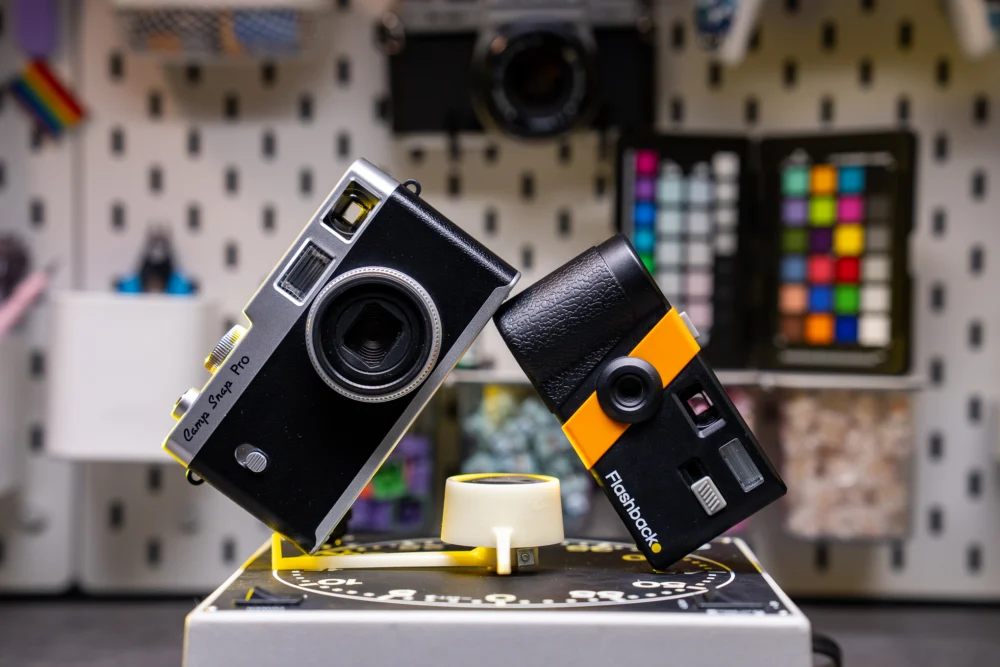
In a fascinating resurgence of analog aesthetics within the digital realm, a new wave of affordable digital cameras is capturing the attention of consumers, particularly younger demographics seeking a distinct visual signature. This trend is driven by a desire for authenticity, a departure from the polished perfection often associated with smartphone photography. Companies are now reissuing and reimagining vintage camera concepts, catering to this burgeoning market. At the forefront of this movement are devices that aim to distill the photographic experience down to its core elements, offering a tangible and unadorned approach to image capture. This analysis pits two prominent contenders in this space against each other: the Camp Snap Pro, an evolution of a screen-free digital camera, and the Flashback One35 V2, which meticulously emulates the form and function of a traditional disposable camera.
The allure of the low-fidelity image has experienced a significant resurgence in recent years, prompting a re-examination of older photographic technologies. Gen Z and younger consumers are increasingly drawn to the perceived authenticity and unique aesthetic of vintage digital cameras, often referred to as "digicams." This fascination has led to a market where companies are not only re-releasing beloved models from the early 2000s but also creating entirely new devices that echo the design and user experience of these bygone eras. The Camp Snap, a pioneering example in this niche, offers a $70 digital point-and-shoot with a singular button and no screen. Its design deliberately evokes the simplicity of a disposable film camera, making it an ideal tool for younger users or anyone seeking an uncomplicated photographic experience. The appeal lies in its accessibility and its capacity to deliver a distinct lo-fi visual style without the financial commitment or complexity associated with film processing.
This comparative review delves into two compelling interpretations of this modern-retro photographic philosophy: the Camp Snap Pro (also known as CS-Pro), priced at $99, and the Flashback One35 V2, retailing for $119. The Camp Snap Pro represents an upgrade to its predecessor, featuring a more refined design reminiscent of classic compact digital cameras, albeit constructed entirely from plastic. The Flashback One35 V2, on the other hand, opts for an almost uncanny replication of a typical disposable film camera, from its physical dimensions to its operational cues. Both devices share a fundamental objective: to provide the aesthetic charm and tactile experience of film photography through the convenience and immediacy of digital technology. This evaluation aims to discern which of these offerings more effectively achieves this ambitious goal.
Upon initial inspection, both the Camp Snap Pro and the Flashback One35 V2 exhibit a shared commitment to lightweight construction, utilizing primarily plastic materials. This design choice contributes to their affordability and reinforces their identity as accessible, unpretentious photographic tools. The Flashback One35 V2 is notably more compact, mirroring the pocketable nature of disposable cameras, which allows for greater portability and discretion. However, both devices are best suited for transport in a jacket pocket, a small bag, or a purse, emphasizing their status as casual, everyday companions rather than high-end photographic equipment. This lack of perceived fragility encourages a more liberated approach to photography, akin to the carefree use of an original Camp Snap, which was often stowed away in a diaper bag without concern for its preservation.

From a technical specifications standpoint, neither camera presents groundbreaking advancements. The Camp Snap Pro boasts a 22.5mm-equivalent lens and a 16-megapixel sensor, offering a wider field of view and higher resolution compared to the original Camp Snap’s 32mm equivalent lens and 8-megapixel sensor. The Flashback V2 features a 13-megapixel sensor. The image quality produced by these cameras, equipped with smartphone-sized sensors and modest lenses, falls into a spectrum between that of a disposable film camera and an early-generation smartphone. A key advantage over film is the absence of per-shot costs, coupled with the inclusion of proper xenon flashes. These flashes are crucial for illuminating subjects in low-light conditions at close range, a characteristic that contributes to a sought-after aesthetic and helps to mitigate the inherent limitations in low-light performance. This is a marked improvement over the original Camp Snap’s largely ineffective LED flash.
The most significant divergence between these two cameras lies in their user interfaces and operational philosophies. The Camp Snap Pro incorporates a physical dial that allows users to cycle through four distinct filter presets: Standard (STD), Vintage 1 (VTG1) with a warm magenta hue, Vintage 2 (VTG2) featuring a green tone and enhanced blues, and Black and White (B&W). Crucially, each of these presets can be customized by the user through Camp Snap’s online Filter Builder. This offers a degree of personalization that aligns with the creative potential of digital photography. Furthermore, the Camp Snap Pro supports the community-driven ecosystem of downloadable filters, which were a hallmark of its predecessor, although some filters may not yet be fully compatible with the CS-Pro. The included 4GB microSD card provides ample storage for over 1,000 images, which can be easily transferred via USB-C cable or a microSD card reader, ensuring a straightforward workflow.
The Flashback One35 V2 also offers four preset filters: Classic, Mono, Beta (characterized by a reddish tint), and Cine (emphasizing a teal-and-orange aesthetic). However, the selection and application of these filters are managed exclusively through the camera’s companion mobile application, available for both iOS and Android platforms. This app structures the photographic process into virtual "rolls," each limited to 27 shots. This design choice is intended to meticulously mimic the experience of using a disposable film camera. Once a filter is selected for a roll, it is locked in for the entire sequence, though users have the option to offload the captured images early to start a new roll with a different filter. The One35 V2 connects to a smartphone or tablet via Bluetooth, enabling users to monitor battery levels, activate a self-timer, and change their selected "film type." Image transfer to a mobile device can be accomplished via Wi-Fi or a cable. By default, the app imposes a 24-hour delay before images become viewable, a feature designed to enhance the analog feel. Alternatively, immediate image development can be achieved by enabling "Digicam Mode," a setting the reviewer activated after the initial batch of photos.
While the Flashback app’s commitment to replicating the disposable camera experience is conceptually engaging, the virtual roll-by-roll system can rapidly transition from charming to cumbersome. The reviewer encountered instances where the selected "film type" did not properly apply to the camera, resulting in unexpected color tones or images rendered in black and white when color was intended. This unpredictability, while a common characteristic of analog photography, deviates from the fundamental expectation of digital capture, where such cross-contamination of color profiles is virtually unheard of. The mandatory waiting period and the occasional unexpected output, while aiming for authenticity, introduce a level of frustration that undermines the convenience digital photography typically affords.
The Flashback’s dedication to emulating disposable cameras extends to other operational aspects that introduce significant drawbacks. After completing a 27-shot roll, the camera becomes unusable until the images are offloaded to the app or a computer. This limitation negates a primary advantage of digital cameras – instant reusability – and paradoxically restricts the spontaneous, screen-free experience it aims to deliver. It renders the device unsuitable for scenarios where immediate, continuous capture is desired, such as handing it to a child for unsupervised use. Furthermore, the camera’s reliance on a physical advance winder, mimicking the film advance mechanism, requires a multi-step process to both wake the device and cock the shutter. This operational sequence, which involves a single turn to activate the camera and approximately eight turns to prime the shutter, results in a delay between intending to take a photo and actually being able to do so. This lack of immediate readiness is counterintuitive for a device designed around spontaneity and quick capture.

In response to inquiries about this operational lag, Flashback’s external PR representative, Bethany Andros, acknowledged it as a "known issue we’re trying to fix right now." While a firmware update is anticipated to address this, it will not resolve another significant handling issue stemming from the lens placement. The camera’s pronounced grip, while aesthetically pleasing, frequently leads to the user’s fingers obstructing the lens, resulting in shots with unwanted intrusions. This design flaw renders the ergonomic grip functionally compromised, as its intended purpose of improving handling is undermined by its proximity to the lens.
In terms of image quality, the Camp Snap Pro consistently delivers sharper and cleaner results than the Flashback One35 V2. Even when compared to the original Camp Snap, the Pro model exhibits a slight edge in image fidelity. It is important to acknowledge that the definition of "better" in this context is subjective, as the core appeal of these cameras lies in their distinctive aesthetic rather than technical perfection. The images lack the crispness and low noise levels characteristic of modern smartphones and dedicated digital cameras. However, these perceived flaws and limitations are precisely what contribute to their desired visual character. Anecdotal evidence from users within the Flashback community suggests a preference for the image quality of the earlier One35 V1 model, specifically because its output is perceived as "worse," highlighting the diverse interpretations of desirable lo-fi aesthetics.
Based on this comparative analysis, the Camp Snap Pro emerges as the recommended choice, while the Flashback One35 V2 falls short of its ambitious conceptual goals. Although the Flashback One35 V2’s design, particularly its transparent variants, is visually striking and its attempt to replicate the disposable camera experience is endearing, its adherence to the physical constraints of its analog inspiration introduces both inherited flaws and new operational inefficiencies. The user is compelled to manage limitations that are not inherent to digital photography, thereby diminishing the advantages of the medium.
The Camp Snap Pro, in contrast, prioritizes the practical utility that disposable cameras offered in the pre-smartphone era. It is more economically priced than the Flashback, offers a more intuitive user experience, provides greater customization options, and produces superior image quality without sacrificing the desired lo-fi aesthetic. It represents a logical progression for users who found the original Camp Snap appealing but desired a more capable tool, particularly a superior flash. For consumers who are not swayed by the Flashback’s overt nostalgic styling, the Camp Snap Pro presents a clear and compelling alternative.
Technical Specifications Comparison
| Feature | Camp Snap Pro | Flashback One35 V2 |
|---|---|---|
| Resolution | 16 megapixels | 13 megapixels |
| Sensor | Type-1/3.06 CMOS | Not disclosed |
| ISO range | Not disclosed | Not disclosed |
| RAW support | No | Yes, DNG format |
| Focal length | 2.56mm (22.5mm equivalent) | Not disclosed |
| Aperture | f/2.2 | Not disclosed |
| Focusing | Fixed | Fixed |
| Focus range | 3 ft / 0.9 m to infinity | Not disclosed |
| Lens filter thread | 37mm | None |
| Shutter speed | 1/30 to 1/1000 | Not disclosed |
| Filter presets | 4 | 4 |
| Custom filters | Yes | No |
| Self-timer | No | Yes |
| Storage | 4GB microSD, removable | Not disclosed |
| Tripod mount | Yes | No |
| Connectivity | USB-C | USB-C, Bluetooth, Wi-Fi |
| Battery | est. 500 shots, USB-C rechargeable | est. 15 rolls / 405 shots, USB-C |
| Dimensions | 5 x 3 x 1 inches | Not disclosed |
| Weight | 7 oz | Not disclosed |


 Ayu Aulia
 Ridwan Kamil
 Safa Marwah
 Lisa Mariana