Aura Kasih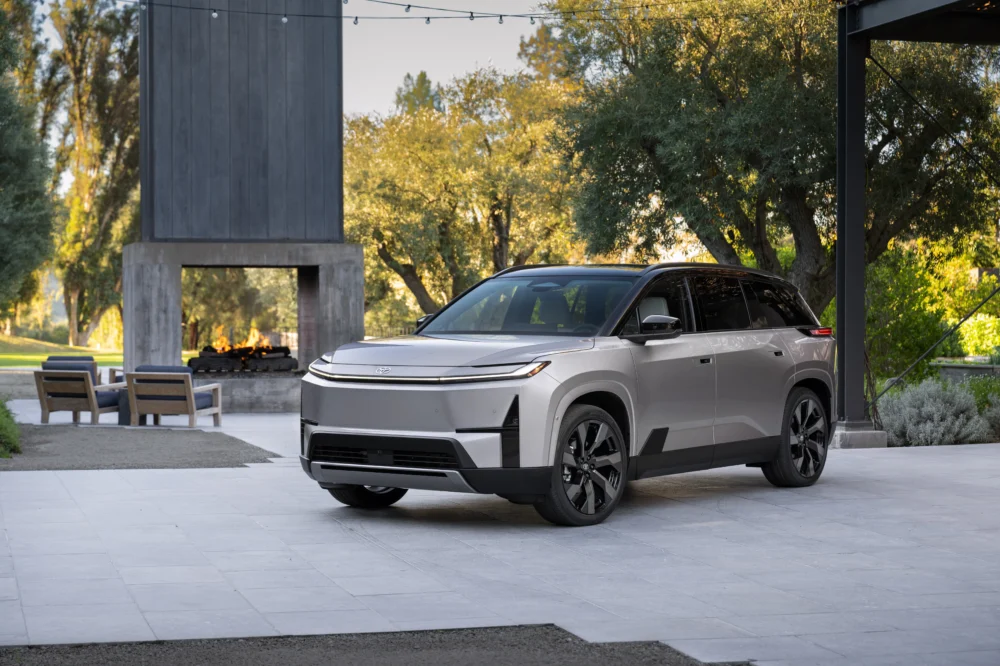
In a pivotal move that signals a significant shift in its electrification strategy, Toyota has officially unveiled the 2027 Highlander, a completely reimagined midsize SUV that not only marks the brand’s inaugural three-row battery-electric vehicle for the United States but also represents the first Toyota EV to be manufactured on American soil. This storied nameplate, a staple in the automotive landscape for over two decades, now embraces an entirely new electric powertrain, targeting one of the most coveted segments in the current market and positioning Toyota for a strong challenge against its EV competitors.
The introduction of the all-electric Highlander arrives at a complex juncture for the world’s leading automaker. Toyota’s long-standing emphasis on hybrid technology, often viewed as a more pragmatic approach to environmental sustainability amidst global market fluctuations, appears to be validated as the pace of pure battery-electric vehicle adoption moderates and rival manufacturers grapple with substantial financial repercussions from their EV investments. This strategic timing is further underscored by the recent appointment of Kenta Kon, a close confidant of outgoing chairman Akio Toyoda, as the new CEO. Kon’s ascent is widely interpreted as a testament to Toyota’s successful navigation of a turbulent period characterized by intense competition from Chinese EV manufacturers, evolving global tariff landscapes, and the substantial capital expenditure required for the industry-wide transition to electric mobility.
The development of the Toyota Highlander EV can be seen as a direct response to these multifaceted industry challenges. Its production at Toyota’s expansive facility in Kentucky is a strategic decision designed to mitigate the impact of potential trade tariffs, particularly those influenced by U.S. policy. Furthermore, its form factor – a three-row, midsize SUV – directly addresses the overwhelming consumer preference for this body style in the American market. Crucially, by leveraging the established Highlander brand, Toyota acknowledges a key learning from its earlier EV ventures; namely, that many consumers remain unfamiliar with or uninspired by nascent EV nomenclature, such as the "bZ" (Beyond Zero) designation. This rebranding strategy aims to capitalize on existing brand loyalty and consumer recognition, ensuring a smoother integration of its electric offerings into the mainstream market.
The 2027 Highlander EV will be offered in two distinct trim levels: the XLE and the Limited. The XLE will provide buyers with the flexibility of either front-wheel drive (FWD) or all-wheel drive (AWD) configurations. The Limited trim, positioned as the more premium option, will come standard with AWD. Powering these new models are two distinct battery pack options: a standard 77 kWh unit and an enlarged 95.8 kWh pack, with the specific choice influencing vehicle performance and range. For those opting for AWD and the larger battery, an impressive estimated range of up to 320 miles is projected, complemented by a robust powertrain delivering 338 horsepower and 323 lb-ft of torque. In contrast, the FWD variants will produce 221 horsepower and 198 lb-ft of torque, offering a more efficiency-focused driving experience.
Inside, the new Highlander EV boasts a thoroughly modernized and sophisticated infotainment system, mirroring advancements seen in Toyota’s recent C-HR and bZ Woodland electric SUV models. Central to the driver and passenger experience is a commanding 14-inch central touchscreen, complemented by a crisp 12.3-inch digital gauge cluster. The cabin is further enhanced by customizable ambient lighting, providing a personalized atmosphere. Connectivity is seamless, with standard wireless Apple CarPlay and Android Auto integration. Recognizing the needs of a family-oriented vehicle, extensive charging solutions are thoughtfully distributed across all three rows, ensuring every occupant can keep their devices powered. Overhead, occupants will be treated to an expansive fixed panoramic glass roof, the largest ever featured in a Toyota vehicle, creating an open and airy cabin environment.
The advanced infotainment system, powered by AT&T 5G connectivity, offers a highly intuitive and customizable home screen, allowing users to tailor their interface. Voice command capabilities are significantly enhanced through the "Hey Toyota" function, enabling natural language interactions for a wide array of vehicle functions. The system also supports dual Bluetooth phone connectivity, facilitating seamless switching between personal and work devices, and integrates popular streaming services such as Spotify and SiriusXM, further enriching the in-car entertainment options.
Designed to accommodate up to seven occupants, the Highlander EV features a versatile third-row seat capable of comfortably seating two passengers. When increased cargo capacity is required, the third-row seats can be folded flat, revealing a substantial cargo area exceeding 45 cubic feet. Additional practical features designed to enhance convenience and comfort include wireless charging trays strategically placed throughout the cabin, multiple USB-C ports accessible in all three rows, dedicated rear HVAC controls for personalized climate management, optional rear window shades for enhanced privacy and sun protection, and a hands-free power liftgate for effortless access to the cargo space.
A significant development for Toyota’s EV lineup, the Highlander EV will come equipped with a NACS (North American Charging Standard) port, granting direct access to Tesla’s extensive Supercharger network. Under optimal conditions, the battery can be replenished from 10% to 80% capacity in approximately 30 minutes using DC fast charging technology. To maximize charging efficiency and battery longevity, battery preconditioning comes as a standard feature, ensuring the battery is at its ideal temperature for charging. This feature can be activated manually or automatically through a Drive Connect subscription, which is priced at approximately $15 per month. For home charging convenience, the Highlander EV supports both Level 1 and Level 2 charging, and includes a dual-voltage 120V/240V charging cable.
Furthermore, the Highlander EV pioneers vehicle-to-load (V2L) capabilities within Toyota’s electric vehicle portfolio, transforming the SUV into a mobile power bank. Toyota indicates that, when equipped with optional bidirectional accessories, the Highlander can even serve as a crucial backup power source during household blackouts. Further details regarding this innovative feature are anticipated in future announcements, suggesting a potentially expanded role for Toyota’s EVs in energy management solutions.
In terms of its physical dimensions, the new Highlander EV is engineered to compete directly with established three-row electric SUVs. It measures 198.8 inches in length, 78.3 inches in width, and 67.3 inches in height, with a substantial wheelbase of 120.1 inches. These dimensions place it in close proximity to Toyota’s current gasoline-powered Grand Highlander and are comparable to other notable electric vehicles in the segment, including the Rivian R1S, Kia EV9, and Hyundai Ioniq 9, among others. This strategic sizing ensures ample interior space and a commanding road presence.
Toyota has announced that pricing details for the new Highlander EV will be released later this year, coinciding with the commencement of production. However, the automaker is currently experiencing a notable resurgence in the electric vehicle market. The recently updated bZ (formerly bZ4x) has achieved unexpected success, ranking as the fourth best-selling EV in the U.S. in January, surpassing rivals such as Hyundai’s Ioniq 5 and Ford’s Mustang Mach-E. The company’s EV offensive is set to continue with the anticipated launch of both the C-HR hatchback and the bZ Woodland in the U.S. market later this year, indicating a more aggressive and diversified approach to electrification.
The introduction of the all-electric Highlander represents a significant opportunity for Toyota to address past criticisms regarding its initial EV production efforts. With a robust pipeline of new electric models, the company is poised to make substantial gains in the competitive EV landscape. The coming months will be crucial in determining whether Toyota can fully capitalize on this momentum and solidify its position as a major player in the global electric vehicle revolution. The convergence of a beloved nameplate, advanced technology, and strategic market positioning suggests that the 2027 Toyota Highlander EV could indeed be a game-changer for the brand and the industry at large.




 Lisa Mariana
 Safa Marwah
 Ridwan Kamil