
 Aura Kasih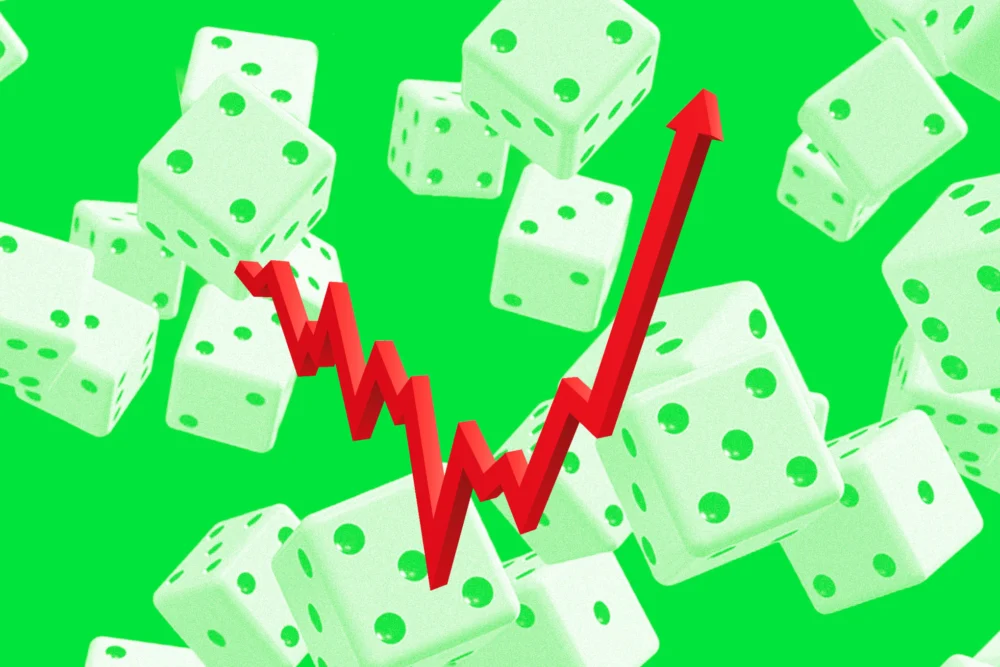
The once-distinct lines between informed speculation and outright wagering have blurred dramatically, as the burgeoning landscape of prediction markets, epitomized by platforms like Polymarket and Kalshi, increasingly transforms everyday events into quantifiable gambles. This evolving ecosystem, fueled by decentralized technology and a thirst for predictive accuracy, is not merely offering novel avenues for financial engagement but is fundamentally altering how societies assess probabilities and process information.

At their core, prediction markets operate on a simple yet powerful premise: participants buy and sell contracts whose payouts are contingent on the occurrence or non-occurrence of specific future events. These events can range from the outcome of political elections and the release of economic data to the success of technological innovations and even the weather. The market price of a contract then serves as a real-time, crowdsourced probability assessment of that event’s likelihood. A contract for an event predicted to occur with high certainty will trade at a price close to $1.00 (representing 100% probability), while an unlikely event will trade near $0.00 (0% probability).

The rise of these platforms signifies a profound shift in how information is valued and disseminated. Historically, predicting future outcomes has been the domain of seasoned analysts, intelligence agencies, and academic researchers. While their methodologies remain crucial, prediction markets introduce a dynamic, democratized layer of forecasting. The collective intelligence of thousands, or even millions, of individuals, each with their own unique insights and incentives to be accurate, converges to create a continuously updated probability. This mechanism is often lauded for its efficiency in aggregating dispersed knowledge, a concept explored by economists like Friedrich Hayek in relation to market prices as signals of information.

The technology underpinning these markets is diverse, with many prominent platforms leveraging blockchain technology. This allows for transparent, immutable record-keeping of transactions and contract settlements, enhancing trust and reducing the potential for manipulation. Decentralized finance (DeFi) protocols, in particular, have provided a fertile ground for the development of sophisticated prediction market infrastructure, enabling smart contracts to automatically execute payouts based on verified event outcomes. This technological underpinning is crucial for the perceived legitimacy and scalability of these markets.

Platforms like Polymarket have carved out a significant niche by focusing on a broad spectrum of events, including those in the cryptocurrency space, politics, and even entertainment. Their user-friendly interface and accessibility have contributed to their rapid growth. Kalshi, on the other hand, has pursued a more regulated approach, aiming to offer event contracts as a form of regulated exchange-traded product. This distinction is critical, as it speaks to the different pathways these markets are forging within the broader financial and regulatory landscape. Kalshi’s engagement with regulatory bodies suggests an ambition to integrate prediction markets more formally into traditional financial systems, potentially making them accessible to a wider range of institutional investors.

The implications of this trend are far-reaching. In the realm of economics and finance, prediction markets offer a powerful tool for hedging against unforeseen events. Businesses can use these markets to gain insights into the probability of supply chain disruptions, commodity price fluctuations, or regulatory changes, allowing for more proactive risk management. For investors, these markets can provide an alternative, or complementary, method for gauging sentiment and anticipating market movements that might not be immediately apparent through traditional analysis. The ability to bet on specific economic indicators, for instance, could offer a granular view of market expectations.

Beyond financial applications, prediction markets are poised to influence policy-making and public discourse. Governments and international organizations could potentially use these markets to forecast the impact of policy decisions, the likelihood of geopolitical events, or the success of public health initiatives. The aggregated wisdom of the market could provide valuable, albeit controversial, real-time feedback loops, offering an early warning system for potential crises or the identification of emerging trends. Imagine a market predicting the likelihood of a specific disease outbreak, allowing for preemptive public health measures.

However, the expansion of prediction markets is not without its challenges and controversies. Regulatory scrutiny is a significant hurdle. The classification of prediction market contracts as either securities, commodities, or derivatives is a complex legal question that varies across jurisdictions. This ambiguity can create uncertainty for operators and participants alike, and potentially stifle innovation if not addressed thoughtfully. The line between a speculative bet and a regulated financial instrument is often fine, and regulators are grappling with how to balance investor protection with the potential benefits of these markets.

Ethical considerations also come to the fore. Critics raise concerns about the potential for markets to incentivize or even influence the outcomes they are designed to predict. For example, a market predicting the success of a particular political candidate could, in theory, see participants betting against them to profit from their failure. The commodification of sensitive events, such as natural disasters or social unrest, also raises questions about the appropriateness and potential for exploitation. There is a delicate balance to be struck between harnessing predictive power and ensuring that these markets do not contribute to negative outcomes or trivialize significant events.

Furthermore, the accuracy and reliability of prediction markets are subjects of ongoing research and debate. While often touted for their efficiency, the validity of their predictions can be influenced by factors such as market depth, participant sophistication, and the potential for manipulation. The "wisdom of the crowd" is not always infallible, and biases can emerge. Understanding the factors that contribute to market accuracy, and mitigating those that detract from it, remains a key area of study.

The technological evolution of prediction markets is also accelerating. Innovations in artificial intelligence and machine learning are being integrated to analyze market data, identify patterns, and even automate trading strategies. This could lead to even more sophisticated and efficient markets, but also raises questions about the role of human judgment and the potential for algorithmic dominance. The interplay between human intuition and algorithmic prediction will be a defining characteristic of future prediction market development.

Looking ahead, the trajectory of prediction markets suggests a continued integration into various facets of society. As the technology matures and regulatory frameworks evolve, these platforms are likely to become more commonplace. The ability to quantify uncertainty and leverage collective intelligence for predictive purposes holds immense potential for informed decision-making across a wide array of fields. The concept of "everything is gambling now" might be an overstatement, but it accurately captures the growing perception that many future outcomes, once shrouded in uncertainty, are increasingly being brought into the quantifiable realm of market-based probabilities. The challenge lies in harnessing this power responsibly, ethically, and effectively to the benefit of society. The ongoing development of platforms like Polymarket and Kalshi, each with their distinct approaches, will be instrumental in shaping this future.



 Ayu Aulia
 Safa Marwah
 Lisa Mariana
 Ridwan Kamil