Lisa Mariana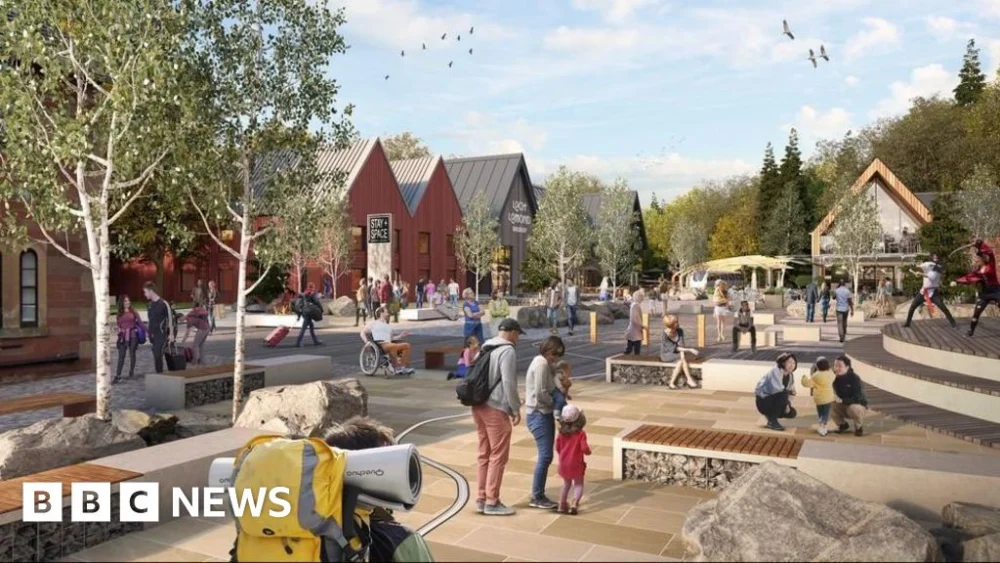
The Scottish Government has delivered a definitive rejection to the contentious £40 million holiday resort planned for the pristine banks of Loch Lomond, bringing a multi-year, often acrimonious, debate to a decisive close. This ministerial intervention, overriding a previous recommendation for approval by the government’s own planning adviser, signals a significant policy stance prioritizing environmental protection and adherence to national planning frameworks over perceived economic benefits in a designated national park. The decision specifically cites critical concerns related to flood risk, irreplaceable woodland loss, and broader inconsistencies with established planning policies, culminating in a victory for a widespread grassroots opposition movement and environmental advocates.
The proposed Lomond Banks development, spearheaded by theme park operator Flamingo Land, envisioned a comprehensive leisure complex that would have included a waterpark, a monorail system, a substantial hotel, and a variety of dining establishments. Such a large-scale project within the sensitive confines of Loch Lomond and The Trossachs National Park inevitably sparked an intense public discourse, pitting proponents of economic regeneration against staunch defenders of ecological integrity and landscape preservation. The project, initially conceived in 2018, underwent significant revisions following an initial withdrawal due to overwhelming public backlash, yet continued to face formidable resistance from local communities and environmental organisations.
The saga of the Lomond Banks proposal has been characterized by a complex and circuitous planning journey. After its initial withdrawal in 2019, revised plans were submitted in 2020. These updated proposals, while presented by the developers as a "major step away" from their traditional theme park model, were still met with considerable skepticism. The Loch Lomond and The Trossachs National Park Authority, the primary planning body for the area, ultimately rejected the updated scheme in September 2024, citing its incompatibility with both regional and national environmental directives. A central tenet of their rejection revolved around the heightened risk of flooding along the River Leven, a critical ecological corridor.
However, the planning process took an unexpected turn when the developers appealed this initial refusal to the Scottish Government’s planning reporter, an independent expert tasked with evaluating such appeals. The reporter subsequently recommended that the development be approved, suggesting a different interpretation of the planning guidelines and potential mitigations. This recommendation briefly offered a glimmer of hope for the developers, only for the Scottish Government to exercise its power to "recall" the plans for a final ministerial decision. This recall mechanism allows ministers to take ultimate responsibility for proposals deemed to have significant implications for national policy or the wider environment, bypassing the reporter’s recommendation. The subsequent ministerial decision to reject the proposal, therefore, represented a direct and conscious divergence from the technical advice received, underscoring the political and strategic weight attached to the outcome.
The core reasons articulated for the ministerial refusal — flood risk, woodland loss, and wider policy conflicts — are deeply embedded in Scotland’s environmental protection ethos and planning legislation. The site’s susceptibility to flooding, particularly from the River Leven, was a paramount concern. Developing a large resort in a flood-prone area could exacerbate risks to both the development itself and downstream communities, potentially necessitating costly flood defence infrastructure or leading to significant future liabilities. The Scottish Government’s assessment evidently found the proposed flood mitigation strategies insufficient, or that the inherent risks simply outweighed any potential benefits. This aligns with broader national strategies aimed at climate change adaptation and sustainable land use planning, which increasingly emphasize avoiding development in areas vulnerable to extreme weather events.
Furthermore, the issue of woodland loss resonated deeply with environmental groups and the public. Scotland possesses a finite and precious woodland resource, with ancient and semi-natural woodlands being particularly valuable for biodiversity, carbon sequestration, and their role in the cultural landscape. The removal of mature trees and established woodland habitats for construction is often viewed as an irreversible ecological cost. The ministers’ decision indicates a strong commitment to conserving and enhancing the natural capital of the National Park, recognising the long-term ecological services provided by these natural assets. This aligns with Scotland’s ambitious targets for reforestation and biodiversity preservation, where the loss of existing, established woodlands represents a step backward.
Beyond these specific environmental concerns, the rejection highlighted "wider policy conflicts" and a clash with the "ongoing aim of conserving and enhancing the natural and cultural heritage of the area." This encompasses a broad spectrum of considerations, including the visual impact of a large-scale commercial development on an iconic natural landscape, potential pressures on local infrastructure, increased traffic, and the philosophical question of whether such a resort aligns with the fundamental principles of a National Park. National Parks in Scotland are established with statutory aims that balance conservation, sustainable recreation, and local community development. The government’s decision implicitly argues that the Lomond Banks proposal would have undermined the conservation and enhancement objectives, potentially compromising the very qualities that make Loch Lomond a cherished natural asset and a draw for visitors.
The developer, Lomond Banks, voiced profound disappointment at the decision. Jim Paterson, the development director, described the outcome as "dismissive of the reporter’s recommendation" and argued it "flies in the face" of the area’s potential for regeneration and economic benefit. He contended that concerns regarding flood risk and woodland loss could have been adequately addressed through refined design work. The company’s perspective underscores the inherent tension between economic development and environmental protection. From their viewpoint, the project represented a significant private investment capable of generating substantial employment opportunities, both directly within the resort and indirectly through local supply chains, contributing to the economic vitality of a region that could benefit from such an injection. They saw the project as a catalyst for "long-term economic benefits to one of Scotland’s most disadvantaged communities."
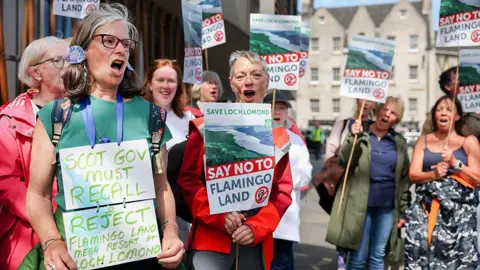
However, the celebratory response from opponents of the development was immediate and unequivocal. Ross Greer, co-leader of the Scottish Greens and a prominent, long-term critic of the project, hailed the decision as "a huge victory for the local community." He emphasized the potential for devastating impacts on the environment, local community, and economy, urging Flamingo Land to "walk away." Heather Reid, Convener of Loch Lomond and The Trossachs National Park Authority, expressed that the decision "vindicated" the board’s initial rejection, reinforcing their commitment to a vision where "people and nature not only coexist, but thrive together." Scottish Labour deputy leader Jackie Baillie, whose constituency covers the proposed site, also welcomed the outcome, reiterating that the proposal was "flawed" and had been overwhelmingly rejected by her local community. These statements collectively highlight the significant public and political pressure that mounted against the development, particularly the impactful online petition that garnered over 174,000 signatures, demonstrating a powerful collective voice against the project.
The unusual sequence of events, where ministerial judgment superseded the recommendation of an independent planning reporter, reflects a deeper governmental commitment to its environmental mandates and potentially a responsiveness to intense public sentiment. While planning reporters typically provide impartial, evidence-based recommendations, ministers retain the ultimate authority to consider broader policy implications, political sensitivities, and the public interest. This particular decision suggests that the environmental and heritage concerns, coupled with the sheer scale of public opposition, were deemed to outweigh the economic arguments and the technical advice provided by the reporter. It sets a precedent, indicating that even well-developed proposals with potential economic upside can be halted if they are perceived to fundamentally conflict with the conservation aims of Scotland’s most cherished natural landscapes.
Looking forward, the rejection of the Lomond Banks resort carries significant implications for future development within Scotland’s protected areas. It sends a clear signal to developers that proposals impacting sensitive environmental sites, particularly National Parks, will be subjected to rigorous scrutiny, with a strong emphasis on ecological preservation and adherence to comprehensive planning policies. This could lead to a re-evaluation of development strategies in such areas, encouraging more sensitively scaled and ecologically integrated projects rather than large-scale commercial ventures. For the Loch Lomond site itself, the future remains open. While Lomond Banks’ plans are now formally rejected, the underlying desire for sustainable economic development in the region persists. This outcome may pave the way for alternative proposals that align more closely with the National Park’s conservation objectives and the community’s vision for the area, perhaps focusing on smaller-scale, eco-tourism initiatives that genuinely enhance, rather than diminish, the natural and cultural heritage of Loch Lomond. The challenge now lies in finding a path forward that genuinely integrates economic prosperity with the enduring protection of Scotland’s unparalleled natural beauty.



 Safa Marwah
 Aura Kasih