Lisa Mariana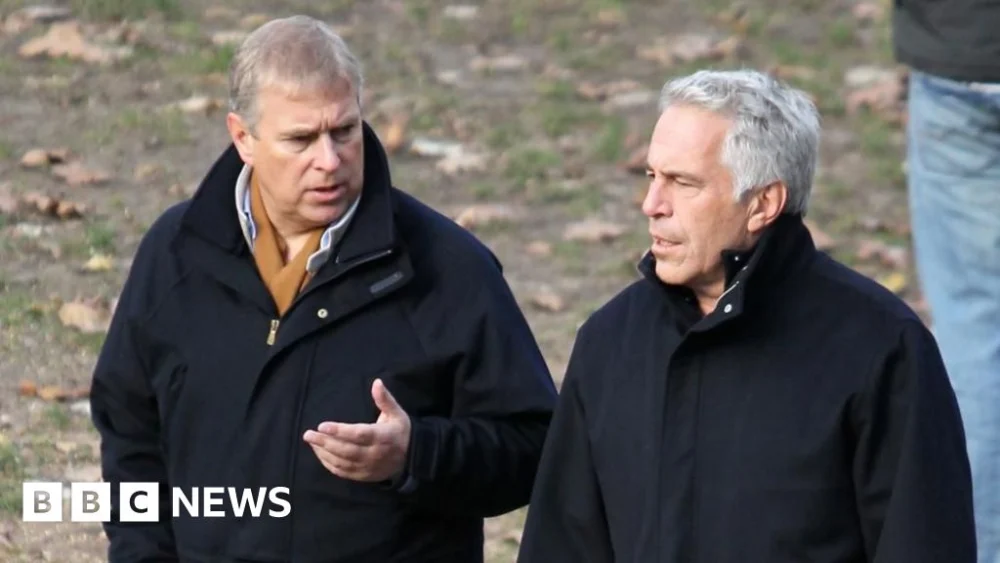
The recent unsealing of documents connected to the disgraced financier Jeffrey Epstein has ignited an intensified re-evaluation of public statements made by Prince Andrew, Duke of York, particularly his notable 2019 television interview, as a transatlantic legal and reputational storm continues to gather momentum around the British royal.
The confluence of newly accessible evidentiary material and the Duke’s past declarations places his narrative under unprecedented forensic scrutiny. Investigative journalists and legal analysts are meticulously dissecting communications purportedly exchanged with and by the former senior royal, juxtaposing their contents against the answers provided during his widely discussed sit-down with the BBC’s Newsnight program. This granular comparison aims to ascertain the consistency and veracity of his account regarding his associations with Epstein and the wider implications of his presence within the financier’s orbit.
The Duke of York continues to face mounting pressure from judicial authorities in the United States, alongside representatives for the family of his most prominent accuser, the late Virginia Giuffre. These parties are actively seeking his testimony in the US, believing his insights are crucial to understanding the full scope of Epstein’s illicit network and its alleged enablers. This persistent demand underscores the unresolved legal questions surrounding his involvement, despite his previous public denials of any misconduct.
Jeffrey Epstein, a figure synonymous with profound moral and legal transgression, was first convicted in 2008 for soliciting a minor for prostitution. His subsequent arrest in 2019 on charges of sex trafficking minors reignited global outrage, culminating in his death by suicide later that year while awaiting trial. The shadow of his crimes continues to lengthen, now ensnaring prominent individuals, including Prince Andrew, as the full extent of his network unravels through successive waves of document releases.
The Duke of York has consistently maintained his innocence, rejecting all allegations of wrongdoing. His legal representatives have been approached for comment regarding the current developments, a standard practice in the face of such sustained public and legal interest. The current focus, however, transcends mere reiteration of denials, moving towards a detailed comparison with concrete, newly public records.
The Genesis of Scrutiny: Prince Andrew’s Entanglement
Prince Andrew’s association with Jeffrey Epstein dates back to the late 1990s, fostering a friendship that would prove catastrophic for his public image and royal standing. The nature of their relationship, characterized by shared social circles and mutual acquaintances, became a subject of intense public debate following Epstein’s initial conviction. Despite the gravity of Epstein’s crimes, the Duke continued to maintain contact with him, an action he later expressed regret for, albeit belatedly. This enduring connection laid the groundwork for the persistent questions that have plagued him for over a decade.
The initial public outcry following Epstein’s 2008 conviction prompted the first wave of reputational damage to the Duke. However, it was the resurfacing of allegations in 2019, particularly from Virginia Giuffre, that escalated the crisis to an unprecedented level. Giuffre alleged she was trafficked by Epstein and forced to engage in sexual acts with Prince Andrew on multiple occasions when she was underage, claims the Duke vehemently denies. These allegations, coupled with photographic evidence purporting to show him with Giuffre, cemented his position at the epicentre of the scandal.
The Pivotal 2019 Newsnight Interview: A Strategic Miscalculation?
In November 2019, amid escalating public and media pressure, Prince Andrew participated in a television interview with Emily Maitlis for BBC’s Newsnight. The interview was widely perceived as an attempt by the Duke to clear his name and provide a definitive account of his relationship with Epstein and his alleged involvement in the illicit activities. During the 50-minute broadcast, he addressed various controversial aspects, including his decision to stay at Epstein’s New York mansion after the financier’s release from prison in 2010, his alleged encounter with Giuffre, and his now-infamous claim that he was unable to sweat due to a medical condition, which he offered as a counter to Giuffre’s recollection of him perspiring during an alleged encounter.
The interview was met with a largely negative reception from the public, media, and even within royal circles. Critics argued that the Duke displayed a lack of empathy for Epstein’s victims, failed to adequately explain his actions, and came across as evasive or detached. Far from quelling the controversy, the interview inadvertently intensified it, leading to a cascade of negative consequences, including his effective withdrawal from public royal duties and the stripping of his military titles and royal patronages. It became a watershed moment, solidifying public perception of his culpability and severely damaging the monarchy’s reputation.
The Unsealing of the Epstein Files: A New Dimension of Evidence
The recent judicial order mandating the unsealing of numerous documents related to the civil litigation surrounding Jeffrey Epstein’s network represents a significant development. These "Epstein files" encompass a vast array of materials, including witness testimonies, depositions, financial records, and, critically, electronic communications such as emails. The release of these documents is not a singular event but an ongoing process, with tranches of information being made public at various intervals, each potentially shedding new light on the intricate web of individuals associated with Epstein.
The significance of these newly accessible emails, purportedly exchanged with and by Prince Andrew, cannot be overstated. Email communications provide a direct, often unvarnished, record of interactions, intentions, and relationships. They can corroborate or contradict previous statements, reveal previously undisclosed connections, or offer contextual details that were absent from prior public narratives. For Prince Andrew, the content of these emails could be pivotal. They offer an independent data point against which his Newsnight interview claims – concerning the nature and extent of his friendship with Epstein, his travel arrangements, and his awareness of Epstein’s activities – can be rigorously tested. Any material discrepancies between his televised assertions and the written record could profoundly impact his legal standing and public credibility.
Legal and Diplomatic Pressures: The US Pursuit of Testimony
The demands from US officials, particularly the Department of Justice, for Prince Andrew to provide testimony are rooted in ongoing investigations into Epstein’s co-conspirators and the wider sex trafficking enterprise. The US legal system operates under the principle of seeking all relevant evidence, regardless of the individual’s status or nationality, when the alleged crimes have a nexus within American jurisdiction.
Virginia Giuffre’s legal team, despite the settlement of her civil lawsuit against Prince Andrew in 2022, continues to advocate for accountability. Their persistent calls for his testimony underscore the belief that his evidence remains crucial for understanding the full network involved in Epstein’s abuses. The pursuit of his testimony could take several forms, including formal requests for cooperation, depositions, or, in extreme cases, consideration of extradition, although the latter presents significant diplomatic and legal complexities given his royal status and the lack of a formal extradition treaty for civil matters.
The Duke’s refusal to voluntarily cooperate with US authorities has been a point of contention, leading to public statements from US prosecutors indicating their frustration. While the civil suit has concluded, the possibility of criminal investigation or renewed civil action, particularly concerning other potential victims or related parties, remains a persistent undercurrent. The legal landscape is fluid, and new revelations from the unsealed documents could conceivably alter the existing calculus, increasing the pressure on the Duke to reconsider his stance.
Implications for the Monarchy and Public Trust
The enduring saga surrounding Prince Andrew has inflicted significant reputational damage on the British monarchy. An institution that relies heavily on public trust and moral authority, the Royal Family has consistently sought to distance itself from the Duke’s personal controversies. The stripping of his military titles and royal patronages, and his removal from public duties, represented a drastic measure to insulate the Crown from the fallout.
However, each fresh wave of revelations, particularly those directly linking him to Epstein’s network through new documentation, reignites public debate and further tests the resilience of the monarchy’s image. The scandal raises fundamental questions about accountability, privilege, and the expectations placed upon those associated with the highest echelons of society. For an institution striving for modernization and relevance, the persistent shadow of the Epstein affair poses a significant challenge, potentially eroding public confidence and fueling republican sentiment. The monarchy’s ability to navigate this ongoing crisis will be crucial for maintaining its standing in an increasingly scrutinizing global landscape.
Analytical Perspectives and Future Trajectories
From an analytical standpoint, the ongoing re-evaluation of Prince Andrew’s statements against the backdrop of the Epstein files serves as a potent case study in the dynamics of public accountability for powerful figures. It highlights the enduring power of investigative journalism and the legal system’s capacity, albeit sometimes slow, to unearth truths and demand answers, irrespective of social standing. The sheer volume and granular nature of the unsealed documents underscore the meticulous efforts by legal teams and authorities to reconstruct the complex narratives surrounding Epstein’s activities.
Looking ahead, several trajectories are possible. Should the newly revealed emails present irrefutable contradictions to Prince Andrew’s previous statements, the pressure for him to provide further explanations or testimony will become almost insurmountable. While direct criminal prosecution in the US may remain a distant prospect given jurisdictional complexities, the reputational and personal consequences of continued defiance could be severe. Conversely, if the emails offer no new incriminating evidence or align with his existing narrative, it could offer a degree of vindication, though unlikely to fully restore his public standing.
The wider implications extend to the enduring legacy of the Epstein scandal. The slow drip-feed of information from the unsealed documents ensures the story remains in the public consciousness, continuing to expose the vulnerabilities of the powerful and advocating for justice for victims. For Prince Andrew, the path forward remains fraught with uncertainty, inextricably linked to the ongoing revelations from the Epstein files and the relentless pursuit of answers by both legal authorities and the global public. The definitive comparison of his past declarations with the cold, hard data of newly disclosed communications will undoubtedly shape the next chapter of this prolonged and damaging royal entanglement.




 Safa Marwah
 Aura Kasih
 Ridwan Kamil