Lisa Mariana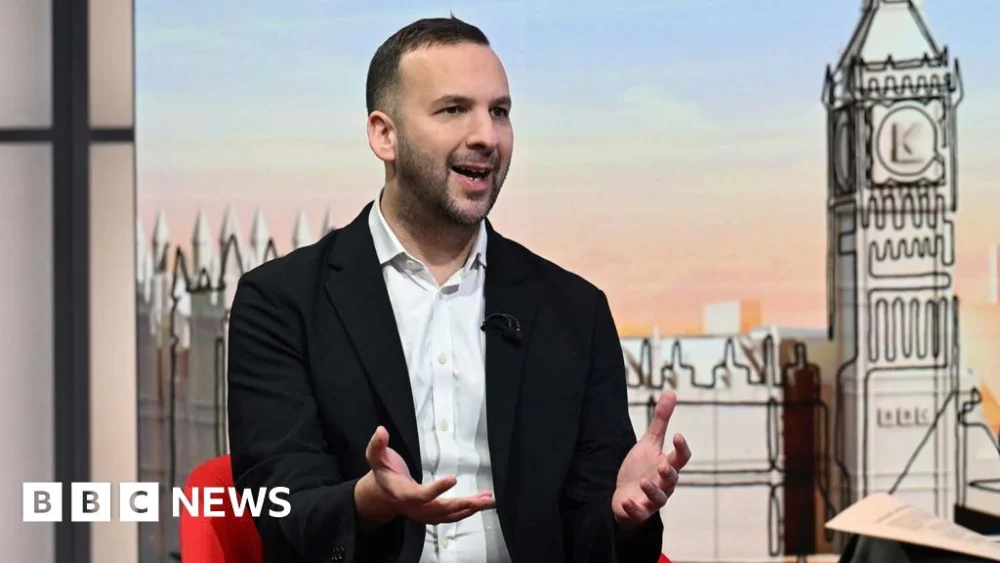
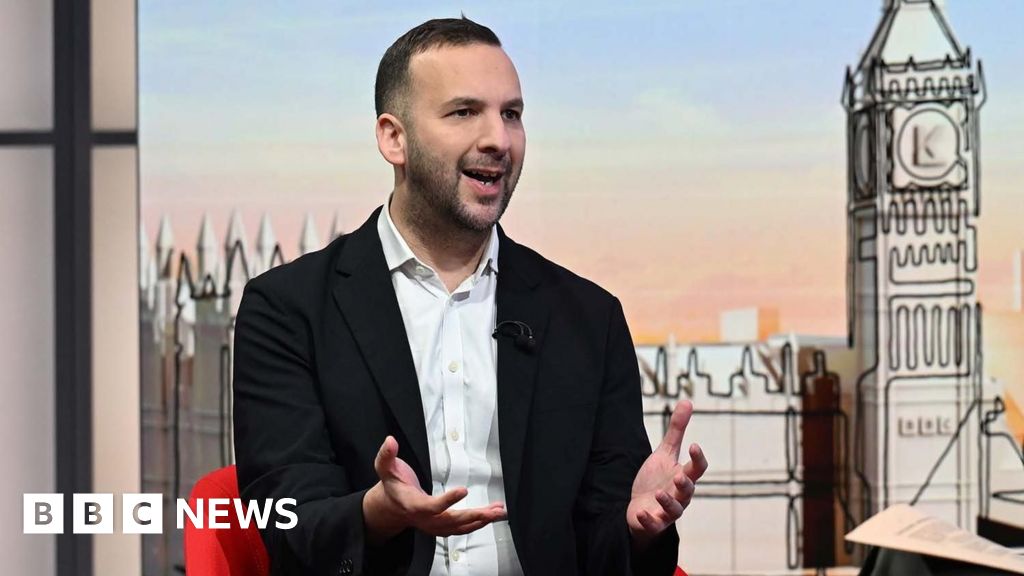
The prevailing approach to drug policy in the United Kingdom requires a fundamental paradigm shift, according to Green Party co-leader Zack Polanski, who advocates for the comprehensive legalisation of currently prohibited substances under a robust public health framework.
Mr. Polanski articulated his vision for a "system change" during a recent broadcast, emphasizing the imperative to transition away from punitive criminal justice models towards a compassionate, evidence-based public health strategy. Central to this proposed transformation is the assurance that individuals grappling with substance use disorders would receive professional medical intervention and support, rather than facing incarceration or societal stigmatisation. This perspective posits that framing drug use as a health issue, rather than purely a criminal one, would unlock more effective prevention, treatment, and recovery pathways, ultimately leading to better outcomes for individuals and society at large.
The Green Party co-leader’s advocacy for drug legalisation has ignited considerable political debate, drawing sharp criticism from established political figures. Notably, Sir Keir Starmer, the leader of the Labour Party, publicly accused Mr. Polanski of being "high on drugs, soft on Putin" – a remark that Mr. Polanski swiftly denounced as "disgraceful" and a "cheap joke." This exchange underscores the deeply entrenched political sensitivities surrounding drug policy, where discussions often devolve into ad hominem attacks rather than substantive policy discourse. A source from 10 Downing Street subsequently echoed a similar sentiment, stating that the Prime Minister’s concerns centred on what was described as the "recklessness and irresponsibility of the Green Party’s proposals." Such responses highlight the significant political hurdles faced by proponents of drug policy reform, where progressive stances are often framed by opponents as dangerous or irresponsible.
Interestingly, Mr. Polanski’s personal lifestyle stands in stark contrast to the subject of his political advocacy. He publicly stated that he has abstained from both drug consumption and alcohol throughout his life, clarifying that such activities were simply "not for me." Explaining his decision regarding alcohol, he recounted growing up in an environment where many of his peers engaged in drinking and drug use, leading him to feel a personal responsibility to remain sober. He further elaborated on his enjoyment of dancing without the need for intoxicants, affirming that while he supports individuals’ choices to engage in such activities safely, his primary concern lies with ensuring support for those who are not doing so. This personal narrative is a crucial element in his public persona, allowing him to counter potential criticisms that his advocacy for legalisation stems from personal indulgence, instead framing it as a pragmatic, public-spirited stance. It attempts to disarm critics by demonstrating a dispassionate, policy-driven approach rather than one informed by personal experience with illicit substances.
Addressing concerns that legalisation might convey an endorsement of drug use to younger generations, Mr. Polanski forcefully argued that the current prohibitionist paradigm is far more perilous. He contended that criminalisation pushes the drug trade into unregulated "street corners and a black market," thereby increasing the dangers associated with illicit substances due to unknown purity, potency, and lack of harm reduction information. This argument forms a cornerstone of the harm reduction philosophy, which posits that a regulated market, coupled with public health interventions, would significantly mitigate the risks inherent in the current illicit drug landscape.
In bolstering his argument, Mr. Polanski cited the work of "Anyone’s Child," an organization founded by families who have lost loved ones to drug-related deaths. This group, he stated, advocates unequivocally for a national dialogue on the manifest failures of the "war on drugs," asserting that current policies inadvertently make drugs more dangerous. The organization’s message resonates with a growing international consensus that punitive measures have largely failed to curb drug use or supply, instead fostering criminality and exacerbating public health crises. Mr. Polanski underscored their call for a "grown-up conversation based in evidence," advocating for a public health approach encompassing prevention, early intervention, and comprehensive post-use support. This reflects a broader movement towards evidence-based policy-making in areas traditionally dominated by moral or ideological considerations.
The debate around drug policy reform is not merely theoretical; practical initiatives are already underway in the UK. Last year, "The Thistle" in Glasgow became a pivotal location, operating as the first facility in the UK where individuals can inject heroin or cocaine under medical supervision without facing prosecution. This pilot project represents a significant departure from traditional enforcement models, embodying a harm reduction strategy designed to prevent overdose deaths, reduce the spread of blood-borne diseases, and provide pathways to treatment. Supervised drug consumption rooms (DCRs) or overdose prevention sites (OPS) are well-established in many European and North American cities, demonstrating tangible benefits in public health and safety. They offer a safe, clean environment, sterile equipment, and immediate medical attention in case of overdose, alongside access to housing, mental health support, and addiction treatment.
Despite the emergence of such innovative pilot schemes, the UK government has maintained its position against altering existing drug laws to facilitate the widespread establishment of similar legal drug consumption rooms. While expressing openness to evaluating the evidence emanating from "The Thistle’s" three-year pilot, the government’s official stance reaffirms its commitment to a "balanced approach." This approach combines "strengthened law enforcement to tackle supply" with "investment in treatment, the development of a skilled workforce, sustainable recovery services and peer networks that will support people in recovery with employment, housing and education." This dual strategy reflects the ongoing tension between law enforcement priorities and public health imperatives, a tension that characterises drug policy debates globally. Critics of this "balanced approach" argue that without addressing the fundamental illegality of drug use, many of the public health interventions remain constrained and less effective than they could be under a regulated model.
Mr. Polanski’s political identity extends beyond drug policy, as he describes himself as an "eco-populist" and has deliberately positioned the Green Party firmly on the left of the political spectrum. This strategic alignment aims to broaden the party’s appeal beyond its traditional environmentalist base, seeking to connect with a wider demographic on issues of social justice and economic inequality. When questioned about the potential risk of alienating the party’s established "tree-hugging middle class" voters, Mr. Polanski confidently asserted that the Green Party represents "the party of the 99% versus the 1%." This rhetoric aligns with broader populist movements that challenge economic disparities and advocate for greater social equity. He acknowledged the inherent risks in political positioning but highlighted the positive impact of his leadership, citing an impressive influx of 130,000 new members since he assumed the role. This growth suggests a potential broadening of the Green Party’s appeal and a resonance of its messaging with a segment of the electorate seeking more radical policy alternatives.
Looking ahead to the next general election, the prospect of the Green Party potentially entering a coalition government with other parties looms large. Mr. Polanski has previously made it clear that he would not be willing to collaborate with the current Prime Minister, indicating a fundamental ideological divergence. When pressed on the possibility of working with other left-leaning political figures, such as Greater Manchester Mayor Andy Burnham, Mr. Polanski articulated that such a decision would be contingent on the specific "policy platform they were putting forward." This pragmatic stance underscores the Green Party’s commitment to its core principles and policy objectives, suggesting that any alliance would necessitate significant alignment on key issues.
Mr. Polanski affirmed that his paramount objective remains securing more seats for the Green Party in Parliament. Should the opportunity arise to collaborate with another political entity, he outlined several non-negotiable demands. These include the implementation of a "wealth tax on multi-millionaires and billionaires," robust and decisive action on the climate crisis, and the adoption of "proportional representation" to ensure that citizens’ votes are more accurately reflected in parliamentary composition. These demands reflect the Green Party’s foundational commitments to environmental sustainability, social justice, and democratic reform, positioning them as a distinct voice within the political landscape. The emphasis on a wealth tax, in particular, resonates with his "99% versus 1%" narrative, highlighting an economic justice component that complements the party’s environmental and social platforms.
The discourse surrounding drug policy in the UK is clearly at a crossroads. The traditional, prohibitionist model, often termed the "war on drugs," has been increasingly scrutinised for its effectiveness and societal costs. Critics argue that it has failed to curb drug use, instead fuelling organised crime, exacerbating health inequalities, and disproportionately impacting marginalised communities. The alternative, championed by figures like Mr. Polanski, proposes a radical shift towards a public health paradigm, where substances are regulated, and individuals with problematic drug use are offered medical assistance rather than criminal punishment. This approach draws heavily on international examples, such as Portugal’s decriminalisation model, which has demonstrated significant reductions in drug-related deaths and HIV infections, alongside increased treatment uptake. Countries like Canada and several U.S. states have also moved towards legalising cannabis, generating tax revenues and diverting law enforcement resources.
However, the path to such reform is fraught with challenges. Public opinion often remains cautious, influenced by decades of anti-drug messaging and concerns about potential societal impacts. The political class, as evidenced by the reactions to Mr. Polanski’s proposals, remains deeply divided, often prioritising perceived public safety and law-and-order rhetoric over harm reduction. The pilot in Glasgow, while a significant step, operates within the existing legal framework and represents a limited, localised intervention rather than a systemic overhaul. The UK government’s "balanced approach" reflects this cautious stance, seeking to enhance treatment options within the existing legal architecture, rather than fundamentally questioning the legality of drug use itself.
The implications of a shift towards legalisation are profound, touching upon economic, social, and ethical dimensions. Economically, a regulated market could generate substantial tax revenues, which could then be reinvested into public health services, education, and treatment programmes. It could also reduce the immense costs associated with policing, prosecuting, and incarcerating drug offenders. Socially, a public health approach could significantly reduce drug-related harm, destigmatise drug use, and improve access to vital support services for vulnerable populations. Ethically, it raises questions about individual autonomy, the role of the state in regulating personal choices, and the societal responsibility to protect its citizens from harm.
Ultimately, the debate initiated by Mr. Polanski and others represents a critical juncture in UK policy. As evidence from international models and domestic pilots accumulates, the pressure for a more comprehensive and humane approach to drug policy is likely to intensify. The Green Party’s consistent advocacy, coupled with the broader movement towards evidence-based policy-making, ensures that the call for a "system change" will remain a prominent feature of the political discourse, challenging the status quo and urging a fundamental re-evaluation of how society addresses the complex issue of drug use. The long-term trajectory will depend on a confluence of evolving public sentiment, robust empirical data, and the willingness of political leaders to engage in a "grown-up conversation" about a topic that has historically been mired in ideology and fear.



 Aura Kasih
 Ayu Aulia
 Safa Marwah