Lisa Mariana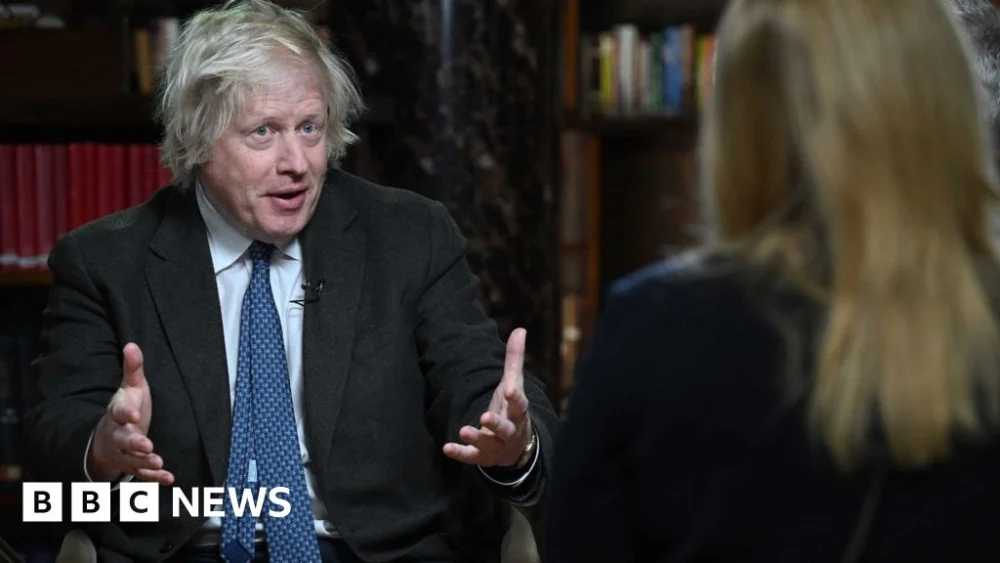
Former British Prime Minister Boris Johnson has issued a forceful appeal for the United Kingdom and its international partners to deploy non-combat military personnel to Ukraine without delay, asserting that such a move could fundamentally alter Russian President Vladimir Putin’s strategic calculus. This audacious proposal, articulated ahead of the conflict’s grim four-year anniversary, directly challenges the prevailing Western approach of providing extensive material support while strictly avoiding direct military presence on Ukrainian soil prior to a peace accord.
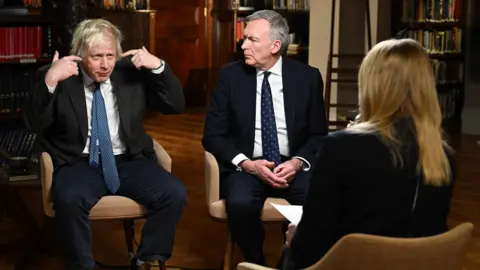
Johnson’s argument, presented during an exclusive interview alongside Admiral Sir Tony Radakin, the former head of the armed forces, posits that if allied nations are prepared to commit ground forces for peacekeeping and stability operations after a cessation of hostilities, there is no logical impediment to deploying them in secure, non-frontline regions now. These troops, he clarified, would undertake roles distinct from active combat, focusing on support functions within areas deemed safe. The rationale, as Johnson articulated, is to "flip a switch" in Putin’s perception, demonstrating an unwavering and tangible commitment to Ukraine’s sovereignty that transcends mere rhetoric and arms shipments.
The prevailing strategy among Western governments, including the UK, involves meticulous planning for a "coalition of the willing" to contribute forces for post-conflict peace preservation and stabilization. However, this hinges entirely on the prior achievement of a comprehensive peace agreement to end the ongoing hostilities. Johnson’s intervention directly questions the efficacy and timing of this cautious stance, suggesting that deferring such a deployment only grants Moscow greater leverage and initiative.
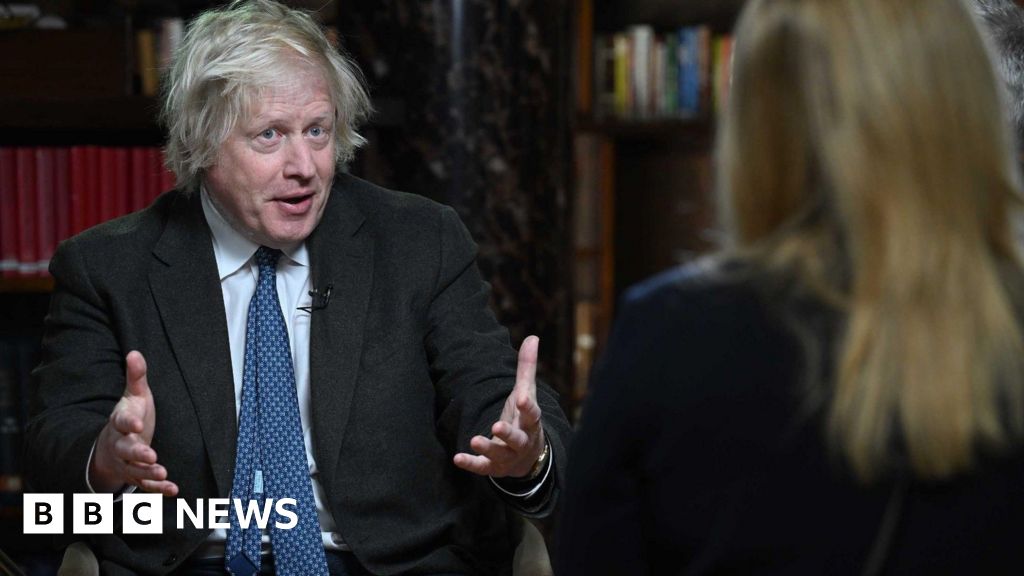
The former Prime Minister, who presided over the initial phase of Russia’s full-scale invasion in February 2022, also voiced profound regret regarding the perceived passivity of Western allies in the face of escalating Russian aggression. He contended that a more robust and decisive response to Putin’s annexation of Crimea in 2014, and subsequent acts of international defiance, could have averted the current devastating conflict. This historical critique underlines a consistent theme in Johnson’s recent commentary: a belief that a pattern of Western equivocation has consistently emboldened the Kremlin.
During the interview, both Johnson and Sir Tony reflected on the pivotal moments surrounding the 2022 invasion and the subsequent decision to provide robust backing to President Volodymyr Zelensky’s government. Despite the substantial military and financial aid channeled to Kyiv, a shared conviction emerged that Western allies had demonstrated excessive slowness and caution in delivering critical support. The consistent delay, often stretching for months, in providing requested weaponry has been a recurring source of frustration for Ukrainian leadership. Sir Tony characterized this hesitant approach as "incrementalism," acknowledging the "deeply frustrating" tensions it has created throughout the conflict.
Johnson unequivocally asserted that this cautious, incremental approach has exacted a heavy toll in human lives. He argued, "We’ve always delayed needlessly. We’ve then ended up giving the Ukrainians what they have been asking for, and actually it’s always served to their advantage and to the disadvantage of Putin. I mean, the one person who suffers from escalation is Putin." This perspective suggests that Western hesitation, driven by an aversion to perceived escalation, paradoxically prolongs the conflict and inflicts greater suffering.
The conceptualization of "non-combat troops" in a live conflict zone demands precise definition. Such deployments could encompass a range of vital functions: humanitarian aid delivery, logistical support for civilian infrastructure, medical assistance, demining operations, training of Ukrainian forces outside combat zones, cyber security assistance, or even the protection of critical non-military installations. The precise geographical scope of "peaceful regions" would also require careful delineation, likely focusing on western Ukraine, far from active frontlines, but still within a nation under siege. The core distinction, as Johnson underlined, is that these forces would not engage in direct offensive or defensive combat operations against Russian forces, thereby theoretically mitigating the risk of direct entanglement.
However, the geopolitical ramifications of such a deployment would be profound and complex. Moscow would almost certainly interpret the presence of international troops, regardless of their declared non-combat status, as a significant provocation and a direct escalation of Western involvement. Russian state media would undoubtedly exploit such a move to bolster its narrative of an aggressive, expansionist NATO directly confronting Russia. The potential for miscalculation, accidental engagement, or targeted attacks against these "non-combat" personnel, thereby triggering a broader conflict, remains a tangible risk that NATO strategists have consistently sought to avoid.
Moreover, the proposal raises critical questions about NATO unity and international legal frameworks. While the deployment would technically be bilateral or multilateral between participating states and Ukraine, bypassing a direct NATO Article 5 commitment, it would inevitably be seen through the lens of alliance solidarity. Would all NATO members concur with such a bold step? The prospect of some nations participating while others abstain could create fissures within the alliance, undermining its collective deterrence. From an international legal standpoint, while Ukraine, as a sovereign nation, has the right to invite foreign troops onto its territory for defensive or support purposes, the context of an ongoing international armed conflict introduces layers of complexity, particularly regarding the principle of non-intervention and the potential for a third party to become a party to the conflict.
Johnson’s broader critique of Western policy extends to what he perceives as a consistent failure to adequately confront Putin’s ambitions. He labeled the inaction following the 2014 annexation of Crimea as "tragic," asserting that this, coupled with a perceived Western failure to respond decisively to the use of chemical weapons by the Assad regime in Syria, and the chaotic withdrawal from Afghanistan in 2021, collectively "emboldened" the Russian leader. This historical narrative suggests that Putin has consistently tested and exploited perceived Western weakness, escalating his aggression when met with ambiguity rather than resolute opposition.
The former Prime Minister articulated a deep-seated regret for not having pursued more decisive action during his tenures as Foreign Secretary and Prime Minister. He believes that a "general ambiguity of the Western position" has ultimately harmed Ukraine. "If we’d had clarity and simplicity about Ukraine, rather than endless fudge and obscurity, we could have saved that, we could have prevented that invasion," he argued. This self-reflection underscores a conviction that the current strategy, despite its significant material support, still lacks the decisive resolve necessary to alter Putin’s strategic calculus.
The core of Johnson’s analysis is that Putin remains unconvinced of the West’s fundamental determination to secure a free and independent Ukraine as an overwhelming strategic objective. "Until he sees the evidence that that is our determination, I think he’s just going to keep going. That’s the problem we’re in. It’s that fundamental lack of resolve." This diagnosis posits that only a clear, unequivocal demonstration of commitment, potentially through a physical presence, can shift the dynamics of the conflict.
Echoing the call for greater strategic resolve, Admiral Sir Tony Radakin used the platform to press the UK government on its commitment to increase defence spending. He urged the government to "resolve" its pledge, made at the previous NATO summit, to allocate 3.5% of national income to defence by 2035. Sir Tony emphasized the critical importance of this investment in safeguarding national security amidst a volatile global landscape, highlighting Russia’s dangerous, albeit weakened, state. He questioned the absence of a concrete plan to meet this commitment, stressing that such investments are vital for ensuring the nation’s safety and influence in the coming decade.
The discussion around immediate troop deployment and historical Western failures illuminates the profound strategic dilemma facing allied nations as the conflict nears its fourth year. While current policy prioritizes avoiding direct confrontation with Russia, Johnson’s proposal suggests that this caution may inadvertently prolong the conflict and embolden the aggressor. The concept of creating safe zones, perhaps around humanitarian corridors or vital civilian infrastructure in western Ukraine, or even facilitating the reopening of key logistical hubs like Lviv airport under international protection, might be explored as intermediate steps, potentially serving as a precursor to a more comprehensive ceasefire.
Johnson’s frustration stems from a perception that the allies’ response has been persistently insufficient – enough to sustain Ukraine’s resistance, but not enough to decisively end the war. Both he and Sir Tony stressed that President Zelensky has already made significant concessions, implying that further diplomatic breakthroughs require intensified pressure on the Kremlin, encompassing economic and military dimensions. The former Prime Minister dismissed as "deluded" any notion that the Russian leader genuinely seeks peace, a sentiment he claims to have conveyed to the White House. The ongoing tragedy of lives lost on both sides underscores the urgent need for a viable path to peace, yet the extent to which Western allies are prepared to escalate their commitment, and whether Vladimir Putin will heed such signals, remains profoundly uncertain. The debate ignited by Johnson’s bold proposition reflects a growing recognition that the current paradigm may be insufficient to secure a lasting and just peace in Ukraine.


 Ayu Aulia
 Ridwan Kamil
 Safa Marwah
 Aura Kasih