Aura Kasih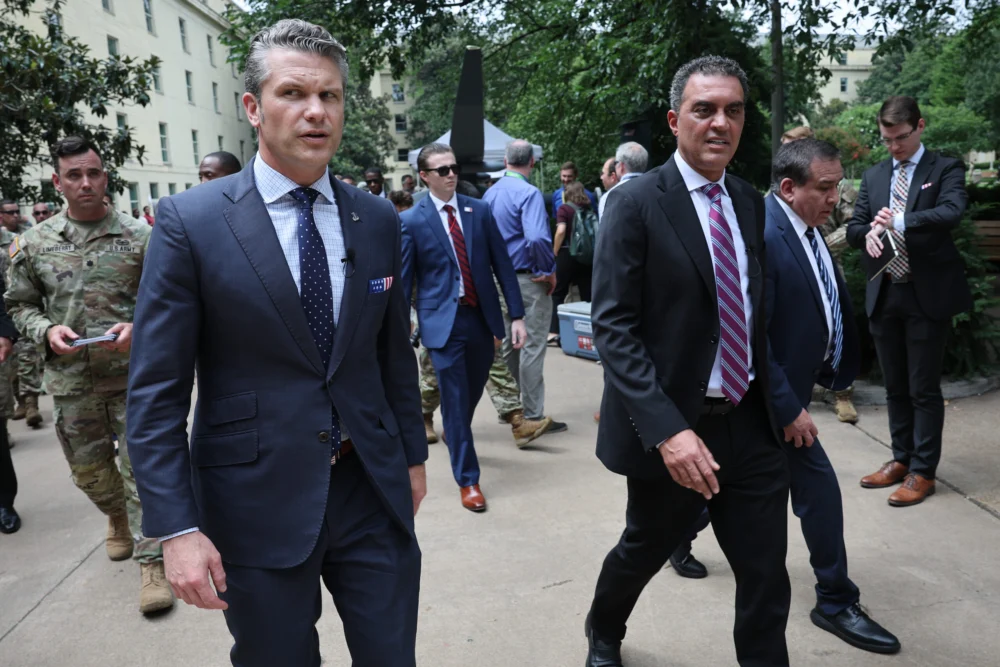
In a significant shift within the Department of Defense’s approach to artificial intelligence, Defense Secretary Pete Hegseth has assembled a high-powered advisory group, colloquially dubbed the "Pentagon AI bro squad," comprising influential figures from the private sector. This strategic coalition includes a former executive from Uber and a prominent private equity billionaire, signaling a concerted effort to integrate cutting-edge technological solutions with national security imperatives. The composition of this group, and the caliber of individuals involved, underscores the administration’s commitment to leveraging commercial innovation for defense applications, particularly in the rapidly evolving domain of artificial intelligence.
The inclusion of individuals with deep roots in the tech and finance industries suggests a deliberate strategy to infuse the Pentagon with a potent blend of technological acumen and financial shrewdness. This approach aims to accelerate the adoption and development of AI capabilities, potentially streamlining acquisition processes and fostering a more agile defense ecosystem. The presence of a former Uber executive brings a wealth of experience in scaling complex technological operations and navigating the challenges of rapid growth, while the private equity billionaire offers a perspective on strategic investment, risk assessment, and the cultivation of high-value enterprises. Their collective expertise is expected to provide invaluable insights into the commercialization of AI technologies and their potential application within the defense sector.
This initiative arrives at a critical juncture, as the Department of Defense grapples with the dual challenges of maintaining technological superiority and addressing evolving global threats. The strategic integration of artificial intelligence is no longer an option but a necessity for ensuring national security. The Pentagon’s move to enlist private sector leaders reflects a recognition that the most advanced AI solutions are often born in the dynamic and competitive landscape of Silicon Valley and beyond. By bridging the gap between government and industry, this "bro squad" aims to foster a symbiotic relationship that benefits both innovation and national defense.
Navigating the AI Supply Chain: A Geopolitical and Technological Tightrope
A central concern driving the Pentagon’s engagement with AI developers, particularly with entities like Anthropic, is the critical issue of supply chain integrity. The Department of Defense, like many global organizations, is acutely aware of the vulnerabilities inherent in relying on a single or limited number of vendors for essential technological components. This concern is not merely logistical; it carries significant national security implications. The potential for a compromised vendor to disrupt critical defense systems or introduce exploitable weaknesses into sensitive networks necessitates a robust and diversified approach to AI procurement and deployment.
The Biden administration’s 2024 National Security Memorandum on Artificial Intelligence underscored this imperative by directing the Department of Defense to cultivate relationships with at least two leading AI laboratories capable of handling classified information. This directive was designed to mitigate the risk of a single point of failure, ensuring that the disruption of one vendor would not cripple an entire IT infrastructure. However, the practical implementation of this directive has proven complex. Reports suggest that by the summer of 2025, the Trump administration was already confronting this challenge. While contracts were established with several prominent AI firms, including Anthropic, Google, xAI, and OpenAI, only Anthropic’s models had achieved the necessary clearance for classified use by the time Secretary Hegseth issued his new AI policy in January.
This situation has placed the Pentagon in a precarious position. Even if they were to sever ties with Anthropic, the process of removing their AI models from existing defense workflows and subsequently vetting alternative providers would be both arduous and time-consuming. Furthermore, such a move could inadvertently lead to non-compliance with the Department’s own guidelines for avoiding single-supplier vulnerabilities, a fundamental tenet of modern technological risk management. The industry-wide practice of diversifying supply chains is rooted in the understanding that concentration risk can lead to significant operational disruptions and security breaches.

The recent granting of classified system access to xAI’s Grok, despite its perceived limitations compared to other available models, can be understood within this context of supply chain diversification. While Grok may not be considered the most advanced or reliable option, its inclusion broadens the Pentagon’s pool of AI vendors capable of handling sensitive information. Simultaneously, reports indicate that Google is nearing a similar agreement for its Gemini model, which is regarded as a strong competitor to Anthropic’s offerings. OpenAI, on the other hand, has reportedly paused its engagement, citing the need to enhance ChatGPT’s safety features before deploying it on classified networks.
This intricate landscape presents a strategic dilemma for the Department of Defense. They must balance the need for cutting-edge AI capabilities with the imperative of supply chain resilience and security. The current options can be broadly categorized: an AI model from a company with a strong offering and a degree of flexibility in its ethical stances; a leading AI model from a company that maintains strict limitations on its use in lethal autonomous systems; an AI model that is not yet deemed secure enough for deployment on classified networks; and an AI model that, while accessible, is considered less advanced and reliable, and has faced scrutiny for issues such as biased outputs or the generation of inappropriate content.
The requirement to engage with at least two vetted AI providers means that, if options for the most advanced and secure models are limited or unavailable, the Pentagon may be compelled to partner with less optimal, or even problematic, vendors. This underscores the critical importance of nurturing a diverse and robust AI ecosystem that meets stringent national security standards. A senior Defense official, speaking anonymously, highlighted the predicament, stating, "The only reason we’re still talking to these people [Anthropic] is we need them and we need them now. The problem for these guys is they are that good." This sentiment reflects the ongoing tension between immediate operational needs and the long-term strategic imperative of a secure and diversified AI supply chain.
Influence Peddling and Political Maneuvers in the Digital Arena
Beyond the direct technological and strategic implications, the current political climate has introduced a layer of influence peddling and ideological alignment into the discourse surrounding AI and its regulation. The intersection of technology, finance, and politics has become a fertile ground for various actors seeking to shape policy and secure favorable outcomes. This is particularly evident in the ongoing negotiations and public debates surrounding digital assets and their integration into the broader financial system.
Recent discussions concerning the Clarity Act, intended to govern stablecoin yields, have inadvertently become a stage for figures associated with MAGA ideology to assert their influence. The involvement of prominent personalities in these financial policy debates suggests an attempt to leverage political clout to impact regulatory outcomes. Reports indicate that a meeting at the White House involving key players from the crypto and finance sectors, including Coinbase, was preceded by public pronouncements designed to frame the proceedings as a test of loyalty to certain political figures.
These tactics often involve casting individuals or entities that have previously engaged with political opponents as disloyal or problematic. Ironically, companies like Coinbase, which have sought to distance themselves from certain political alignments, have also become significant supporters of the current administration’s initiatives, including substantial donations and visible endorsements. Despite such efforts, the influence of certain political commentators remains potent, capable of generating public pressure and potentially impacting regulatory decisions. The ongoing engagement of industry leaders with political figures, even amidst public scrutiny, suggests a continued effort to navigate the complex landscape of policy and influence.
Emerging Figures in the Alt-Finance and Collectibles Sphere

The intersection of wealth, technology, and political connections continues to manifest in unexpected arenas, further blurring the lines between traditional finance, emerging digital economies, and the broader cultural landscape. The recent record-breaking sale of a rare Pokémon card for $16.5 million highlights this phenomenon, with the buyer revealed to be AJ Scaramucci, the son of Anthony Scaramucci. This acquisition is not merely a transaction in the collectibles market; it signifies a deeper engagement with high-value assets and a potential precursor to larger ventures.
AJ Scaramucci’s venture, Solari Capital, has already made a significant investment of $100 million in a Bitcoin mining platform reportedly operated by Eric Trump. This move positions him at the nexus of cryptocurrency, blockchain technology, and established political networks. The acquisition of the highly coveted Pikachu Illustrator card, along with its accompanying diamond chain and carrying case, further underscores a deliberate strategy to acquire iconic and high-value assets. Scaramucci’s stated intention to pursue a "planetary treasure hunt" and his aspirations to acquire other significant historical artifacts, such as a T. rex skull and the Declaration of Independence, suggest a broader ambition to curate and control a portfolio of unique and historically significant items.
His pronouncements on social media, expressing a desire to place the Pokémon card in the Nintendo Museum in Kyoto and elevate it to the status of the "Mona Lisa" of the franchise, indicate a sophisticated understanding of cultural valuation and the potential for strategic positioning within both physical and digital realms. This narrative thread, weaving together high-stakes financial transactions, emerging technologies, and prominent political families, illustrates the evolving landscape of wealth accumulation and influence in the contemporary era.
Legal Precedents in the Digital Age: Attorney-Client Privilege in the Age of AI
A stark reminder of the evolving legal landscape in the digital age comes from a recent ruling by the Southern District of New York. The court’s clarification on the sanctity of attorney-client privilege in the context of artificial intelligence platforms serves as a critical cautionary tale for both individuals and organizations. The ruling unequivocally states that correspondence shared with legal counsel, if subsequently uploaded to a publicly accessible AI platform, forfeits its privileged status and becomes subject to discovery.
This legal precedent underscores the paramount importance of understanding the data handling practices and privacy implications of the AI tools being utilized. In an era where AI is increasingly integrated into daily workflows, the potential for accidental disclosure of sensitive or confidential information is significant. The ruling emphasizes that the confidentiality of legal communications hinges on maintaining strict control over where such information is shared and stored. Failure to adhere to these protocols can have profound legal and financial consequences, potentially jeopardizing ongoing litigation, business negotiations, or other critical matters. As AI technologies continue to advance and become more pervasive, vigilance regarding data privacy and legal privilege will remain an essential component of responsible digital engagement.



 Safa Marwah
 Lisa Mariana