
 Safa Marwah
OpenAI has initiated the gradual deployment of an advertising model within its widely adopted ChatGPT platform, a move underscored by explicit assurances that the integrity and neutrality of its AI-generated responses will remain uncompromised. This strategic pivot towards monetization, currently observed in its nascent stages on the Android ecosystem, marks a significant evolution in the company’s business model, aiming to subsidize the immense computational costs of large language models while concurrently preparing for a broader commercial rollout. The central tenet of this new approach revolves around a carefully constructed user experience designed to separate commercial messaging from core AI functionality, reinforcing user trust as a paramount concern during this critical phase of market expansion and revenue diversification.

The introduction of advertising into ChatGPT represents a pivotal moment for OpenAI, signaling a mature phase in its journey from a research-focused entity to a commercially viable technology giant. Operating sophisticated large language models (LLMs) like GPT-4, which powers ChatGPT, entails astronomical computational expenses, encompassing everything from training massive datasets to powering real-time inference for millions of users globally. These costs include substantial investments in specialized hardware, energy consumption, and the continuous development cycles required to maintain technological leadership. While OpenAI has secured significant capital through various funding rounds, including substantial investment from Microsoft, the imperative to establish sustainable, independent revenue streams is undeniable for long-term viability and to fulfill its ambitious mission of advancing artificial general intelligence (AGI) for the benefit of all humanity.
Historically, technology companies offering freemium models often rely on advertising to support their free tiers, converting a portion of their user base to paid subscriptions while monetizing the remainder through targeted advertisements. OpenAI’s adoption of this strategy aligns it with many internet giants, from social media platforms to search engines, which have successfully navigated the complexities of integrating ads without fundamentally eroding user trust in their core services. The challenge for OpenAI, however, is unique: its core product is a conversational AI, where the perception of neutrality and objectivity is exceptionally delicate. Any perceived bias or influence from advertisers could severely undermine the utility and trustworthiness of ChatGPT, directly impacting its user adoption and reputational standing.

To preempt potential concerns regarding AI bias or commercial influence on its outputs, OpenAI has implemented a robust onboarding process for users encountering ads for the first time. This full-screen introductory experience, initially noted on Android devices, explicitly communicates the company’s commitment: advertisements will not alter or influence the factual or creative answers generated by ChatGPT. Furthermore, these commercial messages are designed to be visually distinct and clearly labeled, typically appearing as a "Sponsored" block separate from the AI’s primary response. This visual and conceptual separation is critical in establishing a clear boundary between informational content and promotional material, a distinction that is foundational to maintaining user confidence in the AI’s impartiality.
The architectural decision to decouple the ad delivery system from the core LLM inference engine is a critical technical safeguard. This ensures that the algorithms responsible for generating conversational responses operate independently of the mechanisms that select and display advertisements. While the content of a user’s current conversation may contextually inform the type of sponsored ad presented – a common practice in contextual advertising to enhance relevance – OpenAI emphatically states that personal user data is not shared with advertisers, nor is user data sold. This commitment to privacy is a cornerstone of its user policy and aims to differentiate its approach from more data-intensive advertising models prevalent elsewhere.

User control and transparency are central to OpenAI’s ad strategy. The platform offers users a suite of tools to manage their ad experience, including options to hide specific advertisements, report inappropriate content, or even query ChatGPT directly about the rationale behind a particular ad’s display. This level of user interaction with the advertising mechanism is a novel feature, potentially allowing for real-time feedback and greater perceived agency over the ad content. Furthermore, a dedicated "Ads controls" page within the user settings provides comprehensive management capabilities. Here, users can review and delete ad-related data without impacting their chat history and toggle ad personalization on or off. This granular control is vital for empowering users and addressing privacy concerns proactively, allowing individuals to tailor their experience while still acknowledging that ads may appear based on the immediate conversational context, even if personalization is disabled.
The differentiated user experience is another key aspect of OpenAI’s monetization strategy. While free users and those on the "Go" accounts will encounter advertisements, subscribers to premium tiers such as Plus, Pro, Business, and Enterprise accounts will remain ad-free. This tiered approach serves multiple purposes: it offers an incentive for users to upgrade to paid subscriptions, reinforcing the value proposition of these premium offerings through an uninterrupted, cleaner interface. For businesses and enterprises, the absence of ads is particularly crucial, as commercial environments demand a highly professional and distraction-free interaction with the AI, where data privacy and response integrity are paramount. This clear distinction helps to segment the user base and align monetization efforts with varying user needs and expectations.
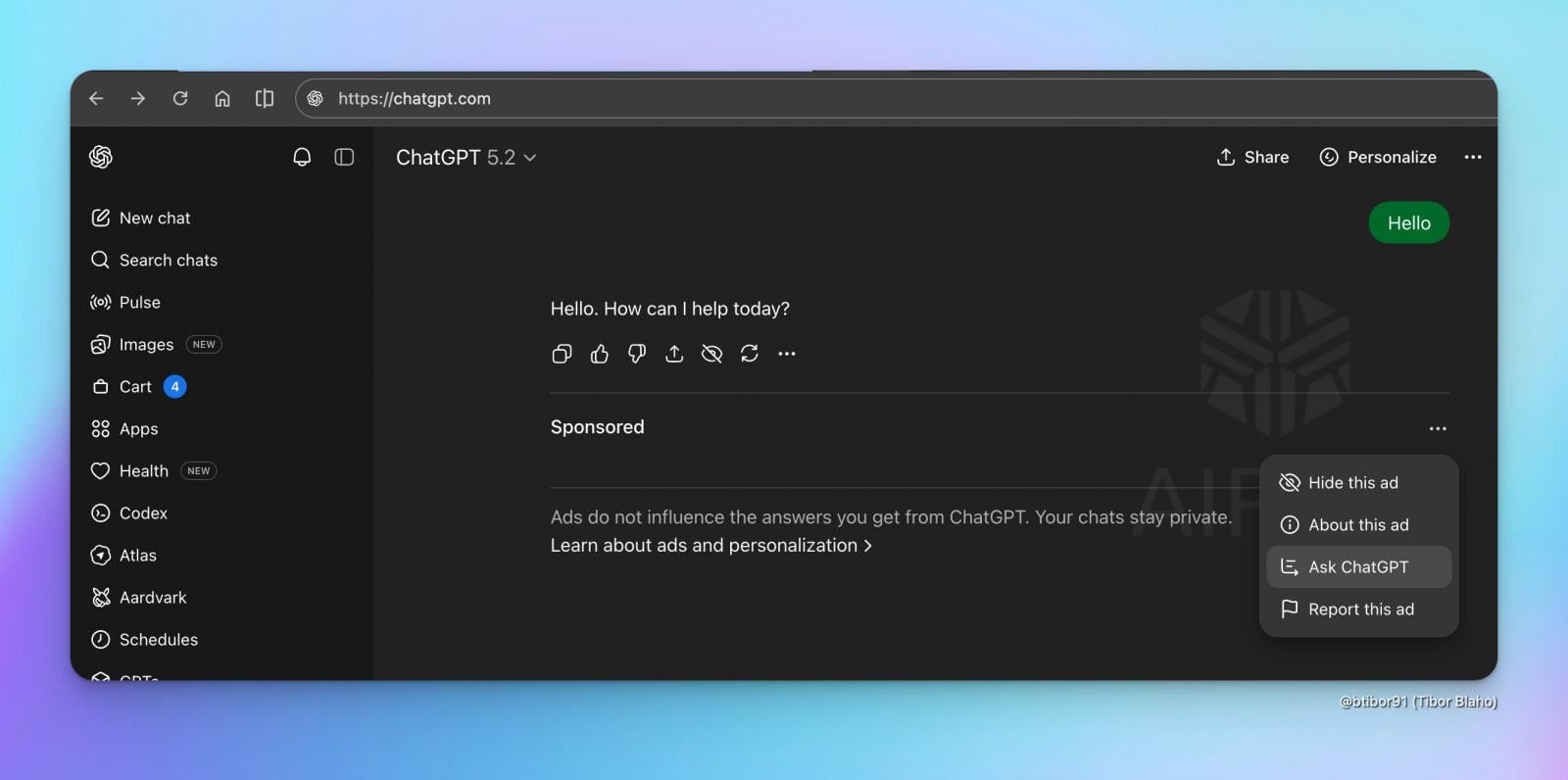
The broader implications of OpenAI’s move into advertising extend beyond its immediate financial objectives. Ethically, the integration of ads into an AI conversational agent raises important questions about transparency and potential for subtle influence. While OpenAI has articulated clear boundaries, the public discourse around AI ethics will undoubtedly scrutinize how well these boundaries are maintained in practice. The potential for ads to shape user perception, even inadvertently, or to introduce a commercial layer into what users expect to be a neutral information source, will be a subject of ongoing debate. Regulatory bodies globally are increasingly focused on AI governance, data privacy, and consumer protection. OpenAI’s ad rollout will likely draw attention from these regulators, particularly concerning how user data is managed and how ad transparency is communicated. Adherence to stringent data protection regulations like GDPR in Europe and CCPA in California will be crucial for global market acceptance.
Competitively, this strategy sets a precedent for other AI developers and large technology companies with their own LLMs. Google, Meta, and Anthropic, among others, are actively developing and deploying conversational AI. OpenAI’s success or challenges in integrating ads will inform their own monetization strategies. The advertising industry itself stands to gain a new and potentially highly valuable inventory. Contextual advertising within conversational AI offers unprecedented opportunities for precise targeting based on immediate user intent and ongoing dialogue, moving beyond traditional demographic or behavioral targeting. This could unlock new revenue streams for advertisers seeking to engage users at highly relevant moments.

Looking ahead, the evolution of advertising within AI interfaces is likely to become increasingly sophisticated. While current implementations focus on static, visually separate ad blocks, future iterations might explore interactive ad formats, generative ads tailored by the AI itself, or more seamless integrations that respect user experience while delivering commercial value. The delicate balance between commercial imperatives and maintaining public trust in AI will remain a central challenge for OpenAI. Its mission to ensure AGI benefits all of humanity requires not only significant investment but also widespread adoption and confidence. The journey of integrating advertising into ChatGPT is a crucial step in funding that mission, but one that will be continuously evaluated by its global user base and the broader technology community based on its ability to uphold its foundational promise of impartiality and user privacy. The success of this endeavor will hinge on OpenAI’s continued commitment to transparency, user control, and the unwavering integrity of its artificial intelligence outputs.




 Aura Kasih
 Ridwan Kamil

 Lisa Mariana
 Ayu Aulia