Lisa Mariana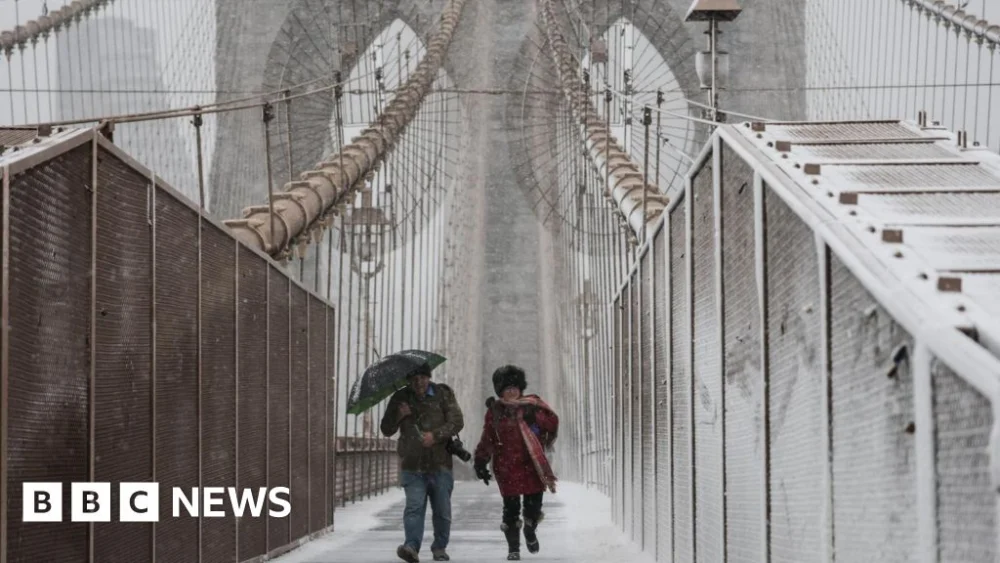
A monumental winter storm has commenced its severe assault on the northeastern United States, triggering extensive disruptions, widespread emergency declarations, and a complete cessation of non-essential travel across New York City, as an estimated 59 million residents brace for historic blizzard conditions. This formidable meteorological event, characterized by its intense snowfall rates, hurricane-force winds, and significant coastal flooding potential, represents a confluence of atmospheric factors poised to challenge regional resilience and operational continuity over the coming days. Authorities across multiple states have activated emergency protocols, with significant implications for public safety, transportation networks, and essential services as the region prepares for what meteorologists are terming the most potent Nor’easter in nearly a decade.
The atmospheric genesis of this storm, classified as a Nor’easter, involves a complex interaction of cold Arctic air descending from Canada and moist air drawn from the Atlantic Ocean. These systems typically develop along the East Coast, often intensifying rapidly as they track northeastward, drawing energy from the stark temperature contrasts. For the current event, forecasters anticipate a deepening low-pressure system off the coast, a characteristic feature that amplifies snowfall totals and wind speeds. The National Weather Service’s Weather Prediction Center has highlighted the storm’s exceptional magnitude, noting that while Nor’easters are common, one of this intensity and widespread impact across such a densely populated corridor is a rare occurrence, last witnessed with comparable force several years ago. This particular system is projected to deliver sustained blizzard conditions across a swath extending from the Central Appalachians to coastal Maine, directly affecting approximately 40 million individuals under blizzard warnings, with an additional 19 million under winter storm advisories.
The storm’s initial thrust began Sunday evening, manifesting as accumulating snow across major urban centers including Boston, Philadelphia, and New York City, where some of the most severe impacts are concentrated. New York City, the nation’s most populous municipality, is facing its first blizzard warning in nine years, underscoring the gravity of the situation. Forecasts for the metropolitan area indicate substantial snowfall accumulations ranging from 18 to 24 inches (approximately 0.5 to 0.6 meters), coupled with ambient temperatures plummeting to around 20 degrees Fahrenheit (-6 degrees Celsius). In response to these dire predictions, Mayor Zohran Mamdani of New York City declared a state of emergency and instituted a comprehensive travel ban from 21:00 local time on Sunday until 12:00 local time on Monday. This mandate prohibits all vehicular traffic on city streets, highways, and bridges, with exceptions made solely for emergency services. Furthermore, all public schools have been preemptively closed. Mayor Mamdani emphasized that the most intense snowfall is anticipated overnight, with isolated areas potentially receiving up to 28 inches (0.7 meters) of snow. This marks the second significant winter weather event for the first-term mayor’s administration, following a cold snap in January that tragically resulted in 19 fatalities.
Beyond New York City, the broader state of New York is also under a declared state of emergency, as Governor Kathy Hochul activated approximately 100 members of the National Guard to assist with response efforts. Governor Hochul underscored the unprecedented nature of the storm, stating, "This will be something the likes of which we’ve not seen in years." She specifically highlighted Long Island, New York City, and the lower Hudson Valley as being directly in the storm’s core, warning residents to prepare for widespread power outages. Coastal areas are expected to experience the highest wind gusts, potentially reaching 65 to 70 miles per hour (104 to 112 kilometers per hour), which pose a significant risk of downed trees and power lines, further exacerbating the utility disruptions already underway. According to PowerOutage.us, a tracking website, over 20,000 customers in New Jersey were without electricity as the storm intensified, with thousands more affected in Virginia, Delaware, and Maryland.
The ripple effects of the storm are reverberating across various sectors, particularly transportation and commerce. Air travel has been severely impacted, with nearly 3,900 flights originating from or destined for US airports canceled on Sunday, and hundreds more experiencing significant delays, according to data from FlightAware. The National Weather Service has issued stark warnings regarding ground transportation, projecting snowfall rates of 2-3 inches (0.05-0.07 meters) per hour during the storm’s peak, leading to total accumulations of 1-2 feet (0.3-0.6 meters) across broad areas. These conditions are expected to render travel "nearly impossible" and "extremely treacherous." In response to the escalating crisis, numerous public transit systems across the affected states have either curtailed or suspended operations. New Jersey Transit, for instance, halted all bus, light rail, and Access Link services from Sunday evening.
The economic and social fabric of the Northeast is also experiencing immediate disruptions. In New York City, the cultural heartbeat of Broadway has been paused, with all Sunday evening shows canceled. The New York Racing Association similarly called off Sunday’s horse races at the Aqueduct Racetrack, reflecting the widespread impact on public gatherings and entertainment. These closures underscore the significant, albeit temporary, economic losses incurred by businesses and the broader service industry.
The comprehensive governmental response extends beyond New York. In Rhode Island, Governor Dan McKee implemented a statewide travel ban and authorized the deployment of the National Guard as required, simultaneously closing state government offices for Monday. Governor McKee’s message was unequivocal: "We’re asking Rhode Islanders to take this storm seriously and stay home." He emphasized a unified "all-hands-on-deck response" to ensure public safety and resource allocation. Neighboring New Jersey also declared a state of emergency, with Governor Mikie Sherrill cautioning that this could be "the worst storm we have seen since 1996," urging residents to avoid all non-essential travel. Connecticut Governor Ned Lamont signed an emergency order to restrict commercial vehicle traffic on all state highways, effective from 17:00 local time (22:00 GMT) until further notice, a measure designed to keep major arteries clear for emergency vehicles and to prevent stranded trucks.
Further north, Massachusetts, another state heavily impacted, joined the ranks of those declaring states of emergency. Boston, its capital, has also closed schools in anticipation of severe weather. Pennsylvania Governor Josh Shapiro issued a disaster declaration, a proactive measure to ensure state agencies possess all necessary resources for preparation and public safety. He advised residents to heed local official directives and avoid unnecessary travel. Even areas less directly in the storm’s path, such as the vicinity of Washington, D.C., are experiencing ancillary effects, with school districts announcing closures and federal government offices delaying opening times or offering telework options.
Looking northward, the storm’s influence is also extending into Canada. Nova Scotia’s east coast is bracing for significant impacts, with many regions under an orange weather warning from Monday morning through early Tuesday, indicating substantial snowfall and strong winds. This cross-border reach highlights the expansive geographical footprint of this powerful Nor’easter.
The implications of such a historic storm extend beyond the immediate hazards. The sheer volume of snow, combined with freezing temperatures and high winds, poses considerable challenges for post-storm recovery efforts, including snow removal, power restoration, and ensuring access to emergency services. The event serves as a critical test of regional preparedness and infrastructure resilience, drawing lessons from past extreme weather events to refine emergency response protocols. As the Northeast endures this formidable winter tempest, the focus remains squarely on safeguarding lives, minimizing disruptions, and mobilizing comprehensive resources for an effective and swift recovery once the blizzard subsides.



 Ayu Aulia
 Safa Marwah
 Aura Kasih