Lisa Mariana
A federal court has handed down a life sentence to Ryan Routh for his premeditated effort to assassinate Donald Trump in September 2024, an incident that underscored the persistent threats facing prominent political figures during a contentious election cycle. The judgment, delivered by Judge Aileen Cannon, concluded a deeply unsettling case marked by the defendant’s erratic behavior and a stark reminder of the escalating dangers within the American political landscape.
The events leading to this landmark sentencing unfolded on September 22, 2024, at the Trump International Golf Club in West Palm Beach, Florida. Donald Trump, then actively campaigning for the presidency, was present at the private resort when Secret Service agents detected an imminent threat. Ryan Routh, then 59 years old, had meticulously positioned himself within a dense thicket of bushes bordering the golf course, strategically concealing a high-powered semiautomatic rifle equipped with a telescopic sight and an extended ammunition magazine. His clandestine preparations were designed to provide a clear vantage point for an attack.
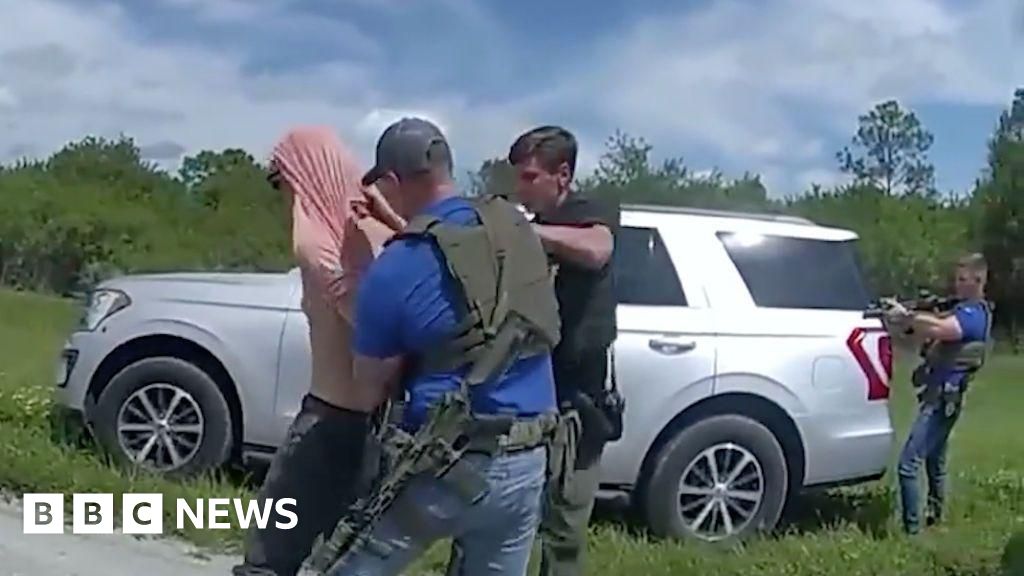
The meticulous planning by Routh, which federal investigators later revealed spanned several months, was narrowly thwarted by the acute vigilance of a United States Secret Service agent. The agent, conducting routine security sweeps of the perimeter, identified the glint of a rifle barrel protruding from Routh’s concealed position. Reacting instantaneously to the grave and immediate danger, the agent discharged their firearm in Routh’s direction. This decisive action disrupted Routh’s attempt, causing him to abandon his position and flee the scene. A swift and coordinated response by law enforcement led to Routh’s apprehension a short distance away, averting what could have been a catastrophic act of political violence.
Subsequent forensic analysis of the scene uncovered compelling evidence of Routh’s intent. In the immediate vicinity of his hiding spot, investigators recovered the aforementioned semiautomatic rifle, a weapon clearly intended for a high-impact, long-range assault. Furthermore, a highly incriminating document was found, detailing a list of locations where candidate Trump was expected to appear, demonstrating a clear pattern of surveillance and targeting. Perhaps most damning was a note addressed to a friend, explicitly describing his actions as "an assassination attempt," leaving no ambiguity regarding his lethal objective. This array of physical evidence formed the bedrock of the prosecution’s case, painting a grim picture of premeditated violence.
The legal proceedings against Routh were notably unconventional and fraught with dramatic turns. Opting to represent himself, a decision often fraught with peril in complex federal cases, Routh pleaded not guilty to the charges. The trial, which commenced on September 8, 2025, quickly devolved into a series of bizarre and disruptive incidents orchestrated by the defendant. Routh’s courtroom demeanor was consistently erratic, characterized by frequent outbursts and non-sequitur remarks. During cross-examination and his own statements, he made peculiar challenges, including inviting Trump to a game of golf, and interjected seemingly unrelated references to figures like Adolf Hitler and Russian President Vladimir Putin. These behaviors often necessitated interventions from Judge Aileen Cannon, who repeatedly paused proceedings and excused the jury to address Routh’s conduct.
Prosecutor John Shipley, leading the government’s case, characterized the evidence against Routh as a "mountain," meticulously constructed to illustrate the defendant’s deliberate intent and the alarming proximity to a successful execution of the plot. Shipley emphasized the exhaustive planning, the acquisition of specialized weaponry, and the detailed logistical considerations Routh had undertaken. The prosecution successfully argued that Routh’s actions were not merely impulsive but the culmination of a sustained and dangerous fixation.
Following the presentation of extensive evidence and Routh’s highly unconventional defense, the jury ultimately rendered a verdict of guilty on all counts pertaining to the attempted assassination. The moment the verdict was read, Routh’s already volatile behavior escalated dramatically. In a shocking display of self-harm, he attempted to stab himself in the neck with a pen within the courtroom, necessitating immediate intervention by U.S. Marshals who quickly subdued and removed him. This desperate act further underscored the profound psychological instability that appeared to underpin his actions.
In her detailed sentencing memorandum, Judge Aileen Cannon articulated the gravity of Routh’s offenses, stating unequivocally that his crimes "undeniably warrant a life sentence." Her written justification highlighted several critical factors that informed the severe punishment. Foremost among these was the extensive premeditation, spanning months, during which Routh systematically planned to assassinate a leading presidential candidate. Judge Cannon also emphasized Routh’s demonstrated willingness to harm or kill "anybody in the way," indicating a broader disregard for human life beyond his primary target. Crucially, the court noted Routh’s complete absence of regret or remorse toward his victims, a factor that often weighs heavily in sentencing decisions, suggesting a lack of rehabilitation potential and a persistent danger to society. The life sentence serves as a definitive statement from the judiciary regarding the intolerable nature of politically motivated violence.
Ryan Routh, a 59-year-old native of North Carolina who had previously resided in Hawaii, presented a profile consistent with certain types of lone-wolf actors, often characterized by a lack of clear, coherent political affiliation or manifesto, coupled with severe personal instability. While the court did not explicitly delve into his motivations beyond the stated intent to assassinate, his erratic courtroom behavior and the nature of his preparations suggest a complex interplay of ideological grievance, personal disaffection, or potential mental health challenges. Such cases present unique difficulties for law enforcement and intelligence agencies, as the absence of a discernible network or clear ideological blueprint makes pre-emptive identification and intervention exceptionally challenging.
The attempt on Donald Trump’s life in West Palm Beach was not an isolated incident in the tumultuous year of 2024. It followed closely on the heels of another grave security breach just months prior. In July 2024, during a campaign rally in Butler, Pennsylvania, a 20-year-old gunman identified as Thomas Crooks opened fire, resulting in one fatality and several injuries, including to candidate Trump himself. Crooks was subsequently neutralized by law enforcement at the scene. The confluence of these two distinct and serious attempts on the life of a single presidential candidate within a short span of time sent shockwaves across the nation, highlighting an alarming escalation in political violence and threatening the very foundations of democratic discourse.
These incidents have profound implications for the operational strategies and resource allocation of federal protection agencies, particularly the Secret Service. The agency faces an increasingly complex threat landscape, where assailants may act individually, be radicalized online, or suffer from severe mental health conditions. Protecting high-profile political figures requires an intricate blend of intelligence gathering, perimeter security, technological surveillance, and rapid response capabilities. The events of 2024 necessitated an immediate and comprehensive review of security protocols for public events, campaign rallies, and private residences, underscoring the dynamic and ever-present nature of these threats.
Beyond the immediate security adjustments, the Routh sentencing and the broader context of 2024’s political violence carry significant judicial and societal ramifications. The stern judicial response aims to deter future acts of politically motivated aggression, sending a clear message that attempts to subvert the democratic process through violence will be met with the full force of the law. From a societal perspective, these events contribute to a climate of fear and division, potentially stifling open political engagement and exacerbating an already polarized national discourse. The psychological toll on candidates, their families, and public servants tasked with their protection is immeasurable, reinforcing the need for national unity and a renewed commitment to peaceful political participation.
The lifetime incarceration of Ryan Routh marks the legal closure of a harrowing chapter, yet the underlying challenges persist. The heightened political tensions, the proliferation of misinformation, and the ease with which individuals can become radicalized or develop violent fixations collectively create an environment ripe for extremism. As the United States navigates an increasingly fractious political era, the lessons from the 2024 assassination attempts and the subsequent legal proceedings will undoubtedly inform future policy, security measures, and societal efforts to safeguard democratic institutions and protect those who seek to lead. The sentence against Routh stands not merely as a punishment for an individual act, but as a stark symbol of the nation’s unwavering resolve against the insidious specter of political violence.



 Ayu Aulia
 Aura Kasih
 Safa Marwah