
 Ridwan Kamil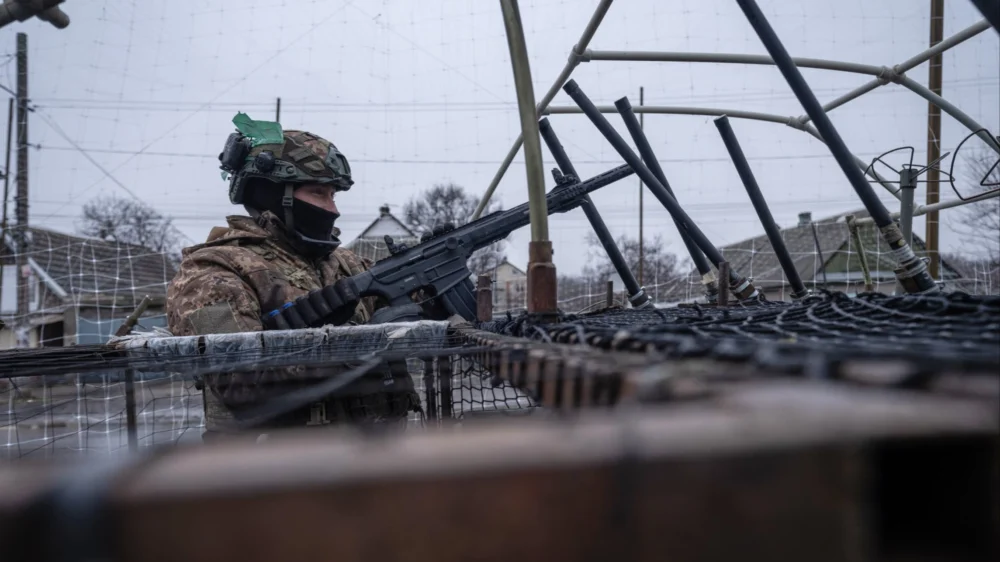
Ukrainian President Volodymyr Zelenskyy has firmly articulated that the nation’s electoral processes can only commence a minimum of two months following the establishment of a lasting cessation of hostilities, a declaration underscoring the intricate interplay between national security, democratic governance, and the ongoing conflict. This stipulation highlights Kyiv’s perspective that free and fair elections, a cornerstone of any democratic society, are fundamentally incompatible with the prevailing conditions of active warfare, displacement, and the pervasive threat to citizen safety.
The pronouncement from the Ukrainian presidency is not merely a procedural detail but a strategic assertion of national sovereignty and a commitment to the integrity of democratic institutions amidst unprecedented challenges. President Zelenskyy’s insistence on a post-ceasefire electoral timeline reflects a deep understanding of the logistical and existential hurdles that would preclude meaningful participation and impartial oversight in an election held under the shadow of ongoing hostilities. The very notion of a free and fair vote requires an environment where citizens can cast their ballots without coercion, fear, or the disruption of active combat. Furthermore, the widespread displacement of millions of Ukrainians, both internally and externally, presents a significant logistical challenge to organizing elections. Ensuring that all eligible citizens, including refugees and internally displaced persons, have the opportunity to participate equitably is a complex undertaking that necessitates a stable and secure environment.
The Strategic Imperative of Electoral Integrity in Wartime
The Ukrainian government’s position on holding elections post-ceasefire is rooted in a fundamental principle of democratic governance: the necessity of a secure and stable environment for the exercise of the franchise. In the context of an active armed conflict, the preconditions for legitimate elections are severely compromised. The presence of ongoing military operations, the potential for shelling and other forms of violence, and the widespread disruption of civilian life create an atmosphere antithetical to free and fair voting. Citizens’ safety would be paramount, and the ability to conduct open and transparent campaigns, engage in public discourse, and for election observers to monitor proceedings without risk would be severely curtailed.
Moreover, the logistical complexities of organizing elections during wartime are immense. The displacement of a significant portion of the population, both within Ukraine and as refugees abroad, raises critical questions about voter registration, ballot access, and the equitable representation of all citizens. Ensuring that internally displaced persons can vote and that mechanisms are in place for the participation of Ukrainians living outside the country require a degree of stability and infrastructure that is currently absent. The current security situation also presents challenges for the deployment of election officials, the establishment of polling stations in secure locations, and the protection of election materials and personnel.
International Precedents and the Ukrainian Context
While there is no universal blueprint for conducting elections in post-conflict zones, international experience offers valuable insights. The fundamental principle often emphasized by international observers is the need for a period of relative stability and the establishment of basic security guarantees before democratic processes can be reliably undertaken. This often involves a comprehensive peace agreement, the withdrawal of foreign forces, and the disarmament of irregular armed groups. The time required for these conditions to be met can vary significantly, but it is generally understood that a premature attempt to hold elections can legitimize contested outcomes and further destabilize an already fragile situation.
In Ukraine’s case, the scale and nature of the conflict, characterized by sustained aggression and significant territorial contestation, amplify these challenges. The presence of occupying forces in certain regions, the ongoing threat of missile strikes and drone attacks across the country, and the immense human and infrastructural toll of the war create a unique set of circumstances. President Zelenskyy’s insistence on a two-month buffer period after a ceasefire is a pragmatic acknowledgment of the time needed to address these fundamental issues. This period would theoretically allow for the restoration of order, the demobilization of forces, the return of displaced persons, and the establishment of the necessary infrastructure for a credible electoral process.
The Dilemma of Wartime Governance and Democratic Aspirations
The ongoing conflict has placed Ukraine in a precarious position, balancing the immediate demands of national defense with the long-term imperative of democratic continuity. The extension of martial law, a necessary measure for wartime governance, inherently restricts certain civil liberties and suspends electoral activities. This is a common feature of states engaged in existential conflicts, where the concentration of power and the prioritization of security often take precedence. However, the democratic aspirations of the Ukrainian people remain a potent force, and the question of when and how to resume democratic processes is a matter of significant national and international interest.
President Zelenskyy’s statement addresses this dilemma directly, proposing a pathway for the restoration of democratic normalcy that is contingent upon the cessation of hostilities. The two-month period following a ceasefire is not an arbitrary figure but likely represents a calculated estimate of the minimum time required for the initial stabilization efforts and the logistical preparations for elections. This timeframe would allow for the assessment of security conditions, the potential return of citizens, and the initiation of electoral administration processes.
Expert Analysis and Potential Implications
From an analytical perspective, President Zelenskyy’s stance serves multiple strategic purposes. Firstly, it reinforces Ukraine’s commitment to democratic principles and signals to the international community that Kyiv is not seeking to indefinitely postpone elections but rather to ensure their legitimacy and credibility. This can be crucial for maintaining international support and for post-conflict reconstruction efforts. Secondly, it sets a clear benchmark for the conditions under which elections can be held, providing a degree of predictability for both domestic and international stakeholders.
However, the implementation of this policy will undoubtedly face scrutiny and potential challenges. The nature of the ceasefire itself will be critical. A fragile or contested ceasefire, subject to frequent violations, could render the two-month window insufficient for the necessary stabilization. Furthermore, the international community may have differing views on the precise conditions required for a legitimate election, particularly if the conflict ends through a negotiated settlement that involves compromises on territorial integrity or political arrangements.
The long-term implications of this approach are significant. A successful transition to post-conflict elections, conducted under conditions that are widely perceived as fair and free, could strengthen Ukraine’s democratic resilience and its integration into Western institutions. Conversely, any perception of undue haste or a compromised electoral process could undermine public trust and create further political instability. The challenge for Ukraine will be to navigate the complex path from active conflict to a stable and inclusive democratic future, a journey that hinges not only on military outcomes but also on the meticulous planning and execution of its democratic processes.
The Road to Reconstruction: Security as a Prerequisite for Political Renewal
The Ukrainian government’s clear articulation of electoral timelines being directly tied to the cessation of hostilities underscores a critical understanding: political renewal and democratic governance cannot flourish in the crucible of active warfare. The very foundations of a free and fair election – citizen safety, unhindered access to information, the ability to campaign openly, and impartial oversight – are fundamentally incompatible with the pervasive insecurity and societal disruption that accompany armed conflict. President Zelenskyy’s insistence on a two-month post-ceasefire period is a pragmatic recognition of the substantial lead time required to re-establish the basic societal conditions necessary for such a critical democratic exercise.
This proposed timeline implicitly acknowledges the multifaceted challenges that Ukraine will face in the aftermath of a cessation of hostilities. Firstly, there is the immediate need for security stabilization. This would involve not only the de-escalation of military activity but also the disarmament of irregular forces, the demining of vast territories, and the restoration of law and order across the nation. The presence of unexploded ordnance, the potential for residual hostilities, and the need to rebuild damaged infrastructure all contribute to a complex security environment that demands careful management.
Secondly, the logistical and humanitarian dimensions of resuming democratic processes are immense. Millions of Ukrainians have been displaced from their homes, either internally or as refugees abroad. Their return, and their ability to register and vote, will require significant organizational effort and a degree of predictability in their living situations. Re-establishing electoral infrastructure, including polling stations, voter registration systems, and secure ballot transport, across a country profoundly impacted by war will be a monumental undertaking. The protection of election officials and voters themselves from potential threats will also be a paramount concern.
The Interplay of International Law and Domestic Political Mandates
The Ukrainian government’s position also reflects a delicate interplay between domestic political mandates and international expectations. While international partners often advocate for the timely restoration of democratic processes in post-conflict scenarios, they also recognize the importance of legitimacy and credibility. Holding elections under duress, without the necessary preconditions for fairness, could undermine the very democratic principles they seek to uphold. Therefore, President Zelenskyy’s clear stipulation can be interpreted as an effort to manage these expectations and to ensure that any future elections are viewed as a genuine reflection of the Ukrainian people’s will, rather than a politically expedient maneuver.
Furthermore, the prolonged period of martial law, while necessary for national defense, raises questions about the suspension of certain civil liberties. The eventual return to normalcy will necessitate a careful unwinding of these emergency measures and a restoration of the full spectrum of democratic freedoms. The two-month buffer period could also serve as a transitional phase for this recalibration, allowing for the gradual reintroduction of political freedoms and the preparation of the public sphere for open debate and electoral engagement.
Beyond the Immediate: Long-Term Implications for Ukrainian Democracy
The successful implementation of President Zelenskyy’s electoral roadmap will have profound long-term implications for the trajectory of Ukrainian democracy. A post-conflict election conducted with transparency and fairness, under conditions that allow for broad participation, could significantly bolster the legitimacy of the incoming government and foster national reconciliation. It would demonstrate Ukraine’s resilience and its unwavering commitment to democratic values, even in the face of existential threats. This, in turn, could strengthen its position in international forums and accelerate its integration into democratic alliances.
Conversely, any deviation from these principles, or the perception of an election being held under compromised conditions, could have detrimental consequences. It could fuel internal divisions, undermine public trust in democratic institutions, and create opportunities for external actors seeking to exploit political instability. Therefore, the period leading up to and following a ceasefire will be critical for meticulous planning, transparent communication, and robust engagement with both domestic constituencies and international partners to ensure the integrity of the electoral process. The Ukrainian government’s current stance, while focused on immediate post-conflict realities, lays the groundwork for a democratic renewal that is both timely and enduring.



 Aura Kasih
 Lisa Mariana
 Safa Marwah