
 Safa Marwah
The Russian Federation is enacting a sweeping campaign to sever its populace’s access to widely used international communication platforms, with instant messaging giants WhatsApp and Telegram now confronting a severe, multi-pronged blockade. This aggressive move signals a significant escalation in Moscow’s sustained efforts to assert absolute control over digital information flows and foster a domestically managed internet ecosystem, fundamentally reshaping the landscape of online communication for millions within its borders. The digital offensive, which has been building for years, represents a critical juncture in the Kremlin’s ambition to create a "sovereign internet," independent of perceived foreign influence and control, while simultaneously promoting state-sanctioned alternatives.
This latest crackdown extends beyond mere content regulation, aiming for a fundamental restructuring of internet access. WhatsApp, a ubiquitous messaging service owned by Meta Platforms, has found itself at the epicenter of this intensified pressure. The company explicitly acknowledged the Russian government’s actions, characterizing them as a regressive step that undermines user safety and connectivity. In a public statement, WhatsApp reaffirmed its commitment to its Russian user base, pledging to explore all possible avenues to maintain service access despite the escalating technical and regulatory hurdles.

The mechanics of this blockade involve sophisticated and evolving tactics by Roskomnadzor, Russia’s federal agency responsible for overseeing media and internet censorship. Initially, the agency implemented measures to exclude key WhatsApp domains, such as whatsapp.com and web.whatsapp.com, from Russia’s National Domain Name System (NDNS). This technical maneuver effectively rendered the service inaccessible to users relying on standard domestic internet infrastructure, forcing them to adopt Virtual Private Networks (VPNs) or alternative DNS resolvers to bypass the restrictions. While this initial step created significant friction, it was largely seen as a precursor to more comprehensive blocking strategies. Reports now indicate a transition to more aggressive, full-scale blocking mechanisms, suggesting the deployment of Deep Packet Inspection (DPI) technology capable of identifying and disrupting encrypted traffic.
The current escalation against WhatsApp is rooted in a broader context of Russia’s digital sovereignty agenda, which gained significant momentum following the designation of Meta Platforms as an "extremist" organization in March 2022. This legal classification, typically reserved for terrorist groups or radical political movements, provides the Kremlin with a wide latitude to impose severe restrictions on Meta’s services, including Facebook and Instagram, and now, increasingly, WhatsApp. The "extremist" label not only stifles the company’s operational capacity within Russia but also carries significant legal risks for individuals and businesses engaging with its platforms. This designation underlines the Russian state’s narrative that foreign tech giants, especially those from Western nations, pose a threat to national security and societal stability, framing their operations as inherently hostile.
Prior to the current blanket ban attempts, WhatsApp had already experienced a phased imposition of restrictions. In August 2025, Roskomnadzor initiated targeted throttling of voice and video call functionalities within the application, disrupting real-time communication capabilities. This was followed in October 2025 by efforts to obstruct new user registrations, effectively preventing the platform from expanding its user base and potentially isolating new internet users from accessing the service. These incremental steps illustrate a deliberate strategy of gradual attrition, testing the waters and progressively tightening the digital noose around the platform before moving to a full-scale prohibition.

Dmitry Peskov, the presidential press secretary, articulated the official position, indicating that the authorities remain open to WhatsApp resuming full operations in Russia, contingent upon Meta’s complete adherence to local legislation. This conditional offer, however, is widely interpreted as a demand for Meta to comply with data localization requirements, content moderation directives, and potentially, provide backdoor access to user communications – conditions that fundamentally conflict with the company’s privacy policies and global operational standards. Such demands are consistent with Russia’s broader legislative framework, including the Yarovaya Law, which mandates telecommunications providers and internet companies to store user data locally and provide decryption keys to security services.
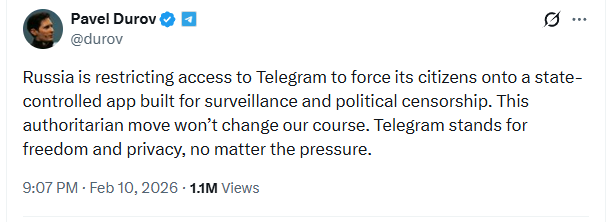
The intensified blockade against WhatsApp closely followed similar aggressive actions targeting Telegram, another widely popular messaging application. Earlier in the week, Telegram reportedly experienced severe throttling, significantly impeding its functionality for users across Russia. Telegram’s founder, Pavel Durov, a Russian entrepreneur known for his libertarian stance on internet freedom, publicly attributed these actions to a concerted government effort to funnel Russian citizens toward the Kremlin-controlled MAX messenger application. Durov’s assertions underscore the geopolitical dimensions of this digital conflict, portraying it as a strategic maneuver to centralize information control under state purview.
MAX, developed by VK, Russia’s largest social media platform, has been at the forefront of the Kremlin’s push for digital self-reliance. Since September 2025, the application has been mandated for pre-installation on all electronic devices sold within the country, ranging from smartphones to smart TVs. This policy reflects a broader national strategy to foster a robust domestic digital ecosystem, reducing reliance on foreign technology and ensuring that critical communication infrastructure remains under national control. While MAX is officially promoted as a secure platform designed to safeguard national communications from foreign surveillance, independent cybersecurity experts and privacy advocates have voiced profound concerns. These anxieties center on potential encryption weaknesses, the inherent risk of government access to user data, and extensive data collection practices, raising questions about the true privacy and security guarantees offered by the application. Critics argue that MAX serves primarily as a surveillance tool, offering a veneer of security while facilitating state monitoring of citizens’ communications.
.png)
The immediate consequence for Russian users is a reliance on circumvention tools, primarily VPNs, to bypass the escalating restrictions. However, this cat-and-mouse game between state censorship and digital resistance is fraught with challenges. The Russian government has progressively tightened its grip on VPN services, compelling Apple and Google to remove dozens of VPN applications from their respective app stores within Russia. Furthermore, regulatory bodies have issued warnings and even imposed fines on VPN providers operating within the country, signaling a sustained campaign to eradicate these bypass mechanisms. The effectiveness of VPNs as a long-term solution remains uncertain, as the government continues to invest in more sophisticated blocking technologies, including advanced DPI systems that can detect and disrupt VPN traffic. The push to block VPNs not only impacts access to foreign platforms but also raises concerns about general internet freedom and the ability of users to protect their online privacy.
Beyond the immediate technical challenges, the implications of Russia’s communication blockade are profound and multifaceted. From a human rights perspective, these actions severely curtail freedom of expression, access to information, and the right to private communication – fundamental tenets of a democratic society. For millions of Russians, these platforms are not just tools for social interaction but vital conduits for independent news, political discourse, and economic activity. Businesses that rely on these international platforms for internal communication, customer engagement, or cross-border collaboration face significant operational disruptions, potentially impacting the country’s digital economy. The creation of a "splinternet," where Russia’s digital space becomes increasingly isolated from the global internet, carries long-term consequences for innovation, economic competitiveness, and the free exchange of ideas.
Historically, Russia’s journey toward digital sovereignty has been marked by a series of legislative and technical measures aimed at centralizing control. The "Sovereign Internet Law," enacted in 2019, provided the legal framework for the NDNS and the technical means to isolate Russia’s internet infrastructure if deemed necessary. This law, alongside other regulations mandating data localization and establishing Roskomnadzor’s extensive powers, reflects a strategic shift towards a more authoritarian model of internet governance, drawing parallels with China’s "Great Firewall." The ongoing battle with Telegram, which previously resisted blocking attempts in 2018 through sophisticated evasion techniques, served as a testing ground for the Kremlin’s resolve and technical capabilities. The current, more aggressive posture suggests that the government has refined its blocking methodologies and is prepared to exert unprecedented control.
The international community, including human rights organizations and digital freedom advocates, has consistently condemned Russia’s escalating censorship efforts. These actions are viewed as part of a broader trend of authoritarian regimes seeking to control information narratives, suppress dissent, and maintain power through digital means. The long-term outlook suggests a continuing arms race between state control mechanisms and user-driven circumvention tools. While advanced VPNs and other proxy services may offer temporary relief, the sustained investment by the Russian state in censorship infrastructure indicates a determination to achieve a fully controlled digital environment. This trajectory not only isolates Russian citizens from global communication streams but also deepens the digital divide, further fragmenting the global internet landscape into distinct, politically demarcated zones. The struggle for an open and free internet within Russia, therefore, continues, with the stakes growing higher with each successive measure of governmental control.



 Ridwan Kamil
 Aura Kasih


 Lisa Mariana