
 Safa Marwah
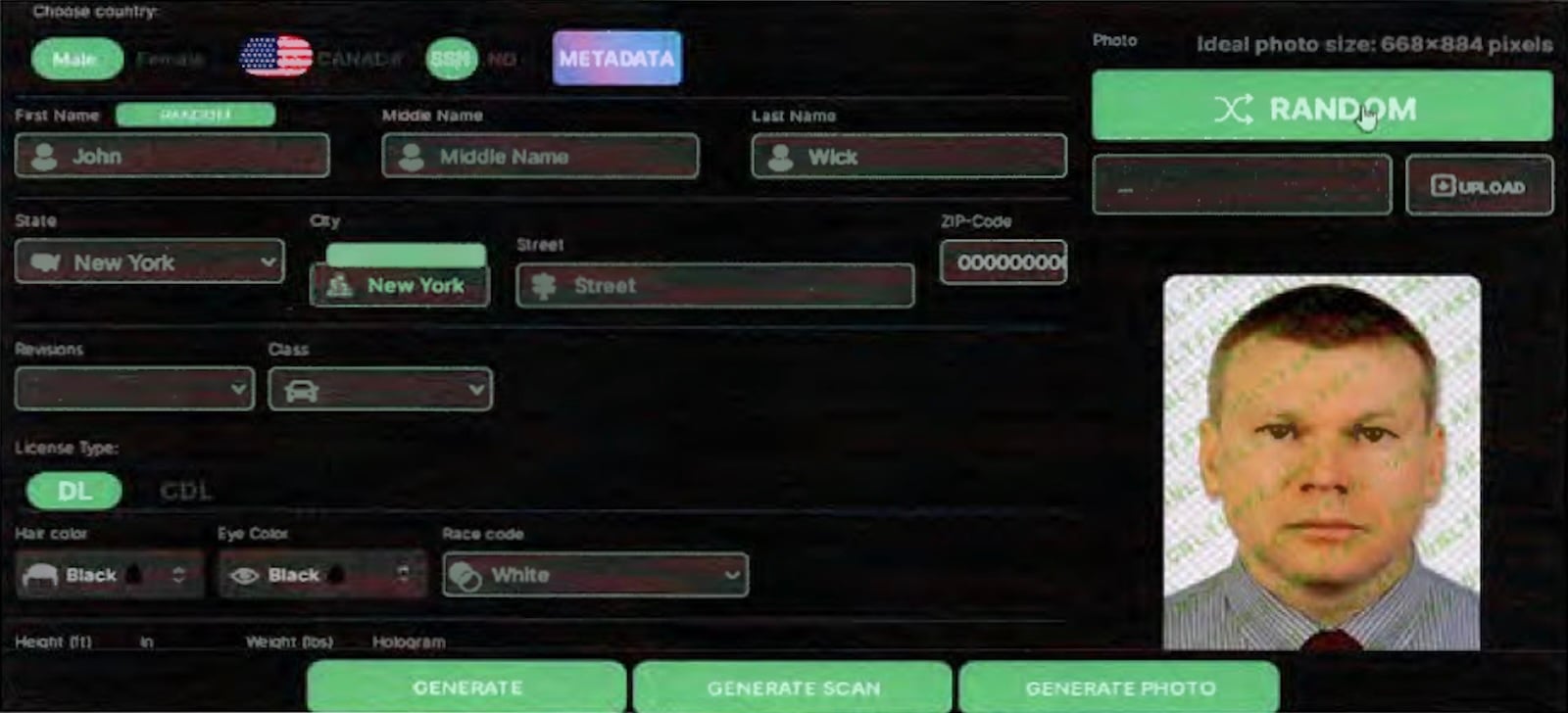
A significant development in the realm of cybercrime has seen a Ukrainian national admit guilt in orchestrating a sophisticated online enterprise that leveraged artificial intelligence to fabricate and distribute more than ten thousand fraudulent identification documents globally. Yurii Nazarenko, 27, known by various aliases including "John Wick" and "Tor Ford," confessed to operating "OnlyFake," a subscription-based digital platform that provided remarkably realistic counterfeit passports, driver’s licenses, and Social Security cards generated through advanced AI algorithms. This plea underscores the escalating threat posed by AI-driven illicit services and the concerted international effort required to combat them, highlighting the critical vulnerabilities in digital identity verification systems worldwide.
The "OnlyFake" platform, meticulously designed for ease of use and broad accessibility, allowed customers to select from a vast array of forged documents. These included digital renditions of U.S. driver’s licenses for all fifty states, U.S. passports, and passport cards, alongside identification documents for approximately 56 other nations. The service offered extensive customization options, enabling users to input specific personal details, opt for randomly generated information, and even choose the presentation format—either a simulated scan or a tabletop photograph—to enhance the perceived authenticity of the forged documents. This level of sophistication marked a significant leap beyond traditional manual forgery, presenting a formidable challenge to existing verification protocols.
U.S. Attorney Jay Clayton articulated the profound societal risk inherent in such operations, stating, "We rely on government issued IDs to combat terrorism, hijackings, fraud, money laundering, and a host of other crimes. OnlyFake’s manufacture of fraudulent IDs and other documents puts us all at risk and must be stopped." This sentiment encapsulates the gravity of Nazarenko’s enterprise, which did not merely facilitate petty fraud but actively undermined the foundational security measures designed to protect national and international financial systems and public safety.
The Evolution of Identity Fraud: AI’s Disruptive Role

Identity fraud is a pervasive and evolving threat, traditionally relying on manual manipulation of physical documents or rudimentary digital alterations. However, the advent of generative artificial intelligence has dramatically reshaped this landscape. AI-powered tools can create synthetic images and documents with a level of realism previously unattainable, blurring the lines between genuine and counterfeit. OnlyFake exemplified this paradigm shift, moving beyond simple image editing to leveraging neural networks capable of generating new, convincing identities from scratch. This not only increased the volume of fraudulent documents but also their quality, making detection significantly more difficult for automated systems and even trained human eyes.
The business model of OnlyFake was designed for maximum reach and operational security. It functioned on a subscription basis, allowing repeat access to its generation capabilities, and offered bulk discounts for large-scale orders, indicating its appeal to organized criminal networks. All transactions were exclusively conducted in cryptocurrency, a deliberate measure to obfuscate financial trails and complicate law enforcement’s efforts to trace funds. Nazarenko further attempted to cover his digital footprints by routing cryptocurrency payments through multiple wallets and deleting communication records following media exposure in early 2024. These tactics underscore the sophisticated operational security measures employed by modern cybercriminals seeking to exploit the anonymity offered by digital currencies and the internet.
Undermining Global Financial Security: KYC and AML Defenses
The primary utility of the sophisticated digital forgeries produced by OnlyFake was to circumvent Know Your Customer (KYC) and Anti-Money Laundering (AML) verification requirements. These critical safeguards, mandated by legislation such as the Patriot Act in the United States, are integral to preventing illicit financial activities, including money laundering, terrorist financing, and sanctions evasion. Financial institutions, including traditional banks and burgeoning cryptocurrency exchanges, are legally obligated to verify the identities of their customers. By providing seemingly authentic but fraudulent identification, OnlyFake enabled malicious actors to establish anonymous accounts, facilitate illicit transactions, and integrate illegally obtained funds into the legitimate financial system.
The ease with which OnlyFake could generate these documents posed a direct threat to the integrity of these financial gatekeepers. Undercover operations by the FBI demonstrated the platform’s efficacy, with agents successfully procuring fake New York state IDs, U.S. passports, and a Social Security card between May and June 2024. This direct evidence confirmed the operational capability of OnlyFake to bypass established security protocols, illustrating the immediate and tangible danger it presented to the financial ecosystem. The ability to create a full suite of identity documents significantly amplified the threat, as it allowed criminals to construct comprehensive fake identities capable of passing multiple layers of verification.

International Law Enforcement and Extradition
The apprehension and prosecution of Yurii Nazarenko highlight the complex challenges and increasing necessity of international collaboration in combating transnational cybercrime. Nazarenko was ultimately extradited from Romania in September 2025, a testament to the cooperative efforts between U.S. and Romanian law enforcement agencies. Such extraditions are crucial in dismantling globally distributed criminal enterprises that exploit jurisdictional boundaries to evade justice. The investigation involved meticulous digital forensics, tracking cryptocurrency transactions, and international intelligence sharing, demonstrating the multi-faceted approach required to bring high-level cybercriminals to justice.
FBI Assistant Director in Charge James C. Barnacle, Jr., emphasized the scale and impact of Nazarenko’s operation: "Yurii Nazarenko developed a website to produce more than 10,000 fake identification documents, earning hundreds of thousands of dollars from these illicit sales. This platform offered its clients a myriad of criminal opportunities, including bypassing traditional regulations to launder money." The forfeiture agreement of $1.2 million, alongside a potential maximum sentence of 15 years in prison, reflects the severe legal ramifications for individuals involved in such sophisticated identity fraud schemes. Nazarenko’s sentencing, scheduled for June 26, 2026, will serve as a stark reminder of the legal consequences awaiting those who leverage advanced technology for criminal ends.
Broader Implications and Future Outlook
The case of OnlyFake and Yurii Nazarenko carries profound implications for the future of digital security, identity verification, and international law enforcement. The ease with which AI can be weaponized to create highly convincing fake documents necessitates a re-evaluation of current verification methodologies. The "cat and mouse" game between criminals and security professionals is accelerating, with generative AI providing unprecedented tools for fraudsters.
Technological Countermeasures: In response to the growing threat of AI-generated forgeries, there is an urgent need for the development and deployment of advanced AI-powered detection systems. These systems would specialize in identifying anomalies and subtle inconsistencies characteristic of synthetic media, including deepfake IDs. Biometric verification technologies, such as facial recognition and fingerprinting, are also poised to become more prevalent as robust, multi-factor authentication methods. Furthermore, the exploration of decentralized digital identity solutions, potentially leveraging blockchain technology, could offer a more secure and tamper-proof method of identity management, reducing reliance on easily forgeable static documents.
Regulatory and Policy Responses: Governments and international bodies must work collaboratively to establish enhanced regulatory frameworks and international standards for digital identity verification. This includes harmonizing laws across jurisdictions to close loopholes exploited by transnational cybercriminals. There is also a growing need for clear policies regarding the ethical development and potential misuse of generative AI technologies, potentially requiring developers to implement safeguards against illicit applications.
Public-Private Partnerships: Effective combat against sophisticated cybercrime requires robust partnerships between government agencies, law enforcement, and private sector entities, particularly financial institutions and technology companies. Sharing threat intelligence, best practices, and innovative solutions will be crucial in staying ahead of evolving criminal tactics. These collaborations can lead to the development of more resilient security infrastructures and faster response times to emerging threats.
Evolving Threat Landscape: The underlying AI technology that enabled OnlyFake will continue to advance, inevitably leading to even more sophisticated and harder-to-detect forgeries. This demands continuous innovation in defensive technologies and a proactive stance from regulatory bodies. The criminal ecosystem is dynamic, constantly adapting to new security measures, suggesting that the challenge of identity fraud will remain a persistent and escalating concern. The ability of cybercriminals to exploit new technologies for illicit gains, coupled with the global reach of the internet, ensures that cases like Nazarenko’s are not isolated incidents but rather indicators of a broader, evolving threat to global security and economic stability.
The conviction of Yurii Nazarenko marks a significant victory in the ongoing battle against cybercrime, particularly those leveraging advanced AI. However, it also serves as a critical warning: as technology progresses, so too does the sophistication of criminal enterprises. The future demands a concerted, multi-faceted approach involving technological innovation, stringent regulatory enforcement, and robust international cooperation to safeguard the integrity of digital identities and the global financial system against increasingly intelligent adversaries.




 Ridwan Kamil
 Aura Kasih


 Lisa Mariana