
 Ayu Aulia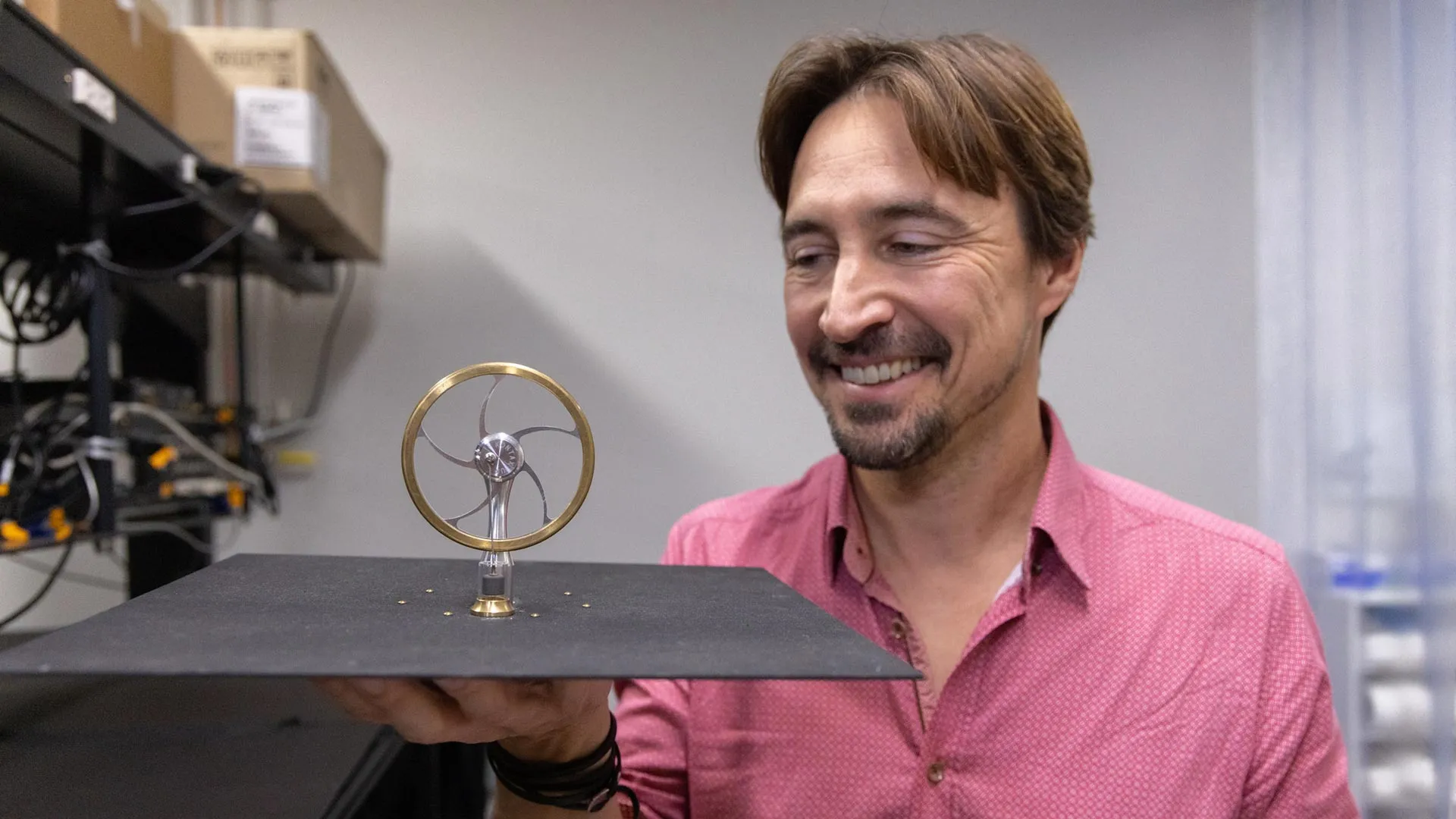
A groundbreaking technological advancement has emerged from research institutions, unveiling a novel system capable of generating mechanical energy during nighttime hours by leveraging the profound thermal disparity between the ambient warmth of Earth’s surface and the extreme cold vacuum of outer space. This innovative approach promises to unlock a previously untapped renewable energy source, offering significant potential for sustainable ventilation and power solutions in various architectural and agricultural contexts without reliance on conventional fuel sources.
The global energy landscape continues to grapple with the imperative of diversifying power generation capabilities, particularly in light of increasing demand, environmental concerns, and the inherent intermittency of established renewable sources such as solar photovoltaics. While solar energy provides abundant power during daylight, the challenge of reliable, off-grid power after sunset remains a critical hurdle. Traditional solutions often involve battery storage, which adds cost and complexity, or the combustion of fossil fuels, counteracting sustainability goals. This new development presents an elegant solution by tapping into a ubiquitous, naturally occurring phenomenon: the planet’s continuous thermal interaction with its cosmic surroundings.
At the core of this innovation lies the Stirling engine, a sophisticated thermodynamic machine with a storied history dating back to the early 19th century. Conceived by Scottish inventor Robert Stirling in 1816, these engines operate on a closed-cycle regenerative heat engine principle, distinguishing them from internal combustion engines. Unlike their combustion-driven counterparts, which demand substantial temperature gradients for efficient operation, Stirling engines possess a unique capability to convert even modest differences in thermal energy into mechanical work. This characteristic is paramount to their application in this context, where the temperature contrast, though significant, does not involve the extreme temperatures generated by burning fuels. The operational principle involves a working gas (such as air or helium) cyclically compressed and expanded within a sealed cylinder, driven by the heat flow between a hot and a cold reservoir. This cyclical motion, mediated by a regenerator that temporarily stores heat, translates into the movement of a piston, which can then be harnessed to perform mechanical tasks or generate electricity.
Historically, Stirling engines have found niche applications in specialized roles, including submarines, auxiliary power units, and certain solar thermal power systems, primarily due to their quiet operation, external combustion, and fuel flexibility. However, their lower power density compared to other engine types and the engineering challenges associated with maintaining large temperature differentials have often limited their widespread adoption. The recent advancements, however, reinterpret the fundamental requirements of a Stirling engine, demonstrating that its efficiency at low temperature differentials can be strategically exploited for novel energy harvesting.
The conceptual breakthrough underpinning this new power generation system involves a redefinition of the "cold reservoir" typically required for a Stirling engine’s operation. Conventionally, one side of a Stirling engine is heated, while the other is actively cooled, often by circulating water or air. The novel approach pioneered by researchers reimagines this cooling mechanism by directly linking the engine’s cold side to the ultimate cold sink: the vast expanse of deep space. This is achieved not through physical contact but through radiative heat transfer, a fundamental process of electromagnetic radiation by which all objects with a temperature above absolute zero continuously emit thermal energy.
On any clear night, objects on Earth, including our own bodies, radiate heat into the atmosphere and, through atmospheric windows, directly into the cold abyss of space. This phenomenon is why surfaces exposed to the night sky can become significantly colder than the ambient air temperature, even in temperate climates. The atmosphere, while insulating, is partially transparent to certain wavelengths of infrared radiation, allowing heat to escape Earth’s thermal embrace. This effect is amplified on clear nights, where cloud cover does not obstruct the radiative pathway to space, and in regions with low atmospheric humidity, as water vapor is a potent absorber and re-emitter of infrared radiation.
The engineering design integrates a standard Stirling engine with a specialized heat-radiating panel. This panel acts as an antenna for thermal radiation, efficiently emitting heat upwards towards the celestial dome. Positioned outdoors at night, the system capitalizes on the Earth’s surface as its warm reservoir – the ground retains heat absorbed during the day, maintaining a relatively higher temperature. Simultaneously, the panel continuously sheds heat to the frigid environment of deep space, establishing the requisite temperature gradient across the Stirling engine. This elegant setup thus creates a perpetual, passive thermal differential, driving the engine without any external fuel input.
Rigorous experimental validation over a sustained period of a year demonstrated the efficacy of this innovative concept. The compact device, deployed and tested under nocturnal conditions, consistently generated a mechanical power output of at least 400 milliwatts per square meter of the radiating surface. To contextualize this output, while seemingly modest, it represents a meaningful amount of energy for low-power applications. In practical demonstrations, the engine directly provided motive force for a small fan, illustrating its immediate capacity for mechanical work. Furthermore, when coupled with a small electric motor, it successfully produced an electrical current, confirming its versatility for various energy conversion needs. These outcomes validate the principle of harnessing the natural nocturnal temperature differential between the Earth and space as a viable energy source.
The implications of this technology are far-reaching, particularly for sectors seeking sustainable, off-grid, and low-maintenance power solutions. One primary application area is the ventilation of agricultural greenhouses. Maintaining optimal temperature and humidity within greenhouses is crucial for crop health and yield, often requiring substantial energy input for fans and cooling systems. A Stirling engine powered by radiative cooling could provide consistent, fuel-free ventilation throughout the night, reducing operational costs and carbon footprints, especially in remote agricultural regions. Similarly, residential buildings could benefit from passive nighttime cooling and ventilation assistance, lessening reliance on conventional air conditioning systems and easing strain on electrical grids.
Beyond ventilation, the technology holds promise for remote and off-grid communities globally. In areas lacking access to reliable electricity infrastructure, this system could furnish essential power for basic needs such as lighting, charging small electronic devices, operating low-power sensors, or driving small pumps for water management. This could significantly enhance quality of life, improve educational opportunities by extending study hours, and bolster economic activities in underserved regions, contributing to energy equity and reducing dependence on expensive and environmentally damaging fossil fuels like kerosene. The self-sustaining nature of the device means minimal operational intervention, making it ideal for deployment in challenging or isolated environments.
However, as with any nascent technology, certain challenges and opportunities for future development exist. The performance of the system is inherently linked to environmental conditions, performing optimally in regions characterized by low humidity and consistently clear skies, which facilitate efficient radiative heat transfer to space. Future research will likely focus on optimizing the materials and design of the radiating panel to enhance its emissivity and minimize parasitic heat gains from the atmosphere, thereby improving efficiency even in less ideal conditions. Further engineering efforts will be directed towards scalability – increasing the power output per unit area and developing modular systems that can be easily deployed and interconnected for larger energy demands. The economic viability, manufacturing costs, and long-term durability of the components will also be critical factors in determining its widespread adoption.
The integration of this radiative cooling-powered Stirling engine with other renewable energy systems, such as daytime solar power, could pave the way for hybrid solutions providing round-the-clock sustainable energy. Imagine a scenario where solar panels generate electricity during the day, while the radiative cooling engine takes over at night, ensuring continuous power without the need for extensive battery storage. This synergistic approach could offer a robust and resilient energy infrastructure for a truly sustainable future.
In conclusion, the development of an engine capable of generating power from the nocturnal chill of deep space represents a profound leap in energy harvesting innovation. By ingeniously combining the established principles of the Stirling engine with the natural phenomenon of radiative cooling, researchers have opened a new frontier for renewable energy generation. This technology underscores the immense potential of harnessing subtle, ambient energy differentials to address pressing global energy challenges, promising a future where sustainable power is not just a daytime luxury but a continuous, environmentally benign reality. The journey from scientific discovery to widespread implementation is complex, yet the foundational work establishes a compelling vision for a world powered by the very fabric of the cosmos.




 Ridwan Kamil
 Aura Kasih

 Safa Marwah

 Lisa Mariana