Lisa Mariana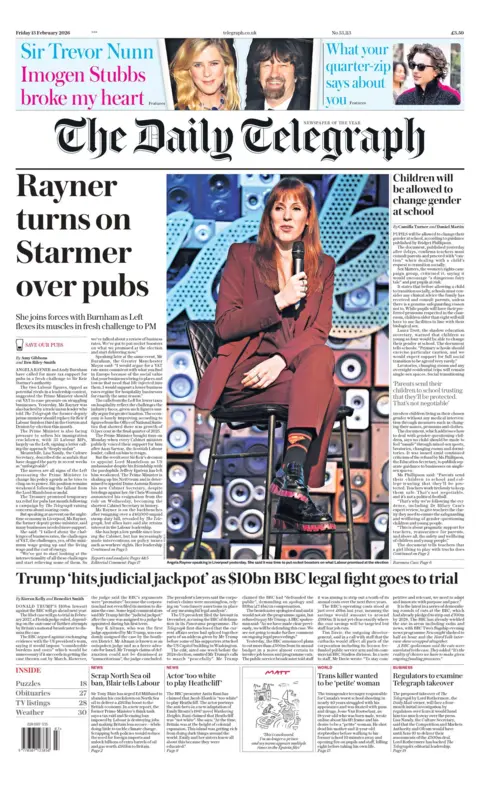
The political landscape of the United Kingdom is experiencing significant flux, marked by a high-profile leadership shake-up within the nation’s administrative core, while simultaneously, a prominent business figure faces intense backlash and potential sanctions over controversial remarks, underscoring a period of heightened public and institutional accountability. These domestic developments unfold against a backdrop of complex international events, ranging from environmental policy reversals in major global powers to ongoing controversies surrounding royal figures and significant shifts in corporate governance.
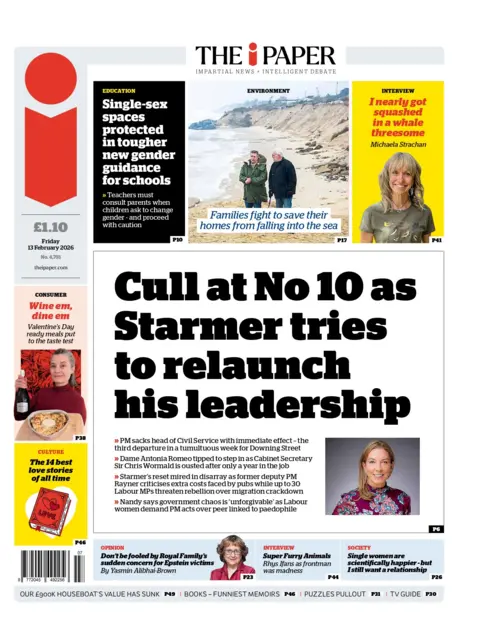
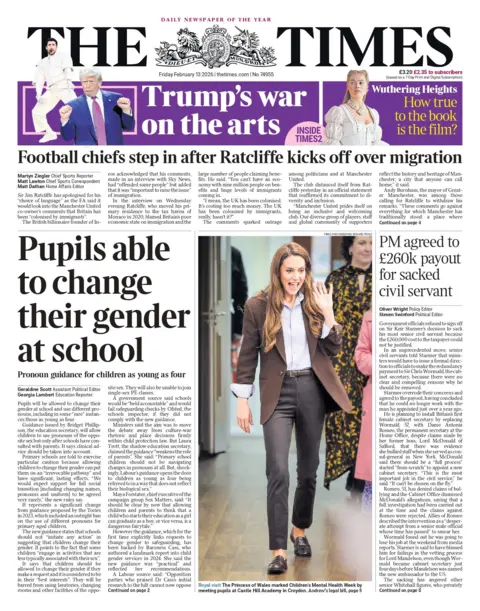
The corridors of power at Downing Street have been rattled by a notable departure at the apex of the civil service. Sir Chris Wormauld, the esteemed head of the Civil Service, has exited his critical post, a move that the Prime Minister’s office, under Sir Starmer, has framed as a "mutual agreement." However, reports from influential media outlets paint a picture of a more decisive action, suggesting Sir Wormauld was "sacked" as part of the Prime Minister’s concerted effort to reinvigorate his leadership and administrative agenda. This strategic recalibration follows months of persistent negative press concerning Sir Wormauld’s perceived performance and the operational efficacy of Downing Street. The narrative surrounding his exit highlights the inherent tension between political leadership’s desire for decisive action and the established protocols of the civil service, which traditionally values stability and impartiality.
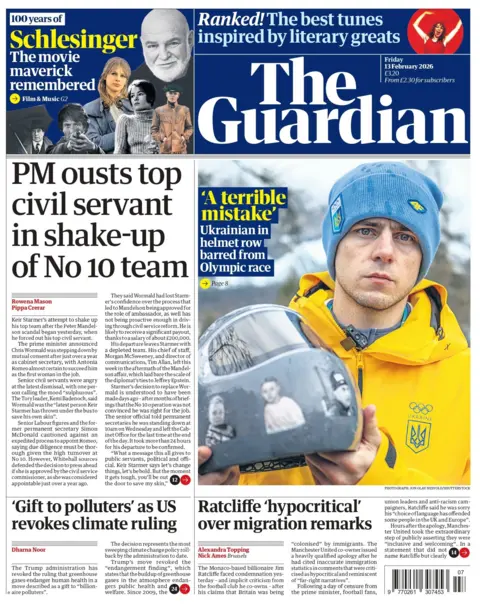
The implications of such a high-level change are profound, extending beyond the immediate administrative adjustments. The Guardian newspaper, citing an unnamed civil servant, reported a "sulphurous" atmosphere within government departments, indicative of apprehension and unease among the wider civil service cohort. Such sentiments can undermine morale, potentially affecting policy implementation and continuity at a crucial juncture for the government. The search for Sir Wormauld’s successor is already underway, with Dame Antonio Romeo emerging as a leading candidate, her potential appointment signaling a new direction for the country’s administrative backbone. The financial details of Sir Wormauld’s departure have also come to light, with the Prime Minister reportedly agreeing to a substantial £260,000 payout for the outgoing civil servant. This compensation package, while standard in some high-level departures, invariably attracts public and political scrutiny, especially in times of economic constraint, raising questions about accountability and the management of public funds. The broader context of this internal shake-up is Sir Starmer’s imperative to consolidate authority and project a renewed sense of purpose, particularly as his administration navigates pressing national challenges and seeks to define its legacy.

Parallel to the governmental reshuffle, a storm of public outrage has engulfed Sir Jim Ratcliffe, the influential co-owner of Manchester United. His recent comments, where he asserted that Britain had been "colonised by immigrants," sparked widespread condemnation across political spectrums and social groups. While Sir Ratcliffe subsequently issued an apology, the swift and strong reaction indicates the deeply sensitive nature of immigration discourse in contemporary society. The Daily Star, under the evocative headline "Ban United," speculated on potential disciplinary actions from the Football Association (FA), including a possible ban from stadium grounds, reflecting the seriousness with which such remarks are being considered by governing bodies.
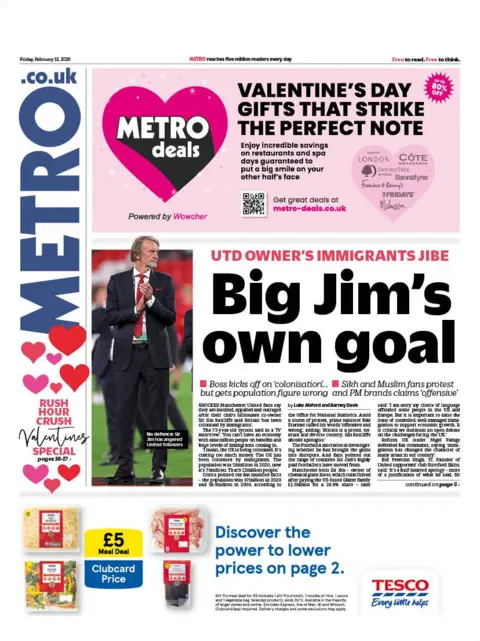
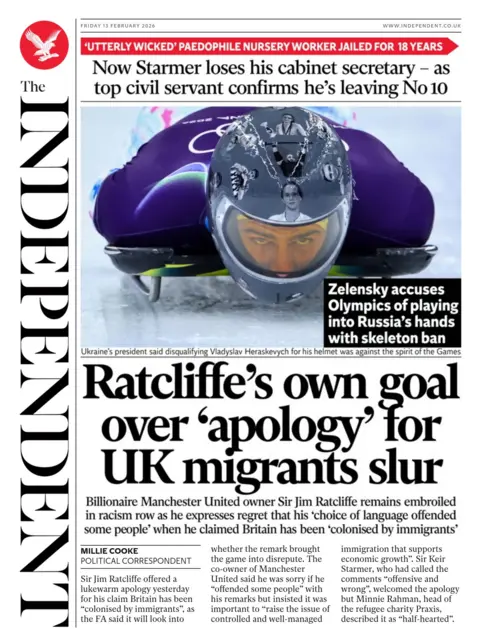
The fallout from Sir Ratcliffe’s statements has been immediate and multifaceted. Metro newspaper critically highlighted his factual inaccuracy regarding population figures in his initial comments, framing it as an "own goal." More significantly, Sikh and Muslim fan groups have voiced their strong protests, underscoring the alienation and offense caused by his words within diverse communities that form a vital part of the footballing landscape. The Prime Minister himself weighed in, unequivocally describing Sir Ratcliffe’s remarks as "offensive," adding significant political weight to the condemnation. This incident serves as a stark reminder of the responsibilities that come with high public profiles, particularly for figures associated with globally recognized institutions like Manchester United, where comments can quickly transcend national borders and ignite international debate. The ongoing scrutiny of Sir Ratcliffe’s statements and their potential ramifications for his involvement in one of the world’s most prominent football clubs highlight the increasing demand for corporate leaders to demonstrate social responsibility and sensitivity in their public pronouncements. The Daily Express further reported on his apology, noting his simultaneous call for an "open debate" on migrants, a stance that itself has drawn mixed reactions, with some seeing it as an attempt to mitigate damage while others perceive it as an insufficient retraction.
Beyond these two dominant narratives, the news cycle reveals a tapestry of other significant events shaping national and international discourse. In a move that reverberated through environmental circles globally, the administration of US President Donald Trump revoked a crucial greenhouse gas ruling. This decision was met with sharp criticism from environmental advocacy groups, with Climate Power notably labeling it a "gift to polluters." The reversal signals a significant policy shift with potentially far-reaching consequences for global climate efforts and illustrates the continuing divergence in environmental strategies among major world economies. This action raises questions about international cooperation on climate change and the long-term impact on global ecological stability.
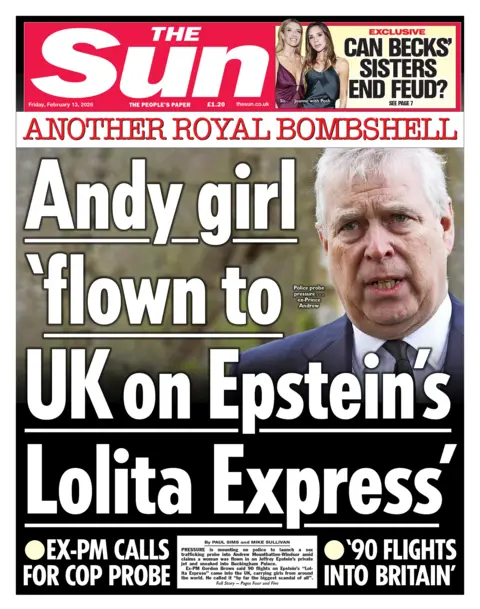
Domestically, the enduring shadow of the Jeffrey Epstein scandal continues to cast a pall over the British Royal Family. Fresh allegations have emerged, with the Sun newspaper headlining "Andy girl ‘flown to UK on Epstein’s Lolita Express’," further intensifying pressure on law enforcement to initiate a comprehensive sex trafficking investigation involving Andrew Mountbatten-Windsor. Claims that a woman was "sneaked into Buckingham Palace" after being flown on Epstein’s infamous private jet have sparked renewed public outcry and calls for greater transparency. Prince Andrew has consistently denied any wrongdoing, yet these recurring allegations continue to fuel public debate about accountability and the monarchy’s standing. In a related financial development, newly released documents suggest that former Barclays boss Jes Staley was named as a trustee of Jeffrey Epstein’s estate until at least 2015. This revelation appears to contradict Staley’s earlier court testimony where he claimed to have declined the role, potentially undermining his credibility and raising further questions about the extent of his association with the disgraced financier. This intersection of high finance and scandalous connections highlights systemic issues of oversight and ethics within elite circles.
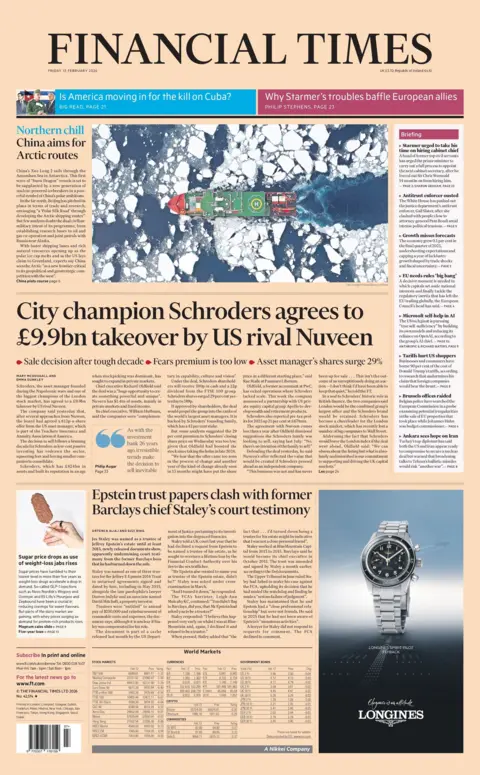
The financial sector also witnessed a significant transaction, with "City champion" Schroders agreeing to a substantial £9.9 billion takeover by its US rival, Nuveen. The Financial Times reported this acquisition follows a "tough decade" for Schroders, underscoring the competitive pressures and consolidation trends within global asset management. This deal reflects broader shifts in the financial landscape, where cross-border mergers and acquisitions are increasingly common as firms seek scale and market advantage.
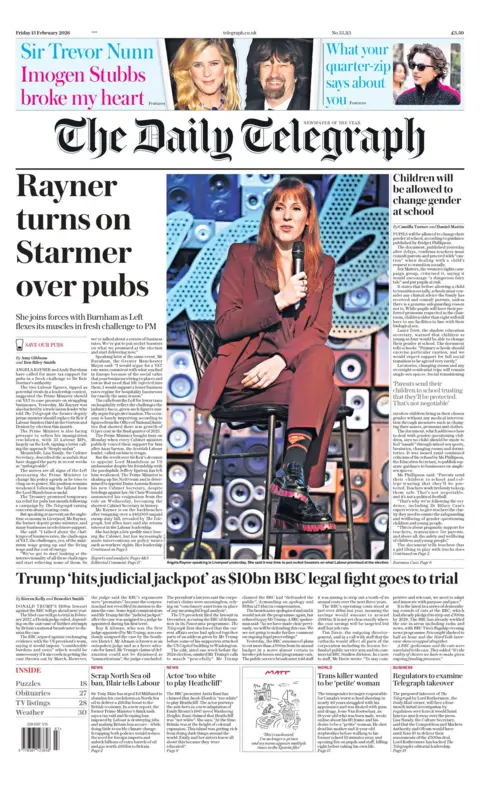
In the realm of domestic politics, internal tensions within the opposition Labour Party have surfaced. Former Deputy Prime Minister Angela Rayner has reportedly "turned on Starmer over pubs," aligning herself with Greater Manchester Mayor Andy Burnham on issues concerning the hospitality sector. This public divergence highlights potential fissures within the party leadership as they navigate policy positions and public sentiment, particularly on local economic concerns.
Internationally, a high-stakes legal battle involving Donald Trump and the BBC is set to proceed to trial next February, with a Florida judge rejecting the BBC’s application to delay discovery in the $10 billion case. This legal confrontation underscores the complex intersection of media, politics, and the judiciary, with potentially significant implications for both parties. Meanwhile, the world of sports became a platform for geopolitical protest, as Ukrainian skeleton athlete Vladyslav Heraskevych was disqualified for wearing a helmet featuring images of athletes who died during the war with Russia. Ukrainian President Volodymyr Zelensky subsequently accused the Olympic authorities of "playing into Russia’s hands" with the ban, highlighting the contentious debate around political expression in international sporting events.

Shifting to social policy, the government has issued new guidance for all English schools regarding gender. The Times newspaper reported that "Pupils able to change their gender at school" is the headline interpretation, though the guidance stipulates that parents should be involved in the "vast majority" of cases where a child questions their gender identity. Crucially, it advises schools against initiating steps towards social transitioning without parental consent. This guidance reflects an ongoing societal debate about gender identity, parental rights, and the role of educational institutions in navigating complex personal and developmental issues for children.
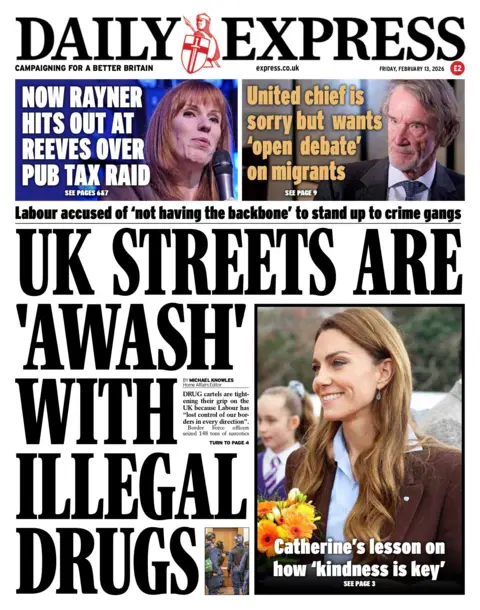
Public safety concerns remain prominent, with the Daily Express reporting that "UK streets are ‘awash’ with illegal drugs," a stark assessment of the nation’s struggle with illicit substances and their societal impact. The Daily Mirror, under the headline "Unmasked," reported on a judge’s decision to name Kian Moulton, a 15-year-old, as the murderer of 12-year-old Leo Ross in a "horror stabbing," bringing a degree of closure to a tragic case that shocked the community.
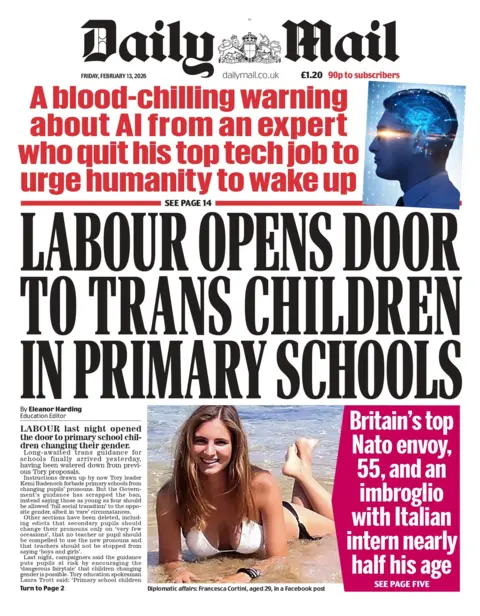
Finally, looking towards the future, the Daily Mail highlighted a "blood-chilling warning about AI" from an expert who resigned from a top technology position to advocate for greater awareness and caution regarding artificial intelligence. This warning underscores the growing global concern about the ethical, social, and existential implications of rapidly advancing AI technologies, prompting calls for careful regulation and thoughtful integration into society.

In summary, the current period is characterized by significant political restructuring at the highest levels of government, intense public and institutional scrutiny of influential figures, ongoing debates on critical social policies, and complex international developments. These events collectively paint a picture of a society grappling with profound internal changes while simultaneously responding to external pressures and technological advancements, all under the discerning eye of a diverse and often critical media landscape.


 Safa Marwah
 Aura Kasih
 Ridwan Kamil