Lisa Mariana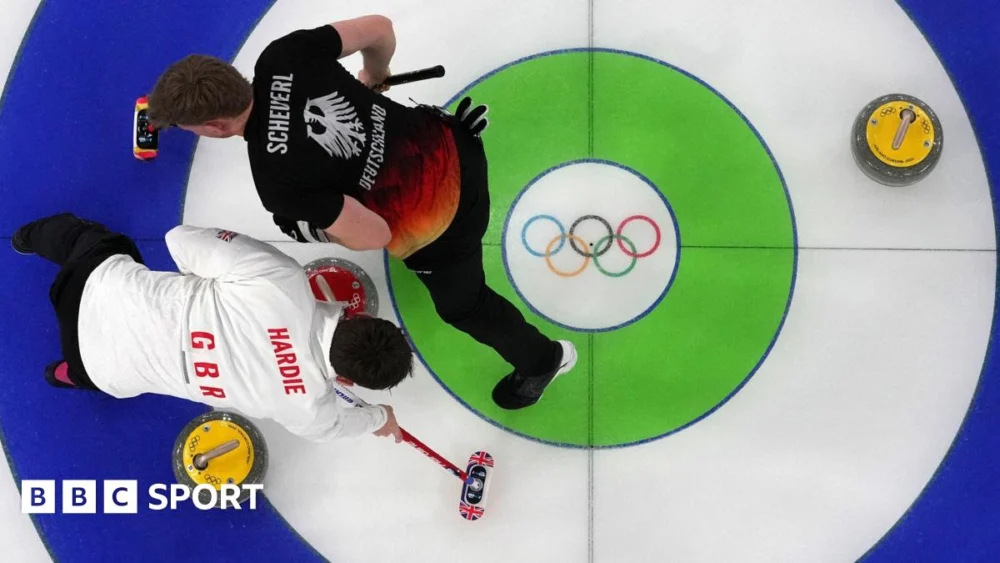
The Winter Olympics 2026 curling competition saw Great Britain’s national teams navigate a demanding day of round-robin play, with the men’s quartet experiencing a dramatic, extra-end defeat against an undefeated Swiss contingent, while the women’s rink succumbed to a formidable Swedish opponent. These outcomes underscore the razor-thin margins at the pinnacle of international curling, placing both British squads in a critical position as they strive to secure coveted spots in the elimination rounds of the tournament. The day’s events highlighted moments of tactical brilliance and resilience, yet also exposed areas where absolute precision proved elusive, intensifying the strategic focus on the forthcoming matches for both male and female athletes.
Men’s Campaign: A Thriller Against Switzerland
The day commenced with a strong performance from the Scottish-based men’s team, led by skip Bruce Mouat, who demonstrated impressive command in their initial fixture against Germany. Dominating from the outset, the British foursome established a commanding 5-2 advantage by the halfway point of the contest, ultimately accelerating their lead to secure a decisive victory. This early triumph set a positive tone, showcasing their capability to execute a well-defined game plan and maintain control under pressure.
However, the subsequent encounter against Switzerland presented a significantly more arduous challenge. The Swiss, entering the match with an unblemished record in the competition, proved to be an exceptionally formidable adversary, renowned for their consistent shot-making and strategic acumen. The match evolved into a tense, tactical battle, with both teams exhibiting a cautious yet precise approach. By the midpoint interval, the British side held a narrow 3-2 lead, a testament to their resilience, particularly after executing a crucial ‘steal’ in the third end. A steal, where a team scores points without holding the ‘hammer’ (the last stone advantage), is often a significant psychological and strategic blow to the opposing side, disrupting their rhythm and forcing a re-evaluation of tactics.
The intensity escalated dramatically in the latter half of the game. For much of the contest, neither team managed to register more than a single point in any given end, a clear indicator of the tight defensive play and the high stakes involved. It was in the seventh end that Switzerland broke this pattern, orchestrating a two-point score with the hammer to seize a 4-3 lead, shifting the momentum in their favour. This pivotal moment set the stage for a nail-biting conclusion, with the final regulation end becoming a decisive juncture.
Entering the tenth and final end, Great Britain found themselves trailing by a single point, holding the hammer. The strategic imperative was clear: score one point to force an extra end, or two points for an outright victory. Despite executing a series of well-placed stones, the British quartet could only manage to secure a single point, levelling the score and initiating an eleventh, extra end. In curling, the team with the hammer advantage in an extra end holds a significant statistical edge, as it allows them the final shot to score. The Swiss, having earned the hammer through the tied score, maintained their composure under immense pressure, meticulously crafting their final stones to secure the necessary point and clinch a statement victory.
Reflecting on the narrow defeat, the British skip acknowledged the fine margins inherent in elite curling. He conveyed a belief that on a different occasion, the outcome could have favoured Great Britain, underscoring the team’s strong performance despite the loss. He also expressed a desire for a potential rematch, highlighting the competitive spirit and confidence within the squad regarding their current form. This sentiment reflects an understanding that while the result was disappointing, the performance level against an undefeated team suggests they remain a significant contender in the tournament.
Women’s Campaign: A Setback Against Swedish Dominance
Earlier in the day, the British women’s team, skipped by Rebecca Morrison, faced an equally formidable challenge against the unbeaten Swedish rink. This encounter carried additional significance, serving as a rematch of the European Championship final where Sweden had previously denied Great Britain the gold medal. The Swedish team, known for their aggressive play and consistent execution, quickly asserted their dominance.
The initial ends saw Sweden capitalize effectively on their hammer advantage, twice scoring three points to establish a commanding lead. By the break, the Swedish side had raced to a 7-3 lead, putting immense pressure on the British team. A further blow came in the sixth end when Sweden managed a critical ‘steal’ of one point, further extending their advantage and tightening their stranglehold on the match. Such an early and significant deficit in curling requires a near-perfect run of subsequent ends to recover, often necessitating high-risk shots.
Despite the mounting scoreline, the British women demonstrated commendable fighting spirit, refusing to concede. They continued to battle for every stone, attempting to claw back into contention. However, the early lead established by the Swedes proved insurmountable, and the match concluded with a 10-7 defeat for Great Britain. This loss puts their aspirations for a semi-final berth under considerable strain.
The skip, Rebecca Morrison, articulated the frustration inherent in competitive curling at the Olympic level, where the difference between success and failure often comes down to mere centimetres in stone placement. She emphasized that while the team was making good shots, they were not consistently at the absolute peak required to overcome an opponent of Sweden’s calibre. This acknowledgment underscores the relentless demands of Olympic competition, where even minor imperfections can be exploited by world-class opposition.
Strategic Implications and Future Outlook
The round-robin format of Olympic curling demands consistent performance across multiple matches, with the top four teams advancing to the semi-finals. For Great Britain’s women, the path forward is now particularly challenging. With five remaining round-robin fixtures, they face the daunting prospect of needing to secure at least four victories to maintain any realistic hope of progressing to the knockout stage. This necessitates an immediate and significant upturn in form and results. Their upcoming schedule includes crucial matches against Denmark and Switzerland, both of which will be pivotal to their tournament longevity. The pressure to perform flawlessly in these remaining games is immense, requiring a combination of strategic execution, mental fortitude, and precise shot-making under duress.
The men’s team, despite their narrow defeat to Switzerland, remains in a relatively stronger position, given their earlier victory against Germany. However, the competitive landscape of the men’s tournament is equally unforgiving. Every match from this point forward will carry significant weight in determining their final standing. Their next opponent, Norway, represents another formidable challenge, known for their innovative strategies and consistent presence at the top of international curling. A victory against Norway would be crucial for consolidating their position and demonstrating their capability to overcome top-tier opposition.
Background Context and The Olympic Pressure Cooker
Curling at the Winter Olympics is a unique spectacle, demanding not only exceptional physical skill but also profound tactical understanding and unwavering mental resilience. The ice conditions, subtle changes in stone trajectory, and the psychological warfare played out on the sheet all contribute to the sport’s captivating unpredictability. Great Britain has a rich history in Olympic curling, with both men’s and women’s teams having achieved significant success, including gold medals. This legacy, while a source of pride, also brings with it considerable national expectation, adding another layer of pressure on the athletes.
The current phase of the tournament is often referred to as the ‘grind’ – a period where teams must manage fatigue, maintain focus, and adapt their strategies day by day. The ability to bounce back from a defeat, analyse errors, and come out stronger in the next game is a hallmark of Olympic champions. For both British teams, the upcoming days will test their resolve, their coaching staff’s strategic adjustments, and their collective ability to perform under the highest scrutiny.
Conclusion
As the Winter Olympics 2026 curling competition progresses, Great Britain’s teams find themselves at a critical juncture. The men’s thrilling defeat to Switzerland, while disappointing, highlighted their potential to compete with the very best, reinforcing their aspirations for a medal. The women’s loss to Sweden, however, has significantly complicated their path to the semi-finals, demanding an extraordinary effort in their remaining matches. The next few days, featuring crucial encounters against Denmark, Switzerland, and Norway, will be definitive in shaping Great Britain’s Olympic curling narrative. The capacity to convert "near-misses" into decisive victories and to maintain peak performance under the unrelenting pressure of the Olympic stage will determine whether both British rinks can ultimately fulfil their ambitions for a podium finish.




 Ridwan Kamil
 Safa Marwah
 Aura Kasih
 Ayu Aulia