Lisa Mariana
Recent Israeli aerial operations targeting locations in eastern Lebanon have resulted in the deaths of at least ten individuals, according to Lebanese authorities, marking a significant breach of the existing cessation of hostilities and raising profound concerns about the potential for wider regional destabilization. These aggressive actions, which Israel states were aimed at assets belonging to Hezbollah, a formidable Shiite Islamist political party and militant group, underscore the inherent volatility of the Lebanese-Israeli border and the persistent challenges to peace in the Levant, despite a negotiated truce in late 2024. The reported casualties, including a high-ranking field commander from Hezbollah, represent a critical escalation that could unravel delicate security arrangements and provoke a robust response, further entangling Lebanon in a protracted cycle of conflict.
The precise targets of the Israeli strikes were identified by the Israel Defense Forces (IDF) as critical Hezbollah command and control centers located within the strategically vital Bekaa Valley. This region, known for its rugged terrain and historical significance, serves as a stronghold for Hezbollah, allowing the organization to maintain a significant operational presence and store a considerable portion of its sophisticated arsenal. Hezbollah itself acknowledged the loss of at least eight of its operatives, confirming the death of a senior commander, a development that signals a substantial operational blow to the group and a direct challenge to its established power dynamics within the region. Such a targeted elimination, particularly of a senior figure, suggests a deliberate and intelligence-driven operation by Israel, aimed at degrading Hezbollah’s leadership and capabilities rather than merely deterring rocket fire. The scale and lethality of these recent attacks distinguish them as among the most severe military engagements in Lebanon since the November 2024 ceasefire, which formally concluded a thirteen-month period of intense cross-border hostilities. This prior conflict, characterized by sustained exchanges of fire, aerial bombardments, and significant infrastructure damage, had underscored the precarious nature of the relationship between Israel and Hezbollah, a dynamic largely shaped by the broader geopolitical rivalries in the Middle East.
The 2024 ceasefire, painstakingly brokered through international mediation, was intended to de-escalate tensions and establish a framework for regional stability. However, its implementation has been consistently challenged by Israel’s ongoing military activities. Since the agreement, Israel has continued to conduct almost daily strikes within Lebanese territory, asserting that these operations are necessary to counter threats emanating from Hezbollah-linked sites. This pattern of intermittent but persistent military action reflects Israel’s deeply entrenched security doctrine, which prioritizes preemptive and retaliatory measures against perceived threats, regardless of formal ceasefire agreements. The images disseminated online following the recent strikes depicted extensive destruction, particularly in what appeared to be residential zones within the affected areas. This visual evidence not only highlights the destructive power of modern aerial warfare but also raises serious questions about the potential for civilian casualties and collateral damage, issues that inevitably fuel humanitarian concerns and inflame public sentiment.
In its official statements, the Israeli military articulated its rationale for the strikes, stating that the targeted Hezbollah command centers were integral to the group’s operational infrastructure. The IDF further contended that Hezbollah systematically integrates its military assets within civilian populations, thereby deliberately creating a complex and challenging operational environment. This claim is often used by Israel to explain civilian casualties in its operations, arguing that Hezbollah’s tactics inherently place non-combatants at risk. According to the Israeli narrative, such integration constitutes a clear violation of the "understandings" that underpin the ceasefire agreement. A subsequent statement from the IDF on Saturday elaborated further, asserting that the operations had successfully "eliminated several terrorists of Hezbollah’s missile array" across three distinct command centers. These centers, Israel claimed, had been recently identified as actively engaged in accelerating Hezbollah’s operational readiness and force build-up, specifically in preparation for potential rocket and missile attacks against Israeli territory. This assertion underscores Israel’s perceived need to preemptively neutralize what it views as an imminent threat, thereby justifying its cross-border military interventions.
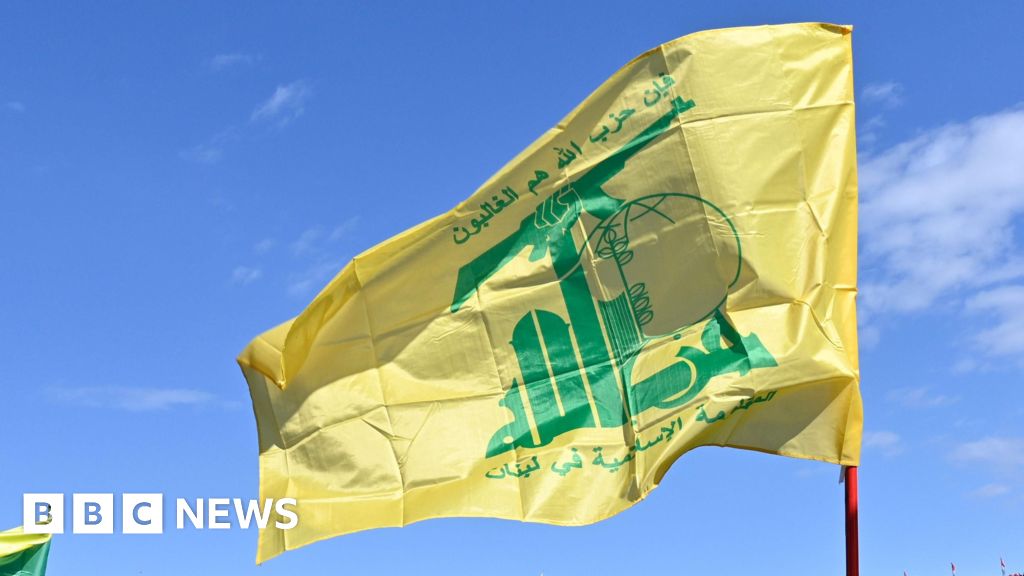
Hezbollah, which is designated as a terrorist organization by several international actors, including the United States and the United Kingdom, maintains a divergent interpretation of the ceasefire agreement. The group asserts that the truce’s stipulations are geographically limited, applying exclusively to southern Lebanon, specifically the area situated between the Litani River and the Blue Line, which demarcates the unofficial border with Israel. This interpretation allows Hezbollah to justify its continued military presence and activities outside this defined zone, including in the Bekaa Valley, where a substantial portion of its military arsenal is believed to be concentrated. Despite calls from the Lebanese government to discuss the future disposition of its weaponry in other parts of the country, Hezbollah has steadfastly refused to engage in such negotiations. This intransigence highlights the deep internal divisions within Lebanon regarding Hezbollah’s status as an armed non-state actor, a critical issue that fundamentally undermines the state’s sovereignty and its capacity to enforce a unified security policy. Earlier this week, Hezbollah explicitly rejected a decision by the Lebanese government to advance the second phase of a disarmament plan, which was intended to cover areas north of the Litani River, extending to the Awali River near the port city of Sidon. This rejection underscores Hezbollah’s determination to maintain its military autonomy and its significant influence over Lebanon’s strategic decision-making.
The Lebanese government, struggling to assert its authority amidst chronic political instability and economic crises, views Israel’s ongoing military actions as flagrant violations of the ceasefire agreement. Beirut has consistently appealed to the international community, urging global powers to exert diplomatic pressure on Israel to cease its attacks. Lebanese Prime Minister Nawaf Salam recently characterized the prevailing situation as a "one-sided war of attrition," a statement that vividly captures the profound sense of vulnerability and frustration within the Lebanese leadership. This sentiment reflects the immense pressure on Lebanon, caught between a powerful neighbor and an internally entrenched armed group, with limited means to unilaterally enforce its borders or protect its citizens.
Compounding the regional tensions, the recent strikes in eastern Lebanon were preceded by another significant Israeli operation hours earlier. An Israeli strike hit the densely populated Palestinian refugee camp of Ain al-Helweh, located on the outskirts of Sidon in southern Lebanon. The Israeli military claimed this target was a "command center" utilized by Hamas, the Palestinian Islamist organization. Hamas subsequently confirmed the deaths of two of its members in this strike. The targeting of Hamas in Lebanon adds another layer of complexity to the already fraught security landscape, connecting the Lebanese front directly to the broader Israeli-Palestinian conflict and signaling Israel’s readiness to pursue its adversaries across international borders.
The timing of these intensified military operations occurs amidst a backdrop of heightened regional tensions, particularly concerning the relationship between the United States and Iran. Washington has reportedly issued threats of military action against Tehran should ongoing diplomatic negotiations fail to yield a satisfactory agreement. This volatile geopolitical climate has generated considerable anxiety within Lebanon, where there are significant concerns that Iran might compel Hezbollah to become actively involved in a broader regional conflict should Israel become embroiled in direct confrontation with Iran. Such a scenario would inevitably transform Lebanon into a primary theater for a proxy war, with potentially catastrophic consequences for its already fragile state and its long-suffering populace. The intricate web of alliances and antagonisms in the Middle East means that any major escalation involving Iran could quickly draw in its regional proxies, with Lebanon bearing a disproportionate share of the human and material cost.
The enduring presence of Hezbollah as a heavily armed non-state actor within Lebanon, coupled with Israel’s proactive security posture, ensures that the region remains a flashpoint for potential conflict. The ceasefire, rather than ushering in a period of sustained peace, appears to have merely altered the intensity and geographical scope of the hostilities. The recent deadly strikes serve as a stark reminder that the fundamental issues driving the conflict – Israel’s security concerns, Hezbollah’s strategic objectives, Iran’s regional ambitions, and Lebanon’s struggle for sovereignty – remain unresolved. Without a comprehensive diplomatic framework that addresses these deep-seated grievances and establishes credible mechanisms for de-escalation and disarmament, the cycle of violence is likely to persist, further eroding stability and undermining any prospects for long-term peace in this critical part of the Middle East. The international community faces an arduous task in navigating these complex dynamics, with limited leverage to compel adherence to international norms or prevent further catastrophic escalation.




 Ayu Aulia
 Ridwan Kamil
 Safa Marwah
 Aura Kasih