Lisa Mariana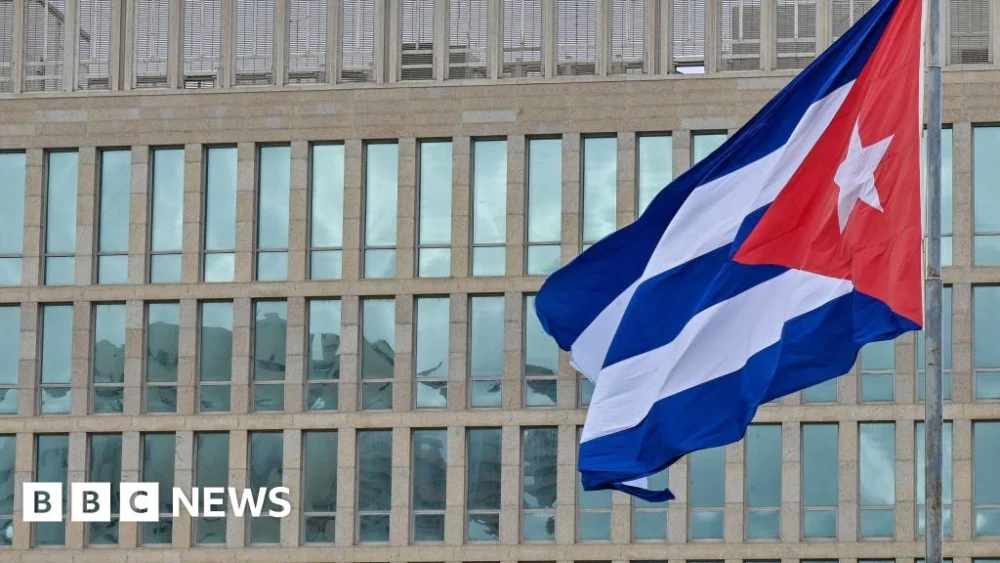
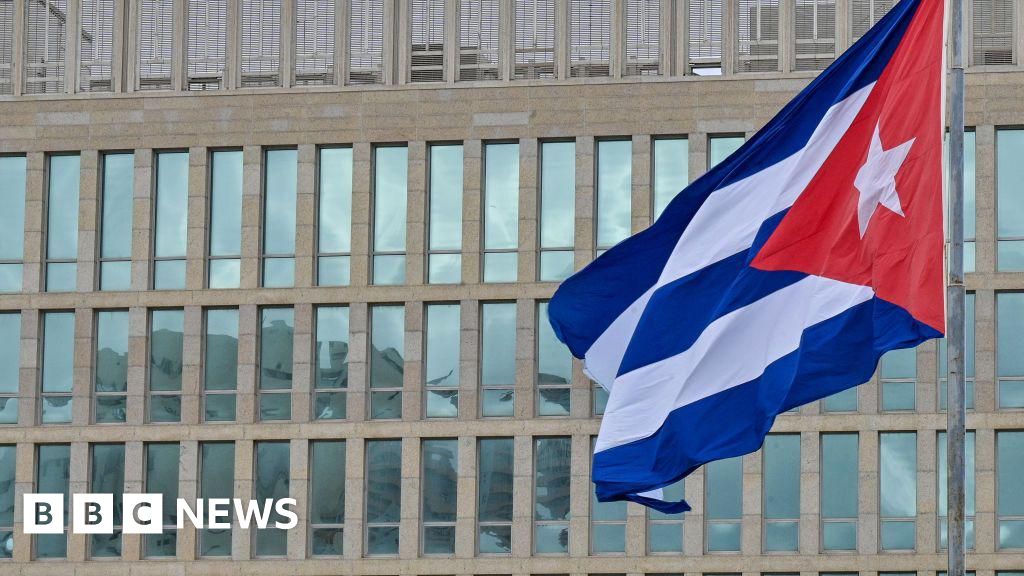
A high-stakes maritime confrontation in Cuban territorial waters has resulted in the deaths of four individuals and the wounding of six others aboard a US-registered speedboat, following an exchange of gunfire with Cuban border protection forces. The incident, confirmed by Havana, has immediately ignited a diplomatic firestorm and prompted urgent calls for independent investigation from Washington, further straining the already fraught relationship between the two nations. Details remain contentious, with Cuba asserting its forces responded to hostile fire from the foreign vessel, while U.S. officials emphasize the need for verifiable facts independent of Cuban government accounts.
The dramatic event unfolded on Wednesday morning near Cayo Falcones, an islet situated within Cuba’s central Villa Clara province along its northern coast. According to a statement released by the Cuban Interior Ministry, a speedboat bearing Florida registration number FL7726SH was detected operating within Cuban maritime jurisdiction. A Cuban border guard vessel, manned by five ministry personnel, approached the foreign craft with the intention of conducting an identification procedure. It was at this juncture, Havana claims, that the occupants of the speedboat initiated hostilities, opening fire on the Cuban patrol and injuring its commander. The Cuban statement asserts that the ensuing confrontation led to the fatalities and injuries among the foreign vessel’s crew, with the wounded subsequently evacuated for medical treatment. The identities and motivations of those aboard the speedboat remain officially unknown to the Cuban authorities, who have launched an investigation to ascertain the full circumstances.
From the United States, initial reactions were marked by caution, concern, and a firm commitment to establishing an independent factual record. Senator Marco Rubio, speaking from Saint Kitts and Nevis where he was engaged in diplomatic discussions with Caribbean leaders, underscored the unusual nature of such an incident. "It is highly unusual to see shootouts on the open sea like that. It’s not something that happens every day," Rubio stated, emphasizing the priority of gathering comprehensive facts. He clarified that the vessel was not carrying US government personnel and that the nationalities of those involved were yet to be determined. The US Coast Guard has reportedly deployed assets to the vicinity of the incident, and Washington has expressed its intent to gain access to the vessel and any survivors, particularly if they are confirmed to be American citizens or legal residents. Crucially, Rubio stressed that the United States would not rely solely on information provided by the Cuban government, vowing to independently verify all aspects of the case.
This deadly confrontation occurs against a backdrop of deeply entrenched geopolitical friction and acute economic pressures facing Cuba. Relations between Washington and Havana have deteriorated significantly since a brief period of rapprochement in the mid-2010s. The Trump administration, in particular, adopted a hardline stance, reimposing and expanding sanctions that have severely impacted the Cuban economy. A central point of contention has been the tightening of restrictions on oil shipments to the island, particularly from its long-standing ally Venezuela. This has exacerbated an already dire fuel crisis in Cuba, leading to widespread shortages and significant public discontent.
Cuba’s government has consistently framed US sanctions as an act of economic warfare, directly contributing to the suffering of its populace and hindering its development. In this context, Havana’s assertion of its "determination to protect its territorial waters" and "safeguard its sovereignty" is not merely a legalistic declaration but a pointed political message. The incident can be seen as an illustration of the heightened vigilance and readiness of Cuban forces to respond to perceived threats or unauthorized incursions, especially given the ongoing political and economic standoff with the United States.
The timing of the incident adds another layer of complexity and sensitivity. It transpired just one day after the 30th anniversary of the "Brothers to the Rescue" shootdown, a somber event in which Cuban MiG fighters shot down two civilian aircraft operated by a Cuban-American exile group, killing four individuals. That incident, which occurred in international airspace after the group allegedly violated Cuban airspace on previous occasions, remains a deeply painful memory for the Cuban-American community and a potent symbol of the volatile nature of US-Cuba relations. The echoes of that historical tragedy undoubtedly amplify the emotional and political resonance of Wednesday’s confrontation, particularly among Florida lawmakers and the exile community.
The immediate aftermath saw a chorus of condemnation and demands for accountability from prominent Florida politicians, many with strong ties to the Cuban-American community. Congressman Carlos Gimenez, a Cuban-American former mayor of Miami, denounced the incident as a "massacre" and pledged to demand a thorough investigation, specifically calling for the determination of whether any victims were US citizens or legal residents. Congresswoman María Elvira Salazar echoed these concerns, stating she was closely monitoring the situation. Florida Attorney General James Uthmeier vowed to direct local law enforcement to investigate, asserting that "The Cuban government cannot be trusted, and we will do everything in our power to hold these communists accountable." Senator Rick Scott also called for a "full investigation" and insisted that "The Communist Cuban regime must be held accountable!" Even US Vice-President JD Vance, while more circumspect, acknowledged the White House was "monitoring" the situation and hoped it was "not as bad as we fear it could be." These strong reactions highlight the significant domestic political implications of any incident involving Cuba, especially in a swing state like Florida.
The nature of the speedboat and the activities it might have been engaged in remain central to understanding the incident. Fast, powerful vessels like the one described are frequently employed in illicit activities across the Florida Straits, including human smuggling, drug trafficking, and sometimes even political incursions or reconnaissance. Given the dire economic situation in Cuba, the desperation of many Cubans seeking to reach US shores has fueled a robust human smuggling trade. Similarly, the Caribbean remains a major transit route for narcotics. The specific purpose of the FL7726SH vessel and its occupants will be a critical, albeit potentially elusive, piece of information for investigators.
The challenges to a truly independent and transparent investigation are formidable. The lack of trust between the US and Cuban governments means that each side will likely view the other’s narrative with deep suspicion. For the US to independently verify the facts, it would ideally require unrestricted access to the incident site, the vessel, any surviving occupants, the bodies of the deceased, and any evidence collected by Cuban authorities. Given the current state of bilateral relations, it is highly improbable that Cuba would grant such extensive access without significant diplomatic pressure or concessions. This creates a scenario where conflicting narratives may persist, further entrenching existing biases and making it difficult to establish a universally accepted truth.
From a perspective of international maritime law, a coastal state has the sovereign right to enforce its laws within its territorial waters. This includes the right to interdict and board foreign vessels that are suspected of violating national laws or engaging in illegal activities. However, the use of force in such interdictions is typically governed by strict rules of engagement, requiring that force be necessary, proportionate, and only used as a last resort, particularly lethal force. The Cuban government’s assertion that its forces were fired upon first would, if proven true, provide a strong justification for their return of fire under the principle of self-defense. Conversely, if the US investigation uncovers evidence suggesting an unprovoked attack or disproportionate force, it would significantly escalate the international outcry and diplomatic fallout.
Looking ahead, this tragic incident is poised to exacerbate the already strained relationship between the United States and Cuba. It injects a new, volatile element into a complex dynamic, potentially undermining any tentative steps towards de-escalation or cooperation. While the US Treasury recently announced a modest easing of some private sector transactions, including oil sales, aimed at supporting the Cuban people, this maritime confrontation could overshadow such gestures and harden positions on both sides. For the Cuban government, the incident reinforces its narrative of needing to protect its borders from external threats, potentially garnering domestic support amidst economic hardship. For the US, particularly the influential Cuban-American political bloc, it fuels calls for increased pressure and condemnation of the Cuban regime.
The future trajectory of this situation will depend heavily on the findings of the respective investigations, the willingness of both sides to engage in some form of dialogue or information exchange, and the broader geopolitical context. Without a clear and mutually accepted account of events, the incident risks becoming another point of intractable contention, further solidifying the mistrust and animosity that have long characterized relations across the Florida Straits. The human cost of four lives lost and six wounded underscores the dangerous realities of a relationship defined by decades of antagonism and the persistent vulnerability of those caught in its crosscurrents.



 Ayu Aulia
 Aura Kasih

 Safa Marwah