
 Lisa Mariana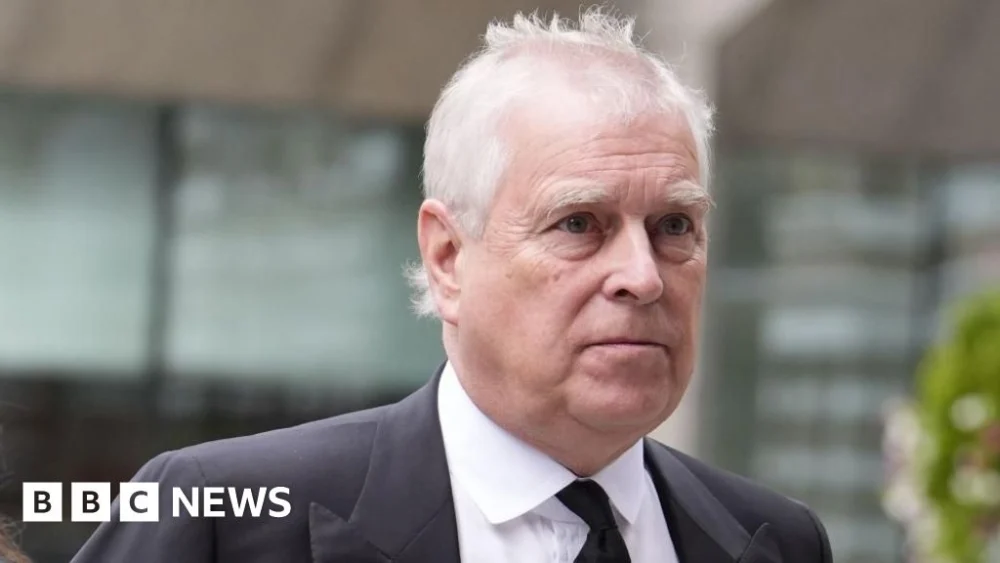
A significant constitutional debate is intensifying across the United Kingdom, with a growing chorus of political figures advocating for legislative action to formally remove Andrew Mountbatten-Windsor from the royal line of succession, thereby precluding any theoretical ascent to the throne. This development follows a period of sustained public scrutiny and the unprecedented stripping of his military affiliations and patronages, yet his position as eighth in line to the crown remains unaltered, prompting calls for a definitive parliamentary intervention.
The current legal framework dictates that changes to the royal succession require an Act of Parliament, a process necessitating approval from both the House of Commons and the House of Lords. Crucially, given King Charles III’s role as head of state across multiple Commonwealth realms, any such alteration would also mandate the consent of these independent nations, underscoring the profound diplomatic and constitutional complexities involved. This multi-jurisdictional requirement elevates the discussion beyond mere domestic political will, transforming it into a matter of international consensus within the Commonwealth.
Andrew Mountbatten-Windsor’s current standing in the line of succession, despite his widely publicised withdrawal from public duties in 2019, represents a unique anomaly within the modern monarchy. His removal from active royal life stemmed from intense public pressure following a controversial television interview concerning his association with the convicted sex offender Jeffrey Epstein, and the subsequent civil legal proceedings in the United States. While these events led to the forfeiture of his honorary military titles and royal patronages in October, his birthright position in the line of succession, established by the Act of Settlement 1701 and subsequent modifications, has remained untouched. This distinction highlights the difference between ceremonial roles and constitutional standing, with the latter requiring a far more rigorous and politically charged process to amend.
Leading the charge for legislative reform are prominent opposition parties. The Liberal Democrats, through their leader Sir Ed Davey, have signaled strong support for such a measure, emphasizing the need for Parliament to address the issue comprehensively. Similarly, the Scottish National Party (SNP), represented by its Westminster leader Stephen Flynn, has publicly committed to backing legislation aimed at formally excluding Mountbatten-Windsor from the succession. This bipartisan alignment among key opposition factions indicates a significant political appetite for resolution, reflecting broader public sentiment regarding the integrity and future image of the monarchy.
Further underscoring this cross-party consensus, Labour MP Rachael Maskell, representing York Central, has also voiced her support for legislative action. Her advocacy extends not only to his removal from the line of succession but also from his residual role as a Counsellor of State. Counsellors of State are senior members of the Royal Family who can act on behalf of the monarch in their absence or incapacitation. While the practical likelihood of Mountbatten-Windsor ever fulfilling these duties is exceedingly low, given his withdrawal from public life, his theoretical eligibility highlights a potential incongruity that many parliamentarians believe must be addressed. The current arrangement, where non-working royals could technically serve as Counsellors, has itself become a subject of recent parliamentary debate, with amendments proposed to narrow eligibility to actively working members of the Royal Family.
However, the political landscape is not entirely uniform in its approach. While the principle of preventing Mountbatten-Windsor from ever becoming King enjoys broad support, some Labour parliamentarians, particularly those with more republican leanings or those critical of the monarchy in general, express a degree of skepticism regarding the immediate necessity of such legislation. Their rationale often hinges on the extremely remote statistical probability of him ever ascending to the throne, given the numerous individuals preceding him in the line of succession. From this perspective, the expenditure of parliamentary time and political capital on a constitutionally complex process to address a highly improbable scenario is viewed with less urgency, especially when other pressing national issues demand legislative attention. This viewpoint does not negate the concerns about his public image but rather prioritizes the practical implications of parliamentary action.
The government, as articulated by Downing Street in October, has previously stated it has no immediate plans to introduce legislation to alter the line of succession. This stance suggests a preference for allowing ongoing investigations and judicial processes to run their course, and perhaps a reluctance to instigate a potentially contentious constitutional debate unless absolutely compelled. The Conservative Party’s official position, as conveyed by senior figures like Kemi Badenoch, emphasizes allowing police investigations to proceed without political interference. This cautious approach reflects a traditional deference to legal processes and a desire to avoid pre-empting outcomes, even as individual Conservative MPs, such as Shadow Scotland Secretary Andrew Bowie, have suggested that it "would be the decent thing" for Mountbatten-Windsor to voluntarily remove himself, or for Parliament to act if guilt were established. This internal divergence within the governing party underscores the sensitivity and complexity of the issue.
The historical precedent for altering the line of succession is scarce but significant. The Act of Settlement 1701 fundamentally shaped the modern British monarchy, ensuring a Protestant succession and excluding Catholics. More recent legislative changes, such as the Succession to the Crown Act 2013, abolished male-preference primogeniture and removed disqualification for marrying a Roman Catholic, demonstrating that the line of succession is not immutable but can be adapted to reflect evolving societal values and constitutional principles. However, these changes were largely proactive reforms to modernize the monarchy’s rules rather than reactive measures addressing the conduct of a specific individual.
The process of gaining consent from all Commonwealth realms that recognize the British monarch as their head of state presents a significant logistical and diplomatic challenge. These realms, including Canada, Australia, New Zealand, and numerous Caribbean nations, each possess their own sovereign legal frameworks and constitutional procedures. Securing their unanimous agreement would involve a coordinated diplomatic effort and potentially lengthy legislative processes in each respective jurisdiction, transforming a domestic UK debate into a multi-national undertaking. This requirement underscores the unique and interconnected nature of the Commonwealth and the monarch’s role within it.
The calls for Mountbatten-Windsor’s removal are not merely about his individual conduct but also about the broader perception and resilience of the monarchy in the 21st century. In an era of heightened public scrutiny and demand for accountability, the continued theoretical eligibility of an individual so deeply embroiled in controversy poses a potential reputational risk to the institution itself. For many, formalizing his exclusion is seen as a necessary step to safeguard the monarchy’s standing and ensure it remains aligned with contemporary ethical expectations. It is a question of symbolic integrity as much as practical constitutional amendment.
Looking ahead, the future trajectory of this debate will likely be influenced by several factors. The conclusion of any outstanding investigations related to Andrew Mountbatten-Windsor could serve as a critical inflection point, potentially intensifying calls for parliamentary action if new information emerges or if public pressure reaches an undeniable crescendo. Furthermore, the evolving dynamics within the Royal Family itself, and any decisions made by King Charles III regarding the future composition and public roles of his family members, could also play a role. Ultimately, while the practical likelihood of Andrew Mountbatten-Windsor ever becoming monarch remains remote, the political and constitutional momentum for his formal exclusion from the line of succession is gaining undeniable traction, signaling a profound shift in how the nation and its political leaders view the future of the monarchy and its enduring relevance. The debate represents a complex interplay of legal precedent, political will, public opinion, and the long-term strategic positioning of the British crown in a modern global landscape.



 Ayu Aulia
 Safa Marwah
 Aura Kasih

 Ridwan Kamil