Aura Kasih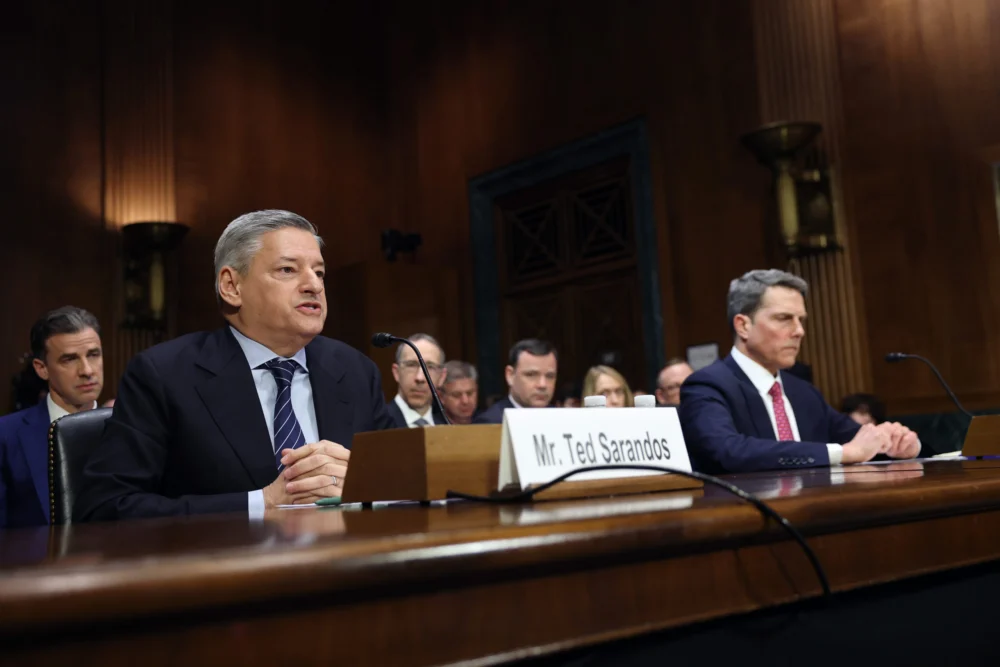
Netflix CEO Ted Sarandos found himself at the epicenter of a heated congressional debate this week, appearing before a Senate subcommittee to discuss the streaming giant’s potential acquisition of a significant portion of Warner Bros. Discovery’s assets. While the hearing nominally focused on traditional antitrust concerns, including the potential for increased consumer costs, diminished theatrical exhibition, and a contraction of the entertainment labor market, a substantial portion of the proceedings devolved into an examination of Netflix’s programming choices, with particular emphasis on content perceived as "woke" and its inclusion of transgender characters.
The competitive landscape for this potential acquisition is further complicated by a rival bid from Paramount Skydance, helmed by CEO David Ellison, whose father, Larry Ellison, is a close ally of former President Donald Trump and a co-founder of Oracle. Despite Warner Bros. Discovery’s rejection of Paramount’s initial offer, Republican lawmakers have expressed a clear intention to leverage this congressional forum to impede Netflix’s advancement.
Senator Eric Schmitt of Missouri articulated this sentiment forcefully, questioning the rationale behind empowering Netflix to become a "behemoth on the planet related to content," asserting that the company had become synonymous with "the wokest content in the history of the world." This sentiment was echoed by Senator Ashley Moody of Florida, who, after Senator Cory Booker’s attempt to steer the discussion back to antitrust principles, argued for the direct relevance of content to consumer choice. Moody emphasized that in a climate where consumers already face limited options, allowing Netflix to consolidate further power warrants a serious consideration of the diversity and ideological bent of its programming.
The debate over content was not confined to broad strokes. Senator Josh Hawley of Missouri, transitioning from his inquiries regarding union labor and streaming residuals, directly questioned the prevalence of "transgender ideology" in Netflix’s children’s programming. Hawley alleged that nearly half of Netflix’s content aimed at minors, excluding older teenagers, actively promoted such an agenda. Sarandos, however, denied this assertion, stating he was unaware of the source of such figures and affirming that Netflix maintains no political agenda.
The French film Cuties was frequently cited as a prime example of what critics deem inappropriate children’s content. Though Sarandos explained the film was intended as a commentary on the sexualization of young girls, is rated for mature audiences, and not children, it was presented as emblematic of Netflix’s alleged ideologically driven library. This controversy is not new; billionaire Elon Musk, a vocal Trump supporter, has previously spearheaded campaigns against Netflix over content featuring transgender characters, citing shows like Dead End: Paranormal Park and The Baby-Sitters Club. Republican lawmakers also pointed to the predominantly Democratic-leaning political donations of Netflix employees and the presence of LGBTQ+ characters in its programming as further evidence of perceived bias.
Senator Ted Cruz of Texas, in a pointed exchange, questioned Sarandos and Bruce Campbell, Chief Revenue and Strategy Officer at Warner Bros. Discovery, about their viewership of the recent Grammy Awards. Cruz specifically referenced an artist’s speech opposing Immigration and Customs Enforcement (ICE) and her declaration that "no one is illegal on stolen land." When both executives stated they had not watched the ceremony, Cruz’s implication was clear, subtly linking the progressive messaging at the awards to the content concerns raised about Netflix. It is noteworthy that the Grammys were broadcast on CBS, a network owned by Paramount Skydance.
David Ellison, the CEO of Paramount Skydance, declined the invitation to testify, reportedly believing his presence would not be conducive to a productive discussion. However, Ellison has engaged in private meetings with lawmakers. Senator Booker described his conversation with Ellison as "fruitful." While Paramount’s bid could present similar antitrust concerns, the close ties of Ellison’s father to former President Trump might offer a potential avenue for Republicans to alleviate their content-related anxieties, while simultaneously raising concerns for Democrats.
Senator Booker, in turn, voiced significant apprehension regarding the fairness of any transaction review under the Trump administration. Sarandos acknowledged a meeting with former President Trump shortly before the deal’s announcement, clarifying that the acquisition was not the primary topic of discussion. Booker expressed a lack of trust in the administration’s evaluations, stating his fervent hope that any hoped-for outcomes of the deal would materialize.
The ongoing antitrust review of potential media mergers is a critical juncture for the industry, particularly as consolidation continues to reshape the landscape of content creation and distribution. The potential acquisition of Warner Bros. Discovery assets by Netflix, or a competing entity like Paramount Skydance, carries significant implications for market competition, consumer access, and the very nature of the entertainment consumed by the public. The inclusion of ideological and content-based critiques within these antitrust proceedings highlights a growing trend where cultural and political considerations are increasingly intertwined with economic and regulatory scrutiny.
From an antitrust perspective, the core concern revolves around market concentration. Should Netflix succeed in acquiring a substantial portion of Warner Bros. Discovery, it would undeniably solidify its position as the dominant global streaming platform. This could lead to reduced competition, potentially allowing the merged entity to dictate terms to content creators, raise subscription prices with less fear of consumer churn, and exert greater influence over the direction of storytelling. The argument is that fewer major players mean less diversity in programming and fewer outlets for independent creators.
However, the narrative presented by some Republican lawmakers extends beyond pure market dynamics. The charge of "woke content" suggests a concern that the ideological leanings of a dominant platform could unduly influence cultural discourse and potentially alienate segments of the audience. This perspective posits that the promotion of certain social values, such as LGBTQ+ inclusivity or critiques of established institutions, is not merely a reflection of audience demand or creative expression but an active agenda that shapes public opinion. The Cuties controversy, regardless of Netflix’s stated intent or rating, serves as a potent symbol for those who believe that certain content is inappropriate for younger audiences and represents a broader cultural shift they oppose.
The counter-argument from Netflix, as articulated by Sarandos, is that the company reflects the diverse interests and demands of its global subscriber base. The assertion that Netflix has "no political agenda" suggests that its programming decisions are driven by market analysis and a desire to cater to a wide array of viewers, rather than an intentional effort to promote specific ideologies. The inclusion of transgender characters, for instance, can be viewed not as an ideological promotion but as an effort to provide representation for a significant demographic and reflect the realities of contemporary society.
The involvement of figures like David Ellison and the shadow of former President Trump add another layer of complexity. Ellison’s familial connection to Trump could be interpreted as an attempt to curry political favor, potentially bypassing some of the content-related objections that Republicans have raised against Netflix. Conversely, this connection might raise alarms for Democrats concerned about potential political interference in antitrust enforcement, particularly given past criticisms of the Trump administration’s approach to regulatory matters. Senator Booker’s remarks underscore these concerns, highlighting a distrust in the impartiality of reviews under a potential future Trump administration.
The implications of this hearing and the ongoing acquisition saga are far-reaching. For the entertainment industry, it signals a heightened level of scrutiny that extends beyond traditional economic metrics. Companies may feel compelled to consider not only market share and profitability but also the perceived ideological implications of their content and business practices when engaging in mergers and acquisitions. This could lead to a more cautious approach to content creation, potentially stifling innovation and artistic risk-taking.
For consumers, the outcome could mean a more consolidated entertainment market, with fewer choices and potentially higher costs. The debate also raises questions about the role of streaming platforms as cultural arbiters and the extent to which they should be held accountable for the ideological messages embedded within their content.
Looking ahead, the antitrust review process will likely be protracted and intensely scrutinized. The Federal Trade Commission (FTC) and the Department of Justice (DOJ) will be tasked with evaluating the competitive effects of any proposed merger. However, the political pressure generated by congressional hearings, as evidenced this week, can significantly influence the regulatory landscape. The "woke" narrative, while framed by some as a critique of corporate responsibility, also serves as a potent political tool, potentially shaping public opinion and influencing the decisions of regulatory bodies. The ultimate resolution of this potential acquisition will undoubtedly have lasting repercussions for the future of media, entertainment, and the ongoing cultural dialogues that shape our society. The confluence of antitrust law, corporate strategy, and ideological debate in this single proceeding underscores the evolving nature of power and influence in the digital age.




 Safa Marwah
 Ridwan Kamil