Lisa Mariana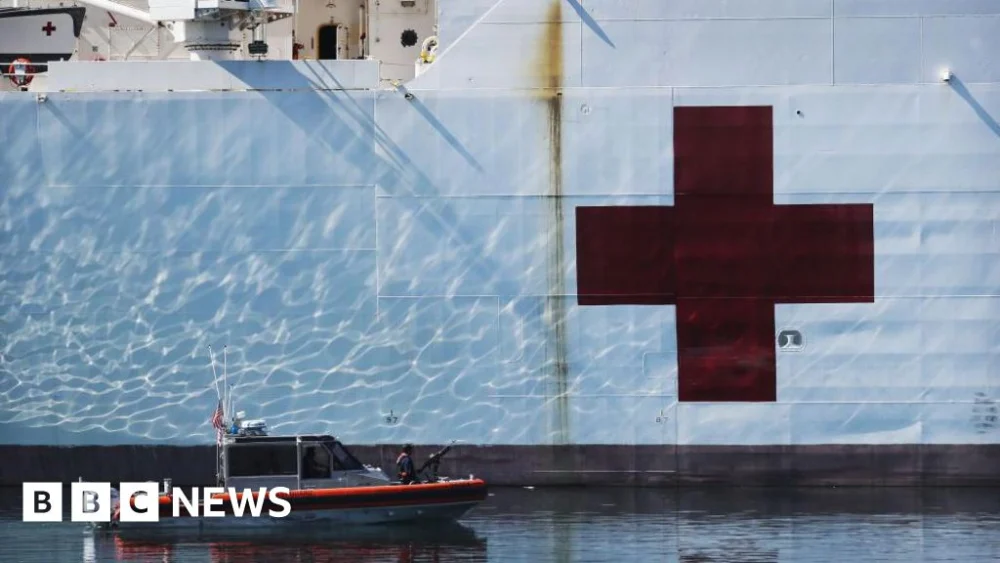
The autonomous territory of Greenland has definitively declined an unsolicited offer of medical assistance from the United States, articulated by former President Donald Trump via social media, marking a sharp diplomatic rebuke that underscores the island’s commitment to self-governance and its established public healthcare system, while also highlighting persistent American strategic aspirations in the high Arctic. This incident illuminates the complexities of international relations when traditional diplomatic protocols are bypassed, revealing underlying tensions regarding sovereignty, communication, and the strategic significance of a rapidly changing polar region.
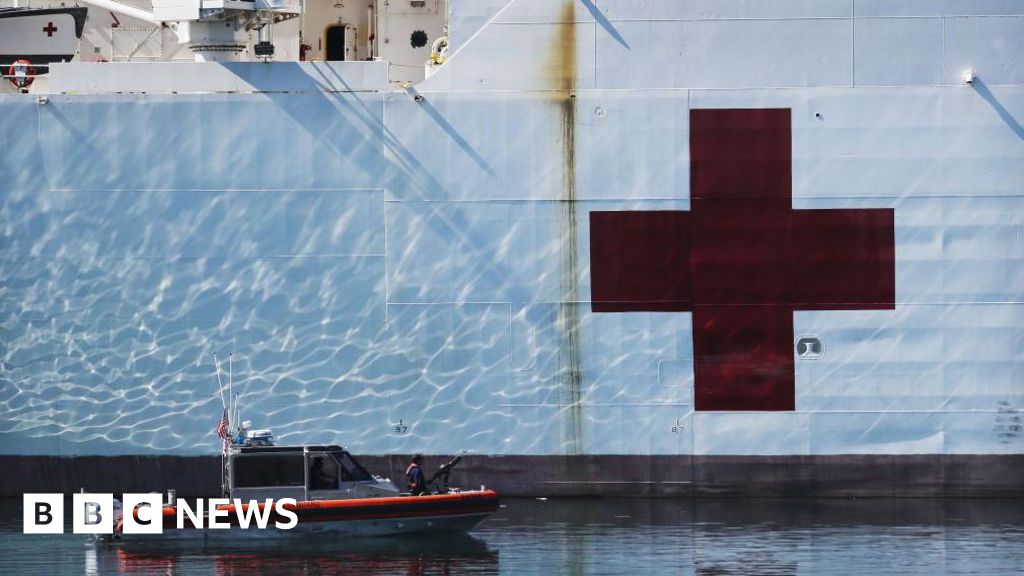
The proposition, conveyed through an unconventional digital platform, involved the purported dispatch of a United States hospital vessel, specifically referencing the USNS Mercy, laden with medical supplies to address what Mr. Trump described as a prevalent health crisis among the Greenlandic population. His social media post asserted that "many people" on the island were ailing and receiving inadequate care, portraying the deployment as an immediate humanitarian intervention. The accompanying visual, an illustrative or AI-generated depiction of the USNS Mercy, further emphasized the readiness of this naval asset.
In a direct and unequivocal response, Greenland’s Prime Minister, Jens-Frederik Nielsen, publicly rejected the overture. His statement conveyed a clear "no thanks from us," emphasizing that Greenland maintains a comprehensive public healthcare system providing free medical treatment to all its citizens. Nielsen explicitly drew a contrast with the American healthcare model, noting its reliance on financial transactions for medical services. Beyond the rejection of the aid itself, the Prime Minister issued a pointed call for direct and formal communication channels, urging Mr. Trump to engage through established diplomatic means rather than resorting to "more or less random outbursts on social media." This highlights a fundamental expectation for respect of sovereign dialogue and procedural integrity in international dealings.
This recent exchange is not an isolated event but rather the latest manifestation of a long-standing and often controversial American interest in Greenland, a vast, resource-rich island with immense geostrategic importance. Former President Trump has previously articulated a desire to acquire Greenland, an aspiration that in 2019 led to a diplomatic dispute when he proposed purchasing the territory from Denmark. That proposition was met with strong condemnation from both Copenhagen and Nuuk, who unequivocally stated that Greenland was not for sale, leading to the cancellation of a planned state visit by Trump to Denmark. While he subsequently conceded in January that a forcible acquisition was off the table, the persistent nature of his interest underscores a broader American strategic calculus concerning the Arctic.
The strategic value of Greenland is multifaceted and growing. Its geographical position, bridging the North Atlantic and the Arctic Ocean, makes it a critical nexus for maritime routes, military operations, and scientific research. The melting Arctic ice cap is opening new shipping lanes, such as the Northwest Passage, which could significantly alter global trade and necessitate enhanced security presence. Furthermore, Greenland possesses vast untapped reserves of rare earth minerals, oil, and gas, resources that are increasingly vital for global economies and technological advancement. The presence of Thule Air Base, a key US military installation, further solidifies Greenland’s role in North American and global defense, particularly in missile defense and space surveillance. This confluence of geopolitical, economic, and environmental factors explains the heightened international attention on the island, transforming it into a crucial arena for great power competition.
Following the earlier diplomatic friction, Mr. Trump had announced a "framework for a future deal" between the United States and Greenland, a declaration that emerged after Denmark and its NATO allies firmly rejected any notion of relinquishing sovereignty over the territory. Details of this purported framework have remained conspicuously vague, even a month after its initial announcement. This lack of clarity contributes to an atmosphere of uncertainty and raises questions about the scope and implications of such an arrangement. Speculation suggests it could encompass enhanced economic cooperation, investment in Greenlandic infrastructure, scientific research partnerships, or even expanded security collaboration. However, the absence of concrete specifics complicates any assessment of its viability or its alignment with Greenland’s own development objectives and Denmark’s sovereign responsibilities. Notably, US Vice President JD Vance recently alluded to European countries being "willing to make a lot of accommodations" regarding this framework, a statement that further fuels speculation without providing substantive details, creating a sense of unease among key stakeholders.
Greenland’s self-governance, established through the Self-Government Act of 2009, grants it extensive autonomy over internal affairs, including healthcare, education, and resource management, while Denmark retains control over foreign policy, defense, and monetary policy. This delicate balance means that any significant international engagement with Greenland requires careful coordination with Copenhagen. Prime Minister Nielsen’s insistence on direct and formal dialogue reflects a commitment to upholding these established protocols and asserting Greenland’s right to engage on the international stage with respect for its autonomous status and sovereign aspirations. His rejection of the US offer, therefore, is not merely a refusal of aid but a powerful affirmation of Greenlandic agency and its determination to be treated as an equal partner rather than a passive recipient of external dictates or charity.
The timing of Mr. Trump’s social media pronouncement also coincided with another notable event in the region: the evacuation of a crew member requiring urgent medical attention from a US submarine operating near Nuuk, conducted by Denmark’s Joint Arctic Command. While it remains unconfirmed whether Mr. Trump’s offer was directly linked to this specific incident, the proximity of these events highlights the existing US military presence in the Arctic and the established mechanisms for international cooperation in emergency situations. The fact that the Danish Joint Arctic Command successfully facilitated the evacuation underscores the efficacy of existing operational partnerships and contrasts sharply with the seemingly unilateral and uncoordinated nature of Mr. Trump’s public offer. This incident serves as a subtle reminder that effective collaboration in the Arctic already exists through conventional military and diplomatic channels, rendering unsolicited public offers potentially redundant and even disruptive.
The broader implications of this diplomatic friction extend beyond the immediate interaction. It underscores a fundamental tension in US Arctic strategy, particularly when executed through unconventional means. While the United States has a clear strategic interest in the Arctic, the approach taken in this instance risks alienating key regional partners like Greenland and Denmark, potentially undermining long-term cooperative efforts. The reliance on social media for significant foreign policy proposals bypasses the established norms of diplomacy, which prioritize formal communication, mutual respect, and careful negotiation. Such an approach can be perceived as disrespectful of national sovereignty and diplomatic protocol, particularly by smaller nations that highly value their autonomy and international standing.
For Greenland, this incident reinforces its position as a discerning actor on the global stage. Its government has demonstrated a clear preference for partnerships that align with its developmental goals, respect its self-governance, and are conducted through appropriate diplomatic channels. The assertion of its robust public healthcare system, in particular, serves as a point of national pride and a testament to its commitment to the well-being of its population, effectively deflecting any insinuation of systemic neglect.
Looking forward, the incident serves as a critical case study in contemporary international relations, particularly concerning the Arctic. As climate change continues to reshape the region, increasing its accessibility and strategic importance, the need for stable, respectful, and predictable diplomatic engagement will only intensify. Future US administrations, regardless of their political alignment, will likely need to recalibrate their approach to Arctic diplomacy, prioritizing consistent engagement through official channels and demonstrating a clear understanding of, and respect for, the sovereignty and self-governance of Arctic nations and autonomous territories. The rejection of the unsolicited medical aid from the United States by Greenland is a clear signal that effective diplomacy in the Arctic must be built on mutual respect, direct dialogue, and a profound appreciation for the distinct political landscapes of its diverse inhabitants.




 Ayu Aulia
 Safa Marwah
 Aura Kasih