
 Ayu Aulia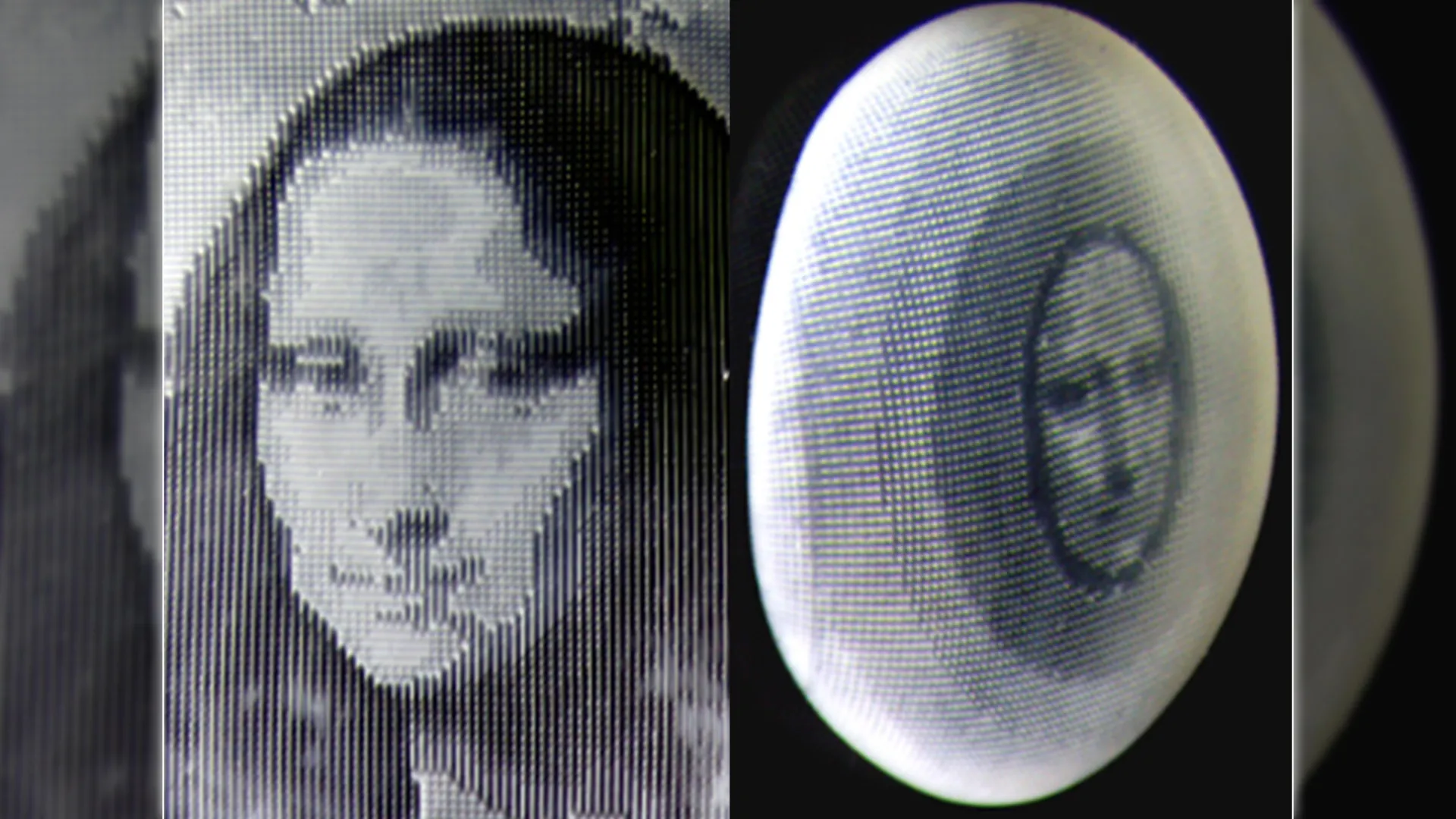
A groundbreaking development in advanced materials science has unveiled a novel synthetic skin capable of intricate transformations, enabling dynamic visual camouflage, encrypted information display, and sophisticated reconfigurable architectures for soft robotic applications. This innovative hydrogel-based material, engineered through an advanced fabrication technique, marks a significant departure from static synthetic counterparts by integrating multi-modal responsiveness into a singular, adaptable platform. Researchers at Penn State have achieved this feat, developing a "smart synthetic skin" that can be programmed to alter its appearance, mechanical properties, and shape in response to environmental stimuli, thereby unlocking a new paradigm for material functionality.
Traditional synthetic materials, while indispensable across numerous sectors from aerospace to consumer goods, are typically designed for specific, fixed functions. Their inherent rigidity and predetermined characteristics often limit their adaptability, requiring complex assemblies of multiple components to achieve varied behaviors. This inherent limitation has spurred extensive research into "smart materials" – substances engineered to react to external conditions. The Penn State team, under the leadership of Hongtao Sun, an assistant professor specializing in industrial and manufacturing engineering, has advanced this field significantly by creating a fabrication method that yields a truly multifunctional, programmable material. This adaptable skin holds the potential to revolutionize how materials interact with their surroundings, offering dynamic control over previously immutable properties.
The core innovation lies in the creation of a programmable smart skin derived from hydrogel, a class of soft, highly water-absorbent polymers. Unlike conventional materials whose behaviors are fixed at the point of manufacture, this smart skin exhibits remarkable plasticity. Its visual attributes, tactile characteristics, structural mechanics, and capacity for morphological change can all be precisely adjusted through exposure to specific external triggers. These triggers can include variations in temperature, the introduction of particular solvents, or the application of mechanical force. The research, which highlights the material’s unprecedented adaptability, was recently published in the esteemed journal Nature Communications, earning a coveted spot in the Editors’ Highlights section, a testament to its scientific impact and novelty.
Biomimicry: Nature’s Blueprint for Dynamic Design
The conceptual foundation for this advanced material draws profound inspiration from the natural world, particularly from cephalopods such as octopuses, cuttlefish, and squid. These marine invertebrates are renowned for their extraordinary ability to rapidly and dramatically alter the color, pattern, and texture of their skin. This biological marvel serves a multitude of purposes, from sophisticated camouflage that allows them to seamlessly blend into complex underwater environments to intricate visual communication with conspecifics. These creatures achieve such dynamic control through a complex interplay of specialized cells, including chromatophores, iridophores, and leucophores, regulated by an intricate nervous and muscular system that allows for instantaneous, localized changes.
Professor Sun, the principal investigator behind this project, explicitly cited these biological systems as the primary source of inspiration. "Cephalopods utilize a highly sophisticated network of muscles and nerves to exert dynamic command over both the visual appearance and the tactile texture of their integument," Sun elaborated. "Inspired by the remarkable capabilities of these soft organisms, our team engineered a 4D-printing system designed to replicate this fundamental concept within a synthetic, pliable material matrix." The designation "4D printing" is crucial here, as it signifies a departure from static 3D-printed objects. Instead, the fourth dimension – time – is integrated, allowing the printed structures to actively transform and reconfigure their properties in response to environmental cues. Sun, whose interdisciplinary affiliations span biomedical engineering, materials science and engineering, and the Materials Research Institute at Penn State, emphasized that this innovative printing paradigm imbues the material with an unprecedented level of dynamic responsiveness.
Encoding Digital Instructions within the Material Substrate
To achieve this exceptional level of adaptability and programmable behavior, the research team developed and employed a sophisticated technique termed halftone-encoded printing. This method fundamentally transforms digital information – such as image data or texture specifications – into a binary code, a sequence of ones and zeros, which is then directly embedded into the very structure of the material itself. The underlying principle mirrors the historical printing process of halftone imagery, where variations in dot size and density are used to create the illusion of continuous tone and detailed images in newspapers or photographs.
By meticulously encoding these digital patterns within the hydrogel matrix, the scientists can precisely pre-program the smart skin’s response to various stimuli. These embedded patterns dictate how different localized regions of the material will react. For instance, certain areas might be engineered to swell more significantly, shrink rapidly, or soften preferentially when exposed to temperature fluctuations, specific liquids, or mechanical forces. Through a careful and deliberate design of these intricate patterns, the research team gains comprehensive control over the material’s overarching behavior and transformative capabilities. "In essence, we are literally printing instructions directly into the material," Professor Sun clarified. "These instructions then direct the skin on how to respond and adapt when its surrounding environment undergoes a change." This direct integration of digital information into the material’s physical architecture represents a significant leap in smart material design.
Dynamic Concealment and Information Encryption
One of the most compelling demonstrations of this smart skin’s capabilities involves its capacity to dynamically conceal and reveal visual information on demand. Haoqing Yang, a doctoral candidate in industrial and manufacturing engineering and the lead author of the study, highlighted this feature as a prime example of the material’s transformative potential. To vividly illustrate this effect, the team encoded a miniature image of Leonardo da Vinci’s iconic Mona Lisa within a thin hydrogel film. Initially, when the material was rinsed with ethanol, it rendered itself transparent, exhibiting no visible trace of the embedded image. However, the hidden image became distinctly clear and visible only after the film was subsequently immersed in ice water or gradually subjected to heating. This reversible process underscores the material’s capacity for dynamic visual control.
Yang emphasized that the choice of the Mona Lisa was merely illustrative; the versatility of the printing technique allows for virtually any image or pattern to be encoded into the hydrogel. "This dynamic behavior could be harnessed for highly effective camouflage applications, where a surface can seamlessly merge into its ambient surroundings, or for advanced information encryption, where sensitive messages or data remain hidden and are only accessible or revealed under precisely defined environmental conditions," Yang stated.
Further augmenting its security applications, the researchers also demonstrated that concealed patterns could be detected not just visually, but also through mechanical interaction. By gently stretching the material and subsequently analyzing its deformation patterns using sophisticated digital image correlation analysis, the hidden information could be discerned. This adds an additional layer of security and versatility, meaning data can be retrieved and authenticated through physical interaction, offering potential for advanced anti-counterfeiting measures or secure authentication tokens.
Unilayered Shape Transformation: A Paradigm Shift
Beyond its visual manipulation capabilities, the smart skin exhibits remarkable flexibility and sophisticated shape-shifting abilities. According to Professor Sun, the material can effortlessly transition from a flat, two-dimensional sheet into complex, biologically inspired three-dimensional forms, complete with intricate surface textures. Crucially, unlike many existing shape-changing materials that often necessitate the integration of multiple layers or the combination of dissimilar substances to achieve such transformations, this novel material accomplishes these feats within a single, homogeneous sheet.
The changes in both macro-scale shape and micro-scale surface texture are entirely governed by the digitally printed halftone patterns embedded within this singular hydrogel film. This groundbreaking approach allows the material to replicate complex morphological and textural changes akin to those observed in the skin of cephalopods, without the need for complex multi-material fabrication. Building upon this remarkable capability, the research team successfully demonstrated that multiple functions can be programmed to operate in concert. By meticulously designing the halftone patterns, they were able to encode the Mona Lisa image into flat films that subsequently transformed into three-dimensional, dome-like structures. As these sheets gradually curved and reconfigured into their new forms, the hidden image simultaneously emerged into visibility, vividly illustrating how coordinated changes in both shape and visual appearance can be achieved within a single, integrated material. "Just as cephalopods flawlessly coordinate their body shape with their skin patterning, this synthetic smart skin possesses the ability to concurrently control both its visual appearance and its physical deformation, all contained within a single, pliant material," Sun affirmed.
Expanding the Horizons of 4D-Printed Hydrogels
This latest research represents a significant evolution of the team’s previous work on 4D-printed smart hydrogels, which was also published in Nature Communications. That earlier study primarily concentrated on integrating specific mechanical properties with programmable transitions from flat geometries to complex three-dimensional forms. In the current iteration, the research team has substantially broadened the scope of their approach by leveraging halftone-encoded 4D printing to embed an even greater array of functions into a singular hydrogel film. This iterative advancement underscores a commitment to progressively enhance the complexity and versatility of their smart material designs.
Looking toward the future, the researchers have articulated a clear objective: to develop a highly scalable and supremely versatile platform. This platform would enable the precise digital encoding of a multitude of functions within a single, highly adaptive material, moving beyond laboratory prototypes to potentially industrial applications. Such a platform would simplify the design and manufacturing of complex responsive systems, enabling rapid prototyping and customization.
"This profoundly interdisciplinary research, positioned at the nexus of advanced manufacturing techniques, intelligent materials science, and fundamental mechanics, unlocks unprecedented opportunities with far-reaching implications," Professor Sun concluded. The potential applications are vast and diverse, spanning fields such as next-generation stimulus-responsive systems, advanced biomimetic engineering, novel encryption technologies, sophisticated biomedical devices, and beyond. The collaboration on this study included Penn State co-authors Haotian Li and Juchen Zhang, both doctoral candidates in industrial and manufacturing engineering, along with Tengxiao Liu, a lecturer in biomedical engineering. The project also benefited from the significant collaboration of H. Jerry Qi, a distinguished professor of mechanical engineering at the Georgia Institute of Technology, underscoring the collaborative and multidisciplinary nature essential for such groundbreaking scientific advancements.
The development of this smart synthetic skin represents a pivotal moment in materials science, moving beyond passive materials to active, programmable matter. Its capacity for dynamic camouflage, secure information display, and complex shape-shifting within a single, reconfigurable matrix offers a glimpse into a future where materials are not merely components, but intelligent, adaptive entities capable of autonomously responding to and interacting with their environment in unprecedented ways. This innovation paves the way for a new generation of adaptive technologies that could fundamentally reshape industries and human interaction with the physical world.




 Aura Kasih
 Lisa Mariana
 Ridwan Kamil


 Safa Marwah