
 Ayu Aulia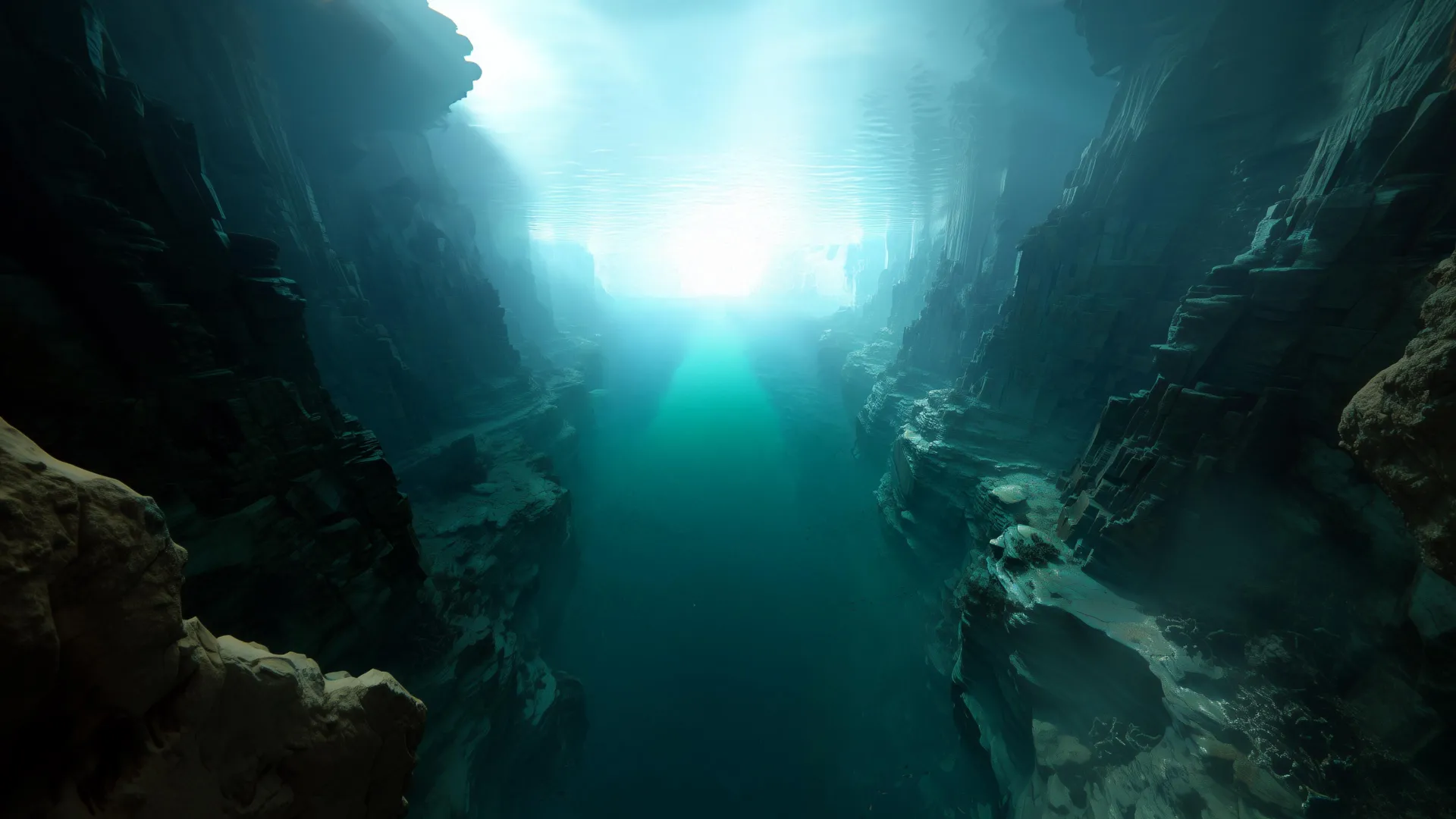
Among these awe-inspiring underwater landscapes, one of the most remarkable is the King’s Trough Complex, situated approximately a thousand kilometers west of the Iberian Peninsula. This monumental undersea structure extends for an astonishing five hundred kilometers, characterized by a series of remarkably parallel, elongated depressions and profound basins. Nestled within its eastern reaches lies Peake Deep, a bathymetric anomaly representing one of the deepest points discovered within the entire Atlantic Ocean. The sheer scale and intricate morphology of the King’s Trough have long presented a significant enigma to marine geologists and geophysicists, prompting decades of scientific inquiry into the forces capable of carving such an expansive and intricate scar across the abyssal plain.
The genesis of this colossal formation has been the subject of intensive investigation, with recent breakthroughs shedding considerable light on its origins. An international consortium of researchers, spearheaded by the GEOMAR Helmholtz Centre for Ocean Research Kiel, has meticulously analyzed geological data to decipher the sequence of events that led to the King’s Trough’s formation. Their comprehensive findings, published in the esteemed journal Geochemistry, Geophysics, Geosystems (an American Geophysical Union publication), provide a compelling narrative that integrates multiple geodynamic processes.
Dr. Antje Dürkefälden, a distinguished marine geologist at GEOMAR and the lead author of the study, articulated the significance of these discoveries. "For an extended period, the scientific community has hypothesized that the fundamental processes of plate tectonics—the grand movements of Earth’s lithospheric plates—were instrumental in shaping the King’s Trough," she explained. "Our most recent research now furnishes, for the first time, a coherent explanation for the precise geographical localization of this extraordinary structure and why it developed at this specific juncture in Earth’s history." This underscores a critical shift from broad tectonic correlation to a detailed, localized understanding of the complex interactions at play.
The pivotal insight derived from the new research indicates that during a specific geological epoch, roughly spanning from 37 to 24 million years ago, a crucial tectonic plate boundary momentarily traversed this segment of the North Atlantic. This boundary demarcated the vast African and Eurasian plates. As these colossal crustal segments diverged and shifted relative to one another, the oceanic crust within this particular region experienced immense extensional stress. This stress caused the crust to progressively distend and fracture, initiating a process akin to the slow, deliberate unzipping of a fabric, systematically propagating from its eastern extremity towards the west. This systematic rifting mechanism is key to understanding the King’s Trough’s linear, segmented morphology.
However, the complete explanation for this unique geological phenomenon delves even deeper, quite literally, into the Earth’s interior. A crucial antecedent to the rifting event was the pre-existing condition of the oceanic crust in the area. Prior to the plate boundary’s incursion, the crust had undergone a significant transformation, becoming both unusually thick and considerably heated. This anomalous state was not a superficial phenomenon but a direct consequence of hot, buoyant material ascending from the Earth’s mantle below. This steady, persistent column of superheated rock originating deep within the planet’s interior is scientifically referred to as a mantle plume. The research team posits that this ancient plume represented an early manifestation or offshoot of what is now recognized as the modern Azores mantle plume, a well-known hotspot responsible for the volcanic activity and elevated topography of the Azores archipelago.
The presence of a thickened and thermally altered crust fundamentally changed its mechanical properties. As co-author PD Dr. Jörg Geldmacher, also a marine geologist at GEOMAR, elaborated, "This pre-existing condition of a robust yet thermally weakened crust likely rendered the region mechanically less resistant to deformation. Consequently, when the regional tectonic stresses mounted, the plate boundary preferentially localized and shifted into this already compromised zone." He further noted that the cessation of the King’s Trough’s formation was directly linked to the subsequent migration of the plate boundary. "Once the plate boundary migrated further south, gravitating towards the locus of the contemporary Azores hotspot, the extensional forces that drove the King’s Trough’s development dissipated, effectively halting its growth." This dynamic interplay highlights the transient nature of plate boundaries and their profound impact on crustal architecture.
The King’s Trough, therefore, stands as a compelling natural laboratory, offering an unparalleled illustration of the intricate and often interdependent relationship between deep-seated mantle processes and the overarching movements of tectonic plates. The findings underscore a fundamental principle in geodynamics: activity far beneath the Earth’s surface can exert a profound preparatory influence on the overlying crust, priming it for subsequent deformation and dictating precisely where major fractures, rifts, and vast canyons will ultimately materialize. It demonstrates that surface expressions of tectonic activity are often guided by subsurface thermal and compositional anomalies.
These revelations extend beyond merely explaining one specific geological feature; they contribute significantly to a more comprehensive understanding of the broader geodynamic evolution of the entire Atlantic Ocean basin. The processes elucidated in the King’s Trough study are not isolated historical events but rather represent fundamental mechanisms that may still be actively shaping other parts of the oceanic crust today. A salient contemporary example is found near the Azores archipelago, where a comparable system of trenches, known as the Terceira Rift, is actively developing. This modern rift system is also situated within a region characterized by unusually thick oceanic crust, strongly suggesting that similar mantle-driven weakening mechanisms are at play, guiding the ongoing deformation of the crust in this volcanically active zone. The continuous monitoring and study of such active rifts offer a living analogue for understanding ancient features like the King’s Trough.
The robust conclusions of this groundbreaking study are founded upon an extensive and meticulously collected dataset. The core data was acquired during the M168 research expedition, which took place in 2020 aboard the state-of-the-art research vessel METEOR. Under the expert leadership of Antje Dürkefälden, the scientific team deployed advanced high-resolution multibeam sonar technology to generate an exceptionally detailed and accurate topographical map of the seafloor within the King’s Trough Complex. This high-definition bathymetry was indispensable for accurately characterizing the complex system of trenches and basins.
Beyond mapping, the expedition also involved the arduous task of retrieving physical samples from the deep ocean floor. Volcanic rock samples were systematically collected from various segments of the trench system utilizing a specialized chain bag dredge. These rock specimens are invaluable geological archives, preserving chemical and isotopic signatures that reveal their origins and thermal histories. Once returned to the laboratory, these retrieved samples underwent rigorous geochemical analysis. The team meticulously examined their chemical composition, looking for trace elements and isotopic ratios that could fingerprint the mantle source and the conditions under which the magma formed. Crucially, selected samples were then subjected to precise radiometric dating techniques at the University of Madison (Wisconsin, USA). This absolute dating provided critical chronological anchors, allowing researchers to establish a precise timeline for the rifting events and the associated volcanic activity. Further enhancing the study’s comprehensiveness, additional bathymetric data was generously provided by the Portuguese research center Estrutura de Missão para a Extensão da Plataforma Continental (EMEPC), complementing the expedition’s own data. The interdisciplinary nature of this endeavor was further underscored by significant contributions from researchers affiliated with Kiel University and Martin Luther University Halle-Wittenberg, exemplifying the collaborative spirit essential for addressing complex Earth science questions.
The study of the King’s Trough Complex thus stands as a paragon of modern marine geophysics, illustrating how cutting-edge technology, meticulous field work, advanced laboratory analysis, and international collaboration converge to unravel the deep-seated mysteries of our planet. It pushes the boundaries of our understanding of how Earth’s interior dynamics manifest as dramatic, enduring features on the ocean floor, fundamentally reshaping our perception of oceanic canyon formation and the long-term evolution of major ocean basins. This work will undoubtedly serve as a critical reference point for future investigations into other enigmatic submarine landscapes and the forces that forge them.



 Aura Kasih
 Lisa Mariana
 Ridwan Kamil


 Safa Marwah