Ridwan Kamil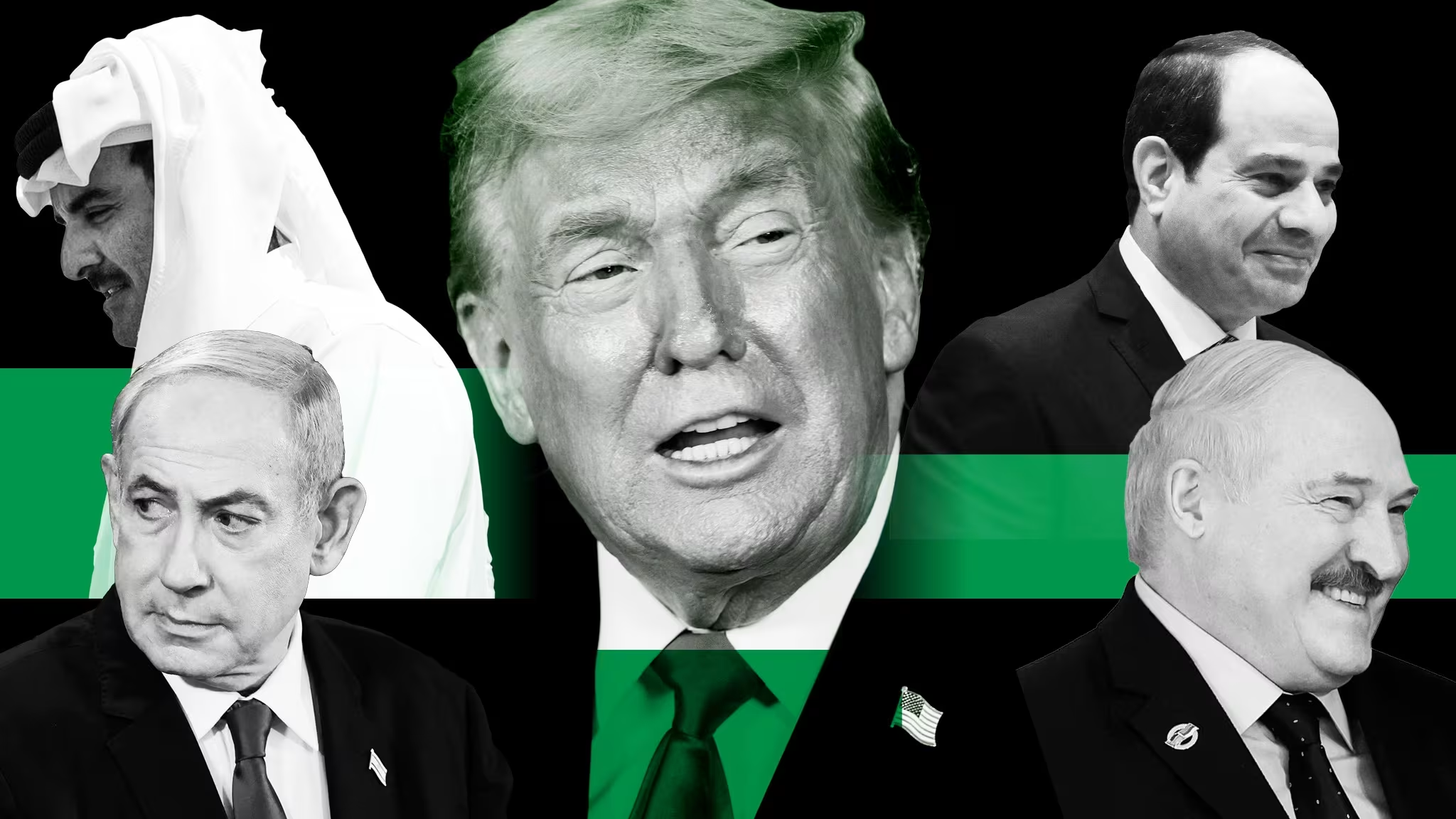
Former President Donald Trump has publicly announced his intention to form a "Board of Peace," a diverse advisory council aimed at developing strategies to foster global tranquility, a move that has generated considerable discussion regarding its potential efficacy and underlying motivations.
The genesis of this proposed "Board of Peace" can be traced to Trump’s persistent focus on his prior foreign policy achievements, particularly his administration’s efforts in brokering the Abraham Accords, a series of normalization agreements between Israel and several Arab nations. This initiative, which he frequently touts as a significant diplomatic breakthrough, appears to serve as a foundational blueprint for his current ambition. Trump has articulated a vision where this new council would convene individuals with varied backgrounds and expertise to offer counsel and innovative solutions to complex international conflicts. The stated objective is to transcend traditional diplomatic frameworks and explore unconventional pathways to de-escalation and lasting accord.
However, the precise composition and operational modalities of this "Board of Peace" remain largely undefined, leading to speculation about its ultimate purpose and the caliber of its intended members. While Trump has suggested that the board will comprise individuals "of great talent" and "from many different places," concrete details regarding selection criteria or a formal vetting process are conspicuously absent. This ambiguity fuels conjecture about whether the council will be primarily a platform for genuine policy development or a vehicle for reinforcing Trump’s political narrative and brand. The history of political advisory bodies often reveals a spectrum of utility, ranging from substantive policy formulation to performative displays of influence. Understanding where this "Board of Peace" might fall on this spectrum requires a deeper examination of Trump’s past approaches to advisory roles and his overarching political strategy.
The Abraham Accords, while lauded by supporters as a paradigm shift in Middle East diplomacy, also drew criticism for their perceived sidelining of the Israeli-Palestinian conflict and for being driven by transactional interests rather than comprehensive peace-building. This context is crucial for evaluating Trump’s current proposal. If the "Board of Peace" is intended to replicate the Abraham Accords model, it could prioritize bilateral agreements and de-emphasize multilateral approaches or the resolution of long-standing, intractable disputes. The success of such a model in achieving broader global peace is debatable, as different regions and conflicts present unique challenges that may not be amenable to a singular, uniform strategy.
Furthermore, the very concept of a "peace council" convened by a figure known for his often confrontational rhetoric and "America First" foreign policy raises questions about the council’s perceived impartiality and its ability to engender trust among diverse international actors. Genuine peace initiatives typically rely on a foundation of credibility, neutrality, and a demonstrated commitment to inclusive dialogue. The extent to which Trump’s proposed board can establish such credentials will be a significant determinant of its potential impact. The inclusion of individuals with genuinely diverse perspectives, including those who may have been critical of past U.S. foreign policy or Trump’s own actions, would be a critical indicator of the council’s seriousness of purpose.
The potential implications of such a board are multifaceted. On one hand, if structured and populated effectively, it could indeed offer novel insights and catalyze constructive dialogue on critical global issues. The involvement of individuals with deep regional knowledge, diplomatic experience, and a proven track record of conflict resolution could be invaluable. Such a body, if operating with a degree of autonomy and transparency, might serve as a valuable parallel track to official government diplomacy, offering a less politically constrained environment for exploring sensitive issues. This could be particularly relevant in situations where established diplomatic channels have become ossified or politically untenable.
Conversely, there is a significant risk that the "Board of Peace" could become a partisan instrument, primarily serving to bolster Trump’s political standing and advance his foreign policy legacy, real or perceived. If the council’s recommendations are seen as pre-determined or designed to align with Trump’s pre-existing political agenda, its credibility would be severely undermined. This could lead to its marginalization by international bodies and national governments, rendering it ineffective. Moreover, the perception of the council as a vehicle for advancing specific geopolitical interests, rather than a genuine pursuit of global peace, could foster skepticism and resistance from nations wary of perceived foreign interference or undue influence.
The operational framework of the board will be a critical determinant of its legitimacy. Will its deliberations be public or private? Will its recommendations be binding or advisory? What mechanisms will be in place to ensure accountability and to measure the success of its proposed strategies? Without clarity on these fundamental aspects, the initiative risks being dismissed as a superficial endeavor. The global landscape of peace-building is littered with initiatives that promised much but delivered little due to poor design, lack of resources, or insufficient buy-in from key stakeholders.
The current geopolitical climate is characterized by a resurgence of great power competition, ongoing regional conflicts, and a proliferation of non-state actors posing complex security challenges. In such an environment, the need for effective mechanisms to promote peace and stability is paramount. Whether Trump’s "Board of Peace" can contribute meaningfully to this effort depends heavily on its ability to transcend partisan politics and to foster genuine collaboration. The success of any peace initiative hinges on its ability to adapt to the nuances of specific conflicts, to build trust among adversaries, and to offer tangible pathways toward reconciliation and cooperation.
Looking ahead, the future trajectory of Trump’s "Board of Peace" will likely be shaped by several factors. The extent to which prominent, respected individuals from diverse backgrounds agree to participate will be a significant indicator of its potential. The transparency with which it operates and the perceived impartiality of its advice will also be crucial. Furthermore, its ability to engage with and influence existing international diplomatic efforts, rather than operating in a vacuum, will be vital for its long-term relevance. The ultimate impact of this initiative will be measured not by its pronouncements, but by its tangible contributions to de-escalating conflicts and fostering enduring peace in a world that desperately needs it. The challenge for Trump, and for those who might be invited to join his board, will be to transform an ambitious concept into a credible and impactful force for global stability. The world watches to see if this "Board of Peace" will be a genuine catalyst for change or another chapter in the complex narrative of international relations.




 Ayu Aulia
 Safa Marwah
 Aura Kasih
 Lisa Mariana