Lisa Mariana
A devastating fire, which erupted in the early hours of New Year’s Day, has claimed a significant number of lives and left over a hundred individuals severely injured at a popular ski resort in southwestern Switzerland, prompting an extensive international emergency response and a complex investigative effort into the catastrophe’s origins.
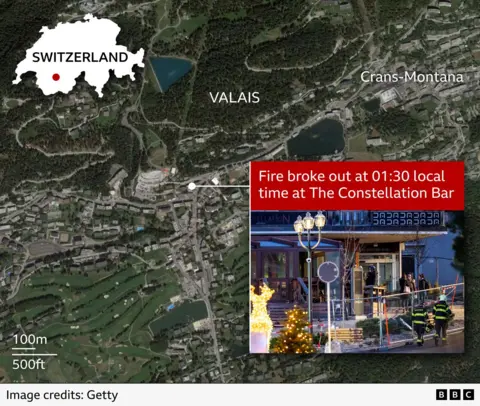
The picturesque Valais canton, renowned for its pristine alpine landscapes and vibrant winter sports scene, was plunged into mourning following the incident at approximately 01:30 local time (00:30 GMT) within "Le Constellation," a prominent bar in the upscale resort of Crans-Montana. Initial reports from Swiss authorities indicate a substantial loss of life, with "several dozen" fatalities presumed, although precise figures remain elusive amidst the ongoing recovery and identification processes. The scale of the human toll underscores the profound impact of the disaster, which has drawn expressions of solidarity and offers of assistance from across Europe.
The Catastrophe Unfolds: A Night of Celebration Turned to Horror
New Year’s Eve is traditionally one of the busiest periods for Crans-Montana, a resort popular with both Swiss residents and international tourists seeking to celebrate the festive season amidst the grandeur of the Alps. "Le Constellation" was a well-known establishment, typically bustling with patrons during such peak times. Reports suggest the venue, which could accommodate up to 300 individuals, was likely near full capacity as revelers ushered in the new year.
The fire’s rapid progression shocked eyewitnesses and emergency responders alike. While initial unverified accounts mentioned an "explosion," regional security official Stéphane Ganzer clarified that the conflagration itself, in its advanced stages, likely caused secondary explosions rather than being initiated by an explosive device. This distinction was crucial in promptly ruling out any deliberate attack, allowing investigators to focus on accidental causes. The swiftness with which the flames engulfed the premises points towards factors such as highly flammable interior materials, the architectural layout, and potentially, the high occupancy contributing to a rapid escalation of the inferno.
Human Toll and the International Dimension of Loss
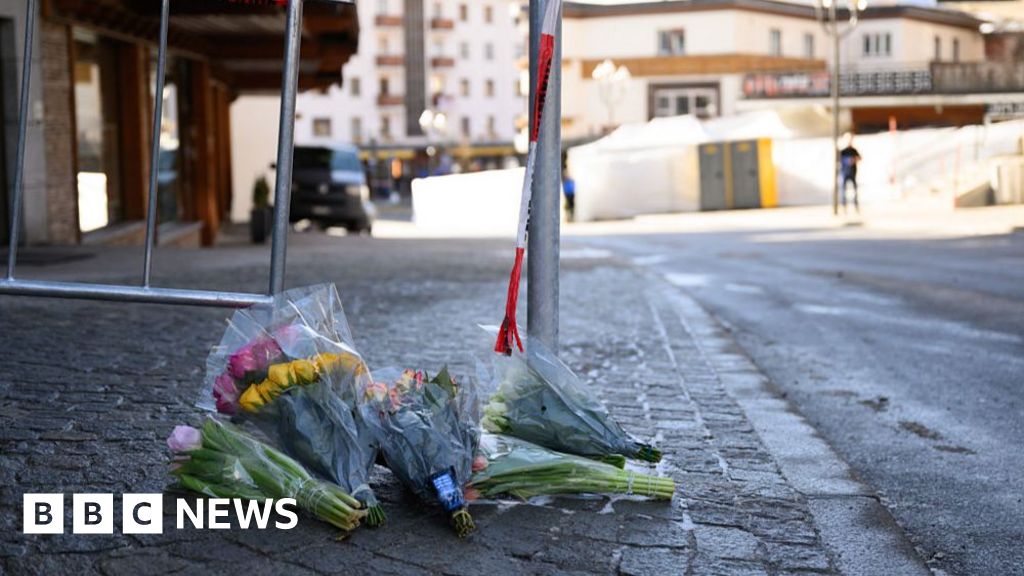
The immediate aftermath saw an overwhelming deployment of emergency services, including fire brigades, paramedics, police, and specialized rescue teams. The injured, numbering over 100, many suffering from severe burns, were swiftly transported to various medical facilities across Switzerland, including specialized burns units. Neighboring Italy also offered medical assistance, with a burns unit in Milan made available to accommodate victims. The director of Lausanne University Hospital noted that their facility alone received 22 patients, predominantly young adults aged 16-26, highlighting the demographic tragically affected by the event.
The international nature of Crans-Montana’s clientele is reflected in the diverse nationalities impacted by the fire. The Italian Foreign Ministry confirmed that 16 Italian nationals were reported missing, with an additional 12 to 15 receiving hospital treatment. French media reported at least two French citizens among the injured, prompting French President Emmanuel Macron to extend "the full solidarity of France and our fraternal support" to Switzerland. The UK embassy in Switzerland confirmed it was actively monitoring the situation and had consular staff prepared to assist any British nationals, although no requests for aid had been received at the time of reporting. This broad international involvement necessitates complex diplomatic coordination for victim support and family liaison.
The Arduous Task of Identification and Repatriation
One of the most profound and immediate challenges facing authorities is the identification of the deceased. The severity of burns sustained by many victims makes traditional identification methods extremely difficult. Chief Prosecutor Beatrice Pilloud indicated that significant efforts are underway to identify the victims and facilitate the return of remains to their families as expeditiously as possible. However, the Italian ambassador to Switzerland cautioned that the process could extend for weeks, underscoring the forensic complexity involved. DNA analysis, dental records, and comparative anthropology will be crucial tools in this painstaking process, often requiring international collaboration and data exchange with consular services to accurately match victims with their identities. The emotional burden on grieving families awaiting confirmation of their loved ones’ fates is immense, necessitating sensitive and transparent communication from authorities.
Unraveling the Origins: The Investigation into Cause and Circumstance
The precise cause of the fire remains under rigorous investigation, with authorities meticulously examining the scene for clues. While the chief prosecutor unequivocally stated that there was "no question" of an attack, initial witness testimonies have provided a potential lead. Two French nationals, Emma and Albane, who were present in the bar at the time, described seeing a waitress place a birthday candle on a champagne bottle. They recounted the candle being held too close to the ceiling, which, being constructed of wood, ignited almost instantly. "In a matter of seconds, the entire ceiling was ablaze. Everything was made of wood," they told BFMTV, illustrating the terrifying speed of the fire’s spread.
This account, if corroborated by forensic evidence, points towards an accidental ignition, possibly exacerbated by the nature of the building materials. The regional police commander, Frédéric Gisler, detailed the timeline of the emergency response, noting that smoke was first observed around 01:30 local time, prompting immediate calls to emergency services and a rapid deployment of rescue teams. The investigation will now focus on confirming these witness accounts, examining fire safety protocols within the establishment, and assessing the role of any combustible materials in the rapid escalation of the blaze. Factors such as the presence of fire suppression systems, emergency exits, and compliance with local building codes will be critical areas of inquiry.
Le Constellation: A Hub of Alpine Nightlife
"Le Constellation" held a long-standing presence in Crans-Montana’s social landscape. While the resort itself caters to an affluent clientele, the bar was characterized by its accessible atmosphere rather than being overtly luxurious. It featured an upstairs area for casual gatherings, such as watching sports, and a larger downstairs bar for dancing and socializing. Its capacity for up to 300 patrons meant it was a significant entertainment venue within the resort.
The structural composition of the building, particularly the reported wooden ceiling, will be a focal point of the investigation. While traditional alpine architecture often incorporates wood, its flammability poses inherent risks in public spaces, necessitating stringent fire safety measures. The layout described by survivors – "narrow" escape routes and "even narrower" stairs – suggests potential challenges for rapid evacuation during a panic, particularly when the venue is crowded. The festive New Year’s period meant the bar was almost certainly filled with a diverse crowd of locals and international visitors, all celebrating the dawn of 2026, amplifying the tragic consequences of the fire.
Broader Implications: Safety, Tourism, and Resilience
The Crans-Montana tragedy extends beyond the immediate human cost, carrying significant implications for fire safety regulations in entertainment venues, particularly within popular tourist destinations and older buildings. This incident will undoubtedly prompt a review of existing fire safety standards, evacuation procedures, and the use of construction materials in public spaces across Switzerland and potentially beyond. Authorities may consider stricter enforcement, updated building codes, or mandatory retrofitting for establishments operating in high-risk environments or during peak occupancy periods. The comparison with international best practices in fire safety for public assembly venues will likely be a key part of this assessment.
For Crans-Montana, a resort heavily reliant on tourism, the short-term impact will be profound. The emotional scars on the community, the economic disruption, and the period of mourning will require collective resilience. However, the coordinated and professional response from Swiss authorities, including the rapid deployment of medical and rescue teams and the establishment of a family helpline (+41 848 112 117), demonstrates robust crisis management capabilities. The psychological toll on survivors, first responders, and the wider community will necessitate long-term support and counseling services.
Looking forward, the physical rebuilding of the site will be a testament to recovery, but the memory of those lost will endure. This tragic event serves as a stark reminder of the critical importance of vigilant fire safety, meticulous emergency planning, and the fragility of life, even amidst celebrations in idyllic settings. The full investigation report will be crucial in providing definitive answers and guiding future preventative measures to avert similar catastrophes.


 Ridwan Kamil
 Aura Kasih
 Safa Marwah